on sale
Franka Robotics GmbHCobots
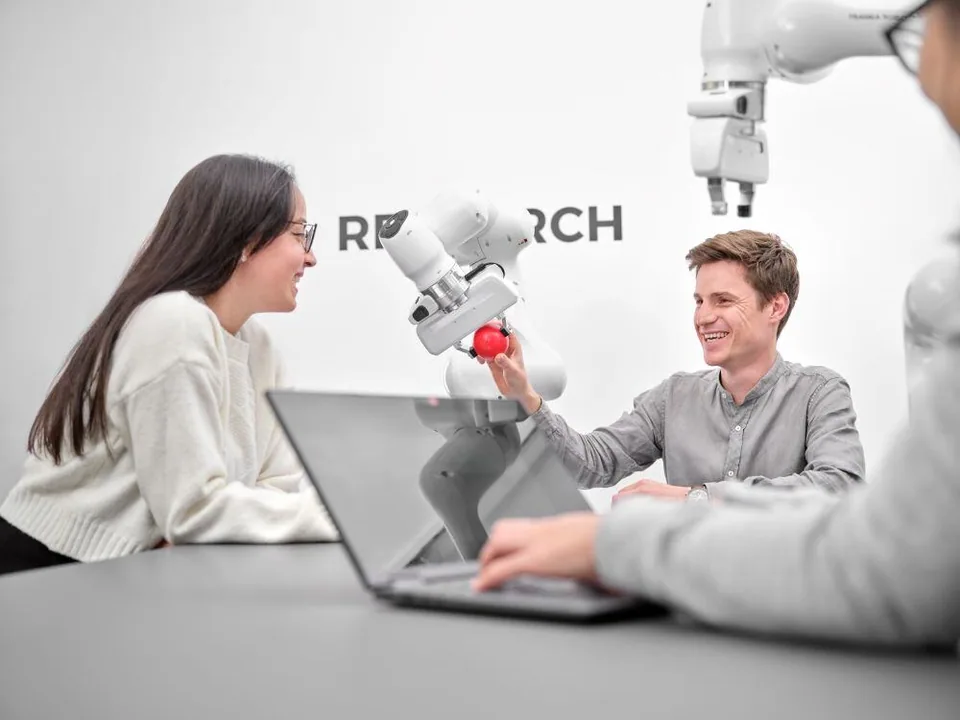
Franka Research 3 (FR3)
- 3 kgpayload
- 7 DOFdegrees of freedom
- 116,300*price (PLN)
Application: Laboratories
In the lab, repeatability counts: from 5 micrometers (Meca500) to ±0.1 mm (Franka Research 3), with prices starting at about PLN 890 (≈ EUR 205 at NBP rate 4.3641 of 21 October 2026) (SO-101).
This page is informational and has not been reviewed by a named expert (lawyer, tax adviser, safety engineer or physician). It is not legal, tax, medical or certification advice; for decisions (for example reimbursement, the robotization tax relief, data protection or safety), check the rules and standards in the official sources.
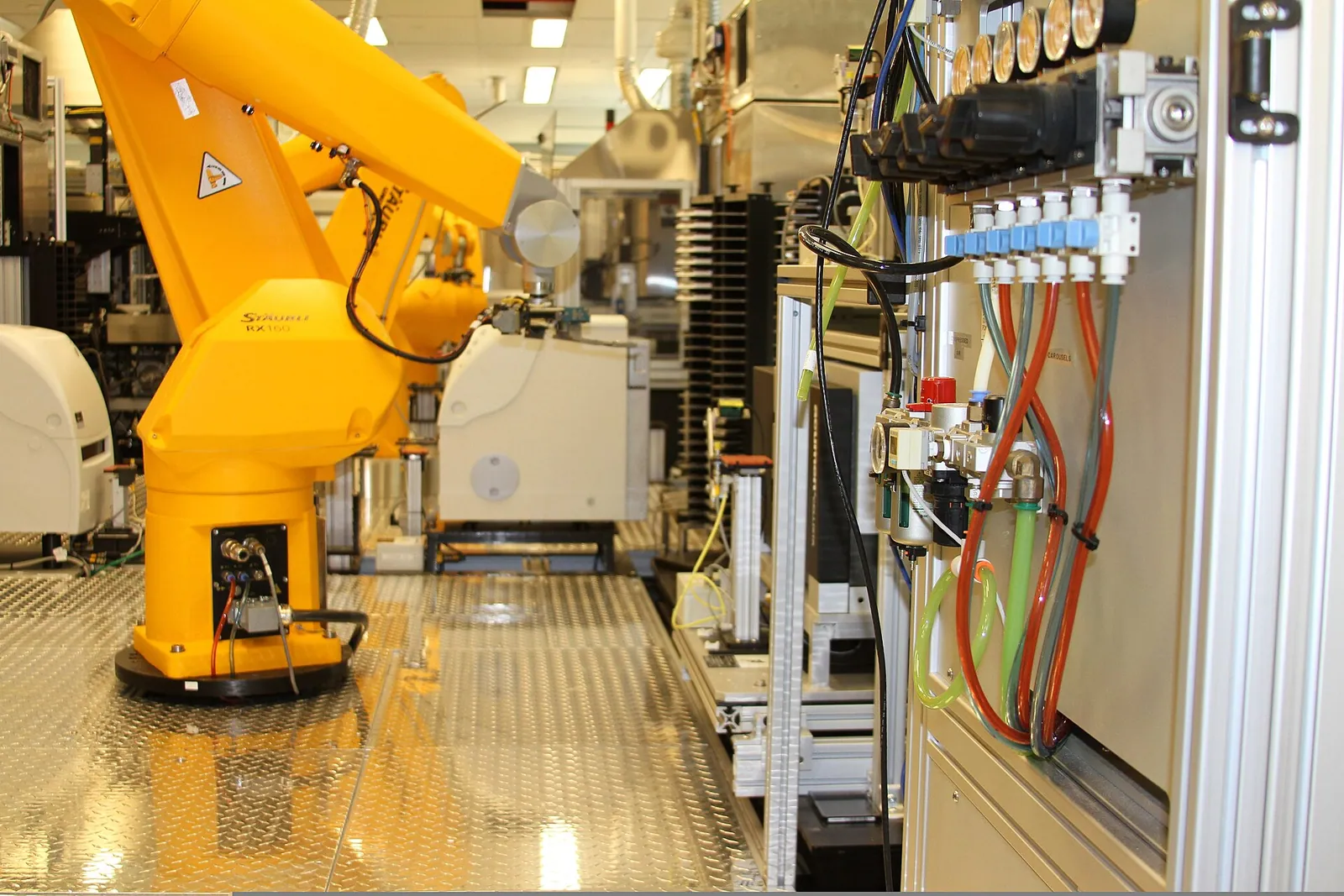
Photo: National Center for Advancing Translational Sciences (NCATS), Wikimedia Commons, Public domain; resized and converted to WebP
Tasks such as moving, rotating and photographing hundreds of samples at the same angle suit automation well, because the result does not depend on operator fatigue; the arm repeats the motion with the accuracy the manufacturer states (see below).
In the lab, repeatability counts, not speed: what is well measured matters more than what is done fast. This piece covers three worlds: research labs at universities, industrial labs (electronics, pharma) and robotics labs where the robot itself is the object of study.
In Poland, lab robotics is in better shape than headlines about the market suggest. Below is the equipment of selected universities according to the institutions' own websites (a caveat: it is not always clear how many units there are or what condition they are in):
This is a list of equipment, not a ranking. It does show two trends, though: classic industrial robots remain the foundation of teaching, and for some years humanoids and quadrupeds have been joining them as platforms for AI research. We write about the latter in a school context in “Educational Robots for Schools and Universities”.
Franka Research 3. The Franka Research 3 (Franka Robotics) is a German arm with 7 degrees of freedom, a 3 kg payload and an 855 mm reach, with ±0.1 mm repeatability; each of the seven joints has a torque sensor, and control runs at 1 kHz (Franka Robotics). The controller runs on Linux, and the libfranka library and ROS integration make research easier. The price at the distributor Vention is EUR 25,250, or about PLN 110,500 at the NBP rate of 1 October 2026 (Vention). Ideal when you care about gentle contact with an object.
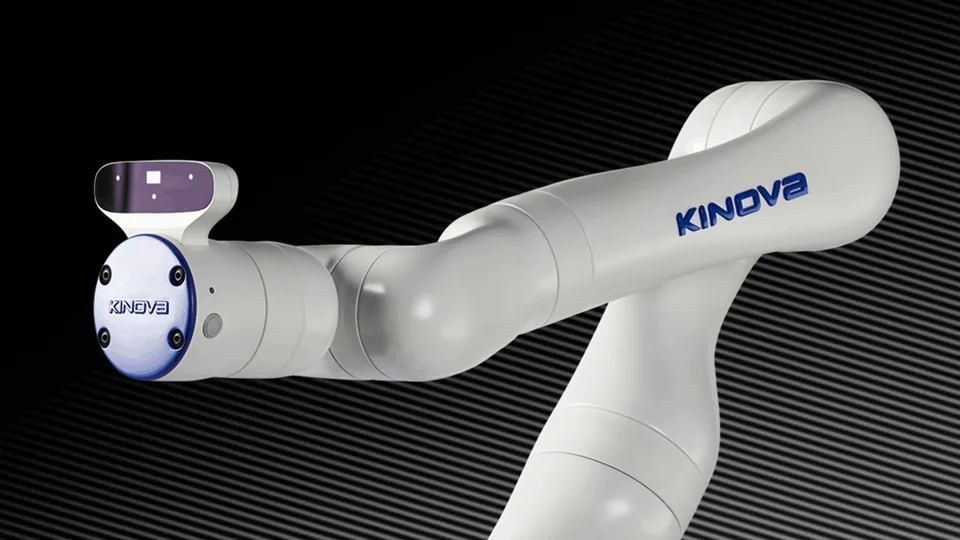
Kinova Gen3. The Kinova Gen3 (Kinova Robotics) from the Quebec-based Canadian company grew out of assistive robotics. The 7-axis version has a 902 mm reach, a 4 kg payload in the mid-range of motion (2 kg across the full range), joints with unlimited rotation and a 1 kHz control loop (Kinova). Distributors quote the price on request. The arm was designed for labs and assistive robotics, not for mass production.
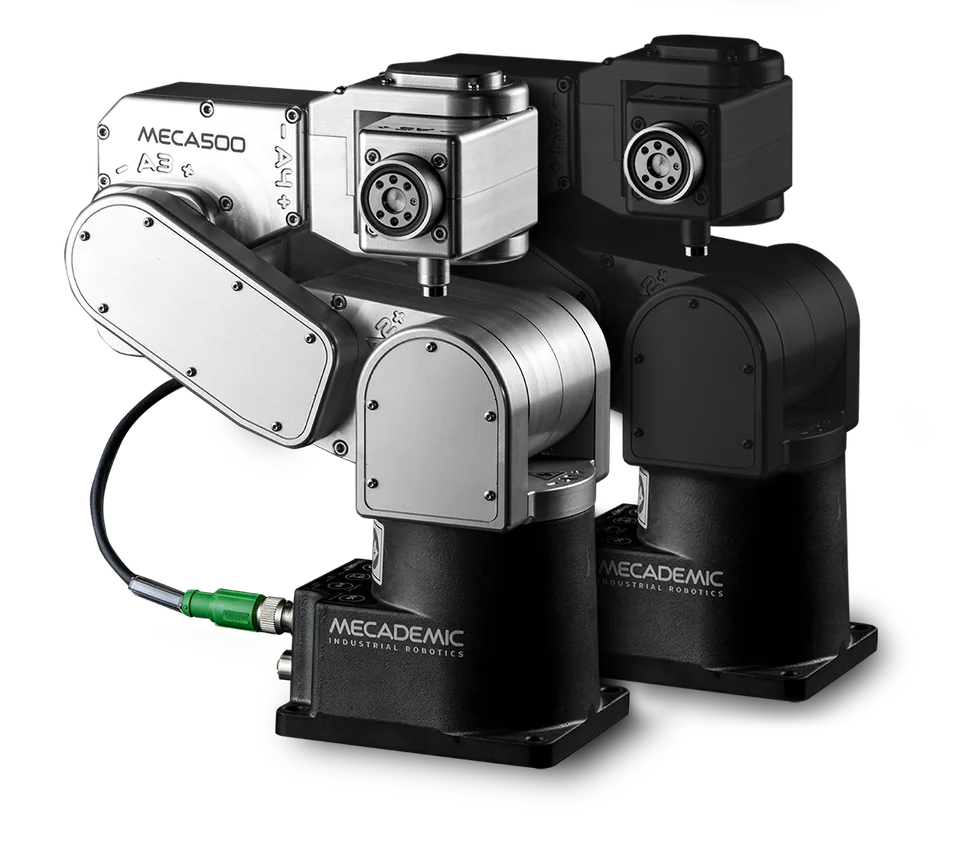
Mecademic Meca500. The Mecademic Meca500 (Mecademic) is, as its maker claims, the smallest and most accurate arm in its class: 330 mm reach, 500 g payload (up to 1 kg under certain conditions), 5-micrometer repeatability and a footprint of only 500×500 mm (Mecademic). It suits labs, electronics and precision mechanics. Price on request only, through distributors.
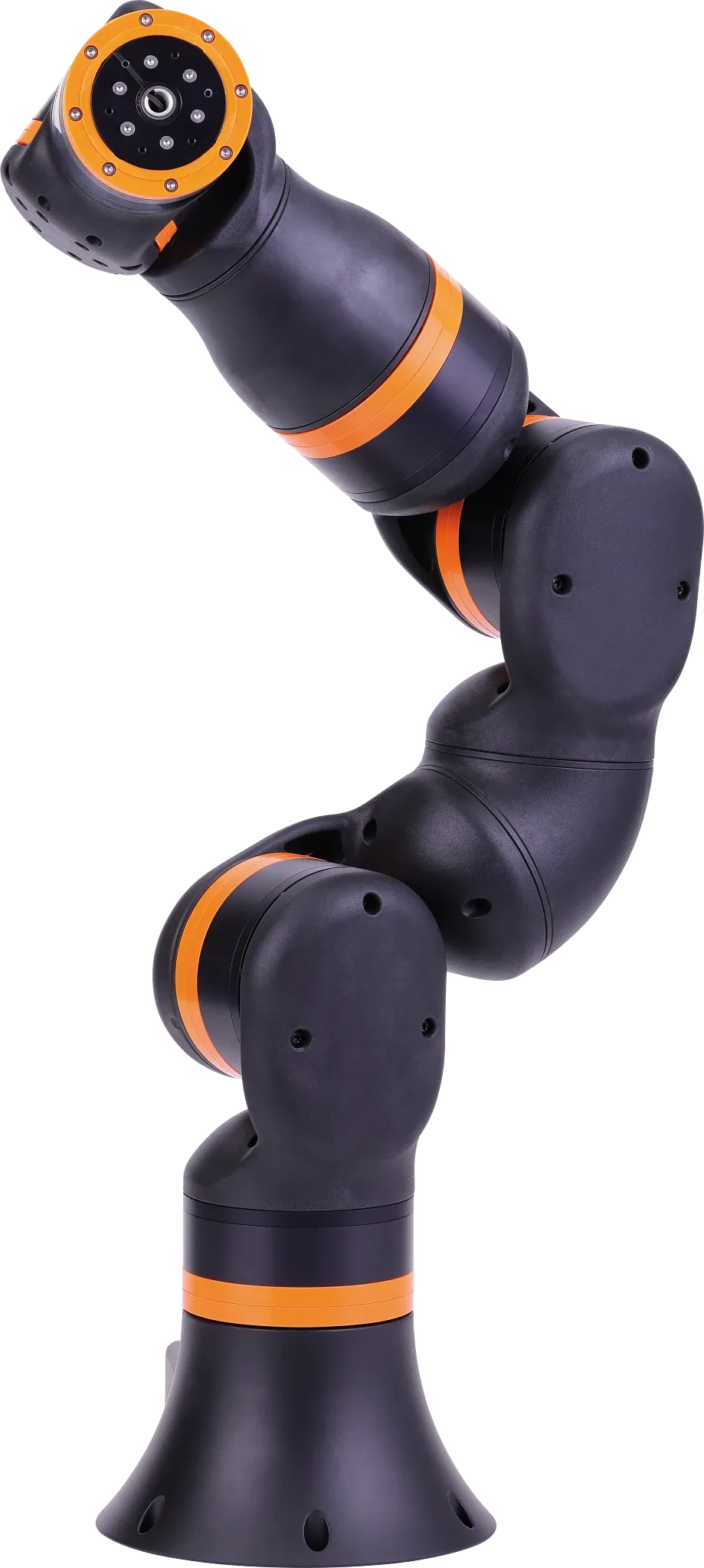
igus ReBeL. The igus ReBeL (igus) weighs about 8 kg, with a 2 kg payload, a 664 mm reach, ±1 mm repeatability and plastic gearboxes (igus). At its 2022 launch the open-source version cost USD 5,850 (about PLN 22,700 (≈ EUR 5,200)) and it is useful for simple pick-and-place, inspection and labs where a low price is key; precision is the compromise here.
UR3e. The UR3e (Universal Robots) is the smallest and lightest in the current UR line, with a 540 mm reach and a 3 kg payload (Universal Robots); bought through distributors, in Poland among others Elmark, who quote the price on request. It works well for short runs and electronics assembly. A comparison of the larger UR models: “Universal Robots UR5e, UR10e and UR20 Compared”.
If you are just starting, “How to Read a Robot Datasheet” helps you tell a manufacturer's claim from the parameter you actually need, and “Degrees of Freedom (DOF) in Humanoid Robots” explains why the seventh joint changes something.
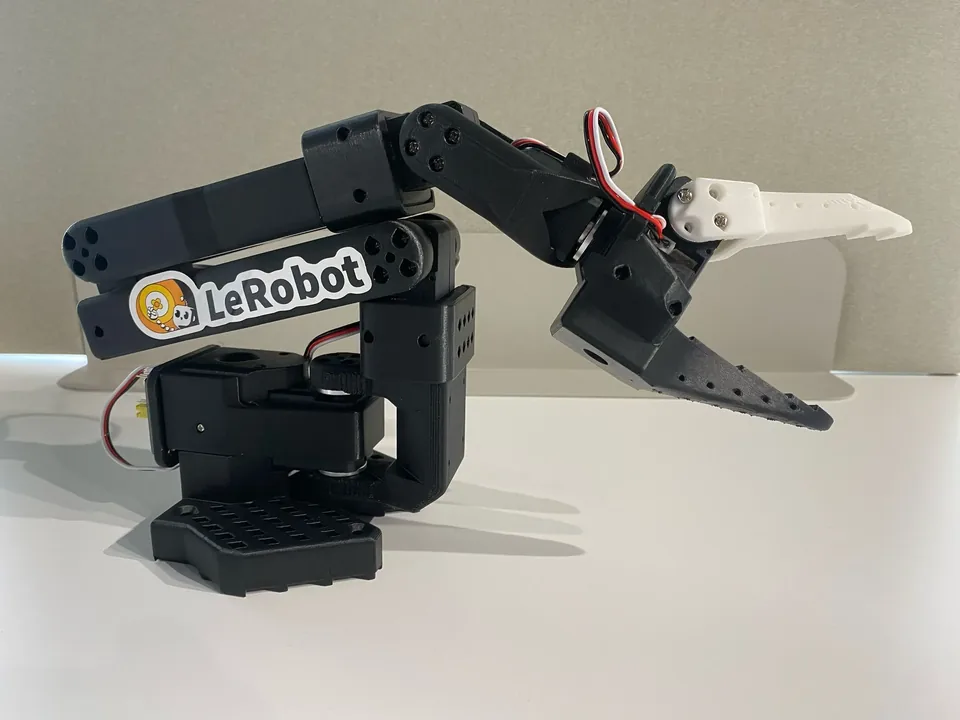
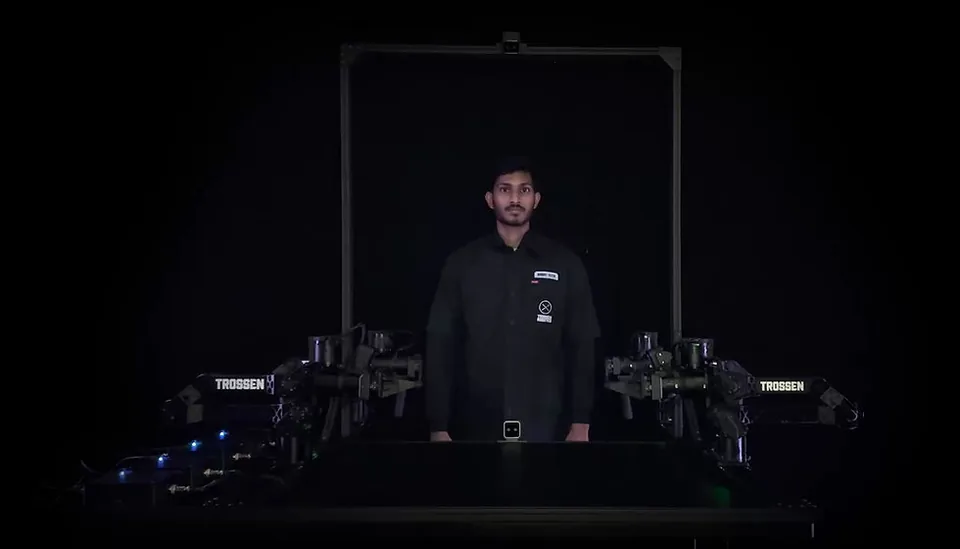
The new wave in labs is robotics based on imitation learning. The SO-101 is an open project from Hugging Face (Hugging Face) and TheRobotStudio: two arms (leader and follower), each with 6 degrees of freedom, made of 3D-printed parts and Feetech STS3215 servos, with a public bill of materials on GitHub (GitHub; Hugging Face). The complete set of both arms costs about USD 230 according to the bill of materials (about PLN 892 (≈ EUR 205)), so it is almost free of licensing for universities, although it requires a computer with a GPU. A more expensive, commercial path is the Trossen AI Stationary (Trossen Robotics), an evolution of the ALOHA line: a stationary platform for bimanual teleoperation (two pairs of WidowX AI arms, four RealSense cameras, a touchscreen), sold for USD 23,995 (Trossen Robotics). The context of the models that drive such a platform is explained in “VLA Models: How AI Controls Humanoid Robots in 2026”. You can start more cheaply with educational arms such as the Dobot Magician (4 axes, 500 g payload according to the manufacturer; Dobot) or the myCobot; more on them in educational robots.
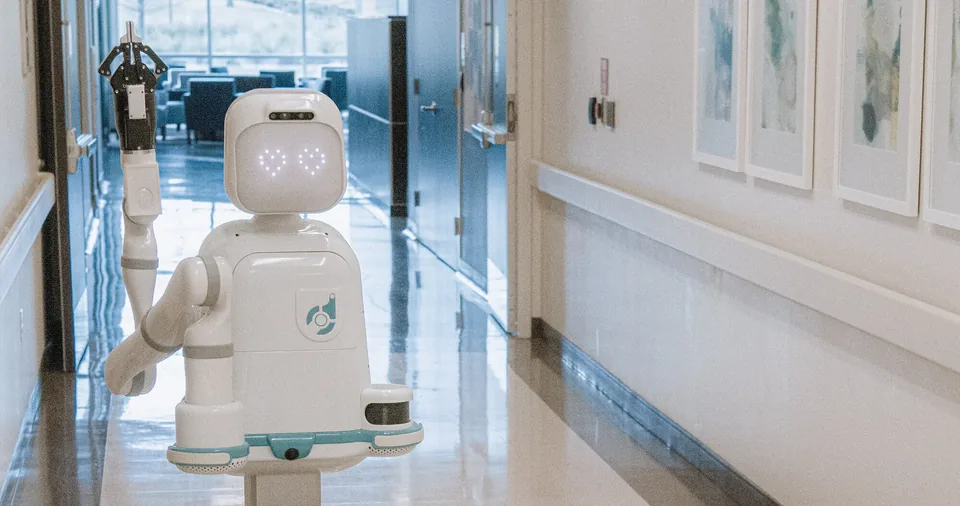
A lab is also a hospital. The Diligent Moxi 2.0 (Diligent Robotics) is a wheeled manipulator that delivers supplies, lab samples, personal protective equipment and medication; a single task takes 20 to 26 minutes on average (The Robot Report). The robot is not available in Poland, and the price depends on a fleet contract. We describe it as a direction: a sample station and a laboratory can be linked by a mobile robot, so the topic returns in mobile robots.
An arm with 0.1 mm repeatability will not replace a technician's knowledge that a pipette "drifts" after long use. A robot will not set up the experiment, judge an anomaly or approve the protocol. Add to that a simple cost: the gripper, calibration, sensors, software and people's time usually exceed the price of the arm itself. Accessory makers such as Robotiq, OnRobot or ATI Industrial Automation (force sensors) enter the budget from day one. We discuss safety when working with collaborative arms in “Robot Safety Standards”.
UR and Franka arms are bought through distributors; for UR, distribution is handled by Elmark Automatyka and CP Trade, among others, and partners include 5sAUTOMATE and Bosky (Automatyka Online). Educational hardware (Dobot, myCobot) is sold by Botland and STEM Polska. When buying for a university, pay attention to ROS 2 support, SDK access and whether the documentation is in English and up to date. A buying guide: “How to Buy a Cobot Step by Step” and “What Is a Cobot and How Does It Differ from an Industrial Robot”.
Realistic budgets: from about PLN 890 (≈ EUR 205) (SO-101) through about PLN 22,700 (≈ EUR 5,200) (igus ReBeL at its launch price), to about PLN 110,000 (≈ EUR 25,210) for the Franka and more for the UR3e and Kinova (prices on request), and that is before accessories. Universities finance such purchases from grants: NCBR (R&D programs), FENG (including the SMART path), Horizon Europe and the European Digital Innovation Hubs (EDIH); we do not have a complete, verified list of calls, so check them at the source. Private companies can consider Poland's robotization tax relief (ulga na robotyzację, “Poland's Robotization Tax Relief”): a deduction of an additional 50 percent of qualifying costs, under a narrow definition of an industrial robot, so have an adviser confirm whether a cobot qualifies (podatki.gov.pl). On 29 September 2026 the government adopted a bill extending the relief by 10 years (bill on gov.pl), but it has not yet been enacted.
The lab is a place where robotics is more mature than in homes and on construction sites. The choice is simple once you know the task: precision, Meca500; force, Franka; assistance, Kinova; learning, SO-101; budget, igus. Start with the question of which error in your data costs you the most today, and choose the robot that removes it.
A chief engineer by profession (technical head of a ship's machinery plant, licensed). Sets the site's editorial rules and is responsible for them; he does not read every page before publication.
Texts are prepared by the editorial team using AI tools. We compare data with primary sources on a sample basis, not page by page. Our rules are described here: How we check · About us
Recommended robots
Models chosen for this scenario, with prices and availability in Poland.
Franka Robotics GmbHCobots
igus GmbH (Robolink / ReBeL)Cobots
Universal Robots A/SCobots
Hugging Face / LeRobot (TheRobotStudio SO-ARM)Educational robots
Knowledge
NAO, Photon, LEGO SPIKE, Unitree G1: a guide to the robots used in Polish education and at universities, with buying advice.
UR5e, UR10e and UR20 from Universal Robots: differences in payload, arm reach and price, and which model to choose for which task.
What vision-language-action (VLA) models like GR00T, Helix and Gemini Robotics are, what they can already do, and what remains unsolved.
Peak vs continuous torque, static vs dynamic payload, battery life under load: how not to be misled by a robot's datasheet.
From defining the application to acceptance of the workstation: seven stages of buying a cobot, and what to look for in an integrator and an offer.
It depends on the task. For force and contact research: Franka Research 3 (7 degrees of freedom, a torque sensor in every joint). For labs and assistive robotics: Kinova Gen3. For micro-assembly: Mecademic Meca500 (5-micrometer repeatability). For learning and imitation learning: the SO-101 for about PLN 890 (≈ EUR 205).
The Franka Research 3 costs EUR 25,250 at the distributor Vention (about PLN 116,300 at the NBP rate of 1 October 2026), the igus ReBeL cost USD 5,850 in its open-source version at its 2022 launch (about PLN 22,700 (≈ EUR 5,200)), and the SO-101 is under USD 230 in parts (about PLN 892 (≈ EUR 205)). The Kinova Gen3 and UR3e are bought through distributors on request. Prices are approximate because manufacturers sell through distributors.
Yes. According to the universities' own websites: Wrocław University of Science and Technology has, among others, a UR3, FANUC and ABB IRB 120; Poznań University of Technology has a KUKA KR200 and ABB IRB120 as well as the ANYmal B and Unitree A1 quadrupeds; Gdańsk University of Technology has a lab with the Unitree Go1 and Husarion robots; Rzeszów University of Technology has a lab with the Unitree G1 humanoid.
Repetitive ones: moving samples, positioning, pick-and-place. The Diligent Moxi 2 delivers lab samples, medicines and supplies in US hospitals; preparing the experiment, calibrating and judging the result are still done by a person.
Poland's robotization tax relief is for businesses. Universities turn to grants: NCBR, FENG programs, Horizon Europe, while companies turn to PARP support. Current calls must be checked directly with the organizer.
Links to the material this text is based on. Before you base a decision on a figure from the article, check it at the source.
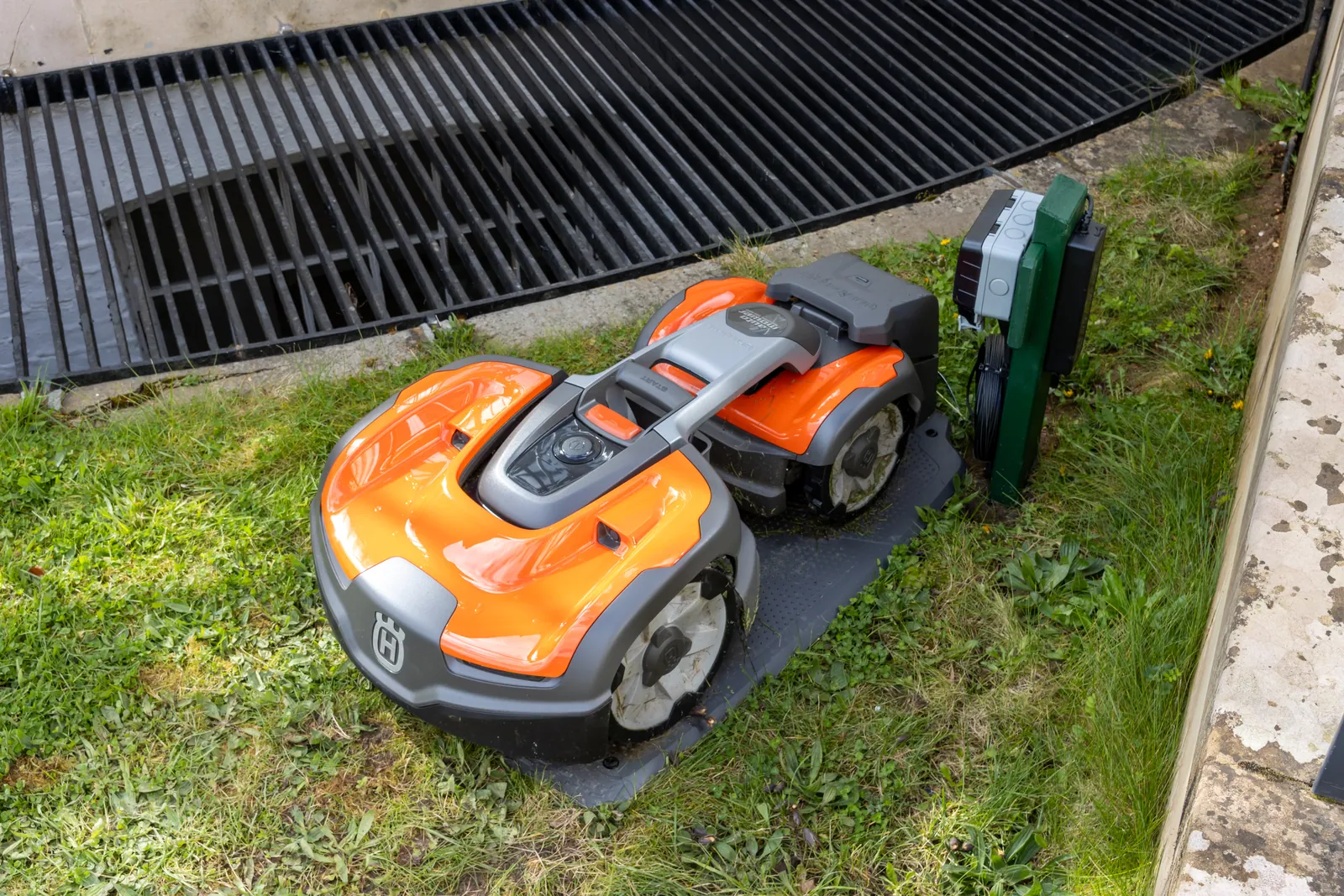
In the garden, robot mowers are mature; the Naio Oz is for professional vegetable growers, and the Unitree Go2 costs from about PLN 9,900 (≈ EUR 2,270) in Polish shops.
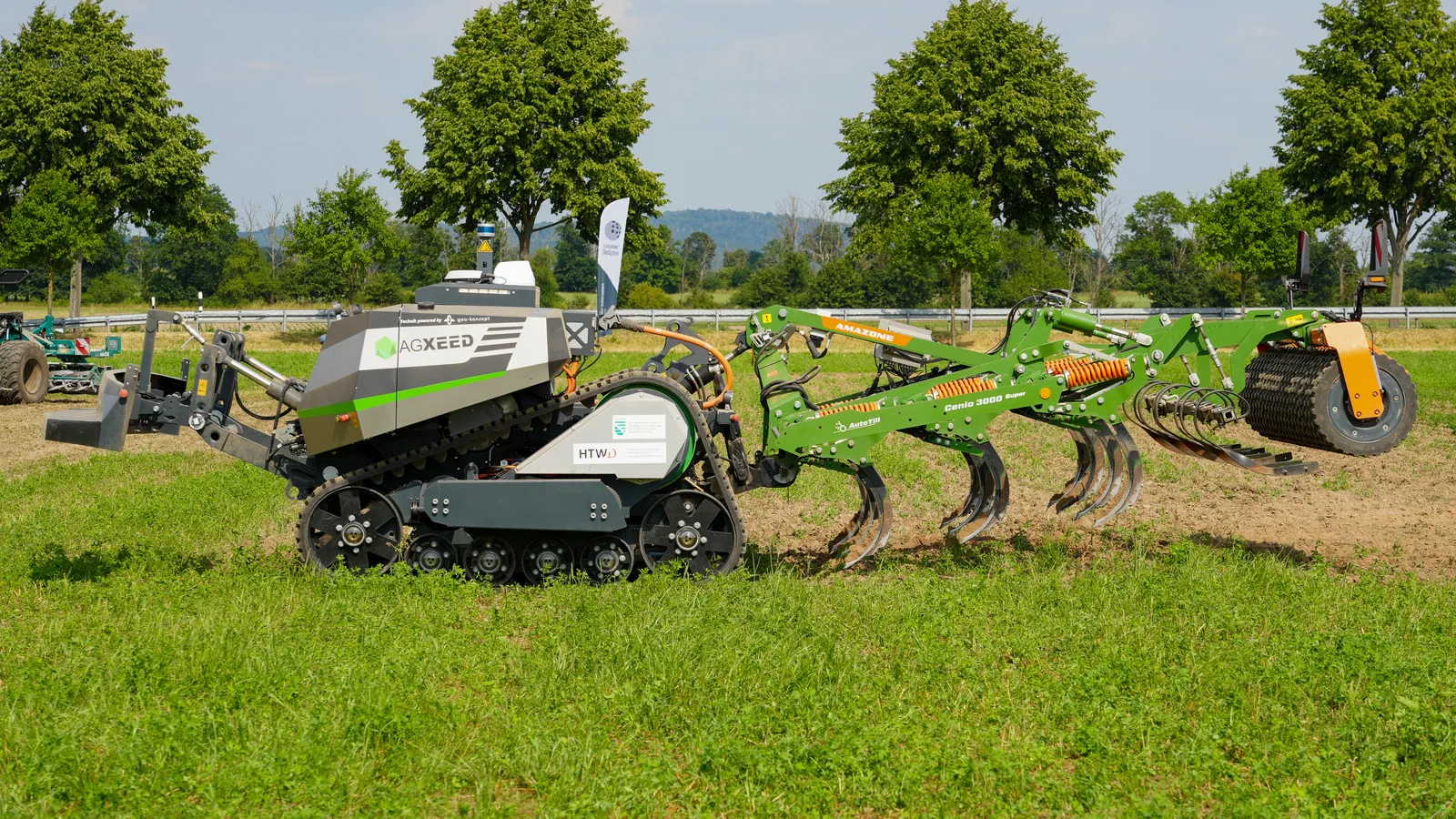
A laser that burns weeds without a gram of chemicals, a solar robot sowing with eight-millimeter accuracy: the field is no longer the exclusive domain of the tractor and the hoe.
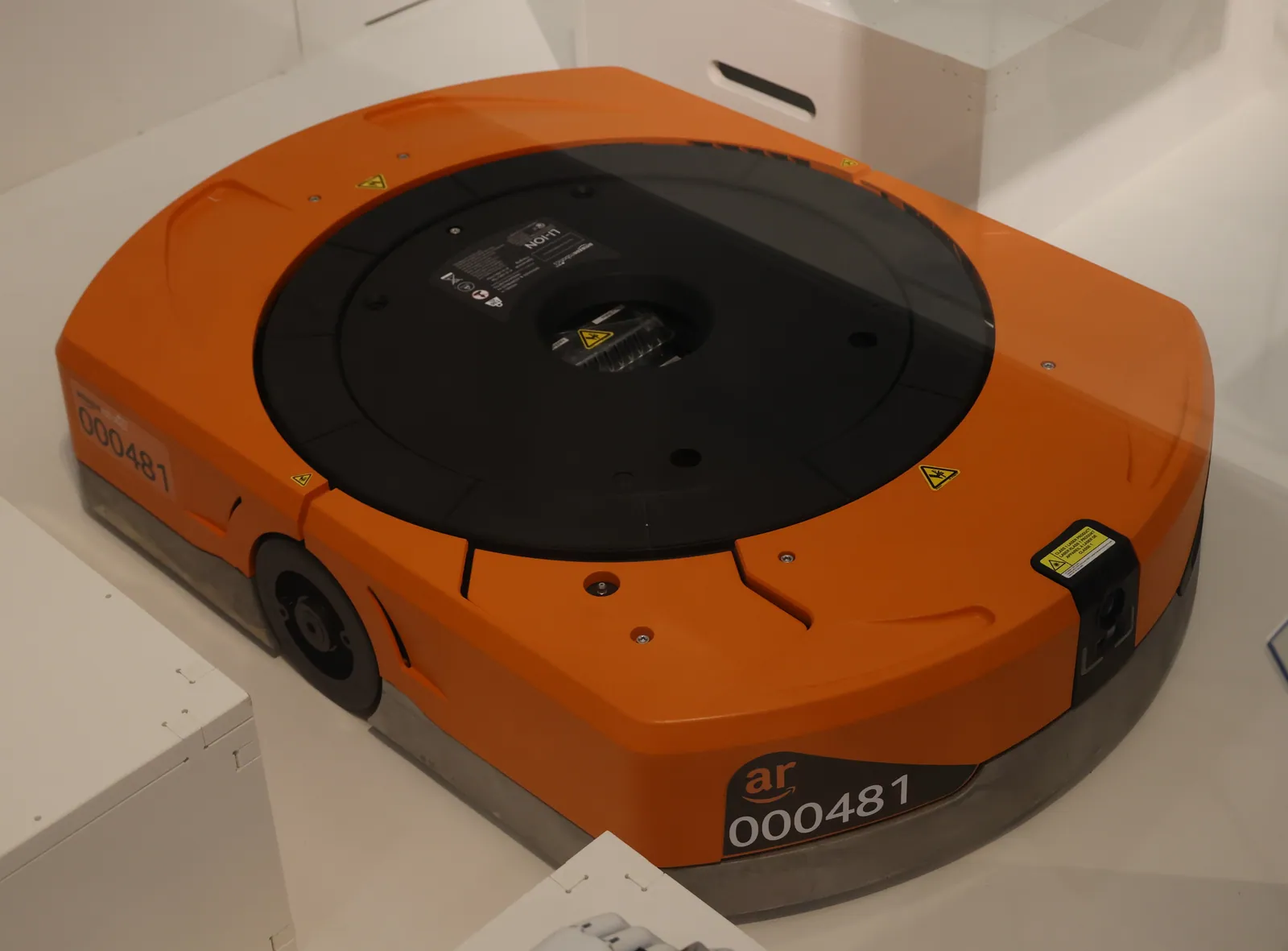
Robots really work here: Amazon reports more than 5,000 robots in its new Dobromierz center, and some AMR offers can be borrowed on trial.
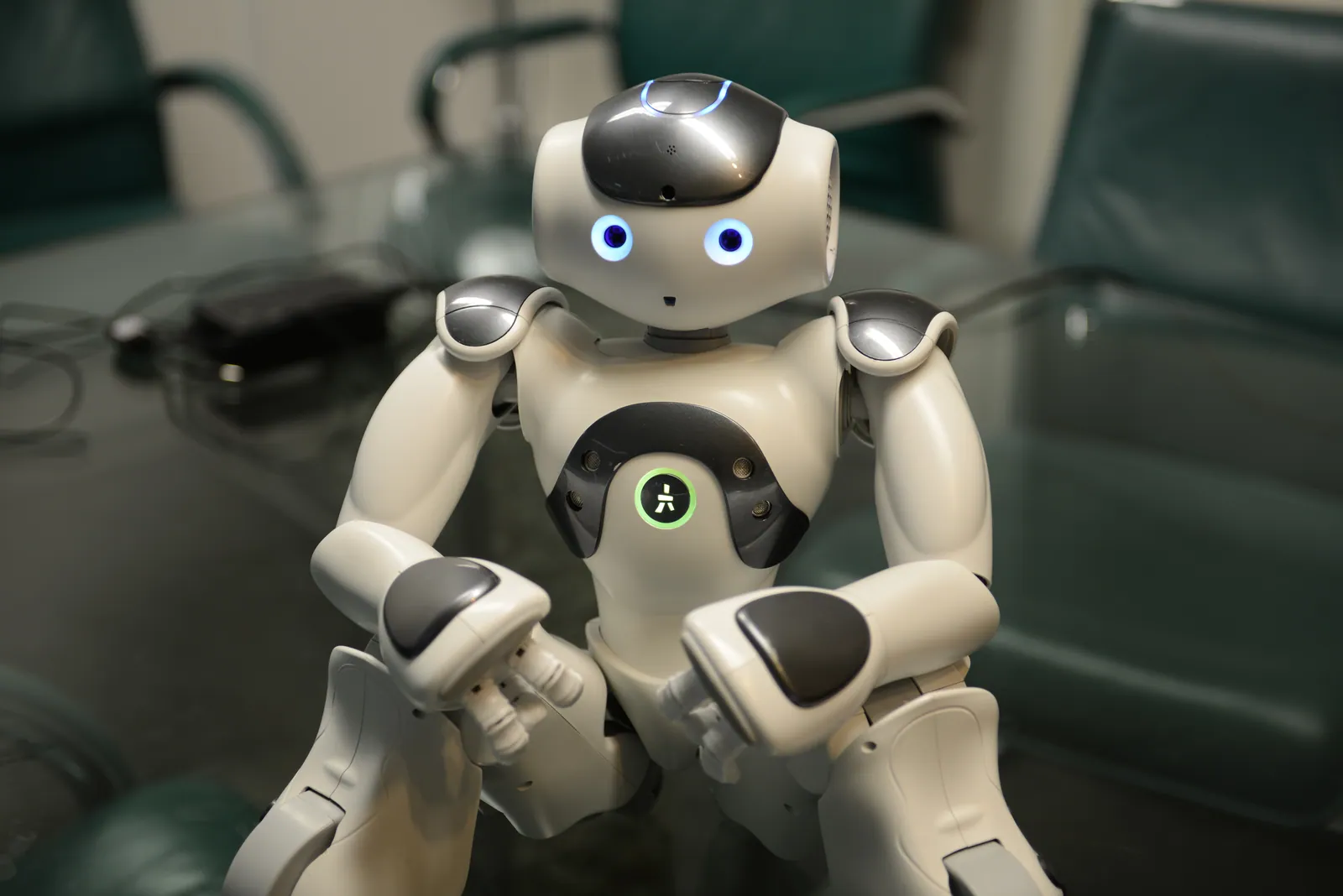
Schools buy robots from USD 175 (Ozobot Evo) to robot arms for more than EUR 2,000; the LEGO SPIKE Prime 45678 was retired on 30 June 2026.
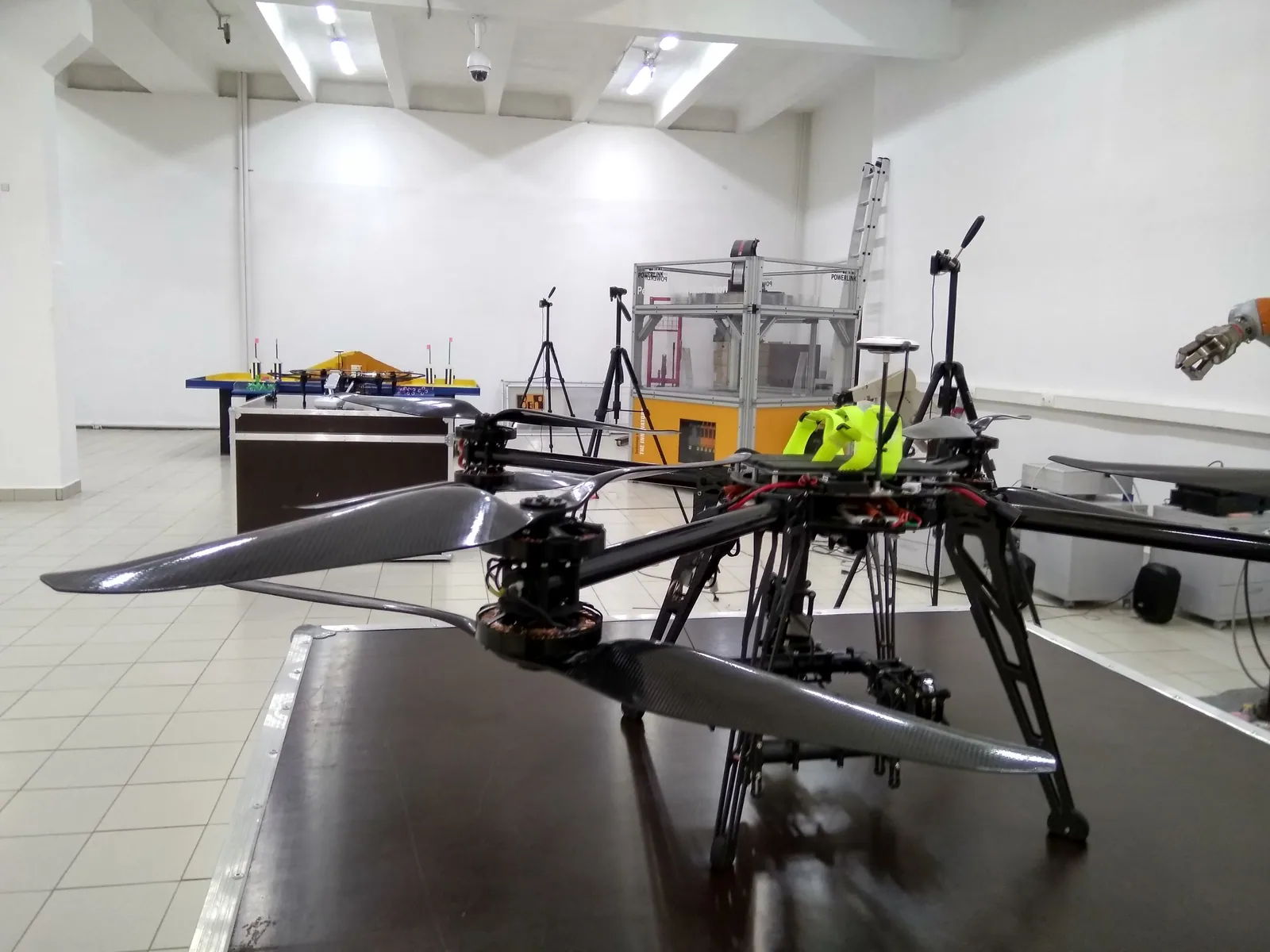
Universities buy research platforms: the Unitree G1 humanoid from USD 13,500, the Franka arm for about EUR 25,000, and the open SO-101 in parts for about USD 230.