on sale
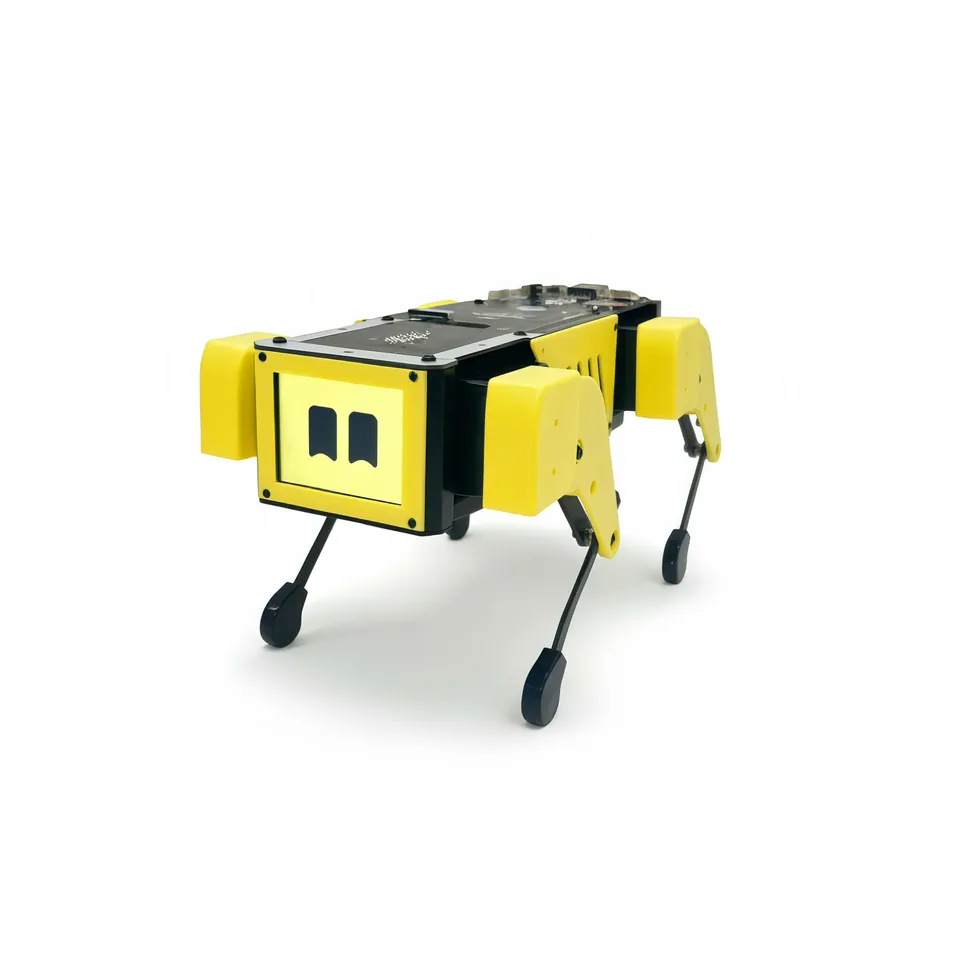
MangDang Technology Co., Limited
MangDang Mini Pupper 2
- 0.45 kgweight
- 12 DOFdegrees of freedom
- 2,500*price (PLN)
Price in Poland
We mark shop links as sponsored (rel=sponsored); today we receive no commission. How we make money
Available in PolandA small desktop four-axis arm weighing just 3.4 kg with a 0.5 kg payload, the Dobot Magician reached the market as what the manufacturer calls the world's first desktop 4-axis arm in the educational class. Drag-to-teach programming combined with the DobotLab/DobotStudio software makes it one of the most popular entry points for learning robotics in schools and universities.
A set of end tools allows 3D printing, laser engraving, and writing and drawing, so a single station covers several STEM exercises without swapping machines. Compared with industrial models from the same family, such as the Dobot MG400, the Magician has a clearly smaller payload and only 4 DOF. It is not suited to production tasks, but it is cheaper and easier for beginners to use.
The manufacturer gives no price on the product page and no availability data for Poland, which makes a direct cost comparison with competing educational kits harder. For schools and universities looking for a first encounter with robot-arm programming it is a sensible choice; for industrial use it is not intended.
DOBOT Magician Robotic Arm - One-stop Solution to Advanced STEAM Education (vimeo.com)
Data checked: · Sources: 1
Data from manufacturer datasheets and product pages; median over the models of this category in the database.
The price is not given on the manufacturer's website.
Purchase: prices in Polish shops as of 27 September 2026 are 5,749-5,770 PLN (≈ EUR 1,320–1,320) for the Basic Plan variant (botland.com.pl and a second offer) and 7,179 PLN (≈ EUR 1,650) for the Advanced Educational Plan (stem-polska.pl). The manufacturer gives no price on its own website, so these are shop prices rather than a list price, and kit contents may differ.
Running costs: the arm itself has no serious upkeep costs, and electricity is negligible. As an estimate, materials add up: 3D-printing filament, paper and pens for drawing, possibly extra end tools. The manufacturer does not give exact amounts.
Training: operation is designed for beginners, and drag-to-teach lets you learn the basics in a single afternoon. A teacher can prepare a lesson plan without special certification.
For larger orders it is worth comparing the cost of the whole station against kits such as the myCobot 280.
| Date | Price (PLN) | Variant | Source |
|---|---|---|---|
| 2026-09-27 | 5,770 PLN (≈ EUR 1,320) | Basic Plan | botland.com.pl |
| 2026-09-27 | 5,749 PLN (≈ EUR 1,320) | Basic Plan | stem-polska.pl |
| 2026-09-27 | 7,179 PLN (≈ EUR 1,650) | Advanced Educational Plan | stem-polska.pl |
The best first contact with a robot is one on your own desk. The Dobot Magician is a small arm weighing 3.4 kg, with four axes and a 0.5 kg payload. The manufacturer calls it the world's first desktop 4-axis arm in the educational class. It won't replace an industrial robot, but that is not why it was built.
The arm can be guided by hand, with points recorded using drag-to-teach and the path then replayed, which makes a first program in action. At the same station, after swapping the end tool, the Magician prints in 3D, engraves with a laser, or writes and draws with a pen. The manufacturer lists exactly these modes as educational and STEM uses. One machine gives you several lessons without buying three devices.
It is at its best in schools (schools) and universities (universities): in classes on programming, mechatronics and automation basics. The DobotLab and DobotStudio software lets you start with simple blocks and work up to code. For a university it is also a cheap way for students to work with kinematics on a real device before they move on to a laboratory (lab) with heavy equipment.
The limits are clear: 0.5 kg payload and only four degrees of freedom. With four axes the gripper cannot always rotate the way you need, which the article on “Degrees of Freedom (DOF) in Humanoid Robots” explains well. For production tasks Dobot offers other lines, for example the Dobot MG400 or the Dobot Nova 2 cobot. A broader market overview is in the article “Educational Robots for Schools and Universities”.
Yes: for teachers who want a single station for several topics: programming, 3D printing, engraving and drawing. Yes: for universities and student clubs looking for an inexpensive arm to teach the basics of kinematics and control. Yes: for hobbyists and prototype builders who want to test an idea for small-scale automation before investing in bigger hardware.
No: for companies looking for a production robot. A 0.5 kg payload and four axes are too little for serious assembly, and the manufacturer itself points to other series. No: for people who need industrial precision, because our materials give no repeatability figure that could be compared with cobots. No: for those who expect a single official price, since prices differ between shops and kit variants.
The educational robots category helps when choosing between kits for a school.
What is confirmed is availability: you can find the Magician in the Polish shops botland.com.pl and stem-polska.pl, so it can be bought locally.
In the educational-robot category, robotics enters schools mainly as kits and small arms; we have prepared an overview in the article “Educational Robots for Schools and Universities”. How to start learning in Poland is described in the text “How to Start Learning Robotics in Poland”.
Dobot MG400: the older sibling from the same family, but aimed at industrial work; if your idea outgrows the classroom station, this is the natural next step.
myCobot 280: a small arm from Elephant Robotics, popular in education; six axes instead of four give more freedom in gripper orientation, which can be an asset when teaching kinematics.
SO-101: an open arm tied to the machine-learning ecosystem; better when you want to teach robots with AI methods rather than classical programming.
Kinova Gen3 Lite: a lightweight research arm; a higher league, but useful once classes reach lab level.
LEGO Education SPIKE Prime Set: for younger students: bricks and simple programming instead of an arm; a gentler entry, though without 3D printing or engraving. Before you buy, compare the contents of kits across shops, because the same variant is sometimes offered with different equipment, and that changes the real price of the station.
MangDang Technology Co., Limited
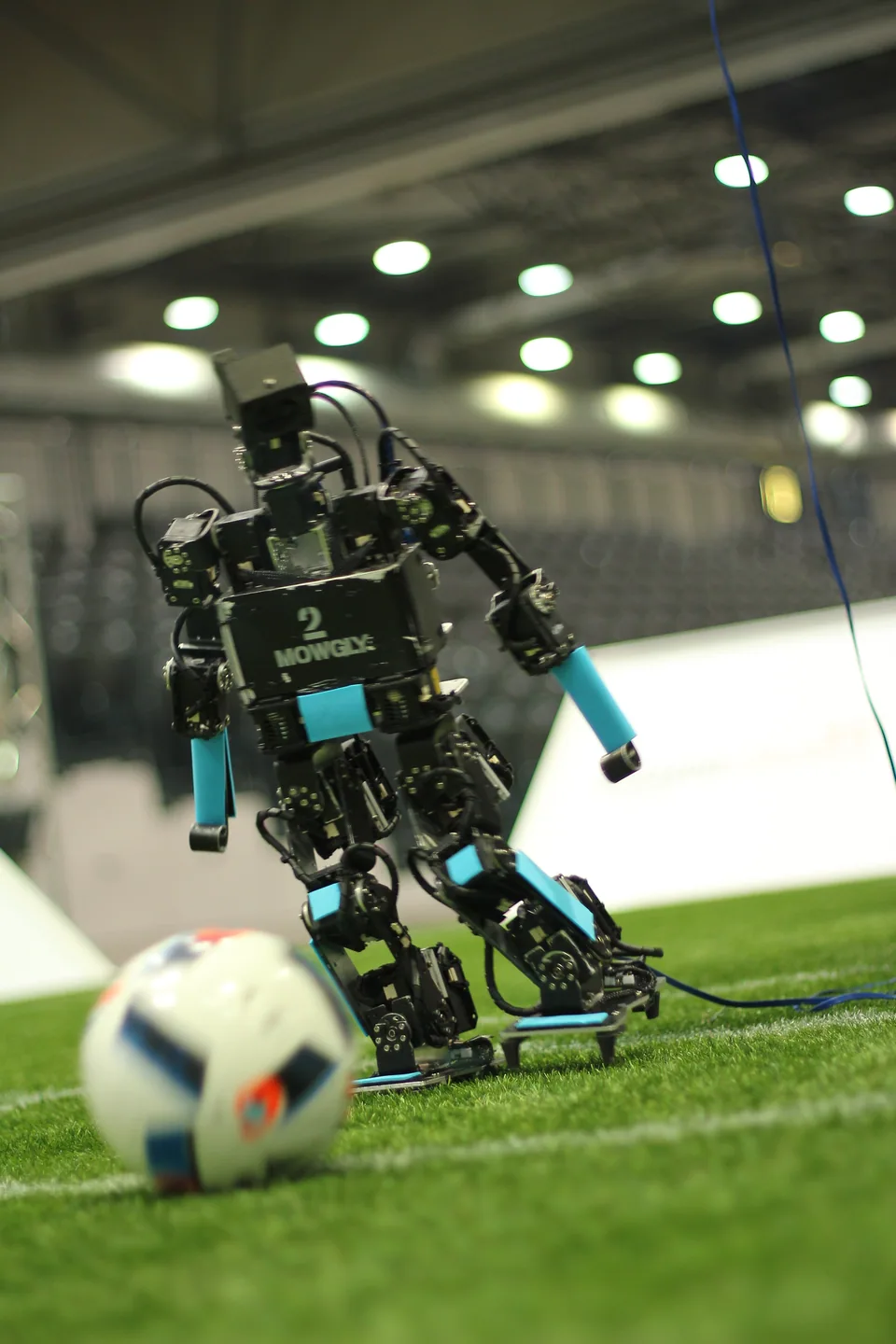
Rhoban Football Club (Bordeaux INP / Universite de Bordeaux)
Clearpath Robotics (Rockwell Automation)
The Dobot Magician reached the market as, according to the manufacturer, the world's first desktop 4-axis arm in the educational class. The manufacturer does not give a launch date or later versions.
What we do know is the context: Shenzhen-based Dobot started with educational arms such as the Magician and later expanded its range with the Dobot MG400 and the commercial Nova series with the Dobot Nova 2 and Dobot Nova 5. The Magician remains the beginning of that road: a compact entry point for students, universities and makers.
Yes, the model is available through the retailers in Poland listed on this page.
Learning robot programming in schools and universities; it also supports 3D printing, laser engraving, and writing and drawing.
0.5 kg, with an arm weight of 3.4 kg and 4 degrees of freedom.
No. Its low payload and only 4 DOF limit it to teaching uses; for production tasks Dobot offers models such as the MG400.
Author, source and licence of the photo are given in the caption. Shop links may become affiliate links in future, details: How we make money · How we check