on sale
Application: Agriculture
A laser that burns weeds without a gram of chemicals, a solar robot sowing with eight-millimeter accuracy: the field is no longer the exclusive domain of the tractor and the hoe.
This page is informational and has not been reviewed by a named expert (lawyer, tax adviser, safety engineer or physician). It is not legal, tax, medical or certification advice; for decisions (for example reimbursement, the robotization tax relief, data protection or safety), check the rules and standards in the official sources.
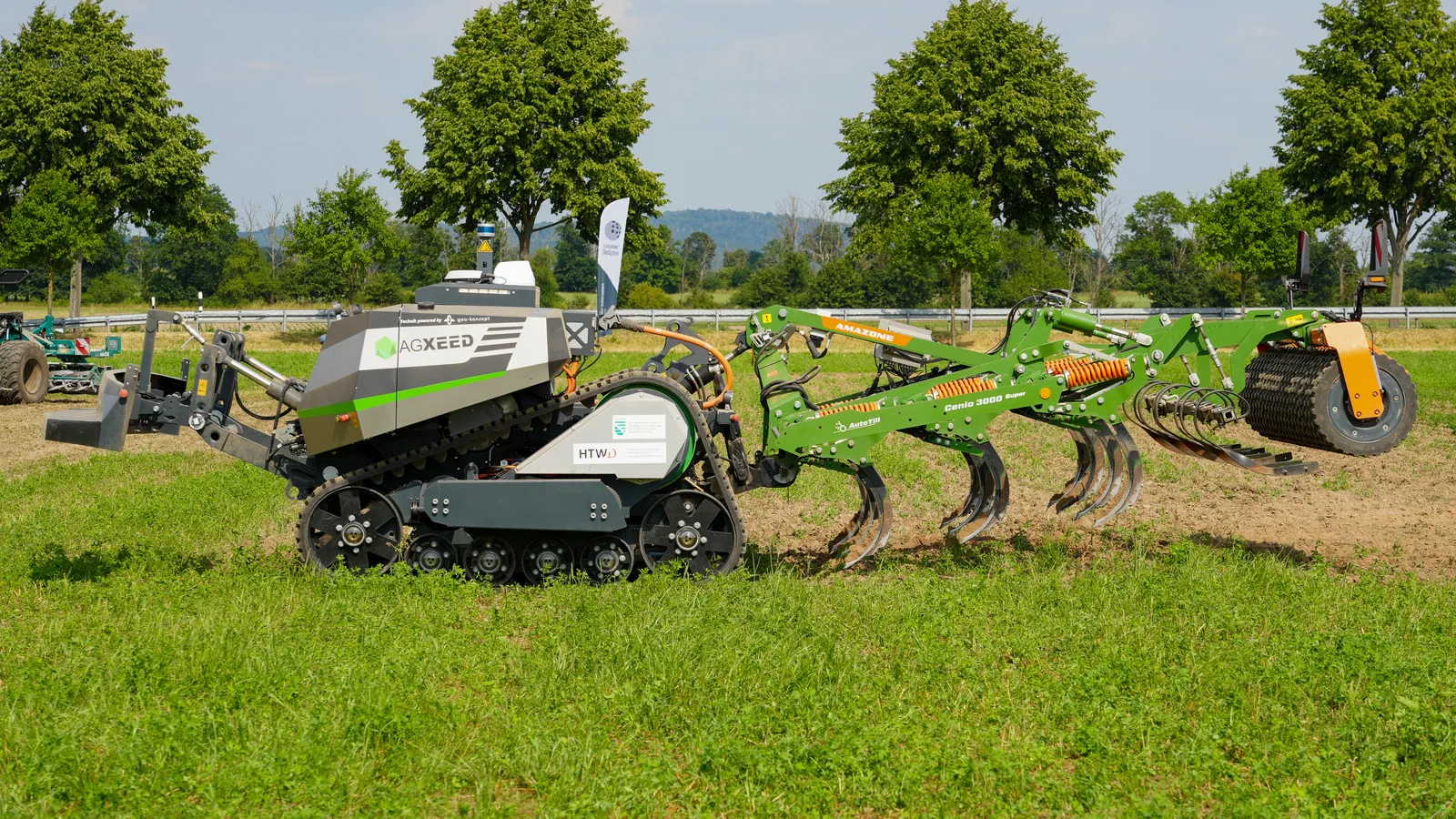
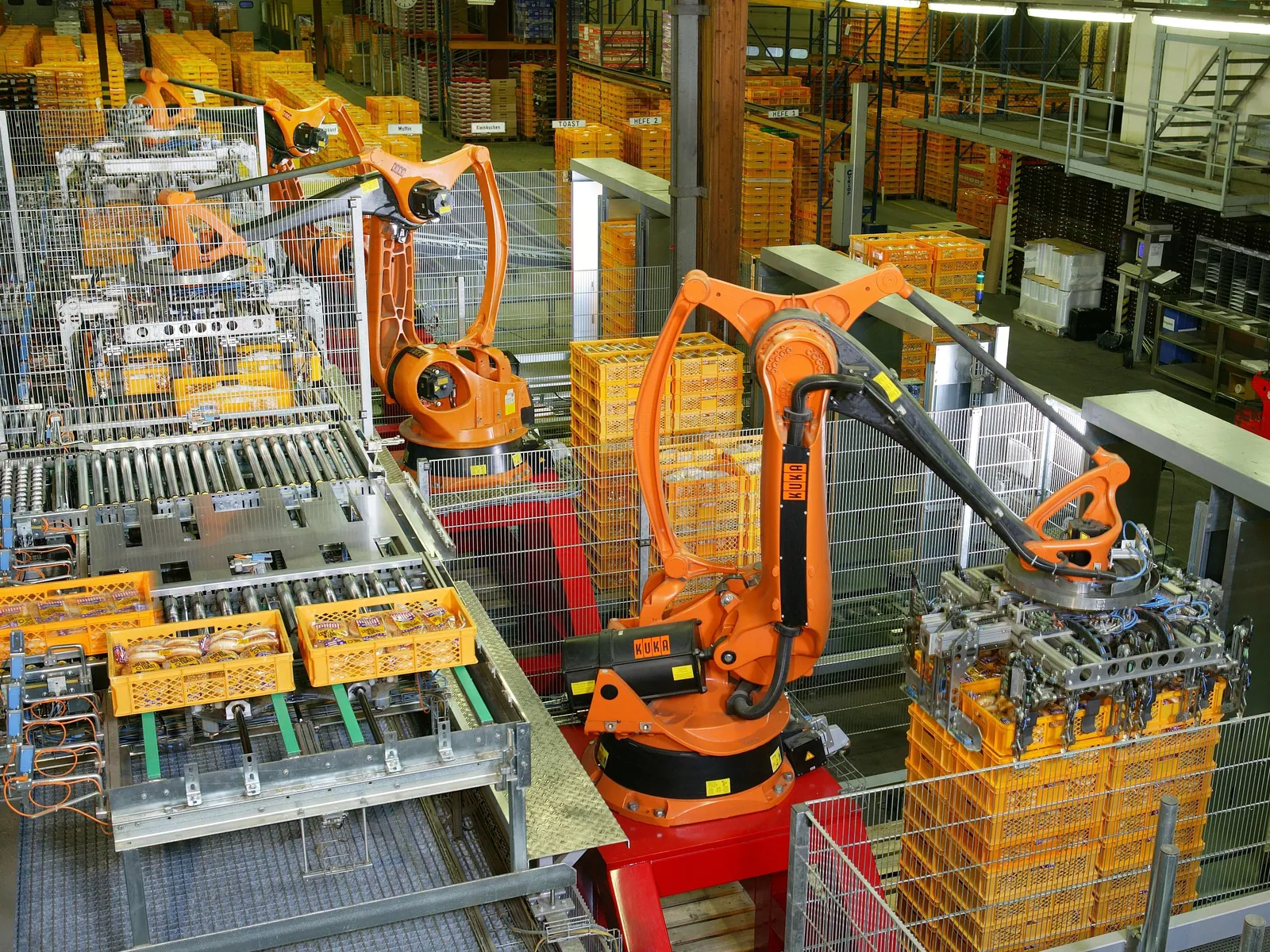
Photo: MarcelX42, Wikimedia Commons, CC BY-SA 4.0; resized and converted to WebP
In row crops such as beets or onions, work is decided by a short weeding window, and regulations limit the use of chemicals. In Poland a specific structure adds to this: the average farm has a few more than ten hectares of farmland (GUS). That is not a size that makes it easy to earn back an investment in a robot costing hundreds of thousands of zloty. Unemployment in Poland is low (3.4% in July 2026 according to Eurostat, Polskie Radio; the GUS registered rate for August 2026 was 5.8%, GUS data of 23 September 2026, via money.pl), and in physical work (warehouses, production, agriculture) employers complain of trouble filling positions (see “Humanoid Robots and the Polish Labor Market”).
Three real tasks: sowing with recorded seed positions, mechanical or laser weeding, and precision spraying. Everything beyond that is at the prototype or pilot stage.
The best example is the Danish FarmDroid. The FD60 model handles, according to the manufacturer, up to 18 hectares a day and is recommended for about 60 hectares per season; its battery is charged by solar panels and a built-in range extender, and it records the position of each sown seed with a claimed accuracy of 8 mm (FarmDroid). That lets it hit the spaces between plants, not the plants, during mechanical weeding. More detail in the article “Robots in Farming: How Field Automation Looks in Poland”.
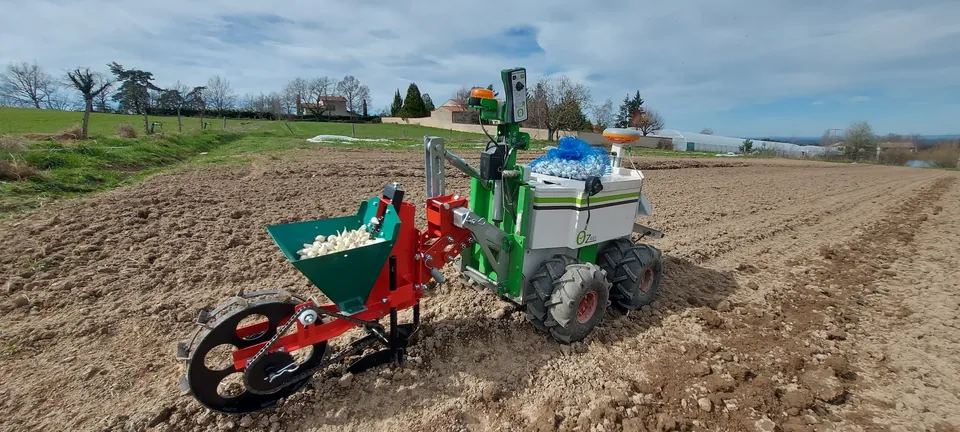
Naio Oz is a compact robot for small vegetable farms from Escalquens (Naio Technologies). Payload 60 kg, up to 8 hours of work, GNSS RTK navigation along a field map (Naio). It sows, weeds, loosens soil and carries loads. Price on request only; we have not confirmed a distributor in Poland.
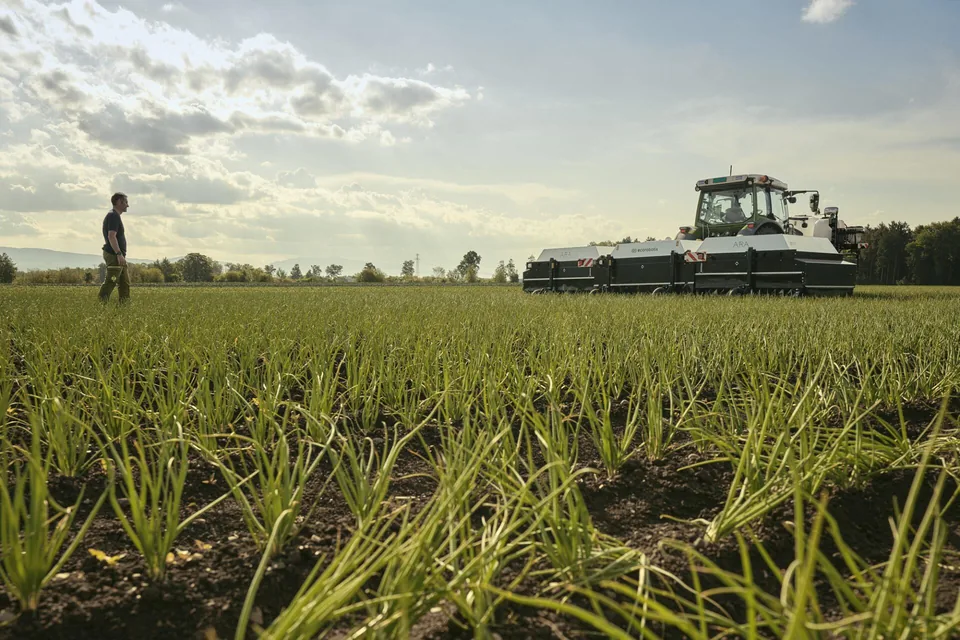
Ecorobotix ARA is a Swiss precision sprayer (maker: Ecorobotix). The ARA620 has a working speed of up to 7.2 km/h (2 m/s), 6 camera modules and 156 nozzles spaced 4 cm apart, and its rear module weighs 1,200 kg (Ecorobotix). According to the manufacturer, it cuts plant-protection product use by as much as 95% compared with spraying the whole area. We stress: that is a manufacturer claim. Ecorobotix also says its machines work in over 20 countries, but the list of those countries has not been independently confirmed.
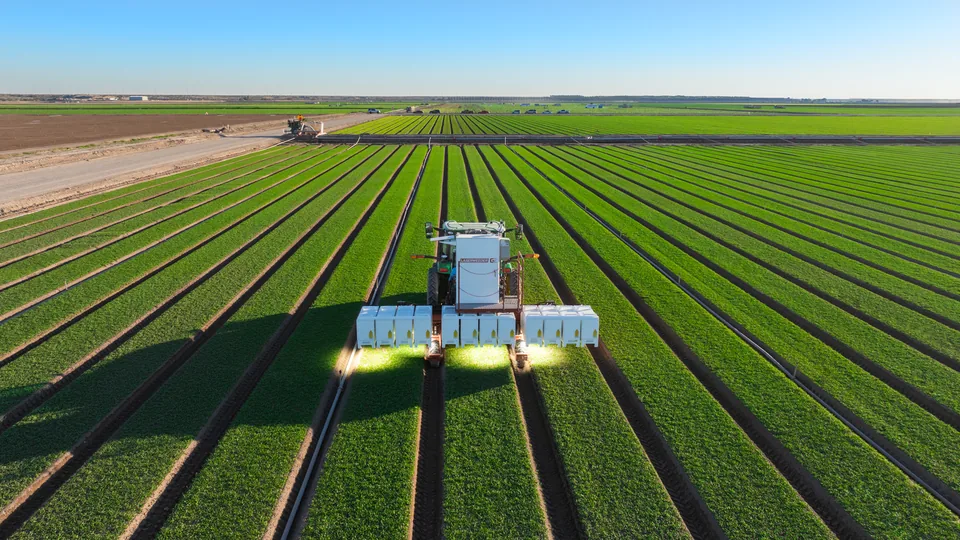
Carbon Robotics LaserWeeder is an American LaserWeeder pulled by a tractor (maker: Carbon Robotics). It has 42 cameras and 30 lasers of 150 W each, and according to the manufacturer it has more than 100 users in North America, Europe and Australia since its commercial launch in February 2022. It needs a tractor of at least 175 hp (Carbon Robotics). The price has not been disclosed, and presence in Poland has not been confirmed.
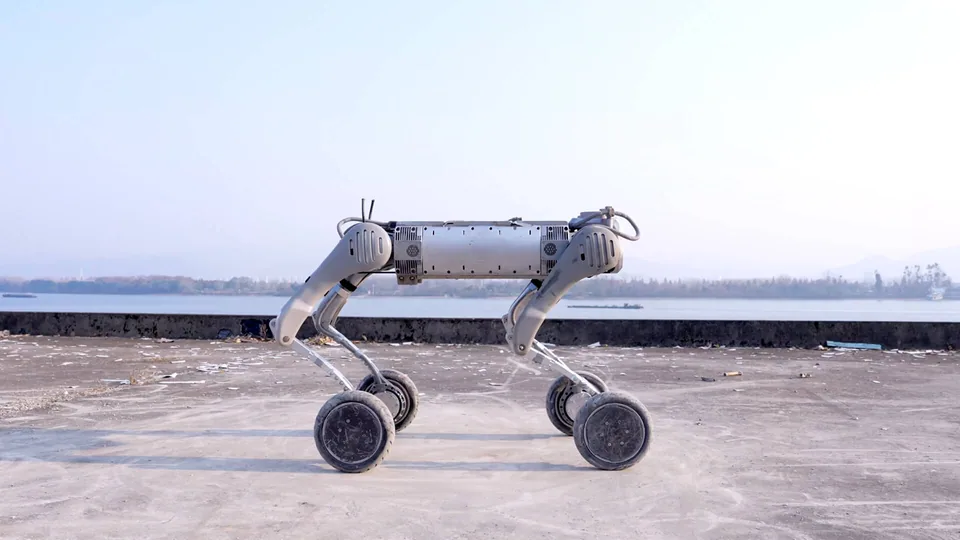
Unitree B2-W is an industrial wheeled quadruped that is not an agricultural robot, but it shows where transport in rough terrain is heading: payload up to 120 kg (x-kom). In Poland you can buy it at x-kom for PLN 349,000 (≈ EUR 79,970 at NBP rate 4.3641 of 21 October 2026) (price checked on 2 October 2026). The seller points to logistics, education and demonstrations for it, not agriculture, so treat it as inspiration, not a recommendation.
It is worth knowing that we are not merely an importer. The Poznań Institute of Technology and the Institute of Aviation from the Łukasiewicz Research Network, together with the company Unia, built an autonomous field robot for maize called "Polski Robot": it has a precision spot seeder, a sprayer and a mechanical weeding module with cameras, and according to Łukasiewicz it is soon to reach the market (Łukasiewicz). Husarion makes mobile terrain platforms such as the Panther (55 kg, payload up to 120 kg), which the manufacturer points to for agriculture, construction and inspection (Husarion); it sells them as a base for integrators, not as a ready-made robot for the farmer. More on domestic companies: “Polish Robotics Companies”. Autonomous tractors, such as those from the Dutch AgXeed, are a separate and more expensive class of machine.
A robot of the FarmDroid FD60 class (recommended for about 60 ha per season, according to the manufacturer) fits the profile of a large, compact field with row crops: sowing and weeding in one pass, less dependence on seasonal workers. With an average farm of a little over ten hectares (GUS), buying such a robot rarely pays back. The solution is often renting for a season, a joint purchase by several farms, or a service provided by a specialist company. Gradual digitalization is often enough here: GPS navigation and section control of spraying deliver part of the savings at a fraction of a robot's price.
The distribution market is narrow. Ask the manufacturer and importer about FarmDroid availability in Poland. Naio, Ecorobotix and Carbon Robotics have no Polish distributors known to us, so contact them directly and ask about pilots or trials in your region. Until a Polish dealer with service sells specific robots, count on the risk: a long repair time in season is a real cost.
We do not state prices that have not been confirmed. The honest reasoning goes like this: a robot replaces part of seasonal labor and of plant protection products. The robotization tax relief does not cover agricultural activity (“Poland's Robotization Tax Relief”; podatki.gov.pl), so farmers should look for support in agricultural programs and EU competitions, such as KPO and FENG. Check current calls directly at mapadotacji.gov.pl, kpo.gov.pl and parp.gov.pl; we have not confirmed budgets for 2026.
First: do you have row crops on a compact area? Sowing and weeding robots assume rows and repeatable spacing, so meadows, orchards and irregularly shaped fields are not their terrain. Second: who is your service provider at the peak of the season? A breakdown in May, when weeds are growing, costs more than the robot itself, so ask about response time and spare parts. Third: is the RTK signal (satellite corrections) stable where you are and available without extra fees? Centimeter-level navigation is the foundation of robots like Naio Oz or FarmDroid. We also write about navigation and sensors in the entries for Hesai and Luxonis.
Agriculture is one of the most promising fields for robots and at the same time one of the least mature markets in Poland. The technology (laser, camera, RTK) works. The barriers are farm scale, price and service. If you run large, compact vegetable crops, start with a conversation with the FarmDroid importer and with renting. If you have a few hectares, start with digitalization and watch robots from the side. And anyone with a small garden will find practical tips in the garden section, and inspiration from other industries in warehouses. We cover robots from the specialist segment in the category “Specialist robots”.
A chief engineer by profession (technical head of a ship's machinery plant, licensed). Sets the site's editorial rules and is responsible for them; he does not read every page before publication.
Texts are prepared by the editorial team using AI tools. We compare data with primary sources on a sample basis, not page by page. Our rules are described here: How we check · About us
Recommended robots
Models chosen for this scenario, with prices and availability in Poland.
Unitree RoboticsQuadruped robots
Knowledge
FarmDroid, Poland's Łukasiewicz field robot and AgXeed autonomous tractors: an overview of agricultural robotization in Poland in 2026.
Poland's robotization tax relief (ulga na robotyzację) in 2026: rules, eligible costs, deduction size, a worked example and the status of the extension beyond 2026.
Clone Robotics, MAB Robotics, Nomagic, VersaBox and Łukasiewicz – PIAP: an overview of Polish robot builders, with data and sources.
Few, and we found no official statistics. According to the Polish distributor at the Agrotech 2025 fair, about 10 FarmDroid units were working (eight sold, four on trial), mainly at vegetable growers (Farmer.pl). Add the “Polski Robot” prototype from a Łukasiewicz Network consortium with the company Unia (Łukasiewicz) and the AgXeed autonomous tractors offered by Agrihandler.
Usually not if you buy it yourself. The average Polish holding has a few more than ten hectares of farmland (GUS data, Agriculture in 2024), while a robot of the FarmDroid FD60 class is meant for about 60 ha per season. Renting, contract services or shared equipment make sense.
The makers of Naio Oz, Ecorobotix ARA and Carbon Robotics LaserWeeder do not publish prices. You get a quote on request, and when buying directly from an importer usually without systemic subsidies. We do not repeat unverified estimates.
Not within agricultural activity. Poland's robotization tax relief (ulga na robotyzację) covers CIT and PIT taxpayers outside agricultural activity. Farmers should check calls under agricultural programs, including ARiMR and agricultural advisory centers, and KPO and FENG competitions, which are sometimes also open to agri-food companies.
The Carbon Robotics LaserWeeder recognizes crops and weeds with AI-driven cameras and aims the laser pulse only at the weed. According to the manufacturer, more than 100 farms in North America, Europe and Australia use the machine; that is a company claim, not an independent test.
Links to the material this text is based on. Before you base a decision on a figure from the article, check it at the source.
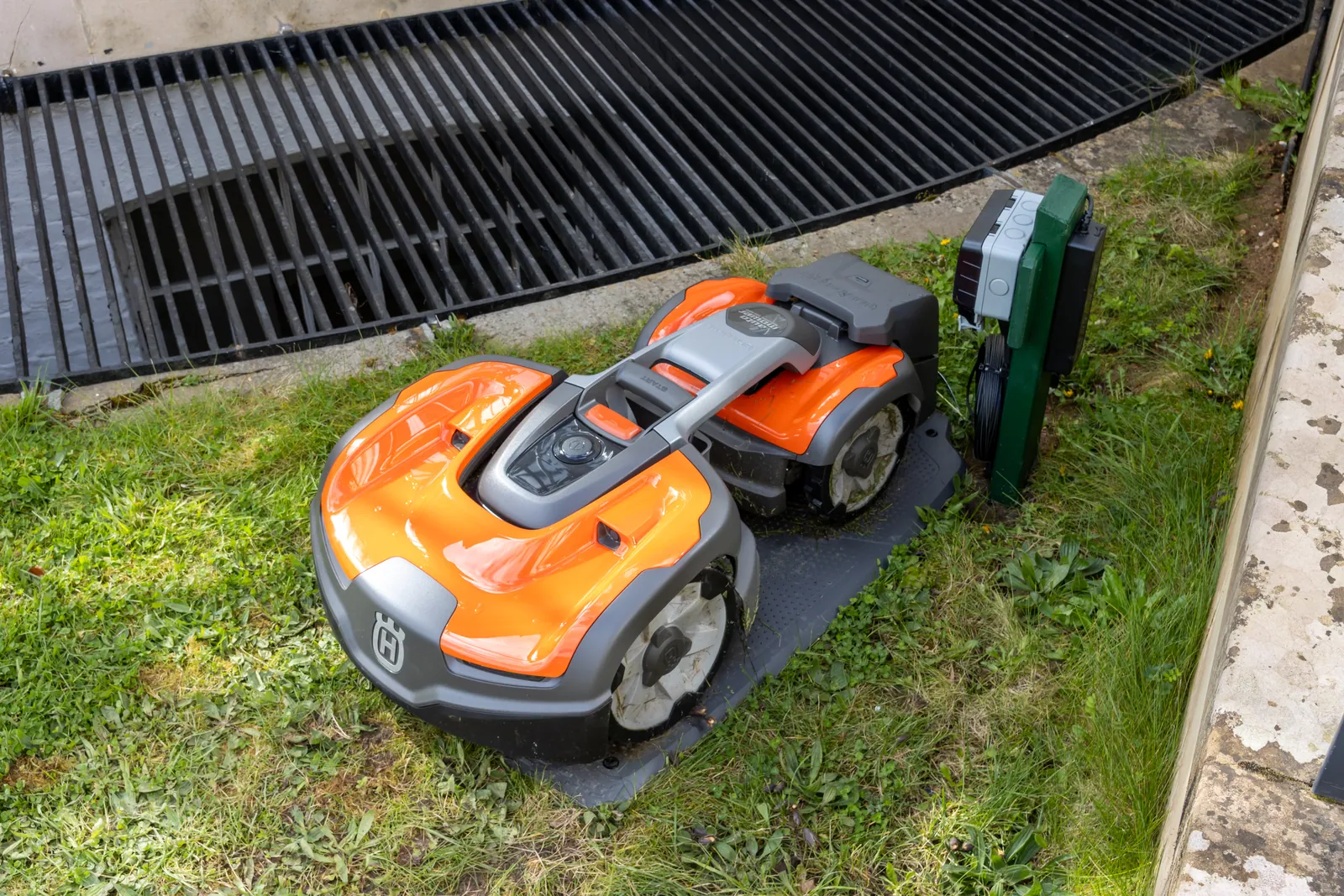
In the garden, robot mowers are mature; the Naio Oz is for professional vegetable growers, and the Unitree Go2 costs from about PLN 9,900 (≈ EUR 2,270) in Polish shops.
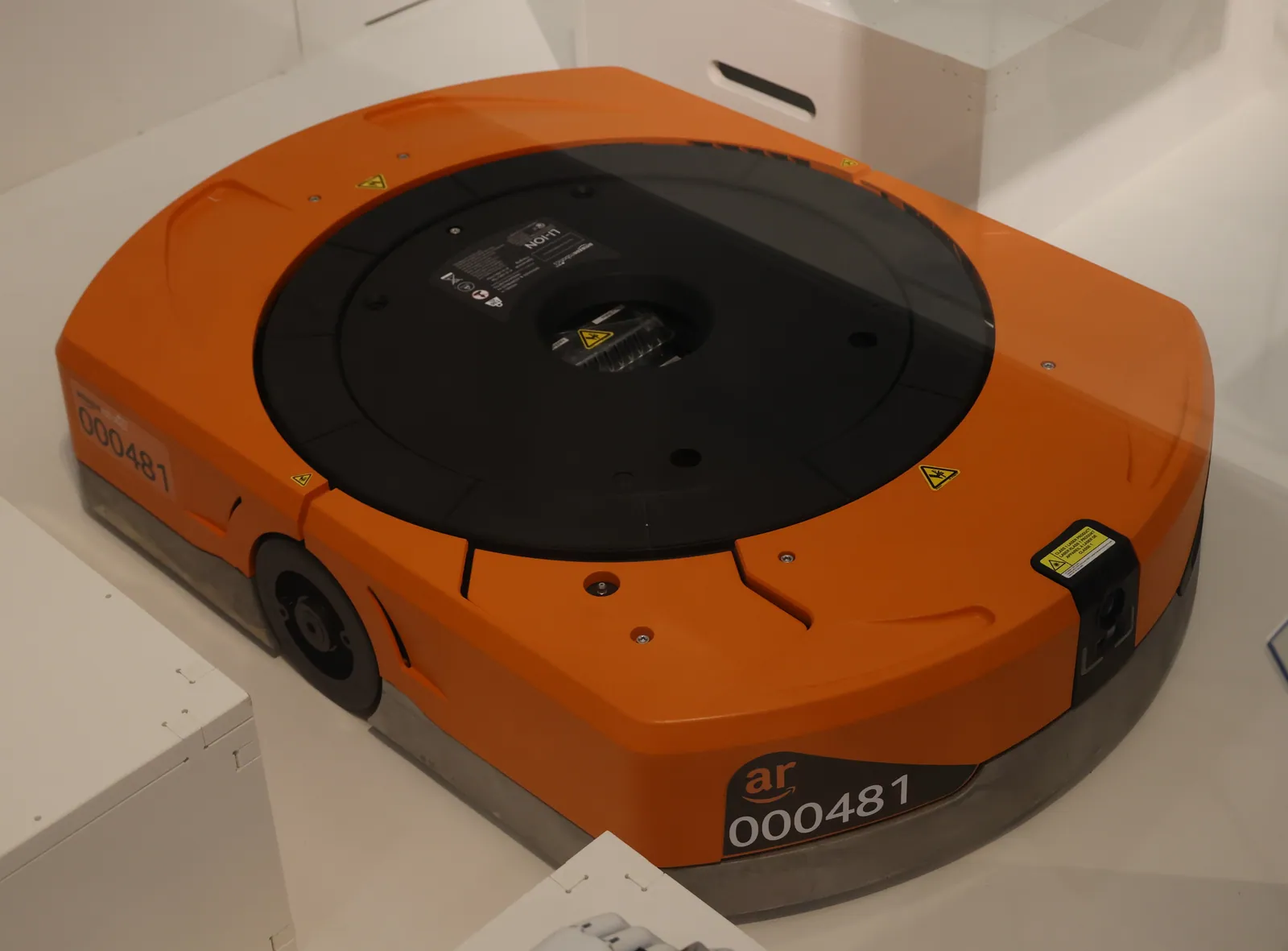
Robots really work here: Amazon reports more than 5,000 robots in its new Dobromierz center, and some AMR offers can be borrowed on trial.

Schools buy robots from USD 175 (Ozobot Evo) to robot arms for more than EUR 2,000; the LEGO SPIKE Prime 45678 was retired on 30 June 2026.
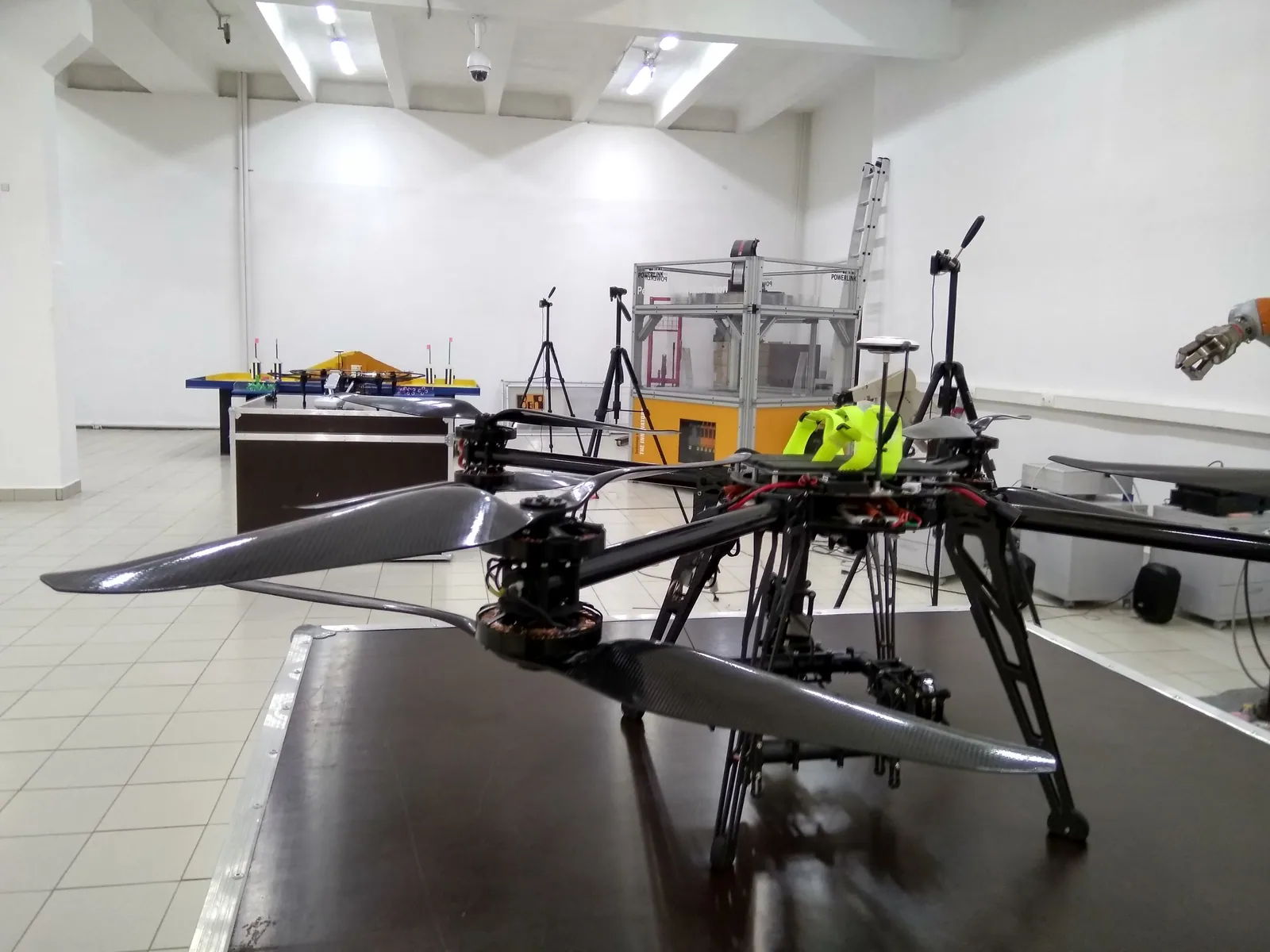
Universities buy research platforms: the Unitree G1 humanoid from USD 13,500, the Franka arm for about EUR 25,000, and the open SO-101 in parts for about USD 230.
What works in factories today is mainly cobots, mobile robots and classic industrial robots; humanoids are still at the pilot stage.