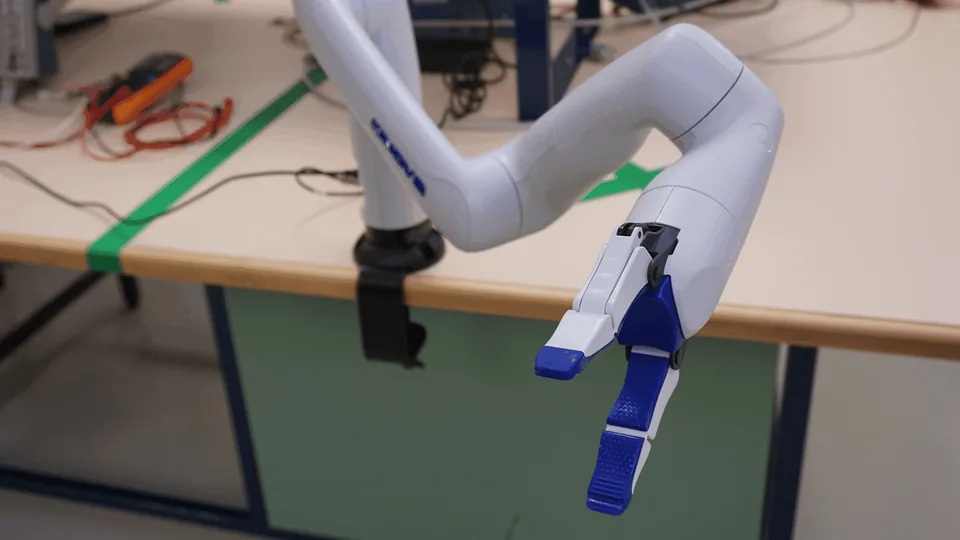
on sale
Price from
Trossen AI Stationary is the commercial successor to ALOHA, the much-talked-about open-source project from Stanford and Berkeley. The original ALOHA Stationary product page is now marked as discontinued, and the Trossen AI line has taken its place.
The kit is a stationary platform for bimanual teleoperation and imitation learning, shipped with a preinstalled Linux laptop and a ROS 2 software stack and designed for controlled lab conditions.
On the manufacturer's site (trossenrobotics.com/aloha), however, the "Stationary AI" tile carries no fixed, public price: there is only a "Get a Quote" button leading to a quote form at trossenrobotics.com/stationary-ai. The price of USD 23,995.95 on the same page belongs to the higher configuration of the different variant “Solo AI”, not to “Stationary AI”.
Even without a public price list, the positioning clearly points to research-lab hardware rather than schools or hobbyists: a dual-arm setup and ready-made software justify a bigger budget than single educational arms. The strengths are continuity with a project well known in the ML community and turnkey readiness; the weakness is the missing public price, which forces you to contact sales before buying.
There is no information on an official distributor in Poland; purchase is probably possible only directly from the manufacturer in the US, with international shipping.
Data checked: · Sources: 3
no data
We do not know the price of the Trossen AI Stationary, because the manufacturer does not publish it: the tile has only a "Get a Quote" button. The figure of USD 23,995.95 on the same page belongs to a higher configuration of the “Solo AI” variant, not to this model. It can serve only as a hint about the order of magnitude: as a rough estimate, a two-arm kit costs a few tens of thousands of dollars, but that is our guess, not a quote.
On top of the kit price, add shipping, customs duty and VAT (for a purchase from the US), possibly a table and lighting for the workstation, extra cameras and grippers, and the time of a PhD student or engineer for setup and data collection, which in research projects is often the biggest cost. Running costs are electricity and servicing, and support in Poland may require going through the manufacturer.
No confirmed distributor in Poland
Trossen AI Stationary is the commercial successor to ALOHA, the open-source bimanual teleoperation platform from Stanford and Berkeley that is well known in the machine-learning community. It is a stationary two-arm kit, shipped with a preinstalled Linux laptop and a ROS 2 stack, built for controlled lab conditions.
Use: collecting demonstrations and imitation learning. An operator guides the leader arms and the robot repeats the movements; the recordings become training data for control policies. Three uses are listed: imitation learning, bimanual manipulation and controlled lab environments.
Applications: “Universities and research” and laboratories. This is research equipment, not an educational toy. We cover the technology background in our article on VLA models and AI for robots, since kits like this are one source of the data used to train them.
Trossen AI Stationary is for research teams: university labs, corporate R&D departments and startups working on two-handed manipulation and learning from demonstration. If your team knows ROS 2, has PhD students and a research question, a turnkey kit saves months of building and calibrating your own ALOHA.
It is not for schools, hobbyists or production departments looking for a robot to work on a line. Nor is it for anyone who wants to know the price first: the manufacturer publishes no fixed price, only a "Get a Quote" form. We have no information about an official distributor in Poland, so buying probably means dealing directly with the manufacturer in the US and shipping internationally, which means customs duty, VAT and longer service turnaround.
The catalog lists no official national distributor. We know of no university or company that has announced a purchase, and we have no documented use case for this kit.
Universities buy research platforms: the Unitree G1 humanoid from USD 13,500, the Franka arm for about EUR 25,000, and the open SO-101 in parts for about USD 230.
In the lab, repeatability counts: from 5 micrometers (Meca500) to ±0.1 mm (Franka Research 3), with prices starting at about PLN 890 (≈ EUR 205 at NBP rate 4.3641 of 21 October 2026) (SO-101).
Alternatives depend on your research goal. Kinova Gen3 Lite is a 6-axis arm for education and light manipulation with a 0.5 kg payload and 760 mm reach; it is a single arm, not a two-handed kit, and no public price is listed. Dobot Magician is a desktop four-axis arm at a fraction of the price, available in Poland from botland.com.pl and stem-polska.pl, but in a completely different class.
If you are studying a whole humanoid rather than just arms: ToddlerBot is an open-source research humanoid (3.7 kg, 30 DOF, 3D-printable) with no commercial price. ROBOTIS OP3 is an open research and education humanoid (51 cm, 20 DOF), sold since 2018 and available in Poland through generationrobots.com. NAO is a long-standing educational robot, but the manufacturer's future is uncertain after Aldebaran's insolvency.
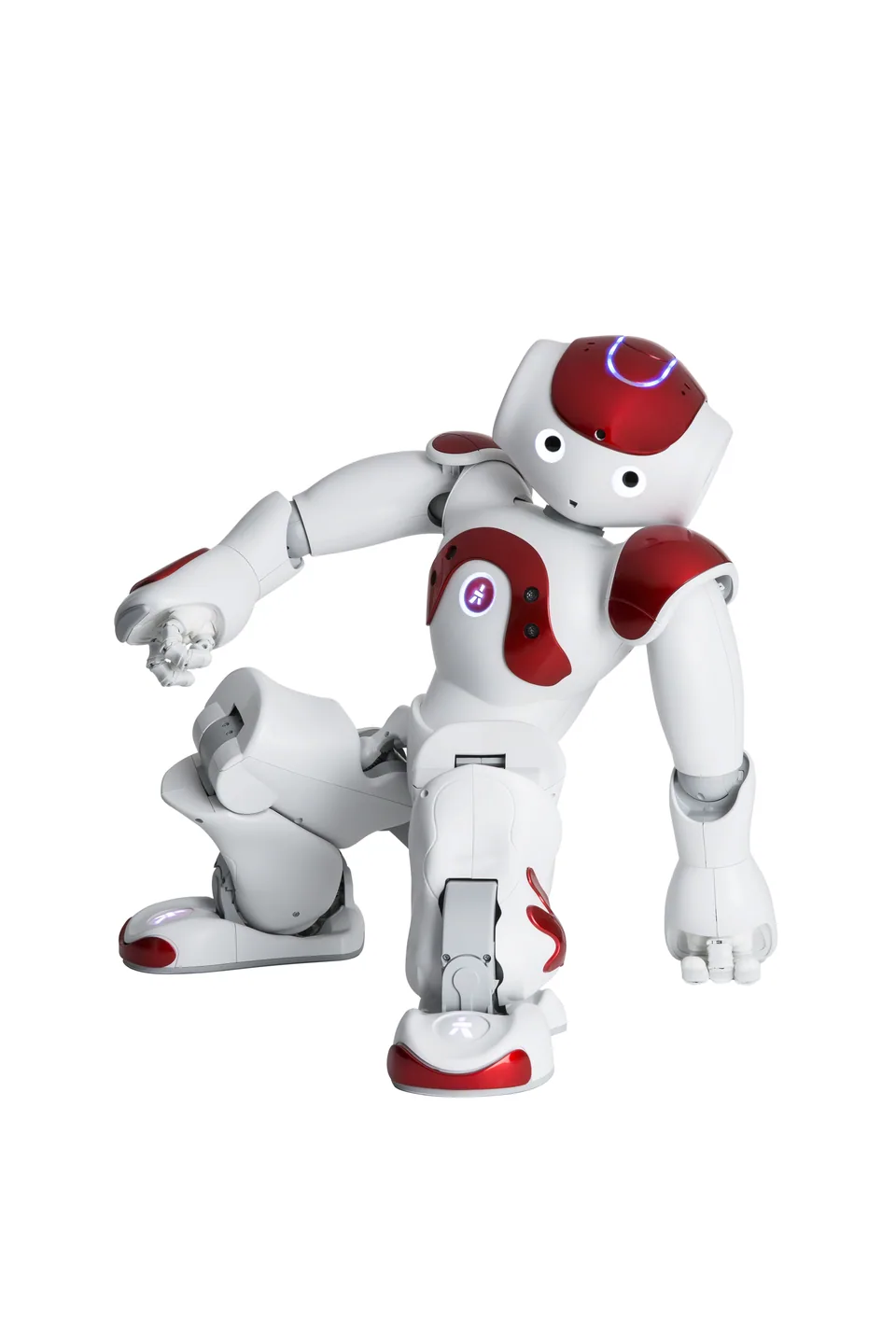
Aldebaran / SoftBank Robotics / United Robotics Group (now Maxtronics)
MangDang Technology Co., Limited
The story of Trossen AI Stationary begins with ALOHA, the open-source bimanual teleoperation project from Stanford and Berkeley that became a popular starting point for research on learning from demonstration. Trossen Robotics, a company based in Downers Grove, Illinois, turned that idea into a product. The original ALOHA Stationary page is now marked as discontinued, and the Trossen AI line has taken its place.
We have no launch date or numbered generations, so we will not guess. What matters is the change in character: from a research project to a ready-made kit with a laptop, ROS 2 and manufacturer support.
No. The manufacturer Trossen Robotics (USA) names no Polish shop or official distributor for the Trossen AI Stationary (successor to ALOHA); enquiries go through the manufacturer's website (trossenrobotics.com). Confirm service in Poland before buying.
The manufacturer lists no fixed price for the "Stationary AI"; the page offers only a quote form (Get a Quote). The price of USD 23,995.95 on the same page belongs to the “Solo AI” variant in a higher configuration, not to this model.
It is a bimanual, stationary platform for teleoperation and imitation learning, the commercial successor to the ALOHA project.
Primarily for research labs working on manipulation and machine learning, not for schools or hobbyists.
Author, source and licence of the photo are given in the caption. Shop links may become affiliate links in future, details: How we make money · How we check