In this article
Key facts
- Models coveredUR3e, UR20, ABB GoFa CRB 15000
- Prices of the models covered135,667 PLN (≈ EUR 31,090 at NBP rate 4.3641 of 21 October 2026) – 147,724 PLN (≈ EUR 33,850)
- Covered models available in Poland2 of 4
- Number of sources7
- Reading time6 min
Where to start: defining the application
Buying a cobot begins not with choosing a model but with describing the task it is to perform. Before the first contact with a supplier, the production department should establish a few hard parameters: what part is being moved or processed, its mass and geometry, the required cycle time, the environment the robot will work in (temperature, dust, proximity to people), and whether the workstation will handle one process or several interchangeable ones.
This stage determines the payload class and reach of the arm, and that narrows the list of realistic candidates faster than comparing catalog specifications. Light electronics assembly and CNC machine tending are entirely different requirements from palletizing 20 kg sacks. Low-payload models such as the UR3e suit small-part assembly and quality inspection, while heavier tasks, such as machine tending and palletizing, call for a class close to the UR20 or comparable designs from other manufacturers. The difference between a cobot and a classic industrial robot, and when it is worth considering the latter, is covered separately: “Cobot or Industrial Robot”.
At this stage it is also worth writing down what the workstation should NOT do. Limiting the scope of the task makes it easier to compare integrators' offers later, since they tend to expand a project beyond the original need.
Finding an integrator
The cobot manufacturer itself rarely deploys the workstation; in Poland, sales and integration are handled by distributors and independent integrators, often authorized by a specific brand. An example is Doosan Robotics, which entered the Polish market in 2021 through a local partner, Transition Technologies-Control Solutions (Elektrotechnik Automatyk) — this is how a global cobot maker often enters a market rather than selling directly. Check the current list of authorized partners of a given brand with the manufacturer.
When choosing an integrator, check three things before the question of price comes up: - Experience in a similar application: projects in the same industry or a similar process (not just "we do automation" in a generic offer). - Scope of responsibility: whether the integrator delivers a complete workstation with risk assessment, documentation and training, or only mounts the arm and leaves the rest to the customer. - Post-deployment service availability: location of the service technician, response time, availability of spare parts; this often matters more than the initial price, especially with brands less widespread in Poland.
Ask for references you can actually contact, not just a list of client logos on the website.
Safety and risk assessment
Before a cobot goes onto the shop floor, a formal risk assessment of the specific application is required, not of the robot as a product. The fact that the manufacturer calls the machine "collaborative" does not remove this obligation: the real safety of human-robot collaboration depends on the end tool (gripper) used, the speed, the mass of the part being carried and the specific layout of the workstation.
The reference points are the ISO 10218 standards (safety of industrial robots, part 1 for the robot itself, part 2 for the integrated application, 2025 editions: -1 and -2) and the supplementary technical specification ISO/TS 15066, devoted to human-robot collaboration, whose requirements were largely incorporated into ISO 10218-2:2025 according to industry commentary. In Poland the obligation to assess occupational risk follows from the Labour Code (Article 226), and working conditions are supervised by the National Labour Inspectorate (Państwowa Inspekcja Pracy). A detailed discussion of both standards, including the four modes of human-robot collaboration and the force and pressure limits on contact, is in a separate article: “Robot Safety Standards”. One practical rule is worth remembering here: the integrator should carry out the risk assessment and the choice of collaboration mode together with the workstation documentation; it cannot be "bought" as a ready-made certificate for the robot alone.
Comparing offers: what to look at besides the arm price
Integrators' offers can be hard to compare, because they split the same costs across line items differently. Break each offer down into the same categories and check whether the supplier included all of them:
- Price of the robot arm itself: the most comparable item, usually known from a price list or distributor's offer.
- Integration and engineering: programming, workstation design, commissioning; according to industry breakdowns, one of the most frequently underestimated items in a project.
- Gripper and end-of-arm tooling: selected separately for the specific task and rarely included in the robot's catalog price.
- Sensors and vision systems: if the application requires them (quality inspection, locating randomly placed parts).
- Operator training: one-off deployment training, plus any additional training for programming your own process changes.
- Service and maintenance: service agreement, parts availability, response time.
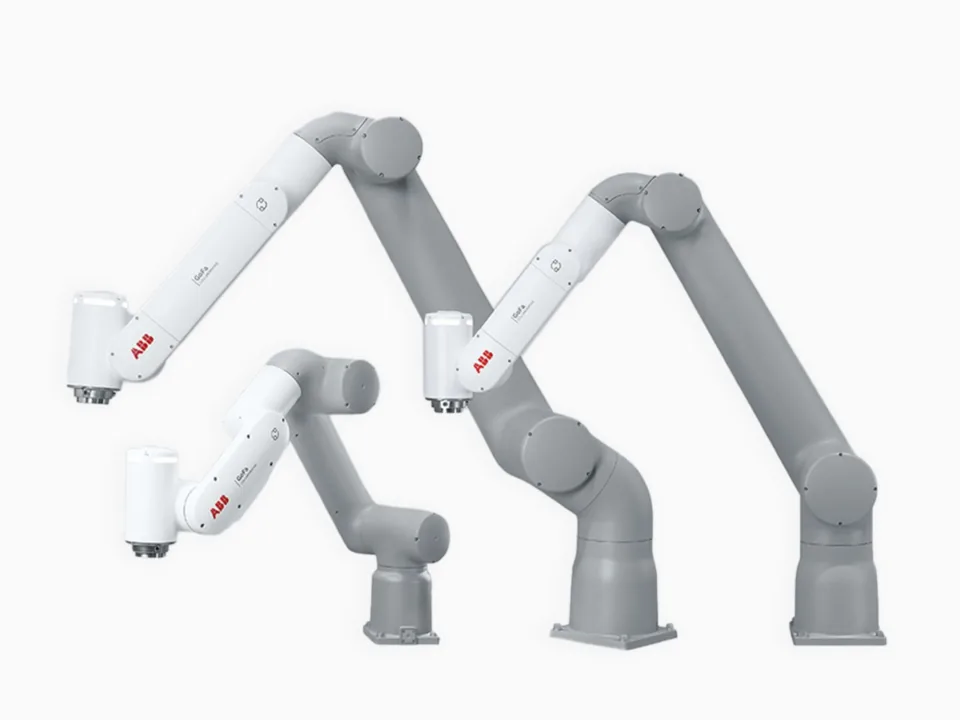
Arm prices differ widely between manufacturers and payload classes. For example, the ABB GoFa ABB GoFa CRB 15000 is priced by the German reseller Unchained Robotics at EUR 30,000-37,500 net for the arm alone (Unchained Robotics), and Standard Bots Standard Bots RO1 gives in its own comparison a price from $37,000 (Standard Bots). These are arm prices only, without integration, gripper and training, so they should not be treated as the total cost of deployment.
Real total cost, without guesswork
For the Polish market there is no confirmed, current data on the overall cost of deploying a cobot in PLN. Distributors price projects individually, and public price lists usually cover only the arm. No single "Polish" figure should therefore be given without a source.
The structure of costs is the same in any country, though: the price of the arm is only one item, next to which stand the gripper, tooling, vision system, safeguarding, integration, training and service. So ask the integrator for an offer broken down into these items and compare offers item by item, not by the price of the arm alone.
The practical conclusion for an offer: if an integrator quotes only the arm price without a breakdown into the other categories from the previous section, ask about the full cost of the integrated workstation before comparing it with a competitor's offer.
Funding and tax relief
Buying a cobot in Poland can be partly financed through several available support mechanisms, including Poland's robotization tax relief (ulga na robotyzację) and, depending on current calls, EU support programs (for example European Funds for a Modern Economy, FENG). None of these mechanisms usually covers the whole investment, and the conditions and call schedules change over time, so we describe the current rules, amounts and deadlines in a separate, continuously updated article: “Poland's Robotization Tax Relief”. Before placing an order, check there for the current state of the programs: the timing of a purchase is sometimes tied to the deadline of a funding call.
Commissioning and acceptance of the workstation
The last stage is commissioning and formal acceptance. Good practice is to split it into two moments: technical acceptance (the workstation works to specification, the production cycle time is met, the risk assessment documentation and manuals are delivered) and operational acceptance after a trial period (several weeks of work under normal production conditions, with real variation in material batches and staffing).
Before signing the acceptance protocol, check whether the integrator has handed over: complete safety documentation and the risk assessment of the application, an operating manual in Polish, the scope and date of operator training, and the terms of warranty and post-warranty service. The absence of any of these is a signal to withhold the final payment until it is supplied, not a problem to be sorted out "in passing" after commissioning.
More models and a comparison of payload classes, reach and prices of cobots available in Poland can be found in the category “Cobots”.
Frequently asked questions
How much does deploying a cobot in a Polish factory actually cost?
There is no confirmed, current data for the Polish market; distributors quote prices individually after analyzing the application. On top of the arm come the gripper and tooling, a vision system, guards or safety scanners, integration and training — each of these items is worth separating in the integrator's offer.
Does every cobot purchase require a formal risk assessment?
Yes. Regardless of whether the manufacturer calls the robot collaborative, an employer in Poland is obliged to assess and document occupational risk at the workstation (Labour Code, Article 226), and working conditions are supervised by the National Labour Inspectorate (Państwowa Inspekcja Pracy). The scope and methodology of the assessment for robots are covered in our article on ISO 10218 and ISO/TS 15066.
Is a cheaper cobot from a Chinese manufacturer always the worse choice?
Not automatically; it depends on service availability, an integrator familiar with the brand in Poland and the completeness of the safety documentation. The price of the arm is only part of the purchasing decision, and a lack of local service support can cost more than a higher initial price.
How long does it take from the purchase decision to commissioning the workstation?
There is no confirmed, averaged data for the Polish market. The time depends on the complexity of the application, the integrator's availability and the lead time for the gripper; ask for a realistic date at the request-for-quotation stage rather than assuming one in advance.
Does public funding cover the whole cost of a cobot deployment?
No. The available mechanisms (including Poland's robotization tax relief, ulga na robotyzację) usually reduce the tax burden or cover part of the costs, not the whole. We describe the details and current rules separately.
Sources
Links to the material this text is based on. Before you base a decision on a figure from the article, check it at the source.
- iso.org/standard/73933.html
- iso.org/standard/73934.html
- iso.org/standard/62996.html
- isap.sejm.gov.pl/isap.nsf/DocDetails.xsp?id=WDU19740240141
- unchainedrobotics.de/en/products/robot/cobot/abb-gofa-crb-15000
- standardbots.com/blog/collaborative-robot-prices-the-ultimate-guide
- elektrotechnikautomatyk.pl/artykuly/coboty-zrewolucjonizuja-polski-przemysl
About the authors
A chief engineer by profession (technical head of a ship's machinery plant, licensed). Sets the site's editorial rules and is responsible for them; he does not read every page before publication.
Texts are prepared by the editorial team using AI tools. We compare data with primary sources on a sample basis, not page by page. Our rules are described here: How we check · About us