on sale
Price from
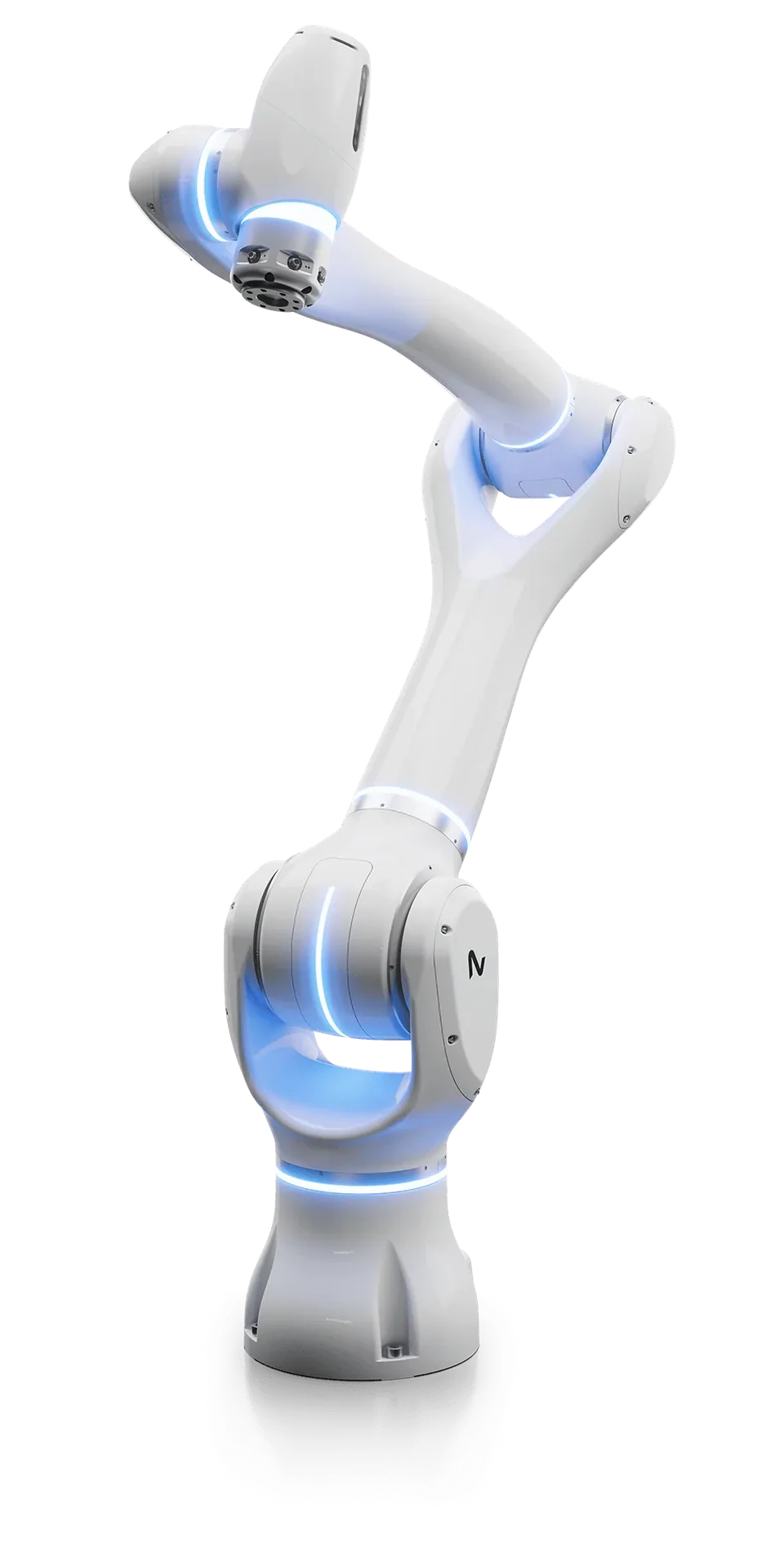
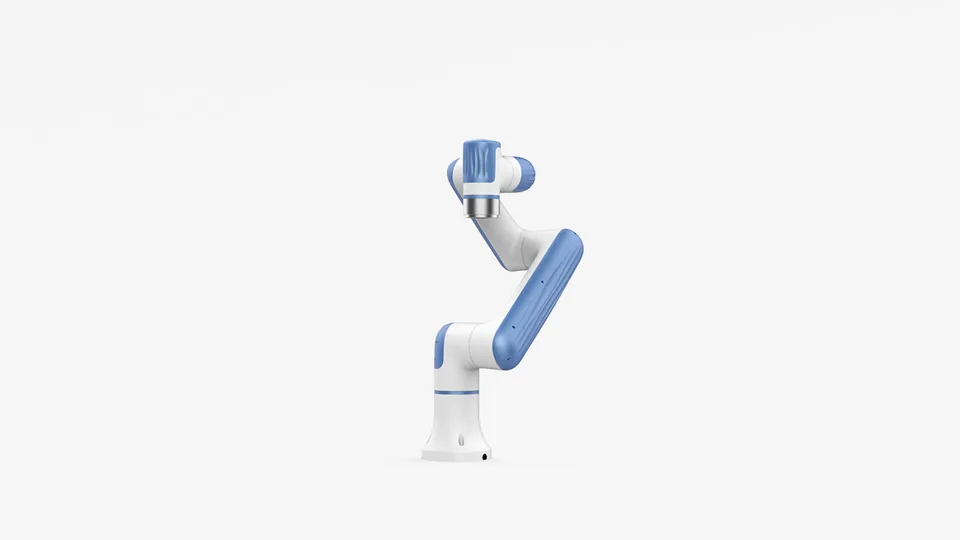
The Franka Research 3 (FR3), successor to the popular Panda, is a German collaborative arm with 7 degrees of freedom, a 3 kg payload and an 855 mm reach, with ±0.1 mm repeatability. Each of its seven joints has a built-in torque sensor, which allows force control at 1 kHz and makes the FR3 a popular choice when moving from research to production on tasks that need a feel for force.
The controller is based on an Intel processor and runs Linux, and open software (the libfranka library, ROS integration) eases research integration. The price is not officially published; available sources give a spread of roughly USD 25,000 to 35,000, and the midpoint of USD 30,000 is used here (about PLN 116,300 (≈ EUR 26,650) at a rate of 3.8762 from 1.10.2026), which should be treated as a guideline, not a price list.
Against the Flexiv Rizon 4 (4 kg, 876 mm), the FR3 has a slightly lower payload and a slightly shorter reach (855 mm), but a comparable class of force sensors. Strength: a mature, open programming platform. Weakness: a payload limited to 3 kg compared with Chinese and Danish competitors at a similar price.
It suits research labs and production with assembly that needs precise force control, and less so tasks with heavier loads.
Data checked: · Sources: 4
Data from manufacturer datasheets and product pages; median over the models of this category in the database.
Quoted prices vary by source between roughly USD 25,000 and 35,000; there is no official list price, so an estimated average from several sellers is given here.
Purchase: there is no official price list. Sources give a range of USD 25,000-35,000; we took the midpoint, USD 30,000, or about PLN 116,300 (≈ EUR 26,650) at a rate of 3.8762 from 1.10.2026. That is an estimate, not an offer. Vention lists the FR3 at EUR 25,250 with 17 days' delivery. In practice the price depends on configuration and distributor; ask for a quote including shipping and check whether the controller is included.
Operation: the Intel-based controller running Linux requires a workstation or your own integration, and most teams will add a gripper (suppliers on file include Robotiq and OnRobot) and, if needed, an external force sensor (ATI Industrial Automation). As an estimate: PLN 10,000-25,000 (≈ EUR 2,290–5,730) for accessories and the workstation.
Training: for a team with ROS experience, days, not weeks; for everyone else, a few weeks to get into libfranka. The manufacturer's training package has no public price.
Subsidies and tax relief: universities and institutes can fund the purchase from research grants; companies can check “Poland's Robotization Tax Relief” (Poland's robotization tax relief, ulga na robotyzację). What you will pay over years of use, calculate with the method in “Humanoid Robot TCO: How to Calculate Total Cost”.
No confirmed distributor in Poland
The Franka Research 3 is not a robot for shop-floor work at thousands of cycles a day; it is a tool for teaching machines to touch. Each of its seven joints has a torque sensor, and force control runs at 1 kHz, which gives the robot something like a sense of feel.
There are four concrete scenarios. First, research on manipulation and robot learning in the laboratory and at the university; the open libfranka library and ROS integration mean you can write your own control, not just command positions. Second, prototyping force-controlled assembly: inserting parts with tight tolerances, snapping in clips, where a rigid trajectory fails. Third, research on control learned from data (“VLA Models: How AI Controls Humanoid Robots in 2026”), which needs a repeatable platform for collecting demonstrations. Fourth, teaching in mechatronics programs.
Specifications: 3 kg payload, 855 mm reach, ±0.1 mm repeatability, 7 degrees of freedom (“Degrees of Freedom (DOF) in Humanoid Robots”), weight 18 kg. The seventh axis provides redundancy: the arm can reposition its “elbow” without moving the tip, which helps avoid obstacles in a tight cell. For a production line, choose an industrial cobot instead (“What Is a Cobot and How Does It Differ from an Industrial Robot”).
Best suited to: research centers, universities and R&D teams working on force control, reinforcement learning or imitation. It also makes sense for companies moving from prototype to deployment that need an arm with force sensors in the joints, without buying external sensors.
Who it doesn't: plants looking for the cheapest arm for palletizing and simple pick-and-place. The 3 kg payload is a limit, and a price of USD 25,000-35,000 with sensors in every joint means overpaying for features you won't use. Also not for newcomers without a programming background: the platform's strength lies in its openness and demands skill. If you are building a production workstation, first read “How to Buy a Cobot Step by Step” and check the requirements in “Robot Safety Standards”.
We have no named customers or deployment dates for the FR3; we can only point to typical applications: force-controlled assembly, research work and prototyping.
What is in the category: in Poland, Universal Robots (Universal Robots), ABB (ABB Robotics) and FANUC (FANUC) operate officially, and their cobots can be bought through local distributors, for example the ABB GoFa CRB 15000 for about PLN 148,000 (≈ EUR 33,910). For the FR3, look to European resellers.
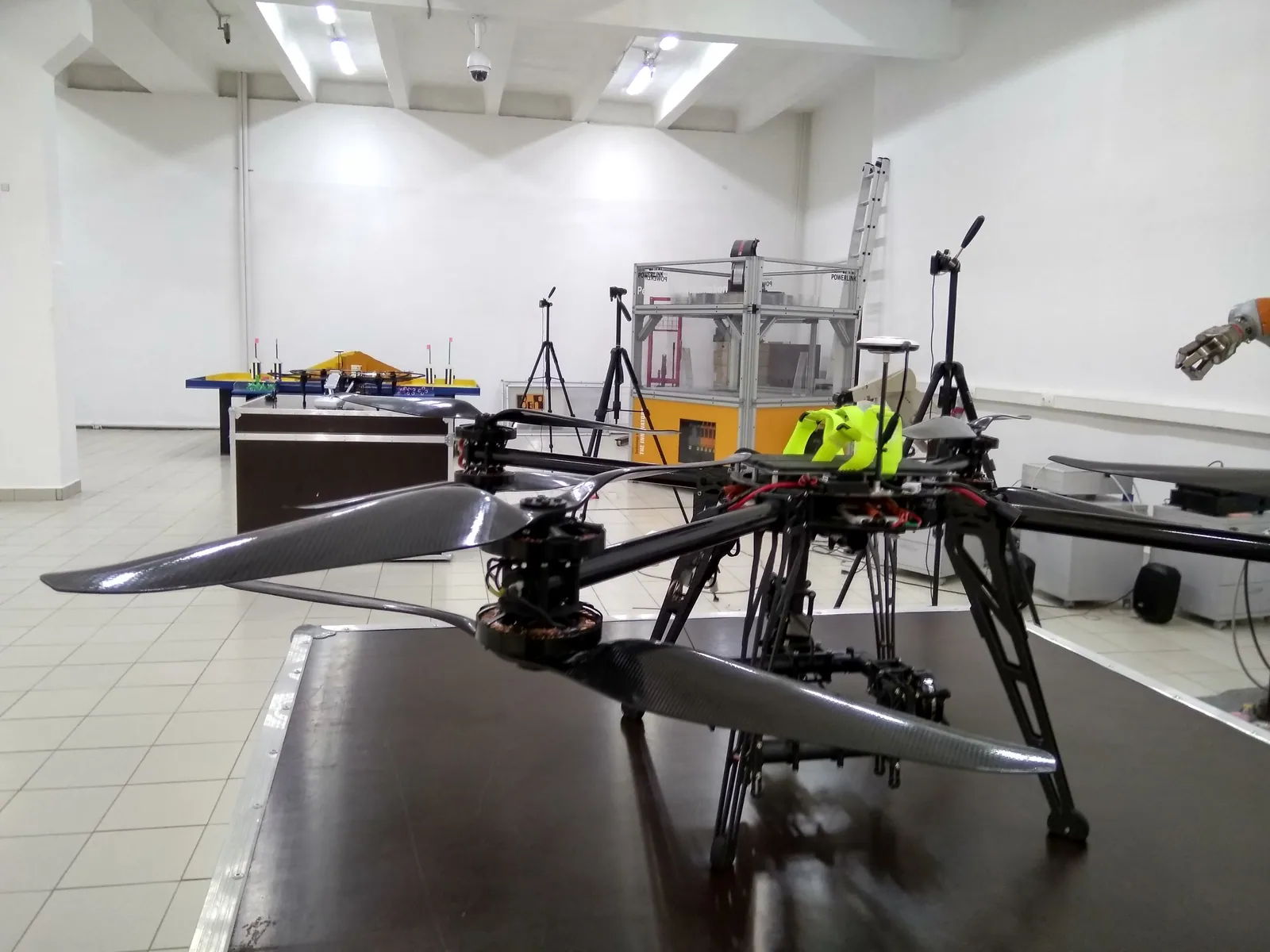
Universities buy research platforms: the Unitree G1 humanoid from USD 13,500, the Franka arm for about EUR 25,000, and the open SO-101 in parts for about USD 230.
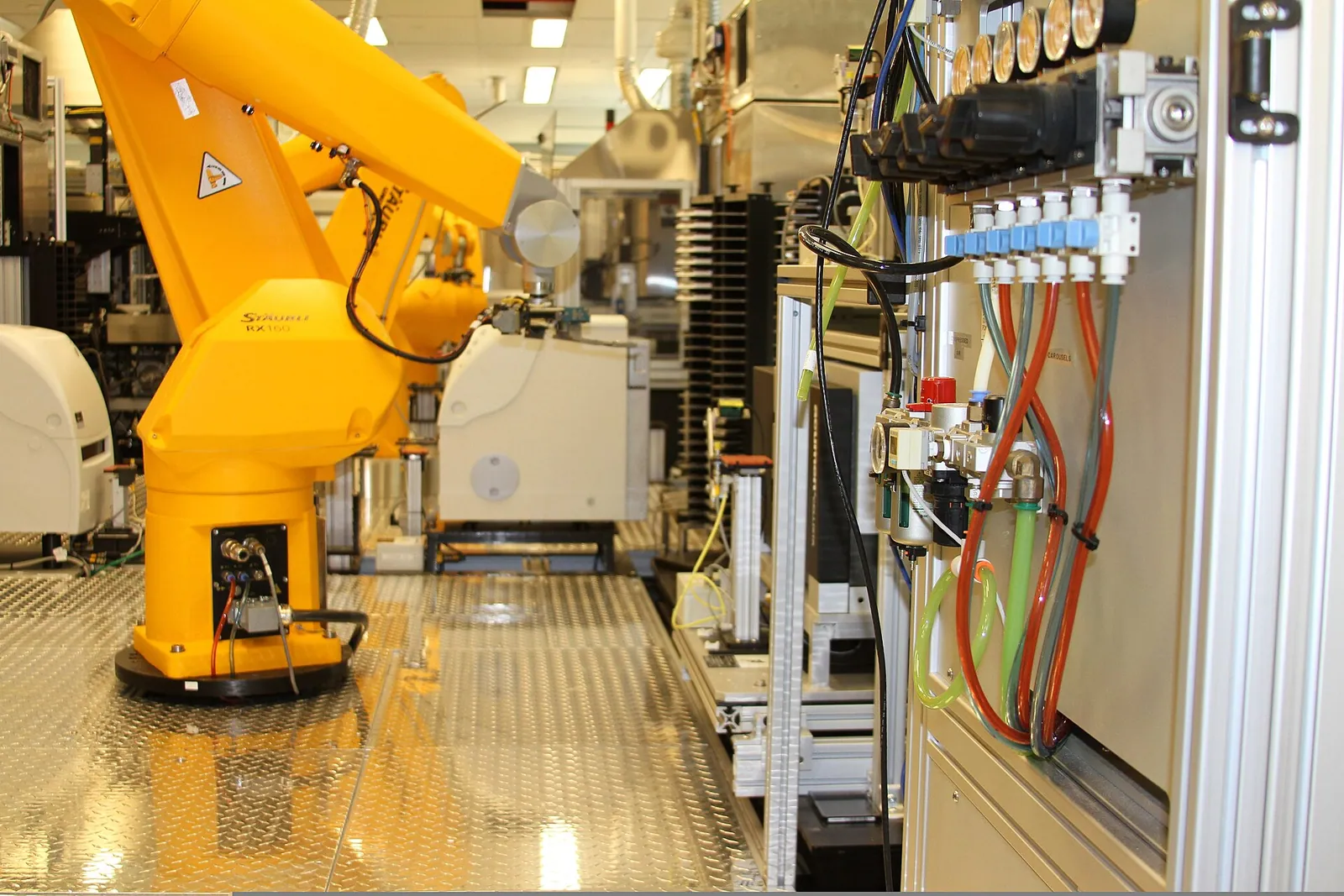
In the lab, repeatability counts: from 5 micrometers (Meca500) to ±0.1 mm (Franka Research 3), with prices starting at about PLN 890 (≈ EUR 205) (SO-101).
Kinova Gen3: also seven axes, a research arm from Canada; 4 kg payload, 902 mm reach and an optional 2D/3D vision module that we have no record of for the FR3. Its price in standard B2B is USD 30,000-35,000, so very close to the FR3.
Flexiv Rizon 4: seven axes, 4 kg payload, ±0.05 mm repeatability, “intrinsic” force sensors in every axis. Price unknown, but the same class; choose it when a higher payload matters.
UR7e: six axes, 7.5 kg payload, 920 mm reach, available in Poland; one force sensor at the tip instead of seven in the joints. It is the simpler, more “industrial” route, good for deployments. See also “Universal Robots UR5e, UR10e and UR20 Compared”.
ABB YuMi IRB 14000: a dual-arm cobot for fine electronics assembly (2 × 7 axes), with a payload of only 0.5 kg per arm. A completely different concept if you need two-handed work.
UR5e: 5 kg, 850 mm, in Poland through elmark.com.pl, about PLN 128,000 (≈ EUR 29,330); the choice when you need a proven platform for deployment, not for research.
KUKA
Universal Robots A/S
Franka Robotics GmbH was founded in 2016 in Munich; the brand was previously known as Franka Emika, famous for the Panda, the first arm to become popular in labs. The FR3 is its successor: the same premises, seven axes and torque sensors in every joint, aimed at research into force interaction, only in a newer build (Franka Robotics).
The model is on sale, although we hold no launch date for it. The manufacturer sticks with the research version, which neatly expresses its position: not mass volume, but quality of feel.
No. The manufacturer Franka Robotics GmbH (Germany) names no Polish shop or official distributor for the Franka Research 3 (FR3); enquiries go through the manufacturer's website (franka.de). Price estimate (midpoint of a range): approx. 116,300 PLN* (≈ EUR 26,650). Confirm service in Poland before buying.
3 kg at a reach of 855 mm and repeatability of ±0.1 mm.
There is no official price list; sources give a range of USD 25,000-35,000, or about PLN 96,900-135,700 (≈ EUR 22,200–31,090).
Torque sensors in each of its 7 joints and open software (libfranka, ROS), though it has a lower payload than, for example, the Flexiv Rizon 4.
Author, source and licence of the photo are given in the caption. Shop links may become affiliate links in future, details: How we make money · How we check