on sale
Universal Robots A/S
UR3e
- 3 kgpayload
- 6 DOFdegrees of freedom
- 135,700*price (PLN)
Price from
Canadian Kinova Robotics has spent years building its reputation as a maker of the lightest research arms on the market, and the 7-axis Gen3 is the fullest expression of that: 902 mm reach, 4 kg payload, 1 kHz closed-loop control and joints with unlimited rotation, with a workstation set up in under 30 minutes.
This is an arm designed for laboratories, research centers and assistive robotics, not for mass production - hence the emphasis on precision and modularity over raw payload. At the upper end of the standard range (USD 35,000) and the current NBP rate (about 3.8762 PLN/USD), that comes to about PLN 135,700 (≈ EUR 31,090); the 6-axis variant is sometimes a few thousand dollars cheaper.
At this price level the Gen3 competes with, among others, Chinese research arms, which at similar payload are often clearly cheaper but fall behind Kinova in the maturity of their ROS ecosystem and documentation. The manufacturer names no availability or sales representative on the Polish market; sales usually go through international distributors of research equipment.
The Gen3 suits universities and R&D teams that value precision above price.
Data checked: · Sources: 3
Data from manufacturer datasheets and product pages; median over the models of this category in the database.
The manufacturer does not publish a price list, so we rely on a market roundup from accio.com. According to it, the standard B2B range for the seven-axis Gen3 is USD 30,000-35,000, and special configurations reach USD 50,000. At the NBP rate of 1 October 2026 (about 3.8762 PLN per dollar), that comes to roughly PLN 116,300-135,700 (≈ EUR 26,650–31,090); the upper limit of the standard range, USD 35,000, is the figure used here.
Roughly, add the gripper (depending on configuration), software, a vision module and the research workstation. Service and warranty depend on the distributor.
Funding: Poland's robotization tax relief (ulga na robotyzację) applies to companies paying CIT/PIT and to a narrow definition of industrial robots. Universities and institutes more often draw on grants; see “Poland's Robotization Tax Relief” and the overview of support programs.
No confirmed distributor in Poland
The seven-axis Kinova Gen3 is an arm designed for people who want to experiment, not just repeat a motion. It offers 902 mm reach, 4 kg payload, 1 kHz closed-loop control, built-in torque sensors and joints with unlimited rotation; the manufacturer claims a workstation can be set up in under 30 minutes, and an optional 2D/3D vision module can be added to the arm.
The seventh axis gives the arm redundancy: the elbow can shift without moving the gripper, so the arm can get around an obstacle that a six-axis arm could not reach past. In the laboratory (laboratories) and at university (universities), the Gen3 is used for research on manipulation, machine learning and assistive robotics, and in medicine (hospitals) for prototype aids for people with limited mobility.
The manufacturer itself writes about research, medical and laboratory-automation uses - not mass industrial production, and rightly so: 4 kg of payload and the price make it a tool for learning, not for the assembly line. Why seven axes matter is explained in the text on “Degrees of Freedom (DOF) in Humanoid Robots”.
Yes: for R&D teams, universities and research centers that care about a mature ROS ecosystem, documentation and control precision. Yes for assistive-robotics projects, where the brand's roots in the JACO arms are an added plus. A broader look at equipment for universities is in the text “Educational Robots for Schools and Universities”.
No: for factories looking for a cheap cobot for palletizing or assembly; many other brands make cheaper hardware for that. No for schools and hobbyists on a limited budget - for them Kinova has the smaller Kinova Gen3 Lite. No for buyers who need local service: the manufacturer names no representative in Poland, and sales usually run through international distributors of research equipment.
The manufacturer names no Polish representative, which makes it hard to check where the arm ends up.
What is known is that Kinova holds a strong academic position worldwide and that the model is intended for laboratories. What is documented in Polish hospitals, meanwhile, are surgical robots - see “da Vinci Robots in Polish Hospitals” - but that is a different category of equipment. An overview of cobots in Poland: cobots.
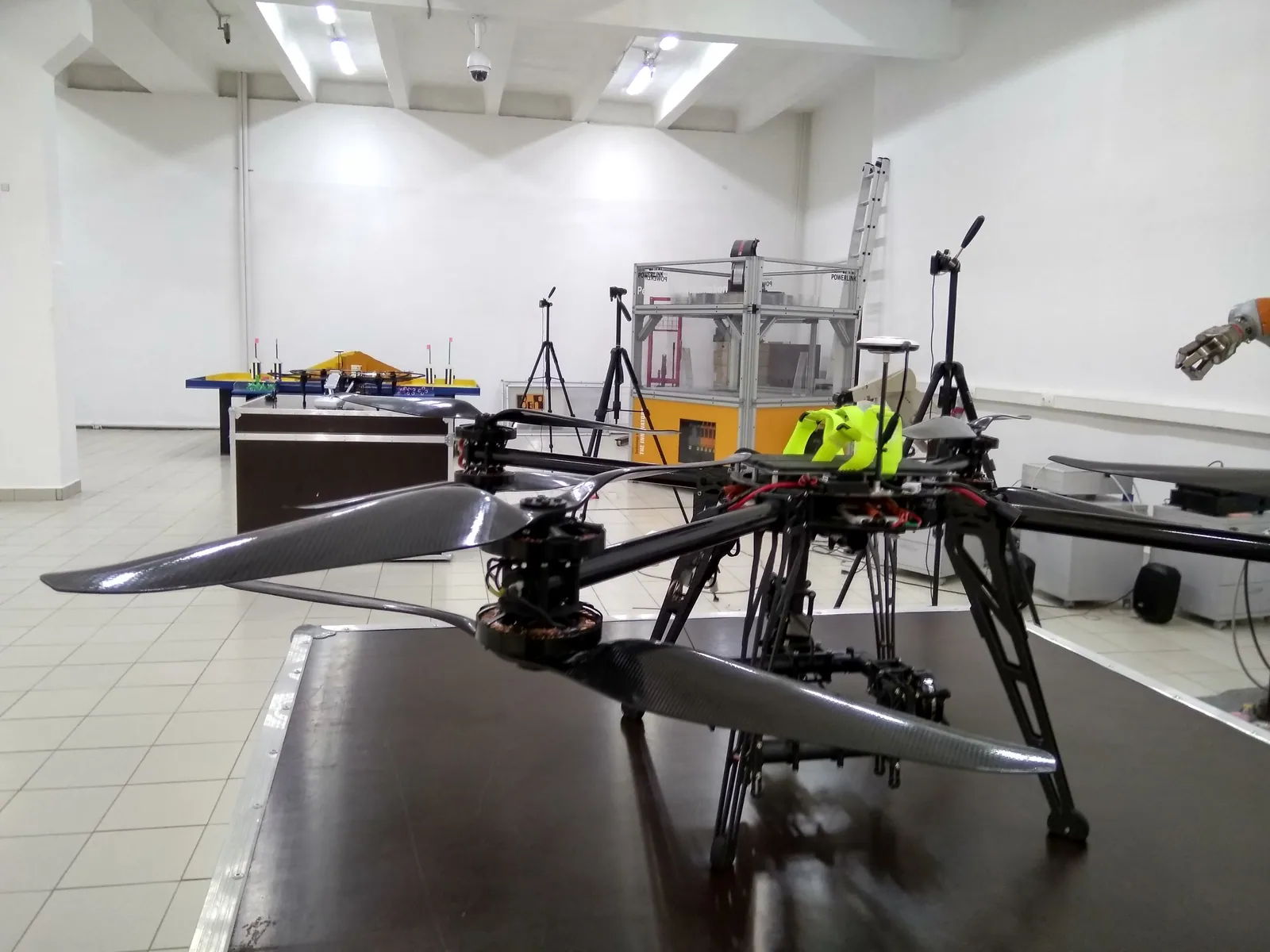
Universities buy research platforms: the Unitree G1 humanoid from USD 13,500, the Franka arm for about EUR 25,000, and the open SO-101 in parts for about USD 230.
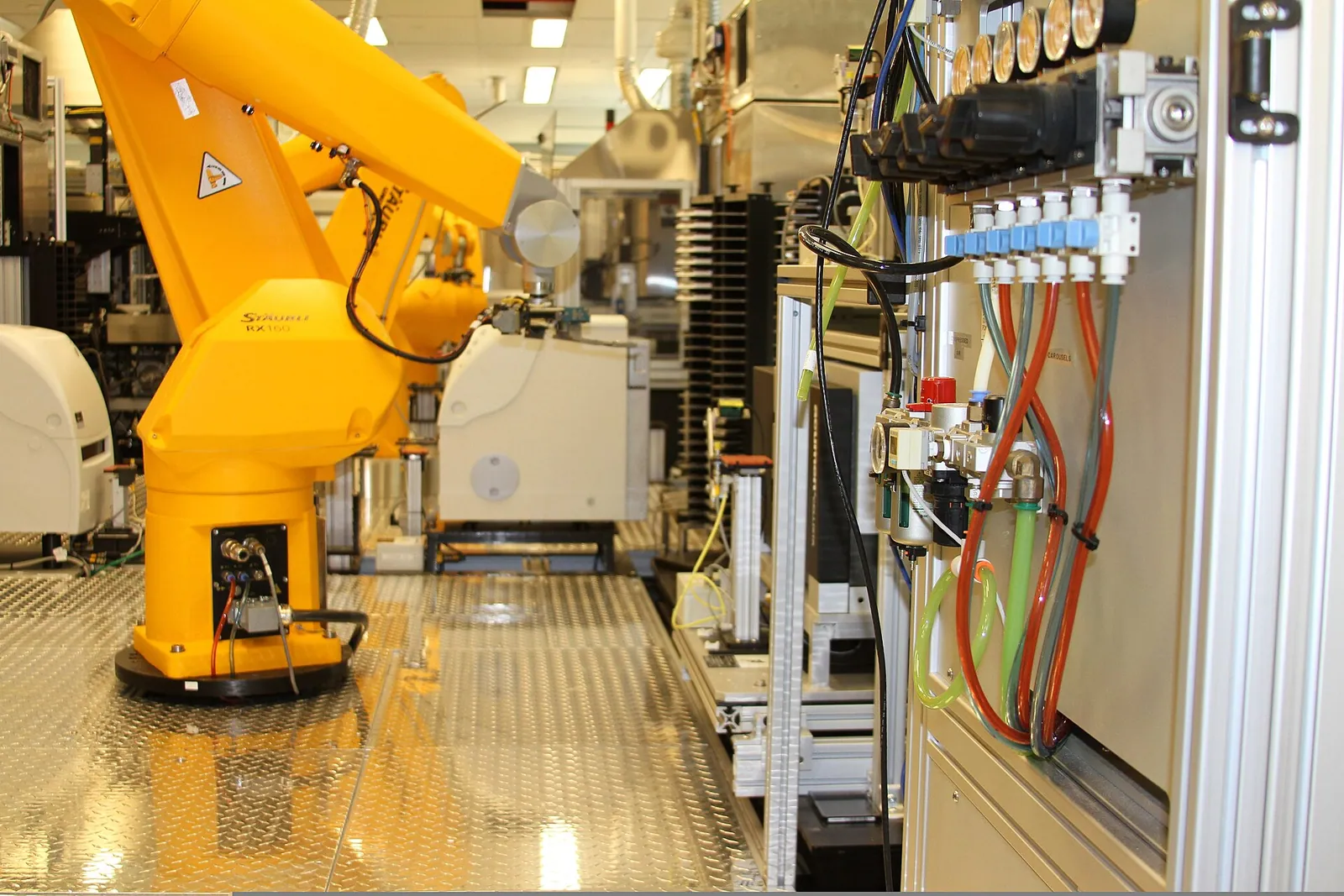
In the lab, repeatability counts: from 5 micrometers (Meca500) to ±0.1 mm (Franka Research 3), with prices starting at about PLN 890 (≈ EUR 205) (SO-101).
Franka Research 3 - also seven axes and also aimed at research; 3 kg payload, priced at about PLN 116,300 (≈ EUR 26,650) (USD 30,000). It has a longer tradition in force-control research.
Kinova Gen3 Lite - the small educational version: 0.5 kg payload, 760 mm reach, 5.4 kg weight. Choose it for schools and simpler experiments.
KUKA LBR iiwa 7 R800 - KUKA's seven-axis arm with a 7 kg payload, offered in Poland by zapamet.pl; a direction for laboratories needing a higher payload.
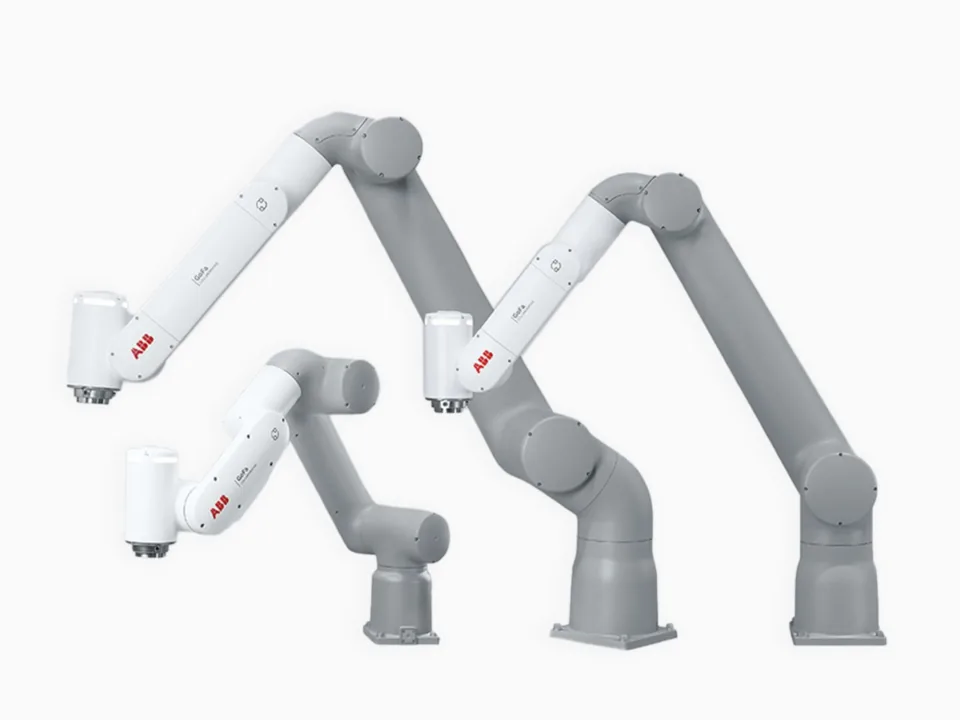
ABB GoFa CRB 15000 - 5 kg payload, priced at about PLN 147,724 (≈ EUR 33,850); it is an industrial cobot, not a research one, but if an industrial brand matters, it is a candidate.
Universal Robots A/S
Universal Robots A/S
KUKA
Kinova Robotics comes from Boisbriand, Quebec, and its roots lie in assistive robotics - the JACO arms. The Gen3 is a later, general-purpose platform for research and industry; it is listed as on sale, and the manufacturer has published a one-page datasheet in a 2024 version. The range also includes the lighter Gen3 Lite, see Kinova Gen3 Lite. Manufacturer: Kinova Robotics.
No. The manufacturer Kinova Robotics (Canada) names no Polish shop or official distributor for the Kinova Gen3 (7DoF); enquiries go through the manufacturer's website (kinovarobotics.com). Indicative price: approx. 135,700 PLN* (≈ EUR 31,090). Confirm service in Poland before buying.
According to accio.com, the standard B2B range is USD 30,000-35,000 (about PLN 116-136k (≈ EUR 26,580–31,160)), and specialized configurations can cost up to USD 50,000.
4 kg of payload at a reach of 902 mm.
Research, medical applications and laboratory automation - not mass industrial production.
Author, source and licence of the photo are given in the caption. Shop links may become affiliate links in future, details: How we make money · How we check