Exoskeletons in Poland
Exoskeletons 2026: Hocoma Lokomat, ReWalk, Ekso Indego, Hypershell and more — rehabilitation and industrial. Prices, uses and availability in Poland.
In the catalog: 14 models from 10 manufacturers. Prices from 3.7k to 7.5k PLN. Available in Poland: 2.
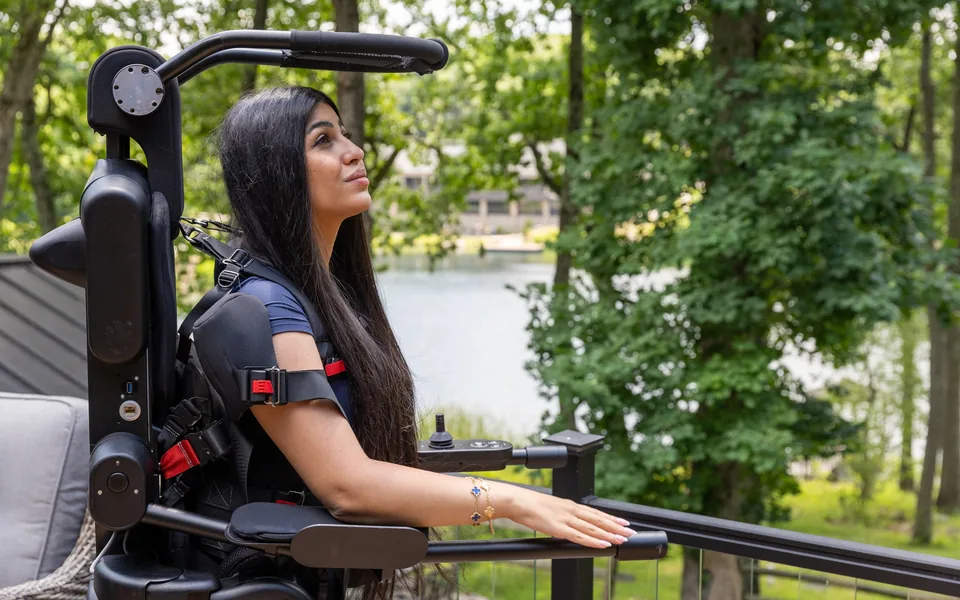
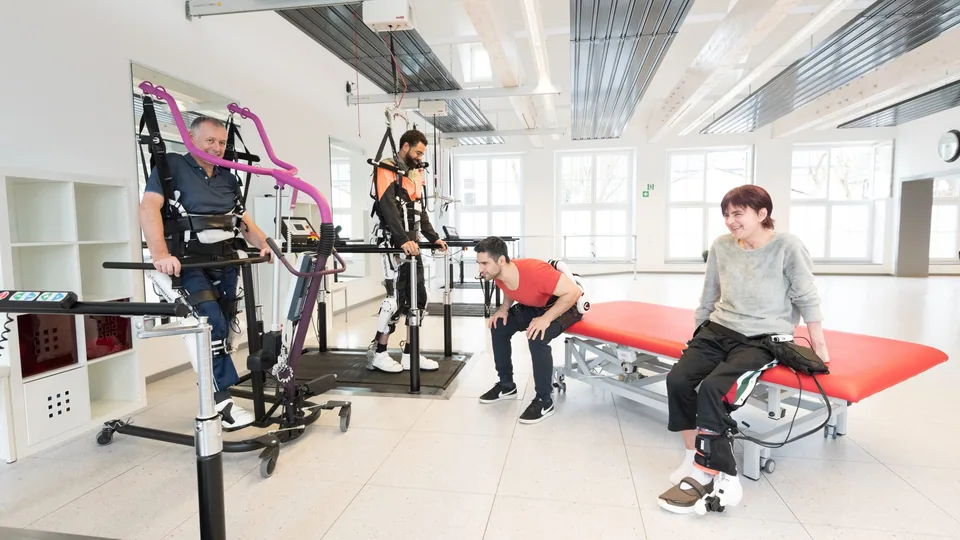
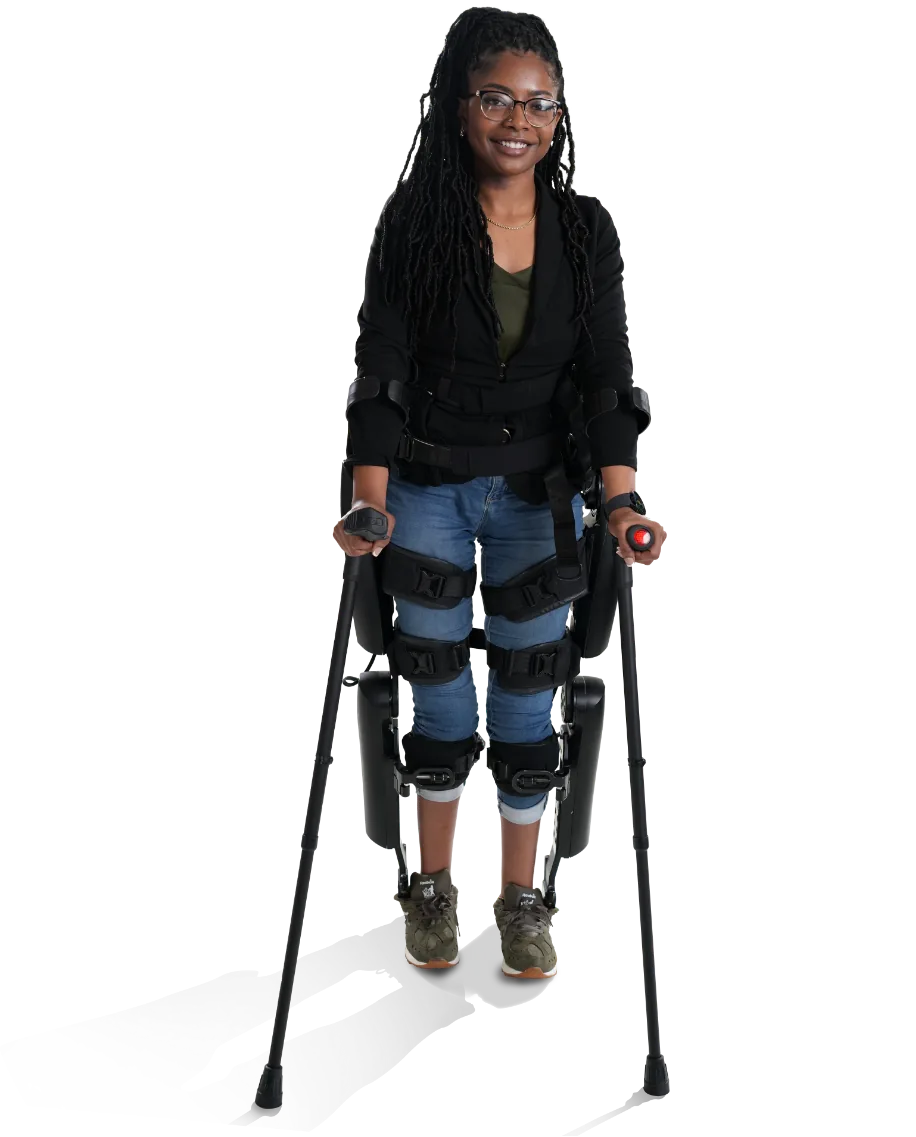
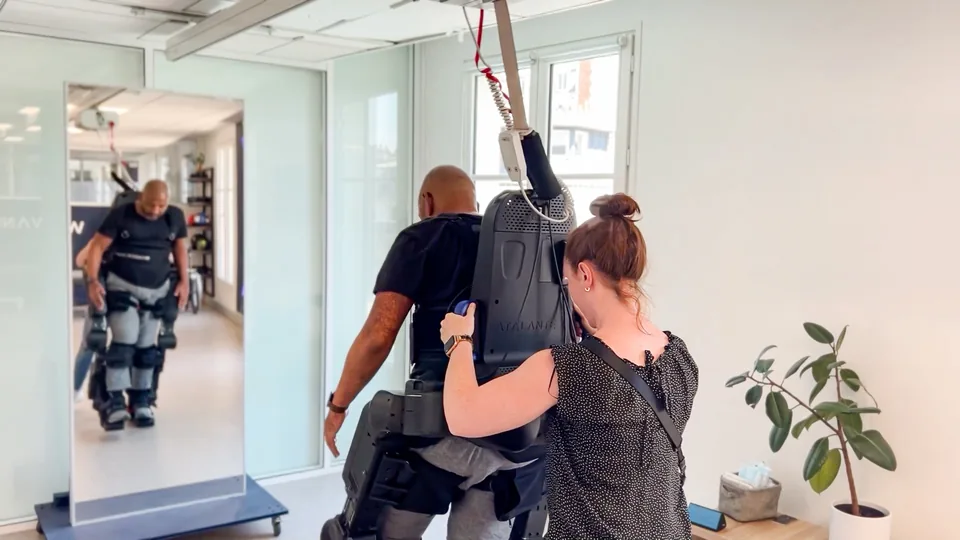
Photo: Myomo, Inc., manufacturer's website (myomo.com); Wandercraft, product page (en.wandercraft.eu); Cyberdyne Inc., product page (cyberdyne.jp)
Key facts
- Models listed14 (with price: 2)
- Price range3.7k – 7.5k PLN (2 models with a price)
- Models with a Polish seller2 of 14
- Manufacturers10
- As of9 October 2026
Showing 14 of 14 models
-
 on sale
-
 on sale
-
 on sale
-
 on sale
-
 on sale
-
 on sale
-
 on sale
-
 on sale
-
 on sale
-
 on sale
-
 on sale
-
 on sale
-
 on sale
-
discontinued
Sarcos Technology and Robotics (now Palladyne AI)
Sarcos Guardian XO
- 113 kgweight
- 90.7 kgpayload
- —price
No models match the selected filters.
| Model | Manufacturer | weight (kg) | payload (kg) | runtime (h) | Price (PLN) | Status | In Poland |
|---|---|---|---|---|---|---|---|
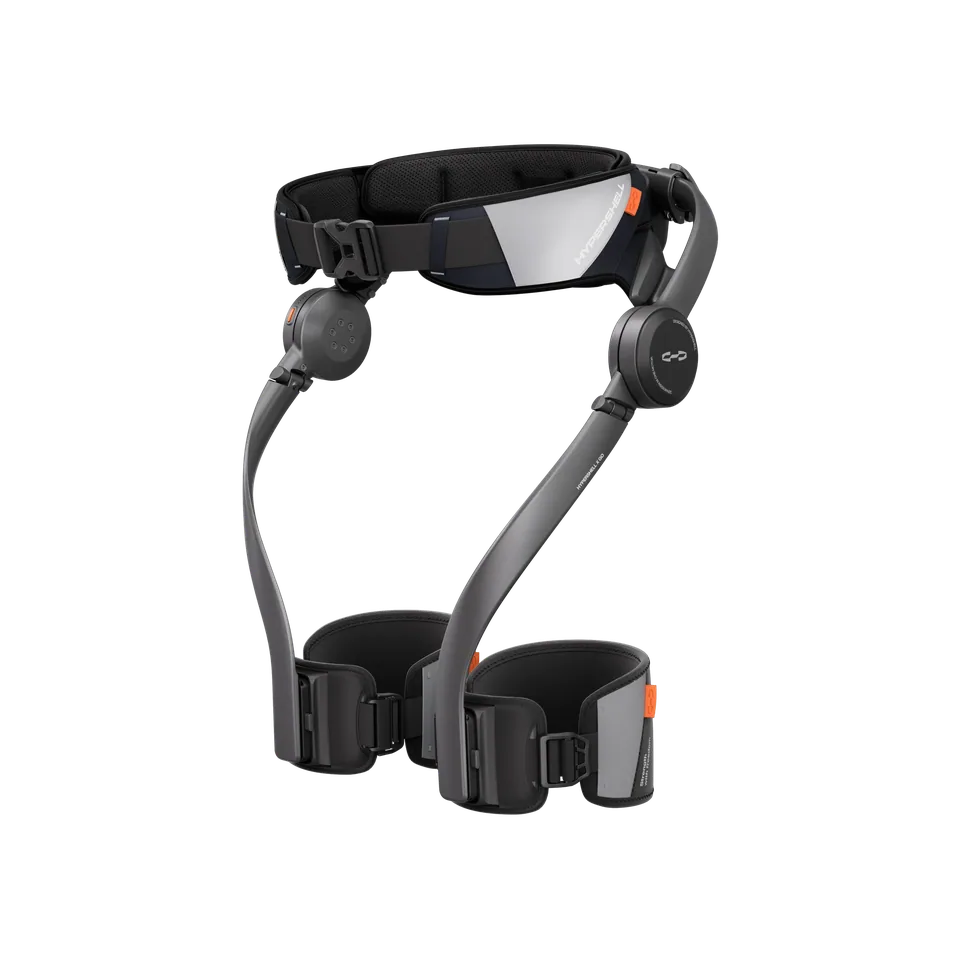
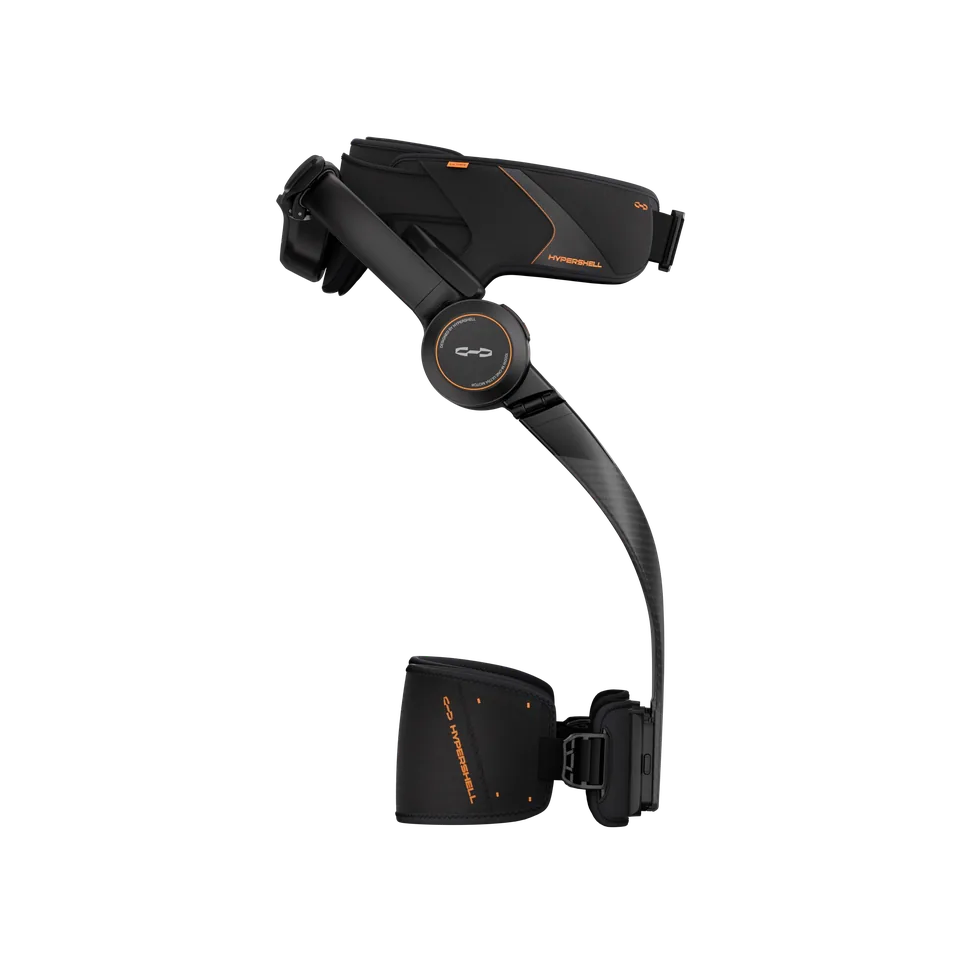
| Hypershell X Pro | Hypershell | 2.4 | — | — | 3,699 PLN (≈ EUR 845 at NBP rate 4.3716 of 20 October 2026) | on sale | ✓ |
| Hypershell X Ultra | Hypershell | 2.3 | — | — | 7,499 PLN (≈ EUR 1,720) | on sale | ✓ |
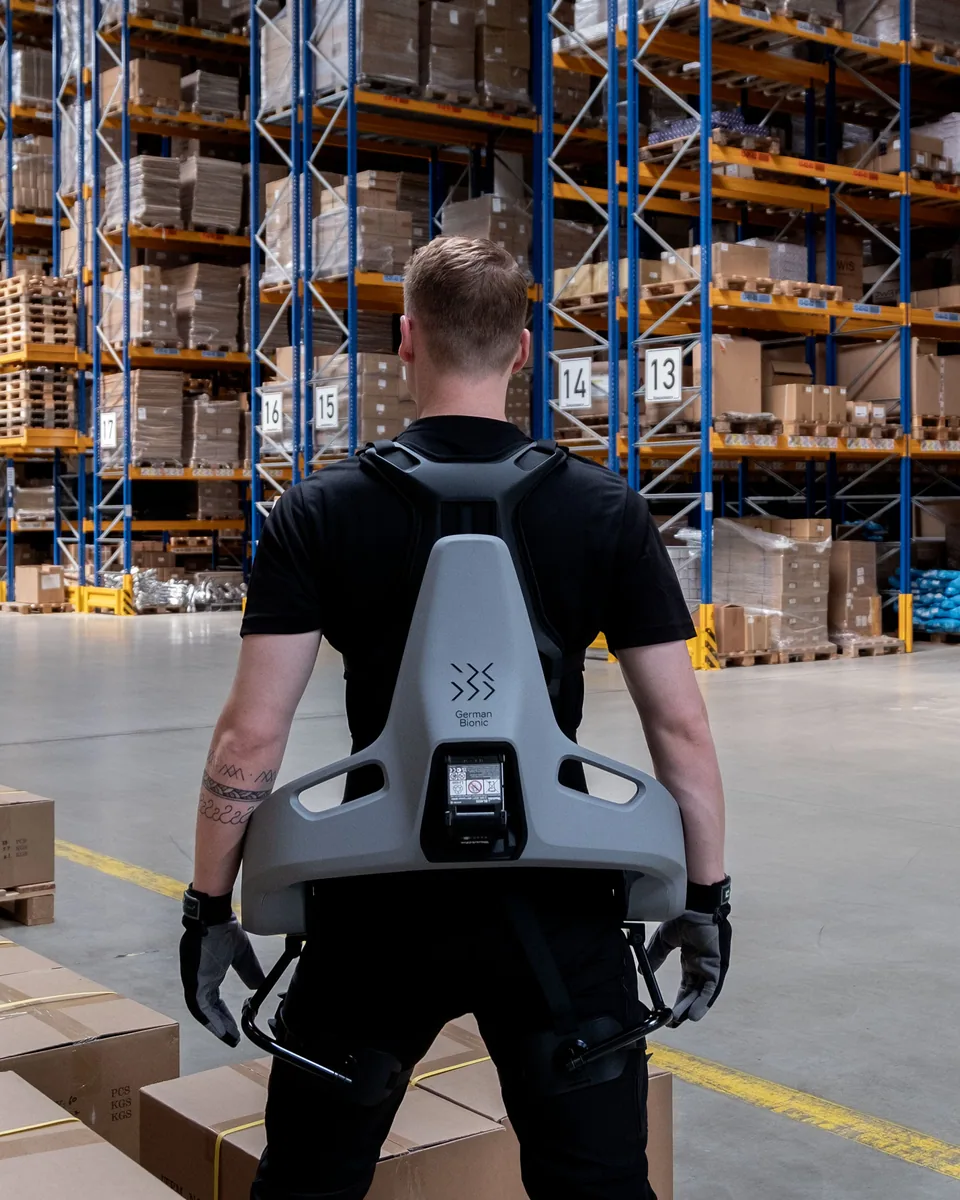
| German Bionic Exia | German Bionic Systems | — | 38 | 4 | — | on sale | — |
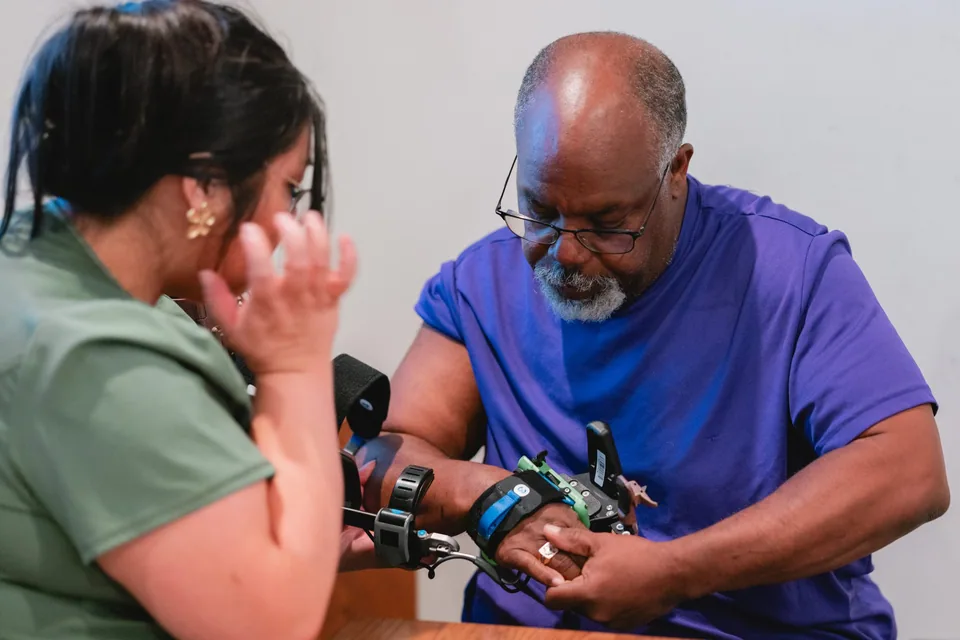
| Myomo MyoPro 2x | Myomo, Inc. | — | 2.27 | — | — | on sale | — |
| Eve | Wandercraft | — | 100 | 4 | — | on sale | — |
| HAL (Hybrid Assistive Limb) | Cyberdyne Inc. | — | — | — | — | on sale | — |
| ReWalk Personal (ReWalk 7) | Lifeward (formerly ReWalk Robotics) | — | — | — | — | on sale | — |
| Atalante X | Wandercraft | 80 | — | 8 | — | on sale | — |
| Marsi Bionics ATLAS 2030 | Marsi Bionics S.L. | 20 | — | — | — | on sale | — |
| Ekso Indego Personal | Ekso Bionics | 14 | 113 | 4 | — | on sale | — |
| EksoNR | Ekso Bionics | 25 | — | 3 | — | on sale | — |
| LokomatPro (with Sensation variant) | Hocoma AG | 1,000 | — | — | — | on sale | — |
| ReStore Exo-Suit | Lifeward (formerly ReWalk Robotics) | 5 | — | — | — | on sale | — |
| Sarcos Guardian XO | Sarcos Technology and Robotics (now Palladyne AI) | 113 | 90.7 | — | — | discontinued | — |
Applications in this category
See the situations where models in this category prove themselves.
Guide
Exoskeletons are wearable mechanical or electrically powered structures that assist movement, offload joints and muscles or — in medical cases — enable people with neurological injuries to learn to walk again. This category sits on the border between industrial and medical robotics; it gets far less media attention than humanoid robots, but it has real, documented deployments both in factories and in rehabilitation centers.
On this page we distinguish two main segments: industrial exoskeletons (mostly passive, relieving the back, arms or knees during repetitive physical work) and rehabilitation and medical exoskeletons (mostly active, electrically driven, used in therapy for people with paresis of the lower limbs). For each model we give the drive type, the weight of the device, the range of supported joints and movements, and the price if it is publicly available.
The exoskeleton market is far less standardized on price than, say, cobots — many manufacturers do not publish prices outright, but quote each deployment individually after analyzing the workstation or the patient's needs. That is why the price field stays empty for some models in our directory — we would rather show a lack of data than guess.
How to choose an exoskeleton — industrial or rehabilitation
For industrial use, the key is to define precisely the workstation and the movement to be offloaded — an exoskeleton supporting overhead work (for instance assembling car underbodies) is an entirely different design from one that relieves lifting from a bent-over position. Start with an ergonomic analysis of the workstation carried out by an occupational health and safety specialist before you choose a specific model — the manufacturer rarely knows the particulars of your production line.
Check how long it can be worn without discomfort (declared by the manufacturer, but worth testing on your own staff too) and how easy it is to put on and take off during a work shift — a device that takes a dozen minutes to put on is rarely used every day in practice.
For rehabilitation use, the choice of model is usually made by the facility's medical team, not by the individual patient — the key criteria are suitability for the specific type of injury, the availability of a therapy program adapted to Polish rehabilitation standards, and the presence of certified staff trained to operate the given device. Check in our company directory which Polish centers and integrators have experience with a particular platform.
Buying guide
Buying guide: Exoskeletons in Poland
The exoskeleton market in 2026: what we actually know
Our catalogue currently lists nine exoskeletons, and eight of them are on sale (the ninth, Sarcos Guardian XO, has been withdrawn). Rehabilitation and medical designs dominate: EksoNR, Atalante X, LokomatPro, ReWalk Personal, Ekso Indego Personal, ReStore Exo-Suit, HAL and the newest, Eve. The only strictly industrial exoskeleton here is Sarcos Guardian XO.
One inconvenient fact needs saying up front: none of these nine models has a public price in our listings, and for none have we confirmed official availability in Poland. For HAL and Guardian XO we know explicitly that they are not in the Polish offer; for the rest there is simply no confirmation. Manufacturers such as Ekso Bionics sell to clinics on individual quotes, and Cyberdyne offers HAL mainly on lease in Japan. So instead of an imaginary "average price" we give what is documented and mark the gaps clearly.
Scale differs widely. Hocoma claims more than a thousand LokomatPro installations and about 70 clinical studies, while Wandercraft reports more than 150 customers worldwide. The latest launch is Eve: since 17 September 2026 the exoskeleton has been sold commercially in the US, on prescription only after clinical assessment.
For the reader this means a simple rule: the figures in this overview describe the product and its history, not an offer you can order in Poland straight away. Before you start comparing models, decide whether you are interested in equipment for a facility, a private person or a workplace. The answer determines whom to ask for a price, who will carry out the qualification and which documents you will need at purchase.
Types of exoskeletons: three different worlds
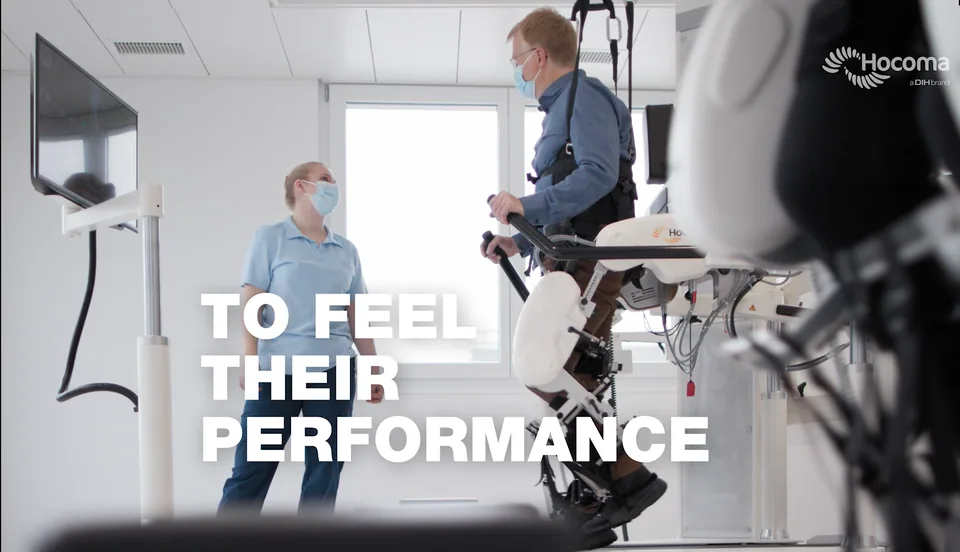
Stationary gait-training robots. According to the manufacturer, LokomatPro weighs about a tonne and stays in the therapy room: the patient hangs in a harness above a treadmill while the robot guides the legs. It is the classic hospital solution, not a wearable device.
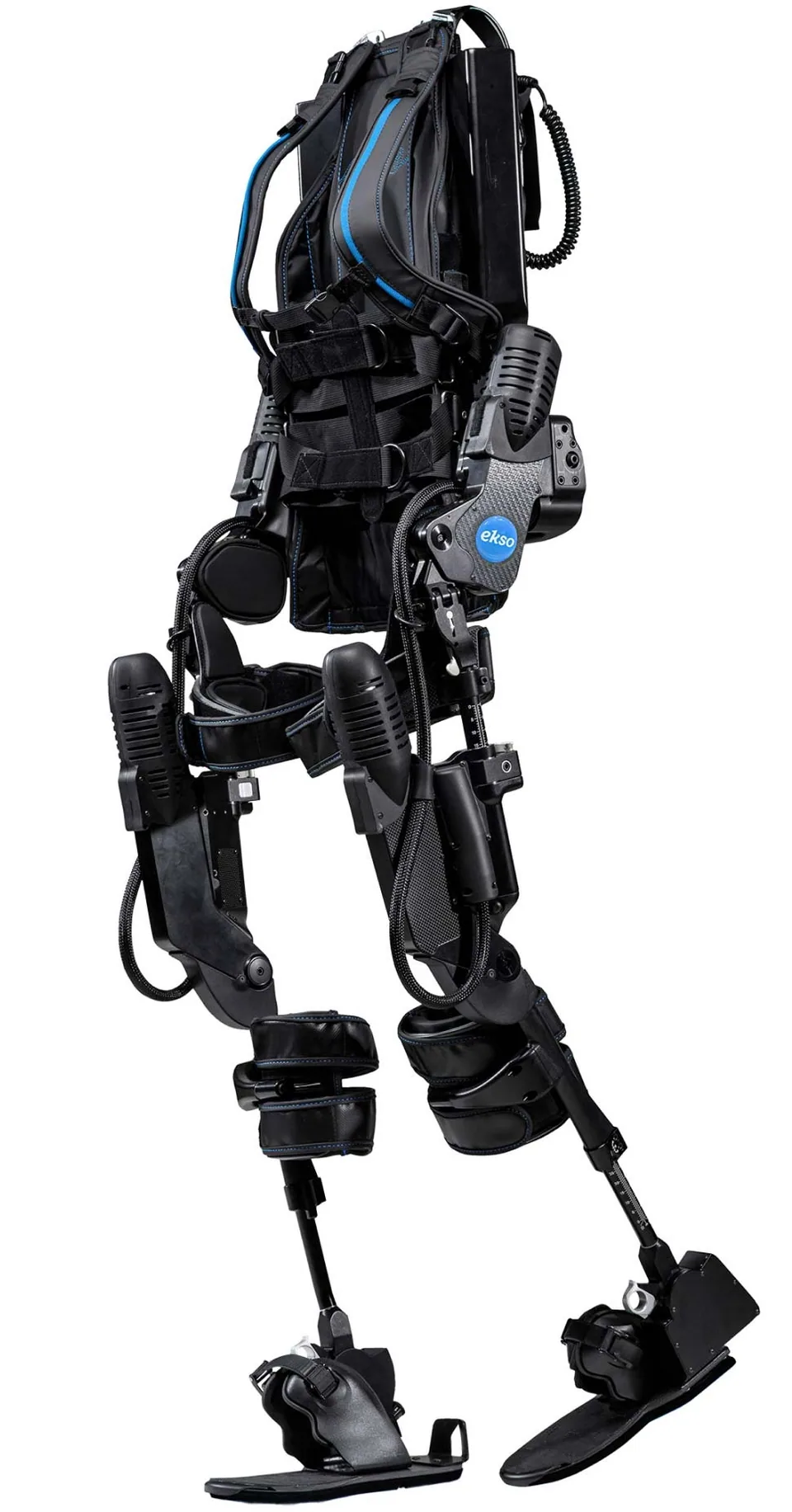
Mobile rehabilitation exoskeletons. EksoNR (about 25 kg, FDA-cleared) and Atalante X (about 80 kg, self-balancing, no crutches) are used for therapy supervised by a physiotherapist. Indications include stroke, spinal cord injury, traumatic brain injury and multiple sclerosis.
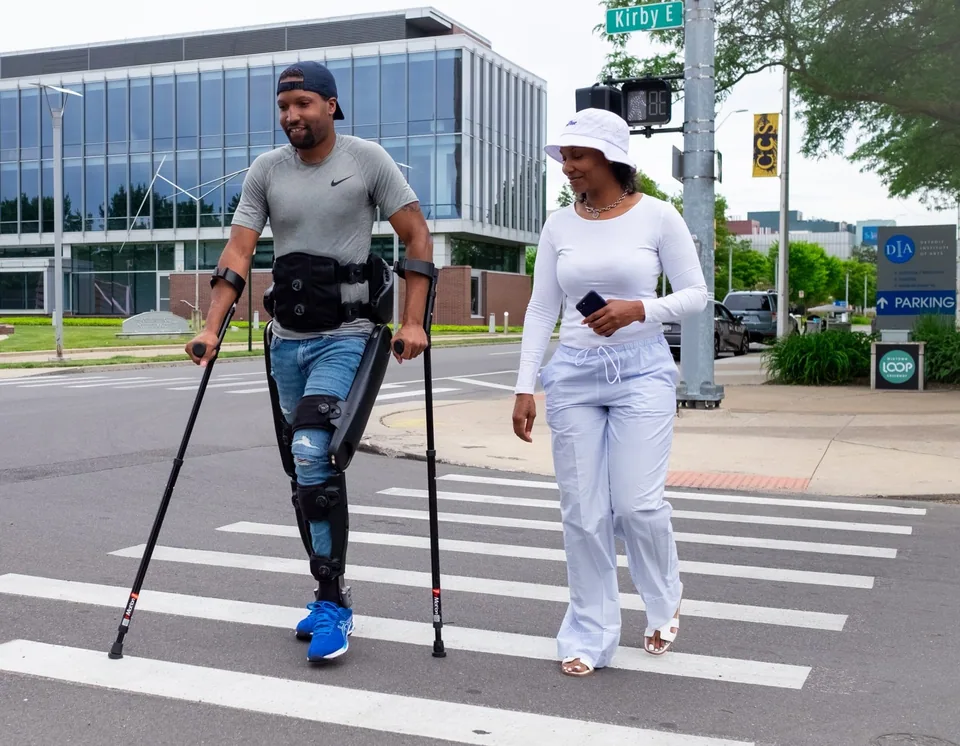
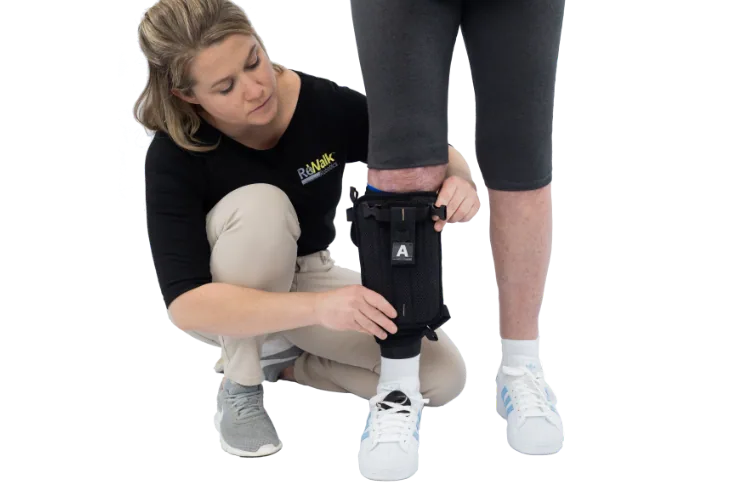
Personal exoskeletons. ReWalk Personal (ReWalk 7), Indego Personal and Eve are meant to let users move outside the clinic, at home or in town. Indego Personal weighs about 14 kg. Since April 2024 it has been reimbursed by Medicare in the US, but that describes the American market, not the Polish one.
Soft and bioelectric systems. ReStore (about 5 kg) is a soft exosuit for gait after stroke, while HAL reads muscle signals from the skin surface and assists movement on that basis.
Industrial. According to its maker, Sarcos Guardian XO lifted up to 90.7 kg, weighed 113 kg and was offered only as a lease service. Production ended after the company was renamed Palladyne AI. Polish logistics is now trialling lighter passive and semi-active systems, for example from the German maker German Bionic, but they are not yet in our catalogue.
What to look for when buying: six criteria
1. Is it a medical device at all. An exoskeleton for patient therapy needs medical certification and, in the United States, FDA clearance, as with EksoNR. Industrial use has no such requirement, but occupational safety rules apply. Start by deciding which side of that line you are on.
2. Clinical indication. Equipment for a high spinal injury is chosen differently from equipment for stroke. ReStore Exo-Suit targets gait rehabilitation after stroke, and ReWalk Personal targets everyday mobility after spinal cord injury. Fit to the diagnosis matters more than the number of features in the brochure.
3. Weight and ergonomics. The gap between 5 kg (ReStore Exo-Suit), 14 kg (Ekso Indego Personal) and 80 kg (Atalante X) translates into transport, donning and handling. In industry the time to put it on counts too: a device that takes a dozen minutes to don is rarely used every day.
4. Operating time and shift planning. According to its maker, Atalante X is meant to work more than eight hours a day, which matters for a centre planning many sessions. Polish trade publications put the battery life of a typical rehabilitation system at 2-4 hours.
5. Service, training and staff certification. As described in Polish sources, a therapist must complete the manufacturer's courses (about 3.5 days basic and 2.5 days advanced). Ask who provides service in Poland and how long parts replacement takes.
6. Financial model. HAL is mostly leased, Sarcos Guardian XO was a service (Robot-as-a-Service), and LokomatPro is a hospital investment. Compare total cost, not the device price.
Price classes: honest about what we do not know
We will not publish a table of model prices because we do not have them documented. Polish trade publications indicate that a mobile rehabilitation exoskeleton costs from about PLN 390,000-450,000 (≈ EUR 89,210–102,940) for a basic version, with extended variants reaching about PLN 950,000 (≈ EUR 217,310). That is an indicative range for the whole segment, not any single maker's offer. A single commercial session at a Polish centre costs PLN 200-350 (≈ EUR 46–80), and a physiotherapy qualification about PLN 150 (≈ EUR 34).
On that basis three classes can be distinguished. The most expensive are stationary hospital systems and advanced clinical exoskeletons (LokomatPro, Atalante X, EksoNR). The middle class is personal devices on prescription (ReWalk Personal, Ekso Indego Personal, Eve). The lightest and least documented on price is the class of soft and bioelectric systems (ReStore Exo-Suit, HAL). This is a split by purpose, not by confirmed amounts.
Funding and reimbursement in Poland
Our listings contain no grant programme aimed directly at exoskeletons, so we will not invent one. A medical facility usually funds the purchase from its own budget, EU funds or dedicated funds. A company buying industrial exoskeletons can check whether the expense fits the “Poland's Robotization Tax Relief”. The relief covers "industrial robots" under a narrow statutory definition, and we do not decide whether an exoskeleton meets it. Ask a tax adviser. A general overview of programmes is in the funding section, and in “Exoskeletons in Rehabilitation and Industry” we described the rehabilitation market in Poland itself.
Three purchasing scenarios
A neurological rehabilitation centre. A facility that wants to run gait training after stroke or spinal injury chooses between a stationary system and a mobile exoskeleton. LokomatPro has the longest installation history, but it occupies a room and guides the patient over a treadmill. EksoNR and Atalante X allow practising gait over the floor, which is closer to the patient's everyday situation. The team should decide whether it needs one device or several with different indications. Before buying, it is worth visiting a centre that already uses the equipment and asking about sessions per week, failure rates and the wait for service.
A private person with a spinal cord injury. Personal models such as ReWalk Personal, Ekso Indego Personal and Eve are meant to make moving around outside the clinic easier. Manufacturers sell them on prescription after clinical assessment, and the reliable reimbursement information comes from the US. For Poland we have confirmed neither a price nor a sales channel. The safest start is a conversation with the treating doctor and the official distributor, and confirmation of availability should be obtained in writing.
A logistics or manufacturing company. Here one starts with a pilot on a few workstations. According to a Polish source, the logistics operator Dachser is testing exoskeletons in its warehouses rather than rolling them out at scale straight away. That approach is sensible: before buying, you measure donning time, wearing comfort and staff opinion, and an occupational safety specialist does the ergonomic analysis. The article “Humanoid Robots in Factories 2026” shows the wider context of automating physical work in factories.
Why exoskeleton data is often incomplete
In this category manufacturers rarely publish full technical datasheets. Device weight is given for only a few models, while payload, operating time and range of motion are often missing altogether. For medical devices this partly stems from the sales model: clinics get an offer after a conversation, not a price list. We do not treat missing data as a flaw of the product, but as a sign that before buying you must ask the manufacturer for a document and record the answer. If no answer comes, that is a signal too.
Common mistakes
- Buying without analysing the workstation or the patient. An overhead-work exoskeleton is a different design from one for lifting.
- Trusting the manufacturer's video. A demo under an engineer's control is not an ordinary shift.
- Ignoring running costs: sessions, service, training and licences.
- Treating the exoskeleton as a substitute for ergonomics. Occupational safety specialists stress that it complements lifting technique and does not replace it.
- Confusing American and Polish models. Medicare reimbursement does not mean availability in Poland.
How we check the data
We compare every figure with the manufacturer's page or a technical document and record the date and source. Where there is no price, we write "the manufacturer does not publish one". A model gets its own page only when it has enough verified data. We also keep these models apart from similar devices in other categories, such as specialist robots and cobots, so assessments do not get mixed. Explanations of terms such as degrees of freedom are in the “Robotics Glossary: 65 Terms with Polish Equivalents”.
Frequently asked questions
How much does an exoskeleton cost?
Prices vary enormously and are mostly not published. Simple passive industrial support frames (relieving the back or arms) cost from a few thousand to over ten thousand zlotys (PLN), while advanced powered rehabilitation exoskeletons for gait training after spinal cord injuries can cost several hundred thousand zlotys and are usually available only to medical facilities, not for private purchase.
What is the difference between a passive and an active exoskeleton?
A passive exoskeleton uses springs and mechanical linkages to offload muscles and joints without electrical power — it is cheaper and simpler to maintain. An active exoskeleton has electric motors that genuinely assist or initiate movement, which is essential for example in rehabilitating people with paresis.
Who in Poland can use a rehabilitation exoskeleton?
Rehabilitation exoskeletons are available mainly in specialized neurological rehabilitation centers and clinics, usually as part of therapy supervised by a physiotherapist — they are not devices sold directly to patients for independent home use.
Are industrial exoskeletons already widely used in Polish factories?
It is still a niche compared with cobots or conventional automation — individual deployments concern mainly workstations with prolonged overhead work or lifting (logistics, automotive, construction), rather than standard production-line equipment.
Does an exoskeleton replace ergonomics training?
No — manufacturers and occupational health and safety specialists stress that an exoskeleton complements, rather than replaces, correct lifting technique and workstation ergonomics. Treating it as the only answer to musculoskeletal overload is a common deployment mistake.
How much does an exoskeleton cost in Poland?
In our catalogue none of the nine exoskeletons has a public price. Polish trade publications give an indicative range for a mobile rehabilitation exoskeleton of about PLN 390,000-450,000 (≈ EUR 89,210–102,940) up to about PLN 950,000 (≈ EUR 217,310). A single session at a centre costs PLN 200-350 (≈ EUR 46–80).
Can I buy a rehabilitation exoskeleton for home use?
Personal models such as ReWalk Personal, Indego Personal or Eve are designed for use outside the clinic, but they are sold on prescription after clinical assessment. We have not confirmed official availability in Poland for any of them.
Which exoskeleton is the most clinically proven?
Hocoma claims more than 1,000 LokomatPro installations and about 70 clinical studies, and Wandercraft more than 150 Atalante X customers. These are manufacturer claims, as we have no independent comparison.
Does an industrial exoskeleton replace ergonomics training?
No. It complements lifting technique and workstation ergonomics but does not replace them. Deploying one without analysing the workstation is a common mistake.
Is funding available for an exoskeleton?
We found no programme aimed directly at exoskeletons. Facilities should ask about support at NFZ and PFRON, and companies should check whether the expense falls under the robotisation tax relief.