prototype
Humanoid robotson sale
Unitree G1 EDU (several configurations up to Ultimate D)
Price in Poland
from 190,000 PLN (≈ EUR 43,540 at NBP rate 4.3641 of 21 October 2026)
2 offers from Polish retailers · as of 28 September 2026
Price from an aggregator: approx. 286,500 PLN* (≈ EUR 65,650) (converted from 73,900 USD, NBP rate 3.8762, as of 1 October 2026). In Polish shops this model costs less.
- Botland28 September 2026 190,000 PLN (≈ EUR 43,540) Out of stock when checked
- botland.com.pl21 October 2026 190,000 PLN (≈ EUR 43,540) Go to shop
- x-kom.pl28 September 2026 250,000 PLN (≈ EUR 57,290) Go to shop
We mark shop links as sponsored (rel=sponsored); today we receive no commission. How we make money
Available in PolandPros
- Full SDK access and secondary development
- Up to 43 degrees of freedom in Ultimate D, tactile hands
- NVIDIA Jetson Orin, payload up to 3 kg, walking speed up to 2 m/s
- Twelve configurations, roughly USD 43,900 to 73,900
Cons
- No official price list – reseller prices only, widely spread
- Unclear what exactly each configuration includes
- About 2 hours runtime and 3 kg payload – too little for a shift
- No industrial certification
- 132cmHeight
- 3kgPayload
- 35kgWeight
- 43DOFDegrees of freedom
- 2hRuntime
- 2m/sSpeed
Key facts
- Price in Polandfrom 190,000 PLN (≈ EUR 43,540) (2 offers from Polish retailers · as of 28 September 2026)
- Specificationsheight 132 cm · payload 3 kg · weight 35 kg
- Statuson sale
- Availability in Polandyes, from: x-kom.pl, Botland, botland.com.pl
- VerdictFor teams with a programmer and a defined research goal; not for firms wanting a ready-to-work robot.
Summary
- ManufacturerUnitree Robotics
- CategoryHumanoid robots
- Statuson sale
- Availability in PolandAvailable in Polandx-kom.pl, Botland, botland.com.pl
Twelve configurations, from about USD 43,900 to 73,900 at resellers: that is the range of offers for the Unitree G1 EDU, the development version of the G1 with full SDK access. The top variant, "Ultimate D," adds five-fingered hands with tactile sensing and raises the degrees of freedom to 43 (optionally with extra DOF in the waist and wrist), with knee torque of up to 120 N·m. The robot is powered by an NVIDIA Jetson Orin, has a payload of up to 3 kg and a walking speed of up to 2 m/s. Importantly, none of these prices comes directly from Unitree: the manufacturer does not publish an official EDU price list, and the spread between resellers is considerable.
Compared with the base G1 (USD 13,500, no SDK), the EDU is several times more expensive, but it offers a genuine platform for secondary development, a rarity in this price class of full-size humanoid. Against the UBTECH Walker S2, the G1 EDU is clearly cheaper, though it offers neither autonomous battery swapping nor a comparable payload.
The model is aimed primarily at universities, R&D laboratories and companies developing their own control algorithms, not at ready-made commercial deployments.
Photo gallery
-
Photo: Unitree Robotics, product page (unitree.com) -
Photo: Unitree Robotics, product page (unitree.com) -
Photo: Unitree Robotics, product page (unitree.com)
Specs
Data from manufacturer datasheets and product pages; median over the models of this category in the database.
-
Height132 cm−22% vs. the category median (169 cm, n=220)
-
Weight35 kg−44% vs. the category median (63 kg, n=192)
-
Degrees of freedom43+46% vs. the category median (29.5, n=200)
-
Payload3 kg−57% vs. the category median (7 kg, n=166)
-
Speed2 m/s+33% vs. the category median (1.5 m/s, n=117)
-
Runtime2 h−50% vs. the category median (4 h, n=135)
- category medianA higher value doesn't always mean a better robot; it depends on the application.
Dimensions and weight
- Height
- 132 cm
- Weight
- 35 kg
Motion and manipulation
- Degrees of freedom
- 43
- Hand degrees of freedom
- 7
- Payload
- 3 kg
- Speed
- 2 m/s
Power
- Runtime
- 2 h
Electronics and AI
- Drive
- electric
- Sensors
- depth camera, 3D LiDAR, Microphone array
- Computing unit
- NVIDIA Jetson Orin
Additional specs
- Movable joints — Unitree simulation model (BSD-3)
- 43
- Mass in Unitree's simulation model (kg)
- 34.4
- Degrees of freedom per limb — Unitree simulation model
- legs 2×6, arms 2×7, hands 2×7, torso 3
- Max. joint torque in Unitree's simulation model (Nm)
- 139
- Joints with the highest torque — simulation model
- hip, knee
- League / competition
- World Humanoid Robot Games; REK
- Arena weapon
- none
Price and availability in Poland
Price in Poland
from 190,000 PLN (≈ EUR 43,540)
2 offers from Polish retailers · as of 28 September 2026
Price from an aggregator: approx. 286,500 PLN* (≈ EUR 65,650) (converted from 73,900 USD, NBP rate 3.8762, as of 1 October 2026). In Polish shops this model costs less. · Source (blog.robozaps.com)
No official Unitree list price (available on request). US sellers quote 12 EDU configurations from about USD 43,900 to 73,900; the top "Ultimate D" tier has tactile five-fingered hands and 41 degrees of freedom. The price given comes from a third-party seller, not from Unitree itself.
Running and deployment costs
Purchase: the price depends on configuration. US resellers list EDU variants from about USD 43,900 to 73,900 (at a rate of 3.8762, roughly PLN 170,200–286,500 (≈ EUR 39,000–65,650)). Unitree does not publish an official price list, so this is second-hand data. In Polish shops, offers recorded on 28 September 2026 were PLN 190,000 (≈ EUR 43,540) (Botland) and PLN 250,000 (≈ EUR 57,290) (x-kom.pl), without stating which configuration is meant. So do not assume a single price; when inquiring, demand the configuration specification in writing.
Operation: as an estimate, a few percent of the price per year on accessories, spare batteries (runtime is about 2 hours, so longer experiments need several packs), repairs after falls and servicing; the robot falls over, which is a natural part of gait research. Add a test stand with safeguards (tether, mat) and a computer with a GPU for training policies.
Training: the biggest hidden cost is people's time. The team must know ROS or the Unitree SDK and reinforcement learning; count on weeks of onboarding.
Universities usually have their own routes: grants and research funds. More on the calculation in “Humanoid Robot TCO: How to Calculate Total Cost” and “How Much Does a Humanoid Robot Cost in 2026”.
Variants and store prices
- Standard28 September 2026 · x-kom.pl 250,000 PLN (≈ EUR 57,290)
Full price table
| Date | Price (PLN) | Variant | Source |
|---|---|---|---|
| 2026-09-28 | 250,000 PLN (≈ EUR 57,290) | — | x-kom.pl |
| 2026-09-28 | 190,000 PLN (≈ EUR 43,540) | — | botland.com.pl |
Dealers in Poland
-
BotlandUpdated: 28 September 2026190,000 PLN (≈ EUR 43,540)
Out of stock when checked -
botland.com.plUpdated: 21 October 2026
-
x-kom.plUpdated: 28 September 2026
Applications
What it's for
The Unitree G1 EDU is a research tool, not a gadget: a humanoid the height of a first-grader that goes into robotics labs at technical universities. The EDU version opens full SDK access (so-called secondary development), so you can replace the built-in behaviors with your own: whole-body control, reinforcement learning in simulation and transferring policies to real hardware (sim-to-real), and collecting teleoperation data for imitation models, including “VLA Models: How AI Controls Humanoid Robots in 2026”. The onboard NVIDIA Jetson Orin computer (NVIDIA Jetson) and a sensor set of depth camera, 3D LiDAR and microphones serve this purpose.
The biggest advantage is the hand. In the "Ultimate D" configuration the robot gets five-fingered hands with tactile sensing and up to 43 degrees of freedom (“Degrees of Freedom (DOF) in Humanoid Robots”), which allows research into grasping and manipulating small objects, something you cannot do with grippers. A payload of up to 3 kg and a walking speed of up to 2 m/s rule out physical labor, but are enough for bench experiments: carrying containers, pressing buttons, tabletop tasks.
The sectors where it makes sense: universities and laboratories, for theses, grants and publications; schools at technical-school or computer-science-track high-school level, provided the school has the budget and a subject-matter supervisor; R&D departments in companies that build their own algorithms and want to test them on a ready-made platform instead of designing the mechanics from scratch; and events, where a humanoid draws a crowd, although for shows alone the cheaper Standard variant is enough. It is unsuited to work in a factory: the manufacturer itself positions the EDU as a development platform, not a ready deployment.
Typical applications
Who it's for
Yes: a team that can program and has a specific research problem. Return on investment is counted here in publications, prototypes and data, not saved labor hours. Yes also for a lab that wants to see how its code behaves on a real, dynamically unstable machine, because simulation shows only part of the truth. A university building a humanoid robotics program and needing hardware comparable to what laboratories around the world work on will also be well served.
No: a company looking for a "robot to do the work." A 3 kg payload and about 2 hours on a battery are too little for a production shift, and the product has no industrial certification (“Robot Safety Standards”). Not for someone without a programmer: without code it is an expensive figure on a plinth, and for shows alone the G1 Standard at a fraction of the price is enough. Not for an institution that cannot tolerate price uncertainty: the manufacturer does not publish an EDU price list, and reseller offers diverge widely. It is also worth thinking about data security if the robot has cameras and works among people (“Data Security: Robots with Cameras and the GDPR”); in 2025, researchers described vulnerabilities in Unitree robots, including the G1.
Deployments
We do not know of a publicly described Polish university or company that has disclosed a purchase. We do know that the G1 is present in Polish commercial circulation: 33bots offers rental of the Unitree G1 humanoid with a certified operator for events and trade fairs (“Renting a Humanoid Robot for an Event”), and Unitree robots are sold by, among others, flystore.pl and x-kom.pl. Worldwide, the G1 serves as an inexpensive research and teaching platform; we describe the wider context of this class of hardware in the humanoid robots category and in the text on “Educational Robots for Schools and Universities”. Before you believe in a "robot in the factory," check whether it is the EDU: there its role is research, not production.
Comparison
Unitree G1: the same mechanics (132 cm, 35 kg), but 23 degrees of freedom and no SDK; sensible only if you need a robot for shows rather than programming, and want to pay about PLN 52,300 (≈ EUR 11,980) instead of hundreds of thousands.
Unitree H2: taller (180 cm), 70 kg and 31 degrees of freedom, and its price in the manufacturer's shop (USD 29,900) is lower than most G1 EDU configurations; the payload and speed data are incomplete, so it is worth asking the manufacturer.
AgiBot A2: larger and more powerful (169 cm, 69 kg, about 40 degrees of freedom), from USD 54,999; sensible when you want a scale closer to a human, but specifications differ between sources.
UBTech Walker S2: 52 degrees of freedom, 15 kg payload and a multi-robot coordination system; price undisclosed, aimed at industry, not at a laboratory with a limited budget.
Unitree R1 EDU: if budget is the main constraint, a small humanoid with programmability for many times less than the G1 EDU.
Similar models
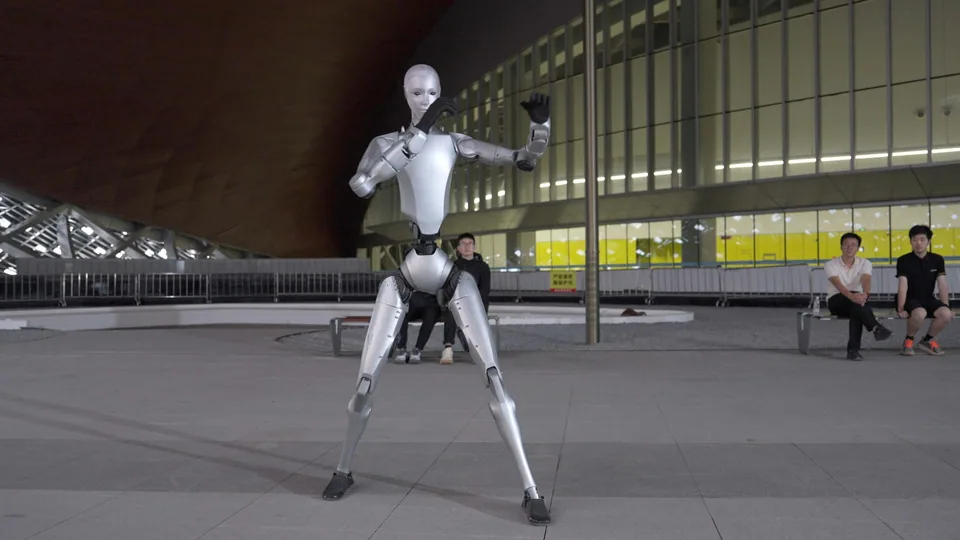 on sale
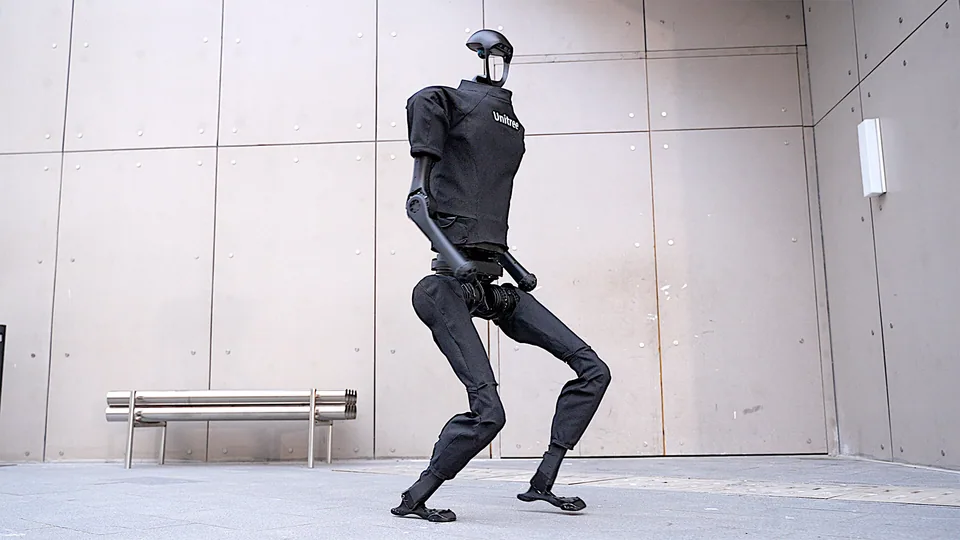 on sale
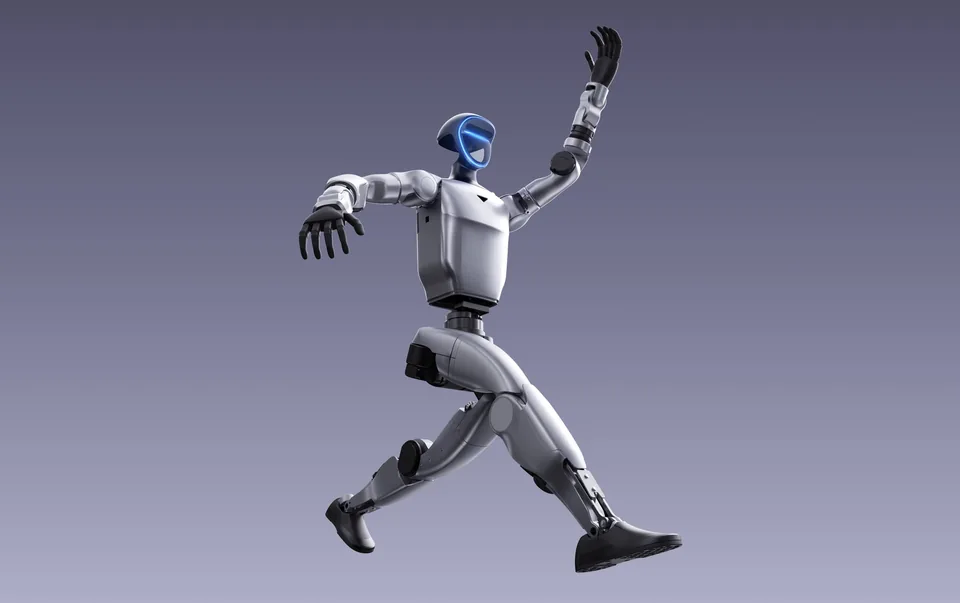 on sale
Unitree Robotics
Unitree G1 (Standard)
- 132 cmheight
- 2 kgpayload
- 79,900price (PLN)
 on sale
 on sale
History
Unitree was founded in 2016 in Hangzhou and for years the company was associated with quadruped robots (“Unitree Go2 Review: Prices and the Air, Pro, X and EDU Versions”). In April 2024 it released a video of the H1 humanoid, and in May 2024 it presented the production G1 at a price from about USD 16,000. The G1 went on sale in August 2024, and in January 2025 Unitree showed it at CES in Las Vegas. The EDU variant is today available at resellers in several versions, up to the "Ultimate D" with tactile hands. The company continued to expand: in August 2025 it introduced the R1, the cheapest full-size humanoid, and in August 2026 it debuted on the STAR Market in Shanghai, raising about USD 905 million (the opening price was 629% above the offer price). The full picture of the family: “Unitree H1, G1, R1 and H2”; context on the manufacturer: Unitree Robotics.
Unitree completes its listing on the Shanghai Stock Exchange; shares rise nearly 500% on the first day Unitree Robotics
Unitree demonstrates its 'Superman' humanoid running at 12.66 m/s, faster than Usain Bolt's world record Unitree Robotics
Unitree Robotics debuts on Shanghai's STAR Market, with shares opening 629% above the offer price; the company raises about $905 million Unitree Robotics
Unitree demonstrates the first fully autonomous humanoid robot fight, powered by the UnifoLM-X2-1.0 model Unitree Robotics
Sources
Frequently asked questions
Is the Unitree G1 EDU (several configurations up to Ultimate D) available in Poland?
Yes, the model is available through the retailers in Poland listed on this page.
How does the G1 EDU differ from the base G1?
The G1 EDU has full SDK access (secondary development), up to 43 degrees of freedom and an NVIDIA Jetson Orin computer, whereas the base version offers no SDK and has 23 DOF.
What does the top "Ultimate D" variant offer?
Five-fingered hands with tactile sensing and the highest number of degrees of freedom in the G1 EDU lineup.
Does Unitree publish an official G1 EDU price list?
No. The prices of USD 43,900–73,900 come from resellers across twelve different configurations, not from the manufacturer's official price list.
Author, source and licence of the photo are given in the caption. Shop links may become affiliate links in future, details: How we make money · How we check