
on sale
Price in Poland
Price from an aggregator: approx. 40,700 PLN* (≈ EUR 9,330) (converted from 10,500 USD, NBP rate 3.8762, as of 1 October 2026). In Polish shops this model costs more.
We mark shop links as sponsored (rel=sponsored); today we receive no commission. How we make money
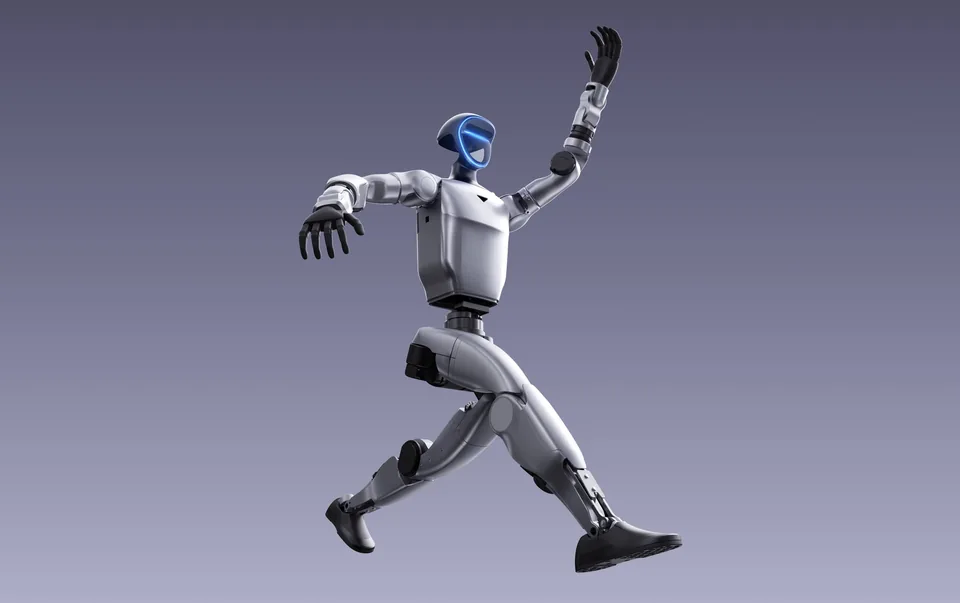
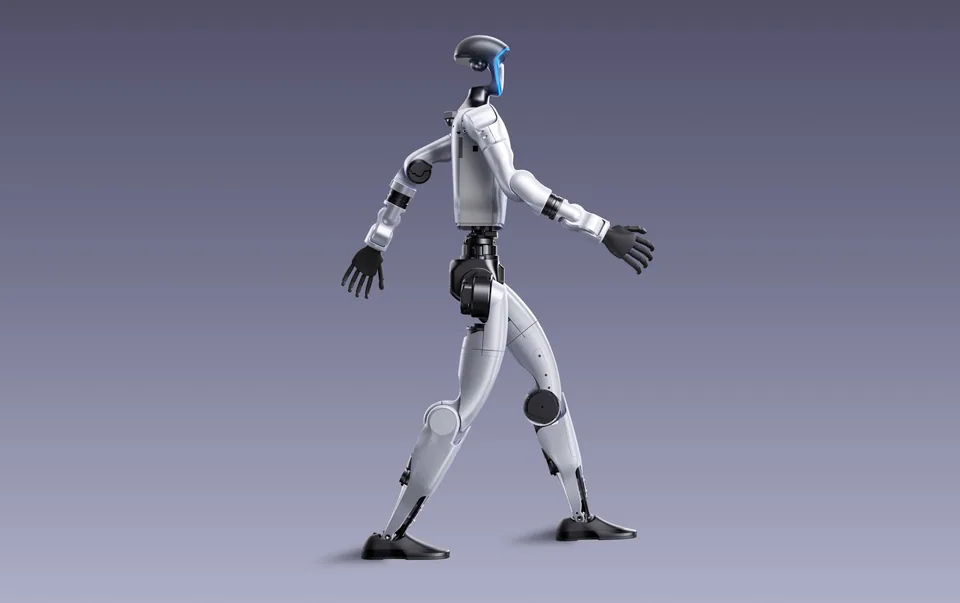
Available in PolandThe R1 EDU is the developer variant of Unitree's cheapest humanoid line, distinguished by support for so-called Secondary Development: you can program your own robot behaviors through the SDK. Its dimensions and mass (123 cm, 25 kg) are identical to the R1 Air, but it has more degrees of freedom, 26 versus 20, which brings its specification close to the standard R1.
The price is 10,500 USD, about 40,700 PLN (≈ EUR 9,330) at a rate of 3.8762 (as of 1 October 2026), nearly twice the basic R1 and more than twice the R1 Air, reflecting the added value of open programming access. The sensors and compute unit (8-core CPU/GPU, binocular vision, 4-microphone array) match the other R1 variants. The manufacturer has not disclosed payload, speed or battery-life figures.
The model targets research teams, universities and companies developing their own robotics software that need low-level API access; in that role the R1 EDU remains the cheapest programmable full-size humanoid on the market. Availability through Polish distributors has not been confirmed.
Data from manufacturer datasheets and product pages; median over the models of this category in the database.
Programmable developer variant with SDK access.
The price of the EDU is the most ambiguous point about this model. A foreign source gives 10,500 USD, which comes to about 40,700 PLN (≈ EUR 9,330) at a rate of 3.8762. Yet at Poland's x-kom on 28 September 2026 the R1 EDU Professional A variant costs 130,000 PLN (≈ EUR 29,790), the Professional G version 78,500 PLN (≈ EUR 17,990) and the Professional D 140,900 PLN (≈ EUR 32,290). The gap against the foreign price is several-fold, and 23% VAT alone does not explain it; it looks as if Polish distributors sell different EDU configurations than the ones a Western review describes. Before buying, demand the exact specification of the kit. On top of the robot come a training computer (an estimated several thousand to over ten thousand zloty for a GPU workstation), a spare battery and warranty, and engineer time, the most expensive item when working with the SDK. Training is usually done in-house.
| Date | Price (PLN) | Variant | Source |
|---|---|---|---|
| 2026-09-28 | 130,000 PLN (≈ EUR 29,790) | — | x-kom.pl |
The R1 EDU is the version you buy so that the robot can do something the manufacturer never programmed. Access to the SDK and so-called Secondary Development means your own code drives the humanoid's movement, rather than just triggering canned animations. The robot is 123 cm tall with 26 degrees of freedom (DOF) and an 8-core CPU/GPU, so it can run your own gait algorithm or an experimental “VLA Models: How AI Controls Humanoid Robots in 2026” on real hardware, not just in a simulator. The manufacturer aims this model at research and development, and market data points to three groups: researchers, education and developers. The most natural home is universities: humanoid robotics courses, thesis projects, student clubs that cannot afford the G1 or H2, which cost many times more. Second is laboratories: whole-body control tests, reinforcement learning, perception experiments using binocular vision and the four-microphone array. Third is schools, but more as a lab for the most advanced classes; for plain demonstration the basic Unitree R1 is cheaper. What the R1 EDU does not do: the manufacturer discloses no payload, speed or battery life, so you cannot honestly plan work in a factory or warehouses around it. It is a tool for learning and prototyping, not for moving goods. For the general picture of what humanoids can and cannot do today, see the article on “How Does a Humanoid Robot Work”.
YES: university labs and institutes that want to teach students to program a humanoid on real hardware; startups writing their own gait or manipulation software; R&D departments that need low-level access to a robot without buying a machine that costs a hundred thousand dollars; teams entering robotics competitions that want a shared platform for many programmers.
NO: companies looking for a robot that can start working on Monday, because payload and runtime are undisclosed and SDK access is engineer's work, not a ready-made service. NO for people who just want to impress at a trade fair: the cheaper Unitree R1 Air or the basic R1 does the same for less. NO for anyone who has not checked the digital risks: in 2025 researchers described security vulnerabilities in Unitree robots (the G1 and the Go2/B2), which is a matter for your IT department before you connect one to a corporate network. More in the piece on “Data Security: Robots with Cameras and the GDPR”.
Our sources describe no customer with a specific use. What we know is that the model is sold at x-kom.pl and that Unitree has four distribution channels in Poland. From the neighborhood: the company 33bots rents out the Unitree G1 humanoid with a certified operator for events, and Unitree robots appeared on the runway at Vogue World 2026. The category as a whole currently has the most demonstrations and research and the fewest documented production deployments; see humanoid robots and “Renting a Humanoid Robot for an Event”.
Unitree R1 has the same 123 cm build and 26 DOF without the open SDK; enough if the robot only needs to perform or teach operation, not run your own code.
Unitree G1 EDU is the bigger sibling (132 cm, 35 kg, 43 DOF by our figures) with a richer hand configuration and a payload of about 3 kg; but it costs many times more, from 190,000 to 250,000 PLN (≈ EUR 57,290) in Polish shops.
AgiBot Lingxi X2 is a compact AgiBot humanoid (130 cm, 35 kg, 25 DOF), around 53,500 PLN (≈ EUR 12,260) once converted; it has interesting demonstration uses but is not as clearly a developer platform.
EngineAI PM01 is 140 cm with 24 DOF, roughly 46,500 PLN (≈ EUR 10,660) converted; aimed at research and education, with no confirmed availability in Poland.
Booster T1 is 118 cm with 23 DOF and the 2025 RoboCup AdultSize champion; much pricier (about 132,000 PLN (≈ EUR 30,250) converted), but with a concrete sporting record.

Unitree Robotics
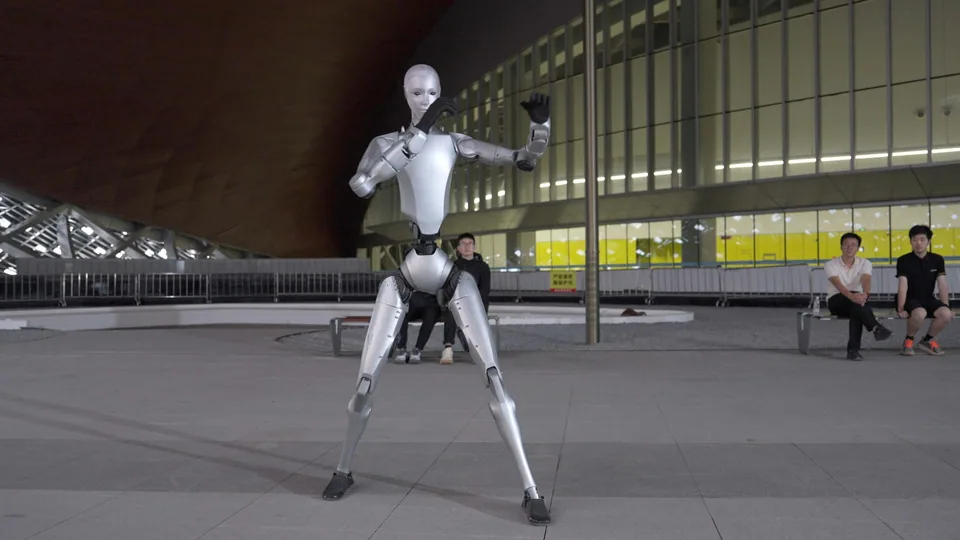
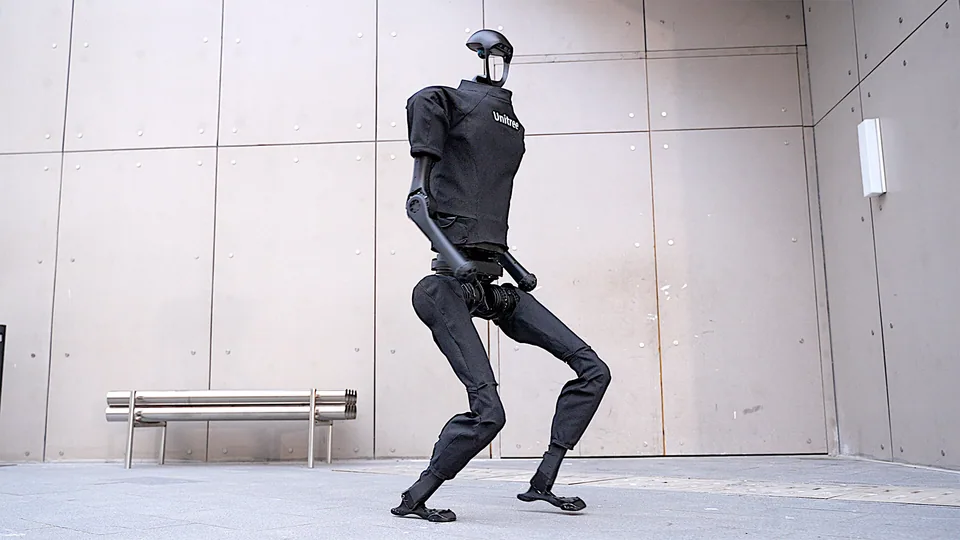
Unitree started with quadrupeds and in April 2024 released a video of its H1 humanoid. In May 2024 the company presented the production G1 from around 16,000 USD, which went on sale in August 2024. The R1 line reached the market in summer and autumn 2025 as Unitree's cheapest full-size humanoid, with a reported starting price of about 5,900 USD. The R1 EDU is its developer variant; the exact date of its launch is not described. In August 2026 the company listed on Shanghai's STAR Market, raising about 905 million USD, and its shares rose more than 400% on the first day. We cover the brand's history in the profile Unitree Robotics.
Unitree completes its listing on the Shanghai Stock Exchange; shares rise nearly 500% on the first day Unitree Robotics
Unitree demonstrates its 'Superman' humanoid running at 12.66 m/s, faster than Usain Bolt's world record Unitree Robotics
Unitree Robotics debuts on Shanghai's STAR Market, with shares opening 629% above the offer price; the company raises about $905 million Unitree Robotics
Unitree demonstrates the first fully autonomous humanoid robot fight, powered by the UnifoLM-X2-1.0 model Unitree Robotics
Yes, the model is available through the retailers in Poland listed on this page.
It supports Secondary Development, meaning you can program your own robot behaviors through the SDK, and it has 26 degrees of freedom.
10,500 USD, or about 40,700 PLN (≈ EUR 9,330) at a rate of 3.8762 (as of 1 October 2026).
Research teams and universities that need low-level programming access to the robot.
Author, source and licence of the photo are given in the caption. Shop links may become affiliate links in future, details: How we make money · How we check