
UBTECH Robotics
Compare
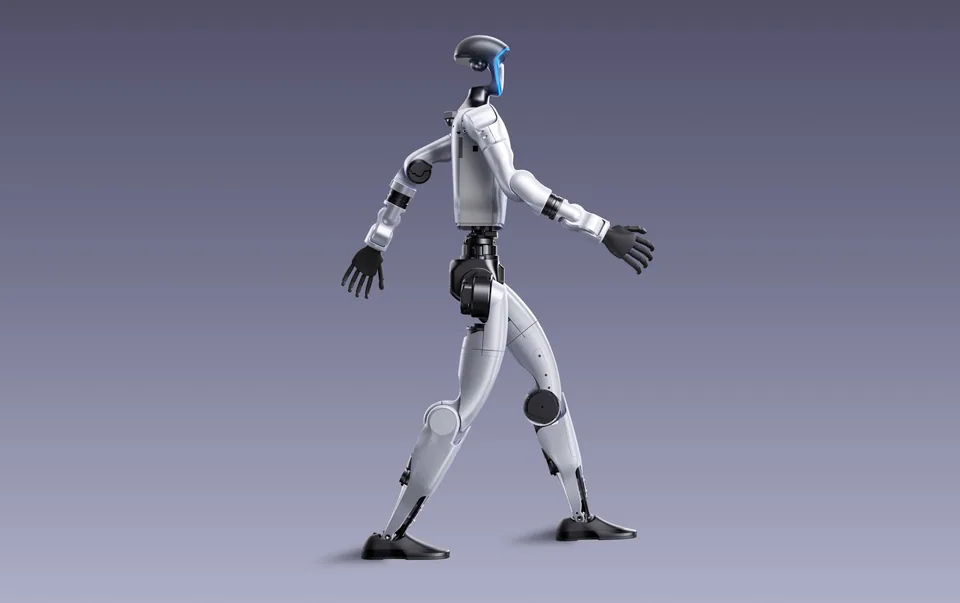
Who sets the UBTech Walker S2 against the Unitree G1 EDU? A plant manager who has heard about humanoids in factories, and a lab head who wants to buy “the same kind” of robot, only cheaper. The question lumps together two different things. The Walker S2 from UBTECH Robotics is an industrial humanoid, shown in July 2025 and offered in pilots, with serial deliveries from November 2025. The G1 EDU from Unitree Robotics is a development platform for programmers. One is designed for the factory floor and a fleet of robots, the other for the lab and your own code. Below we show what is known about each, and what the manufacturer simply does not state.
UBTECH Robotics
Unitree Robotics
| Feature | UBTech Walker S2 | Unitree G1 EDU (several configurations up to Ultimate D) |
|---|---|---|
| Manufacturer | UBTECH Robotics | Unitree Robotics |
| Price (PLN) | no data | approx. 286,500 PLN* (≈ EUR 65,650)(converted from 73,900 USD, NBP rate 3.8762, as of 1 October 2026) |
| Height (cm) | no data | 132.0 |
| Weight (kg) | no data | 35.0 |
| Degrees of freedom | 52 | 43 |
| Payload (kg) | 15.0 | 3.0 |
| Speed (m/s) | no data | 2.0 |
| Runtime (h) | no data | 2.0 |
| Status | pilot | on sale |
The Walker S2 has 52 degrees of freedom (“Degrees of Freedom (DOF) in Humanoid Robots”) against 43 in the top G1 EDU configuration. The waist rotates ±162° and tilts 125°, the hands are fourth-generation, and payload is 15 kg within a reach of up to 1.8 m. The G1 EDU has 3 kg of payload and a walking speed of up to 2 m/s, and its best configuration gets five-fingered hands with tactile sensing.
The biggest difference is power. The S2 has autonomous battery swapping in a dual-battery system that takes under 3 minutes, meant to allow 24/7 operation. The G1 EDU runs about 2 hours, and a person changes the battery. On top of that comes BrainNet 2.0, a system for coordinating many robots, which is not documented for the G1 EDU.
There are also gaps. For the S2 the manufacturer does not state height, weight, walking speed or battery capacity; vision rests on a passive, two-lens RGB camera setup. The G1 EDU, at 132 cm and 35 kg, has an NVIDIA Jetson Orin computer (NVIDIA Jetson), 3D LiDAR, a depth camera and full SDK access. So for the S2 we have details on motion and battery but no basic numbers, and for the G1 EDU the reverse. The practical conclusion: ask the manufacturer about the missing spec-sheet fields before you sign an order.
The Walker S2 has no price on the manufacturer's page, not even an indicative one, and we have no information on a Polish sales channel or service. The manufacturer names factories where the robot is meant to work: Dongfeng Liuzhou, Geely, FAW-Volkswagen Qingdao, Audi FAW, BAIC New Energy, Foxconn and SF Express. It gives neither the number of robots nor the scope of tasks, so we treat this as a claim.
The G1 EDU comes in twelve configurations, which US resellers price at roughly USD 43,900–73,900 (there is no official Unitree price list). In Poland it costs PLN 190,000 (≈ EUR 43,540) (Botland, EDU U2 variant) or PLN 250,000 (≈ EUR 57,290) (x-kom, EDU Ultimate A), according to data from late September 2026. So the S2 has to be negotiated directly with the manufacturer or its partner, while the G1 EDU can be ordered from a Polish seller. A broader cost calculation for a humanoid robot is in “Humanoid Robot TCO: How to Calculate Total Cost”.
The Walker S2 is intended for the factory and logistics: there, what counts is a 15 kg payload, battery swapping without a person and coordination of many robots on a single line. It suits large plants that can negotiate an individual contract and accept having no list price. For an overview of similar deployments see “Humanoid Robots in Factories 2026”; for warehouse tasks also look at warehouses.
The G1 EDU suits the university and laboratories: reinforcement learning, teleoperation, grasping research and the models described in “VLA Models: How AI Controls Humanoid Robots in 2026”. It has no industrial certification (“Robot Safety Standards”), so it should not work on a factory floor. For a single laboratory that does not need a fleet, the S2 would be an ill-fitting purchase.
The Walker S2, in pilot use since July 2025, stands out for BrainNet 2.0, a system for coordinating many robots at once. It is a rare feature among humanoids in this segment and is not documented for the G1 EDU. The S2 also has more degrees of freedom across the body (52 versus 43) and a larger payload (15 kg versus 3 kg), which points it toward production work rather than research. UBTech does not publish a price for the S2, whereas the G1 EDU at least has indicative reseller pricing ($43,900 to $73,900). The S2 targets industry only, meaning manufacturing and logistics; the G1 EDU spans research and education thanks to its open SDK. For a plant planning a coordinated fleet of robots, the S2 with BrainNet 2.0 offers a unique capability. For a single lab with no need for swarm coordination, the G1 EDU remains the more affordable and better-documented choice.
A large plant, three shifts and a budget for a pilot: talk to UBTECH about the S2, but buy only after a price list, a service agreement and a trial at your own station. For comparison take the Agility Digit 5.
A laboratory, university or team with a programmer: the G1 EDU. It is available in Poland, cheaper than industrial humanoids and open to your own code. Anyone who only wants a show piece without an SDK can consider the Unitree G1. The whole category is described on the humanoid robots page, and we write about the Chinese manufacturer market in “Chinese Humanoid Robots”. In short: the S2 for the factory, the G1 EDU for the lab, and mixing the roles ends in disappointment.
UBTech's system for coordinating several robots working together (swarm coordination), a capability the G1 EDU has no documented equivalent for.
No. The manufacturer's website gives no pricing information at all, unlike the indicative ranges available for the G1 EDU.
The Walker S2, at 15 kg, is well ahead of the G1 EDU with its 3 kg.
The Walker S2, with 15 kg within a reach of up to 1.8 m, clearly beats the G1 EDU with 3 kg.
Yes. Botland listed PLN 190,000 (≈ EUR 43,540) for the EDU U2 variant and x-kom PLN 250,000 (≈ EUR 57,290) for the EDU Ultimate A (data from late September 2026).