Compare
AgiBot A2 vs Unitree G1 EDU: China's Rival Humanoids for Research and Industry
Key facts
- Price in PolandAgiBot A2 (Yuanzheng A2): approx. 213,200 PLN* (≈ EUR 48,770 at NBP rate 4.3716 of 20 October 2026) · Unitree G1 EDU: approx. 286,500 PLN* (≈ EUR 65,540)
- PayloadAgiBot A2 (Yuanzheng A2): 2 kg · Unitree G1 EDU: 3 kg
- WeightAgiBot A2 (Yuanzheng A2): 69 kg · Unitree G1 EDU: 35 kg
- StatusAgiBot A2 (Yuanzheng A2): on sale · Unitree G1 EDU: on sale
- In PolandAgiBot A2 (Yuanzheng A2): no · Unitree G1 EDU: yes
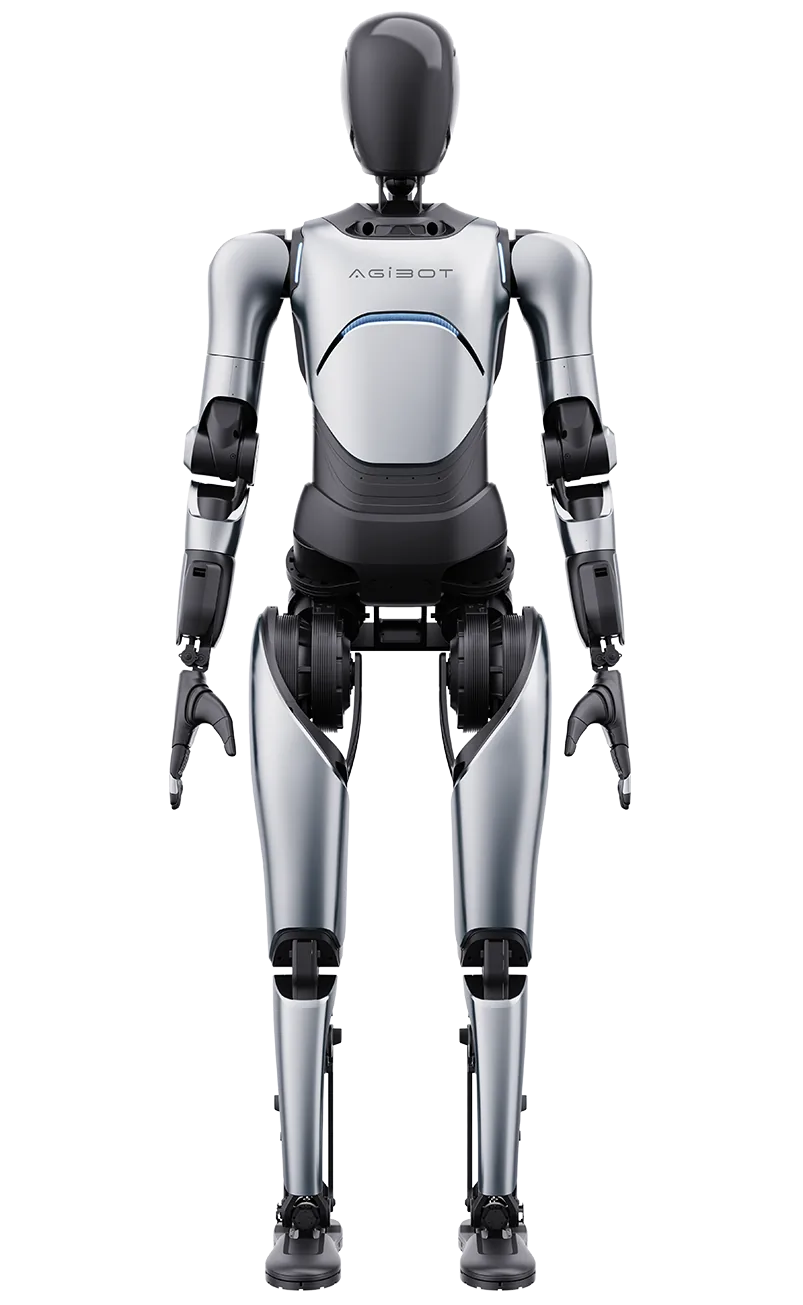
A comparison of the AgiBot A2 and the Unitree G1 EDU. Both models come from China. The A2 is built by Shanghai-based AgiBot, founded in 2023, and the G1 EDU by Hangzhou-based Unitree Robotics, active since 2016. Neither has a single, clearly stated price. What separates them is the size of the robot, how open the software is, and the fact that you can buy the G1 EDU in a Polish shop while the A2 is not on sale here yet. Below we set the numbers side by side and say who comes out better with which.
Unitree Robotics
Unitree G1 EDU (several configurations up to Ultimate D)
286,500 PLN* (≈ EUR 65,540)| Feature | AgiBot A2 (Yuanzheng A2) | Unitree G1 EDU (several configurations up to Ultimate D) |
|---|---|---|
| Manufacturer | AgiBot (Zhiyuan Robotics) | Unitree Robotics |
| Price (PLN) | approx. 213,200 PLN* (≈ EUR 48,770)(converted from 54,999 USD, NBP rate 3.8762, as of 1 October 2026) | approx. 286,500 PLN* (≈ EUR 65,540)(converted from 73,900 USD, NBP rate 3.8762, as of 1 October 2026) |
| Height (cm) | 169.0 | 132.0 |
| Weight (kg) | 69.0 | 35.0 |
| Degrees of freedom | 40 | 43 |
| Payload (kg) | 2.0 | 3.0 |
| Speed (m/s) | 1.2 | 2.0 |
| Runtime (h) | 2.0 | 2.0 |
| Status | on sale | on sale |
Design and specifications
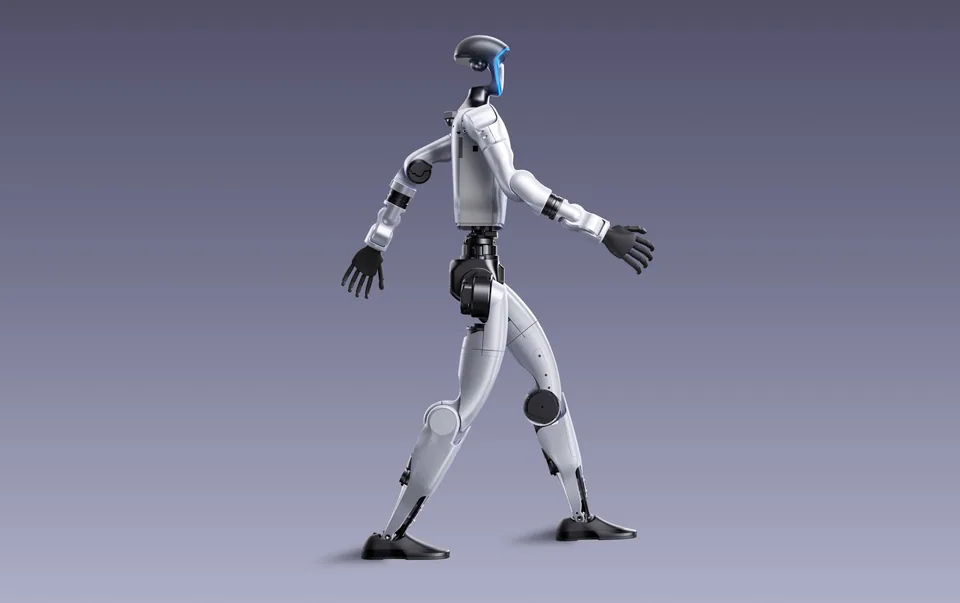
The A2 is clearly larger: 169 cm and 69 kg against 132 cm and 35 kg for the G1 EDU. A bigger machine has a reach closer to a human's, but it is heavier to transport and secure. The number of degrees of freedom (“Degrees of Freedom (DOF) in Humanoid Robots”) is similar: the A2 has over 40 (some sources say 49+), the G1 EDU up to 43 in its top configuration. The A2's hands have 19 degrees of freedom according to its description, while the highest G1 EDU version gets five-fingered hands with tactile sensing.
Motion figures favor the smaller robot. The G1 EDU walks at up to 2 m/s and carries up to 3 kg, whereas the A2, according to the manufacturer's official page, reaches 1.2 m/s with a maximum arm load of about 2 kg. Higher values (3.3 m/s and 15 kg) circulate in some roundups, but the manufacturer does not confirm them. Runtime is the same: about 2 hours.
The software layer differs. The A2 has the WorkGPT model at 200 TOPS, plus sensors for interaction: sound source localization, face recognition, lip reading and 3D SLAM. The G1 EDU bets on openness: full SDK access, an NVIDIA Jetson Orin computer (NVIDIA Jetson), a depth camera, 3D LiDAR and microphones. A single, complete official spec sheet for the A2 is hard to find, so it helps to read up on “How to Read a Robot Datasheet”.
Price and availability in Poland
Both prices call for caution. For the A2, a third-party aggregator service gives USD 54,999–99,999 (from about PLN 213,200 (≈ EUR 48,770) at a rate of 3.8762), and other roundups give USD 100,000–190,000. The G1 EDU comes in twelve configurations, which US resellers price at roughly USD 43,900–73,900; there is no official Unitree price list.
In Poland the G1 EDU has concrete shelf prices: Botland lists PLN 190,000 (≈ EUR 43,460) for the EDU U2 variant and x-kom PLN 250,000 (≈ EUR 57,190) for the EDU Ultimate A (data from late September 2026). For the A2 we found no Polish distributor or service point. Buying one therefore means importing from China, paying customs duty, 23% VAT and relying on mail-in service. Add team training and spare batteries; the calculation is in “Humanoid Robot TCO: How to Calculate Total Cost”, and prices of other models in “How Much Does a Humanoid Robot Cost in 2026”. Before ordering either of them, ask for a written configuration specification and a quote.
Which model for which job
At a university and in a laboratory, the G1 EDU does better. It is lighter, cheaper, available locally, has an open SDK and a software environment familiar to many doctoral students worldwide.
The A2 makes sense for teams working on human-robot interaction, because it adds conversation and person-recognition sensors, and for companies that want to test a larger humanoid on simple logistics or demonstration tasks.
Neither is ready for work in a factory: two hours on a battery and 2–3 kg of payload rule out a production shift. More on Chinese platforms: “Chinese Humanoid Robots”.
Conclusion
The A2 is clearly bigger and heavier than the G1 EDU, at 169 cm and 69 kg against 132 cm and 35 kg, even though their degrees of freedom are close (40 versus 43). It also walks faster, at 3.3 m/s against 2.0 m/s, and carries more: 15 kg versus 3 kg. Price makes the G1 EDU the cheaper way in. It starts at about $43,900 from resellers, while the A2 begins at $54,999 and can climb as high as $99,999 depending on configuration. AgiBot runs its own WorkGPT model with a claimed 96 percent success rate, although some A2 specifications, including the exact number of degrees of freedom, differ between sources. The G1 EDU has been on the global market longer and comes with a broader ecosystem of developer documentation. For logistics and manufacturing jobs that need a heavier payload, the A2 is the better fit; for academic research, the G1 EDU is.
A university or laboratory with a programmer on the team: the G1 EDU. It is cheaper, faster, lighter, sold in Polish shops and offers a full SDK.
A team studying interaction with people that needs a larger, more human-like frame: the A2, but only after seeing a live demonstration and getting written parameters, because the source data diverge.
A company looking for a robot to do work: neither. If you want to stay in the same family, check the flagship Agibot A2 Ultra; if a show piece without an SDK is enough, look at the cheaper Unitree G1. The whole shelf is in humanoid robots. In short: the G1 EDU is the safer purchase, the A2 a more interesting but less well-documented experiment.
Frequently asked questions
Which robot can carry more?
The A2, at 15 kg, is well ahead of the G1 EDU, which is rated for 3 kg.
Is the A2's price firmly confirmed?
Not entirely. Sources quote a wide range, from $54,999 up to $190,000 in some listings, and there is no single official price from the manufacturer.
Which robot is cheaper in its base configuration?
The G1 EDU, with configurations starting at about $43,900 from resellers, against $54,999 for the A2.
Which robot is faster, the A2 or the G1 EDU?
The G1 EDU, which walks at up to 2 m/s. According to the manufacturer's official page the A2 reaches 1.2 m/s, and higher values from some roundups are unconfirmed.
Can I buy the AgiBot A2 in Poland?
We found no Polish distributor, so buying one means importing it. The G1 EDU is sold by Botland and x-kom, among others.
Which robot has more degrees of freedom?
A similar number: the A2 has over 40 (some sources say 49+), the G1 EDU up to 43 in its top configuration with tactile hands.
How much does the G1 EDU cost in Poland?
In late September 2026 Botland listed PLN 190,000 (≈ EUR 43,460) for the EDU U2 variant and x-kom PLN 250,000 (≈ EUR 57,190) for the EDU Ultimate A.
Sources
- AgiBot A2 (Yuanzheng A2) · en.wikipedia.org
- AgiBot A2 (Yuanzheng A2) · agibot.com
- AgiBot A2 (Yuanzheng A2) · guinnessworldrecords.com
- Unitree G1 EDU (several configurations up to Ultimate D) · unitree.com
- Unitree G1 EDU (several configurations up to Ultimate D) · zmprobots.com
- Unitree G1 EDU (several configurations up to Ultimate D) · github.com