In this article
Key facts
- Models coveredUnitree R1, Unitree G1 (Standard), Unitree H1
- Prices of the models covered41,900 PLN (≈ EUR 9,600 at NBP rate 4.3641 of 21 October 2026) – 439,000 PLN (≈ EUR 100,590)
- Covered models available in Poland4 of 4
- Number of sources8
- Reading time8 min
Why the price question has no single answer
A humanoid robot is not one product but a category, ranging from demonstration platforms for under $5,000 to industrial systems whose unit price is never published because they are sold as multi-year fleet contracts. It helps to separate three segments: robots available off the shelf at a public price (mostly Chinese manufacturers, led by Unitree), robots in pre-order with an announced target price (1X Neo), and pilot robots sold only to companies under B2B terms, where the price is a trade secret (Tesla Optimus, Figure, Apptronik Apollo, Boston Dynamics Atlas).
The overview below relies on prices from manufacturers' websites and official stores; they are given as of September 2026 and may change. Wherever a number comes from an industry estimate rather than the manufacturer's price list, this is stated explicitly: no confirmed number is better than a guessed one.
Prices of specific models, September 2026
Unitree R1: the cheapest full humanoid on the market
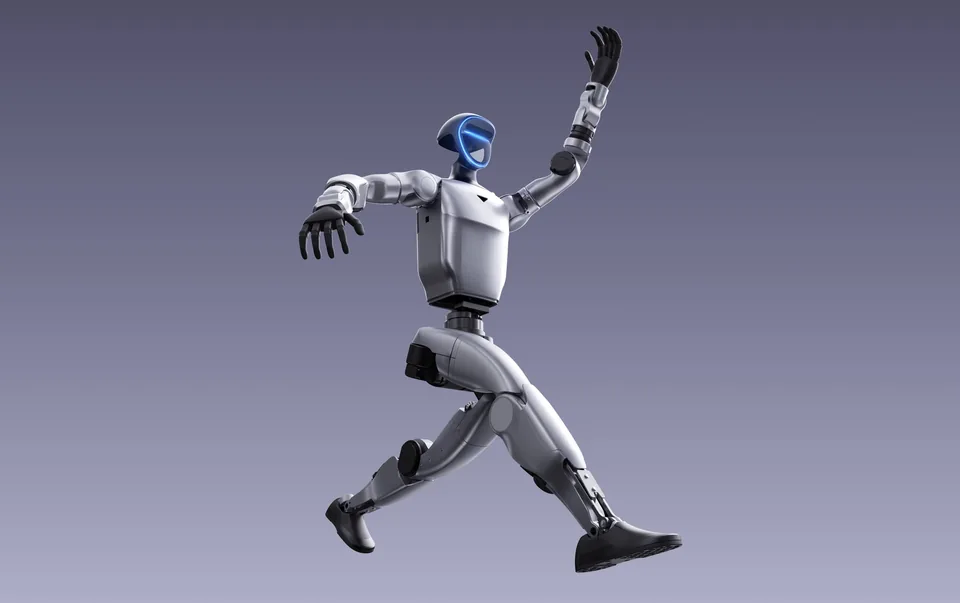
The Unitree R1 is currently the cheapest full-size humanoid robot from an established manufacturer. Unitree's official store gives the R1 a price from $4,900 (R1 Air, R1 and R1 EDU variants); the EDU version, which supports software development, requires contacting the sales department (Unitree store). According to the store the robot weighs about 29 kg, stands 123 cm tall and offers 20-26 degrees of freedom; the store also quotes shipping of $300-1,200, with customs duty and taxes left to the buyer. A full specification (payload, speed, battery life) is not given in the store.
Unitree G1: a research platform at used-car prices
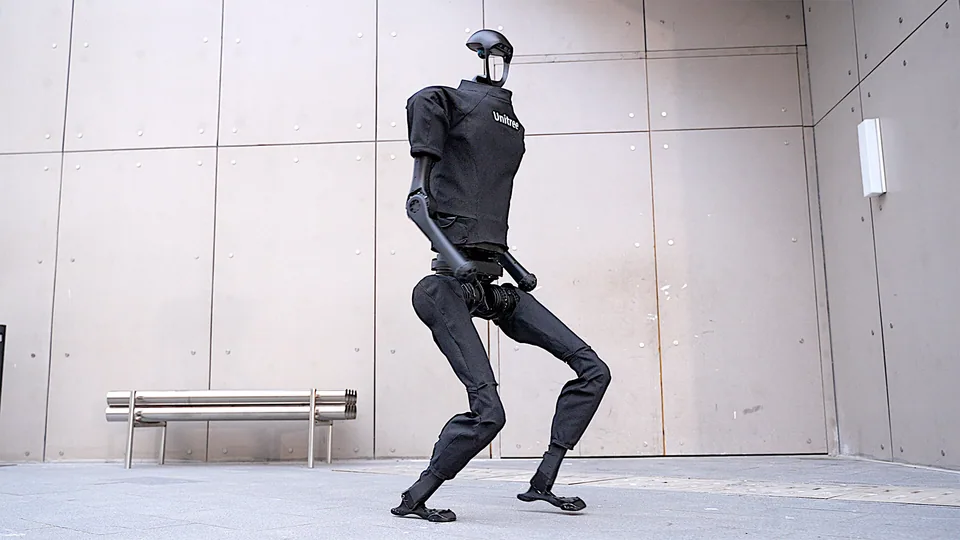
The base Unitree G1 (no SDK, demonstration only) costs from $13,500 according to the manufacturer's official website (excluding tax and shipping). The G1 EDU developer variant, with expandable degrees of freedom (23-43 DOF) and an optional three-fingered hand, has no public price list: Unitree refers buyers to its sales department. EDU configuration prices from resellers that circulate online are not confirmed by the manufacturer, so we do not give them; they do show, however, why comparing "the price of the G1" without naming the variant is meaningless.
Unitree H1 and H2: research and industrial flagships
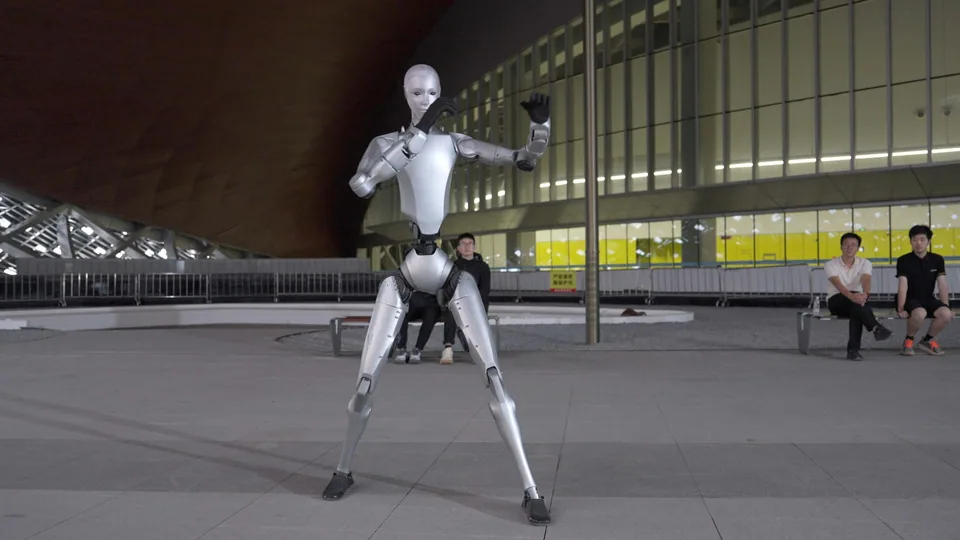
The Unitree H1, Unitree's flagship before its successor arrived, is listed in the manufacturer's store at $90,000, but the product page states outright: "Contact us for the real price." The figure shown is a reference point, not a transaction price. According to Unitree the H1 stands about 180 cm tall, weighs about 47 kg and reaches 3.3 m/s (the maker speaks of a world record). Its successor, the Unitree H2, has a public price list in the Unitree store: $29,900 for the standard version and $100,000 for the "H2 Plus" variant; the store gives 180 cm, 31 degrees of freedom and a 2070 TOPS computing platform, and only the EDU version supports software development. The H2 is therefore cheaper at launch than the H1 with a higher specification, which fits the observed fall in Chinese humanoid prices, although we do not base that conclusion on broader data.
Tesla Optimus: the most-hyped robot with no price
Contrary to popular belief, the Tesla Optimus Gen 3 has no official price. Tesla has published no official specification, price or launch date for Optimus Gen 3, so we do not repeat the figures circulating on third-party sites (details in “Tesla Optimus: What We Actually Know (as of September 2026)”). The $20,000-30,000 figure, most often cited as the target price, is, according to media reports, an announcement by Elon Musk, not a selling price. No date for consumer availability has been given in primary sources, so every number attached to Optimus is a plan, not an offer.
Figure 02/03 and other US players: prices locked behind contracts
The Figure 03, Figure AI's model being piloted at BMW's Spartanburg plant, has no public unit price: Figure AI does not state one, and its announcement on scaling production (more than 350 delivered units) contains no per-unit financial data. It is similar with Apptronik Apollo (partners: Mercedes-Benz, GXO Logistics), Boston Dynamics Atlas (all 2026 deployments are contracted to Hyundai and Google DeepMind) and Agility Robotics Digit (a robots-as-a-service model); none of these companies publishes unit prices.
Among US humanoids, the 1X NEO stands out with a public consumer price:, 1X Technologies' home robot, at $20,000 as a one-time purchase or $499 per month on subscription, with a reservation via a $200 deposit (1X). The maker announces first deliveries in 2026.
Chinese competition beyond Unitree
Beyond Unitree, the Chinese market has a dozen or so manufacturers with varied approaches to pricing. According to the South China Morning Post UBTech debuted a humanoid at about $41,000 in 2025 (the figure comes from the article's headline). AgiBot prices (A2, Lingxi X2) appear mainly at intermediaries, not in the manufacturer's price list. UBTech's flagship Walker S2 and the Fourier GR-2/GR-3 have no public price list.
Why price spreads are so wide
Several factors overlap, creating a range from $4,900 up to amounts that companies do not make public:
Target segment. A demonstration robot without an SDK (such as the R1 Air) is an entirely different product from a development platform for researchers (G1 EDU Ultimate) or an industrial robot integrated into a production line (Figure 03, Apollo). The price rises with the openness of the software, the quality of tactile sensors and the safety certifications needed to work alongside people.
Sales model. Unitree sells hardware directly with a public price list in its store, a model familiar from consumer electronics. American companies focused on industry (Figure, Apptronik, Boston Dynamics, Agility) sell access to the robot through multi-year contracts or a robot-as-a-service model, where the unit price does not exist as a separate line item: you pay for the result or for the fleet.
Stage of commercialization. Optimus, Atlas and XPeng Iron are still in the pre-production or pilot phase, so their "prices" are management announcements, not commercial offers. Only the move to mass production will reveal the real unit cost (XPeng announces it for the end of 2026 — a company announcement).
Currency and importer margin. Prices in Polish shops can differ considerably from the manufacturer's dollar price list, because they include the reseller's margin, customs duty and 23% VAT. Polish offers are collected on the individual model pages in humanoid robots; before buying, compare them with the manufacturer's price.
Total Cost of Ownership: what gets added to the purchase price
The purchase price is only the first line in the budget. For a company considering deploying a humanoid robot, total cost of ownership (TCO) can be significant relative to the price of the hardware itself, especially in the research and industrial segment. No manufacturer publishes a detailed TCO calculator; this is an area where the market is still opaque, and it should be communicated as such.
Service and maintenance. Bipedal robots have dozens of actuators working under constant dynamic load, and every fall or overload risks mechanical damage. That is why robots-as-a-service providers (Agility Robotics with Digit) bill by contract rather than through a one-off sale: the cost of keeping the robot working is built into the subscription, not left as a separate item for you to estimate.
Software licenses. Base versions (Unitree R1 Air, G1 without SDK) give no access to programming your own behaviors; full development requires the EDU variant, several times more expensive than the base version. With closed-platform makers (for example Figure with its Helix model), the software is usually not separated from the hardware, which limits the choice of an alternative AI platform; licensing terms differ between companies.
Integration. Connecting a robot to an existing production line or logistics process is the integrator's job, a cost independent of the robot's price and highly dependent on the complexity of the facility. That is why pilots such as Figure 03 at BMW Spartanburg or Apollo at Mercedes-Benz last for months before production start: a large share of the time goes into tuning the integration. More on this stage in “How to Buy a Cobot Step by Step”.
Spare parts. Hands with a high number of degrees of freedom (for example 22 DOF in the 1X Neo according to the maker) are among the most complex components of a robot: they need precise mechanisms and touch sensors, which usually raises the cost of replacing them. No reliable source gave a spare-parts price list for any model. The absence of confirmed data is itself important information: running costs must be negotiated individually before purchase.
Training and operation. Robots with an open SDK (G1 EDU, R1 EDU) require an engineering team able to program and maintain the system. This is a personnel cost that appears in no price list but is very real in a project budget.
A buyer who counts only the list price systematically underestimates the real cost of owning a humanoid robot, particularly in the research and industrial segments. In the hobby and education segment (Unitree R1), the gap between purchase price and TCO is smaller, because the robot needs neither production integration nor industrial-grade service. More on the components behind these costs in “Actuators in Humanoid Robots” and “Degrees of Freedom (DOF) in Humanoid Robots”.
How to read humanoid robot prices
Three practical rules. First, check whether the price refers to the demonstration or the development (EDU) version: the difference can be several-fold for the same model, as “Unitree H1, G1, R1 and H2” shows. Second, treat with caution the price of any robot not yet on commercial sale (Optimus, Atlas, XPeng Iron): these are management announcements, not offers. Third, when buying in Poland, compare a local seller's offer with the manufacturer's price list; discrepancies of several hundred percent, visible in the offers of some marketplaces, need explaining before you order. The rules for reading a full datasheet are described in “How to Read a Robot Datasheet”.
The market remains young and opaque on pricing. What is a premium price today (the H2 at $29,900) may be an entry-level price in two years, and the G1 costs today, according to the manufacturer's site, from $13,500. Current prices for all models, updated continuously, are in humanoid robots.
Frequently asked questions
What is the cheapest humanoid robot on the market?
The cheapest full-size humanoid from an established manufacturer that we found is the Unitree R1, from $4,900 according to the manufacturer's official store (as of September 2026). That is the base price, before customs duty, VAT and shipping to Poland (the store quotes shipping of $300–1,200).
Is the Tesla Optimus available for sale yet?
There is no confirmation of commercial sales or an official price for the Optimus (Gen 3); according to available information the robot is being developed inside Tesla. The $20,000-30,000 figures circulating in the media come, according to those reports, from remarks by Elon Musk, not from an official price list.
Why do humanoid robot prices differ by as much as tenfold?
Because one category name covers completely different products: a demonstration platform without an SDK (Unitree R1) is not the same thing as a fully programmable research robot (G1 EDU Ultimate), and neither is an industrial robot in a B2B pilot (Figure 03, Apollo), where the unit price is not published at all.
What else should be added to the budget besides the purchase price of a humanoid robot?
Service and maintenance, software and SDK licenses, integration with existing processes, spare parts (especially hands and actuators) and operator training. There is no published TCO calculator, so we do not give the scale of these costs; for research and industrial models they can be significant relative to the hardware price.
Can you already buy a humanoid robot in Poland?
Yes, Unitree models are offered by Polish resellers, and their prices are given on the individual model pages. Shop prices include the reseller's margin, customs duty and 23% VAT, so compare them with the manufacturer's price list before buying.
Sources
Links to the material this text is based on. Before you base a decision on a figure from the article, check it at the source.
About the authors
A chief engineer by profession (technical head of a ship's machinery plant, licensed). Sets the site's editorial rules and is responsible for them; he does not read every page before publication.
Texts are prepared by the editorial team using AI tools. We compare data with primary sources on a sample basis, not page by page. Our rules are described here: How we check · About us