In this article
Key facts
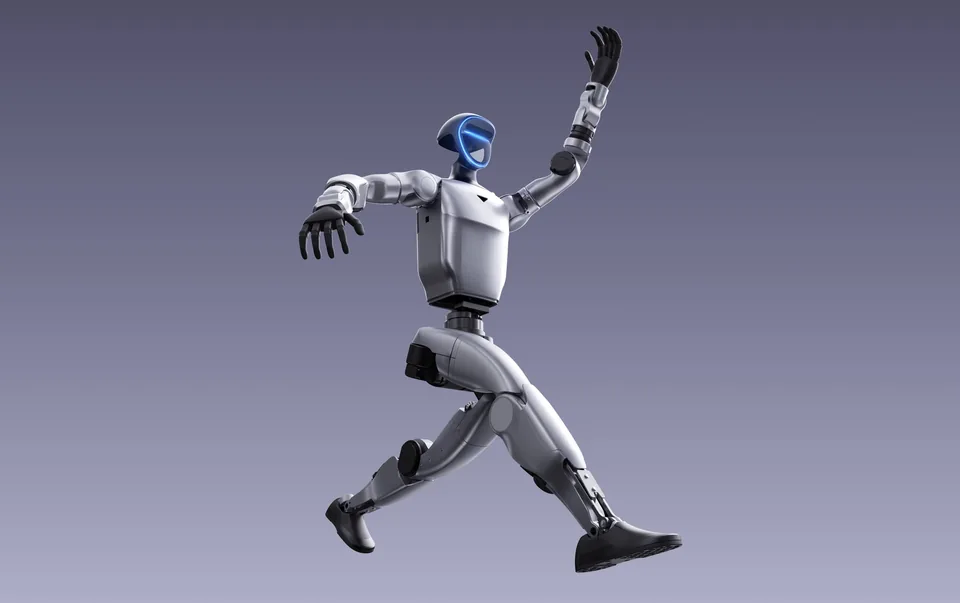
- Models coveredUnitree G1 (Standard)
- Prices of the models covered79,900 PLN (≈ EUR 18,310 at NBP rate 4.3641 of 21 October 2026)
- Covered models available in Poland1 of 1
- Number of sources4
- Reading time5 min
The list price of a humanoid robot, whether $30,000, $80,000 or $150,000, is the starting point of the calculation, not its result. Companies that count only the purchase price regularly miscalculate in one direction or the other: they either drop a project that still pays off once all costs are added up, or they buy a machine that turns out to be more expensive than assumed once servicing and downtime are included. Total cost of ownership (TCO) is the method that avoids both mistakes.
What TCO is made of
The basic principle: TCO is calculated for a specific task over a specific period, not "for the robot in general". On top of the purchase price or lease cost, add in turn:
- delivery and customs duties, especially significant when buying from a manufacturer outside the European Union;
- integration: adapting the workstation, any tooling, programming the task;
- safety: guards, sensors, procedures compliant with the standards (see our article on robot safety standards);
- training of the staff who supervise the robot;
- service and maintenance throughout the period of use;
- software: licenses, updates, any subscription fees for AI features;
- energy: electricity consumption;
- spare parts and batteries: humanoid robot batteries have a limited number of charge cycles and need replacing after a certain time;
- downtime: time when the robot is not working because of servicing, updates or a fault;
- human intervention: situations in which an employee has to finish the task because the robot could not cope.
The sum of these items is divided not by the number of hours the robot could theoretically work, but by the number of hours of work actually and safely performed. That distinction is key. A manufacturer may quote availability of 20 hours a day, but if in practice a third of the time goes to downtime and corrections, the effective cost per working hour is correspondingly higher.
How to calculate the cost per hour
The calculation rests on a single formula: cost per productive hour = (purchase price + annual costs × number of years) / (productive hours per year × number of years). Annual costs include energy, service, software updates and insurance; for a worker the numerator holds the employer's costs (gross pay with on-costs) and recruitment costs.
A worked example with an illustrative assumption (not market data): the purchase price alone of the base-version Unitree G1 is USD 13,500, or about PLN 52,300 (≈ EUR 11,980) (Unitree). Assuming 2,000 productive hours a year over 5 years (10,000 hours), that gives about PLN 5.2 (≈ EUR 1) per hour from the purchase alone, before service, energy, integration and human supervision, which have to be added from the supplier's offer.
The result depends above all on the utilization assumption: at half the hours, the cost per hour doubles. In a real purchasing decision, ask the supplier for a written breakdown of service costs.
How to compare a robot's cost with an employee's
To compare with human labor you need the effective cost of a robot-hour: divide the total TCO by the number of working hours over the whole period of use (the example assumes five years). The same method applies to a person, which is why both costs are related to productive hours, not hours worked in the formal sense (holidays, sick leave, breaks). The result depends on Polish rates and Polish service costs.
For a company in Poland, rather than comparing against other people's estimates it makes more sense to calculate your own scenario: the real cost of employing someone in the given role (gross salary plus contributions, absences, turnover) set against the offer of a specific robot supplier, including the service terms in Poland, because a long travel time for a service technician coming from abroad in itself raises the cost of downtime.
The factors that change the result most
Three variables have the strongest effect on the TCO result:
- Intensity of use. A robot working one shift spreads its purchase cost over fewer hours than a robot working three shifts. The higher the utilization, the lower the unit cost.
- Availability of local service. No authorized service in Poland means longer downtime and higher transport costs with every repair, which can change the calculation more than the purchase price itself.
- Tax relief. The robotization tax relief allows an additional 50% of eligible costs to be deducted from the tax base (under current law, for costs incurred up to the end of the tax year starting in 2026), provided the machine being bought meets the statutory definition of an industrial robot (we describe this in the article on the robotization tax relief). Not every humanoid robot automatically qualifies.
Purchase, lease or subscription
More and more manufacturers offer a humanoid robot not only as a one-off purchase but also as a lease or a subscription with a monthly fee covering service and software updates. From a TCO point of view each of these models shifts the risk in a different direction. A one-off purchase means a higher upfront cost, but full control of the hardware and no dependence on continued cooperation with the supplier. Leasing spreads the cost over time and makes budgeting easier, but usually carries a higher total cost over the long term. A subscription with service included shifts part of the risk of failures and downtime to the supplier. That is attractive for a company testing the technology for the first time, though it is usually the most expensive per year if the robot is to work for longer than a few years.
It is worth matching the financing model to the stage the company is at: a pilot and first tests are better handled under a subscription or lease that limits the loss if the project fails, with the decision to buy outright taken only after confirming that the task is genuinely worth automating.
Practical recommendation
Before deciding, build your own spreadsheet with the items listed above, ask at least two suppliers for a written breakdown of service costs, and calculate a pessimistic scenario (lower utilization, longer downtime) alongside the optimistic one. Only such a range of outcomes, not a single number from a manufacturer's marketing material, gives a basis for an investment decision. Current prices of specific models available on the Polish market are in our price index.
Frequently asked questions
What does a humanoid robot really cost to run beyond the purchase price?
There is no credible universal ratio of integration and safety costs to the robot price, because they depend on the task, the environment and the risk-assessment requirements. So before buying, ask the supplier for a written breakdown of integration, service, software updates and insurance, and base the calculation on the offer, not on averaged estimates.
Is a humanoid robot cheaper than an employee?
It depends on the task, the scale and utilization; we know of no credible universal comparison. The cost per robot hour is calculated as (purchase price + annual costs × years) / (productive hours × years), and for a worker analogously with the Polish employer cost. For the same robot, the cost per hour rises in inverse proportion to productive hours, and battery power (the Unitree G1: about 2 hours per battery) limits continuity of work.
Which costs are most often left out when calculating a robot's TCO?
The items most often left out are downtime for servicing and software updates, the cost of retraining staff to supervise the robot, the cost of integration with the existing line (mechanical and software), insurance, and the cost of human intervention in situations the robot cannot resolve on its own.
Can the cost of buying a humanoid robot be deducted from tax in Poland?
Poland's robotization tax relief (ulga na robotyzację) applies to industrial robots that meet together the conditions in Article 38eb(3) of the CIT Act: at least 3 degrees of freedom, programmability, digital data exchange with control and diagnostics, a connection to production IT systems, monitoring by sensors or cameras, and integration with other machines in the production cycle (CIT Act). Whether a specific humanoid robot model qualifies depends on its technical specification and requires a separate analysis; not every machine called a robot automatically meets the statutory definition.
Sources
Links to the material this text is based on. Before you base a decision on a figure from the article, check it at the source.
About the authors
A chief engineer by profession (technical head of a ship's machinery plant, licensed). Sets the site's editorial rules and is responsible for them; he does not read every page before publication.
Texts are prepared by the editorial team using AI tools. We compare data with primary sources on a sample basis, not page by page. Our rules are described here: How we check · About us