prototype
Pros
- 24 degrees of freedom, works at heights of 0-200 cm
- Payload up to 5 kg, 360° LiDAR, 550 TOPS
- Wheeled base avoids walking problems
- Series prices start at RMB 199,000
Cons
- No confirmed distribution outside China
- Not available in Poland
- Wheeled base limits e.g. stairs
- Manufacturer data unconfirmed
- 200cmHeight
- 5kgPayload
- 24DOFDegrees of freedom
Key facts
- Specificationsheight 200 cm · payload 5 kg · degrees of freedom 24 DOF
- Statuson sale
- Availability in Polandnot confirmed
- VerdictA good research option for two-handed manipulation if you arrange support yourself; for stairs pick the Unitree G1.
Summary
- ManufacturerGalaxea AI (Galaxea Dynamics)
- CategoryHumanoid robots
- Statuson sale
- Availability in PolandNo confirmed distributor in Poland
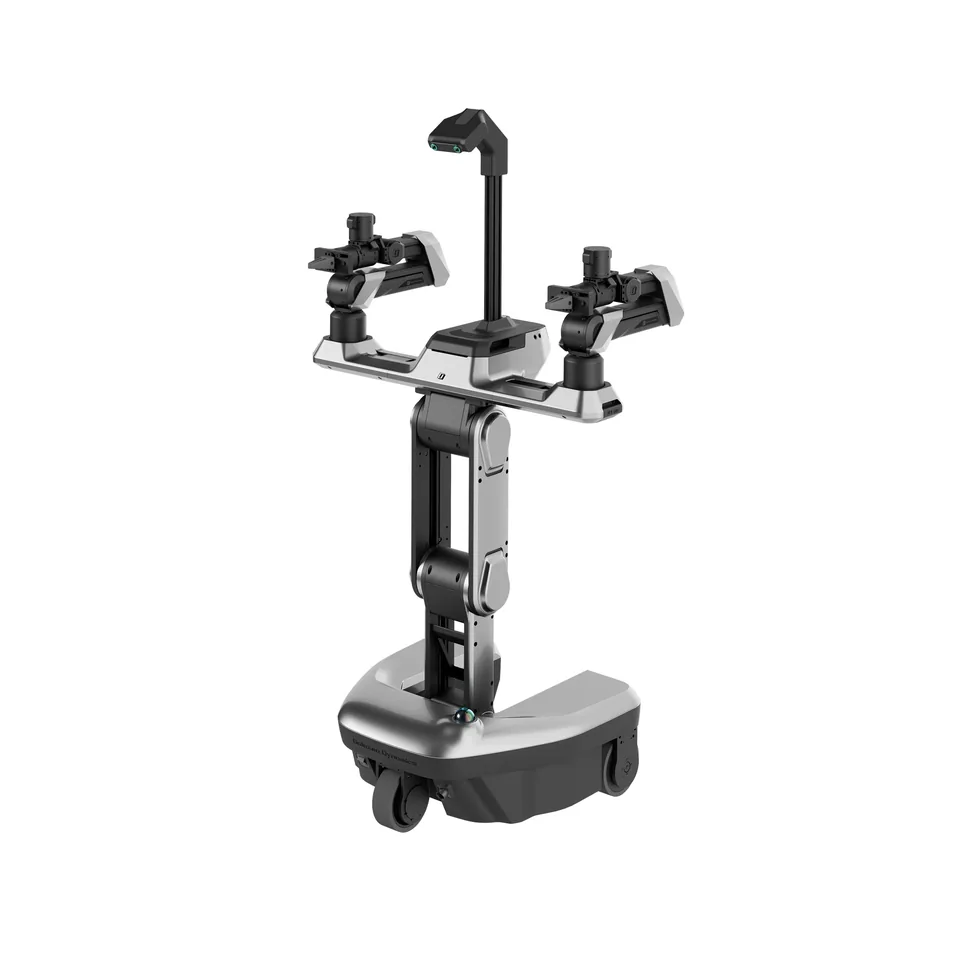
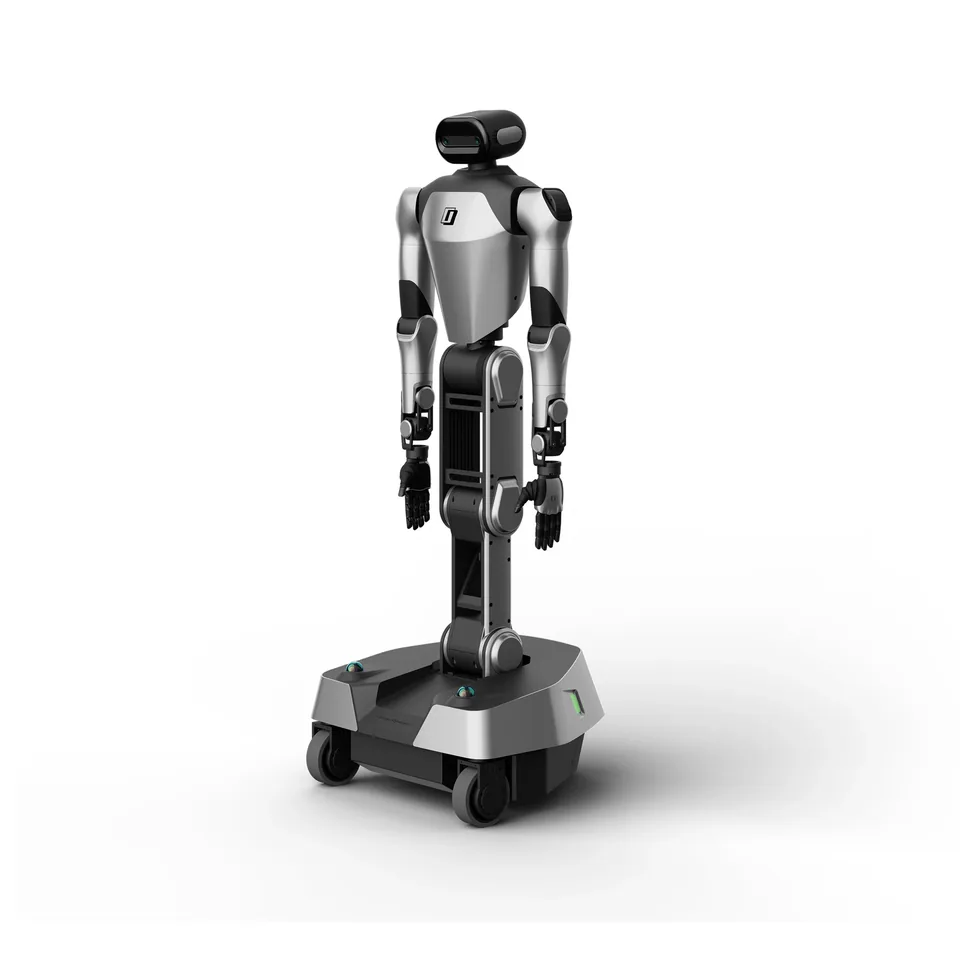
The Galaxea R1 is a full-size, dual-arm humanoid robot on a wheeled base (three-wheel steering), unveiled in January 2025 by China's Galaxea AI. It has 24 degrees of freedom in total: 6 in the base, 4 in the torso and 14 in the two arms with grippers.
It can handle objects at heights from 0 to 200 cm, with a payload of up to 5 kg at a reach of 0.5 m. Perception comes from a set of cameras (on the head, the wrists and five points on the base) plus a 360° LiDAR, and the computing is done by a 550 TOPS platform.
The R1 is the middle model in Galaxea's three-tier lineup, between the cheaper R1 Lite and the pricier R1 Pro; prices for the series start at RMB 199,000 for the base variant. Compared with competitors such as the Unitree G1 or the AgiBot A2, the R1 stands out for its greater vertical reach thanks to the wheeled base, but like many Chinese research platforms it has no confirmed distribution outside China yet.
The robot is not available in Poland.
Specs
Data from manufacturer datasheets and product pages; median over the models of this category in the database.
-
Height200 cm+18% vs. the category median (169 cm, n=220)
-
Degrees of freedom24−19% vs. the category median (29.5, n=200)
-
Payload5 kg−29% vs. the category median (7 kg, n=166)
- category medianA higher value doesn't always mean a better robot; it depends on the application.
Dimensions and weight
- Height
- 200 cm
Motion and manipulation
- Degrees of freedom
- 24
- Payload
- 5 kg
Electronics and AI
- Drive
- electric (rolling base, 3-wheel steering)
- Sensors
- 1x head camera, 2x wrist camera, 5x chassis camera, 1x 360-degree LiDAR (optional second)
- Computing unit
- 550 TOPS
Price and availability in Poland
no data
Running and deployment costs
Purchase: the R1 series (Lite, Standard, Pro) reportedly starts at RMB 199,000 for the entry-level model. That figure comes from a 2025 announcement, not a shop price list, and the conversion into zloty depends on the exchange rate. It will roughly be several hundred thousand zloty depending on the version, but treat it as an order of magnitude. Current prices of other humanoids: “How Much Does a Humanoid Robot Cost in 2026”.
Operation and training: expect costs for updates, mail-in service (there is no distribution in Poland), transport and customs duty. Battery power is a secondary cost, but service from a foreign manufacturer can be expensive. Training a research team takes a few weeks of work on the interface and teleoperation.
You can run the full calculation using “Humanoid Robot TCO: How to Calculate Total Cost”.
Dealers in Poland
No confirmed distributor in Poland
Applications
What it's for
Most humanoids are figures on two legs. The Galaxea R1 stands on wheels, and that is its biggest advantage. Unveiled in January 2025 by China's Galaxea AI, the robot has two arms, a torso and a base with three-wheel steering, for 24 degrees of freedom in total: 6 in the base, 4 in the torso and 14 in the arms with grippers. It manipulates objects at heights from 0 to 200 cm, with a payload of up to 5 kg at a reach of 0.5 m.
What does that mean in practice? A manipulation range from 0 to 200 cm allows reaching shelves at different heights (warehouses), and the wheeled base spares the trouble of a biped gait; this is a conclusion from the specifications, not a confirmed deployment. The sources point to two uses: manipulation up to 2 m and remote control (teleoperation), which in robotics is used, among other things, to collect data for training AI models (“VLA Models: How AI Controls Humanoid Robots in 2026”). The second place is the laboratory (laboratories) and the university (universities), where the camera set (on the head, the wrists and five points on the base), the 360° LiDAR and the 550 TOPS computer make a solid platform for perception research.
Factory use (factories) is a direction suggested by an “industrie” tag in the sources, but we have no named deployments.
Typical applications
Who it's for
Best suited to: laboratories and teams looking for a mobile dual-arm robot for research into manipulation and data collection; companies testing warehouse automation that do not need a bipedal gait; universities that want a more modern alternative to a classic tabletop arm.
A poor fit: anyone who needs a robot that climbs stairs, since the wheeled base has its limits here; and users looking for a certified product with service in Poland, because the model is not available there and distribution outside China is unconfirmed. Data on the manufacturer Galaxea itself is unconfirmed, so it is worth checking again before you buy. If you are interested in a walking humanoid, go to Unitree G1.
Deployments
The sources mention only uses: manipulation up to 2 m and remote control. In Poland there are no confirmed deployments, and the model is not available. In the category of mobile robots worldwide there are many warehouse and research projects; the Polish context is described in “AMR Robots in the Warehouse”.
Comparison
Galaxea R1 Lite: the cheaper version from the same family, when budget is the priority.
Galaxea R1 Pro: a pricier variant with higher specs, for demanding research tasks.
Unitree G1: a walking humanoid for around PLN 52,300 (≈ EUR 11,980 at NBP rate 4.3641 of 21 October 2026); it reaches differently from the R1 but has a broad community and an SDK.
AgiBot A2: a Chinese humanoid platform for industry and demonstrations; context in “Chinese Humanoid Robots”.
Agility Digit 5: a logistics robot with a different philosophy, bipedal and designed for warehouses.
Similar models
- pilot
- prototype
- pilot
Cyan Robotics (Shanghai Qingxin Creative Technology Co., Ltd. / 上海青心意创科技有限公司, Cyanborg)
Orca I (ORCA)
- 151 cmheight
- 10 kgpayload
- —price
 on sale
 on sale
History
Galaxea AI is a Chinese company for which we have no confirmed data, so we base the history on a single source. In January 2025 the company announced the R1 series in three variants, Lite, Standard and Pro, and the Galaxea R1 is the middle one. The user documentation describes the sensor configuration and the 550 TOPS computing platform. We have no records of later generations or funding rounds. Company profile: Galaxea AI. For comparison, to see what documented generation histories look like, see Figure 03 and Fourier GR-2.
Model unveiled
Sources
Frequently asked questions
How many degrees of freedom does the Galaxea R1 have?
24 DOF in total: 6 in the base, 4 in the torso and 14 in the two arms with grippers.
How much does the Galaxea R1 cost?
The R1 series (Lite/Standard/Pro) starts at RMB 199,000 for the base variant, according to the manufacturer's announcements.
Is the Galaxea R1 available in Poland?
No, the robot is not present on the Polish market.
Author, source and licence of the photo are given in the caption. Shop links may become affiliate links in future, details: How we make money · How we check