prototype
no official photo
Humanoid robotspilot
Persona AI Humanoid (3rd generation, autumn 2026)
Price from
no public price
No confirmed distributor in Poland
Pros
- Narrow specialisation: shipyards and steelworks
- Named deals: HD Hyundai, Louisiana, SSE Steel Fabrication
- First and second generations passed pilot tests
- Founders from NASA, IHMC and Figure
Cons
- No technical specifications at all
- No price; pilot or lease only
- An announcement rather than a product; unavailable in Poland
Key facts
- Statuspilot
- Availability in Polandnot confirmed
- VerdictOne to watch via the HD Hyundai pilots; for now there is nothing to buy.
Summary
- ManufacturerPersona AI
- CategoryHumanoid robots
- Statuspilot
- Availability in PolandNo confirmed distributor in Poland
Houston-based Persona AI, founded in 2024 by Nic Radford (ex-NASA, Nauticus Robotics) and Jerry Pratt (IHMC, Boardwalk Robotics, Figure), is preparing to launch the third generation of its humanoid in fall 2026, built exclusively for work the industry calls "dull, dirty, dangerous and declining": shipyards and steelmaking.
That is a much narrower niche than general-purpose robots such as Figure or the Unitree G1. The first and second generations have already been through pilot testing, and the third is headed for real deployments under an agreement with HD Hyundai (delivery within 18 months of the 2025 deal) and a pilot with the State of Louisiana and SSE Steel Fabrication.
The manufacturer publishes no technical specifications at all, including height, weight, payload and speed, and no price; the robot is offered only to industrial customers on a pilot or lease basis. Its strength is a tight specialization backed by named, concrete industrial contracts, which are rare in this segment.
Its weakness is a complete absence of public technical data, which makes comparison with competitors difficult. The robot is not available in Poland; the target audience is large shipyards and steelworks, not smaller integrators or the service sector.
Specs
Electronics and AI
- Drive
- electric
Price and availability in Poland
no data
Running and deployment costs
Purchase: there is nothing to buy. The manufacturer publishes no sales price and does not offer the robot for ownership. The model is a pilot or lease for industrial customers. All we know is that the company has raised 27 million USD, which points to early commercialization rather than a finished price list. As a rough guide, industrial humanoids with public prices, such as the Neura 4NE-1 at about 98,000 EUR, start in the hundreds of thousands of zloty, but that is only an order-of-magnitude reference point, not a Persona offer.
Operation: under a lease the cost is spread across installments, and service and software updates probably come with the contract, though the manufacturer does not disclose details. In a shipyard there are also infrastructure costs: safety zones, charging, and adapting workstations to the robot's reach.
Training: the company learns together with the customer; the pilot at SSE Steel Fabrication is meant precisely to test how quickly a crew learns to work with the robot.
For a full-cost calculation method, see “Humanoid Robot TCO: How to Calculate Total Cost”.
Dealers in Poland
No confirmed distributor in Poland
Applications
What it's for
The Persona AI humanoid is meant to work in environments the industry sums up as the four D's: dull, dirty, dangerous and declining, meaning jobs that are boring, filthy, hazardous and dying out, rather than in homes or services. The Houston company is not building a robot "for everything." It picked two industries and says so openly: shipbuilding and steelmaking.
The first concrete scenario is shipyard work. Persona AI signed an agreement with HD Hyundai; according to sources, delivery is due within 18 months of the 2025 deal, which puts it roughly around the launch of the third generation, announced for fall 2026. The second scenario is steelmaking and metal fabrication: a pilot is run jointly with the State of Louisiana at the SSE Steel Fabrication plant. The third is energy and construction, sectors the company is expanding into in South Korea.
The robot's physical tasks are not specified. The manufacturer names no specific tasks or parameters, so we describe it in line with the available information: heavy, repetitive and dangerous work of the kind typical of construction sites and factories. It pays to stay sober here, though: there are no figures for payload, speed or height, and without them there is no way to judge honestly which tasks the robot will really suit.
The team's aim is a narrow specialization rather than a universal platform. That sets Persona apart from models such as Figure 03 or Unitree G1. For the broader prospects of humanoids in production plants, see “Humanoid Robots in Factories 2026”; for how such machines are entering industry, see “Humanoid Robot Market Forecasts”.
Typical applications
Who it's for
Worth considering for: large shipyards and steelworks with access to pilot contracts and the willingness to refine the robot with the supplier on their own shop floor; heavy-industry firms that want a seat at the table early, while standards for working with humanoids are taking shape; and market watchers looking for an example of narrow specialization instead of a do-everything robot, in the mold of Persona AI.
Probably not for: small and mid-sized companies, integrators and the service sector, because the manufacturer offers the model only to industrial customers on a pilot or lease basis; anyone who needs a public spec sheet for comparisons, since height, weight, payload and speed are not published; and Polish buyers, because the robot is not available in Poland and has no local representative. Polish shipyards and steel plants can ask the manufacturer about a pilot, but there is no official route for our market, and nothing can be bought off the shelf.
Deployments
Abroad, three threads matter: the agreement with HD Hyundai covering shipyards (delivery within 18 months of the 2025 deal), the pilot with the State of Louisiana at SSE Steel Fabrication, and the expansion into energy and construction in South Korea. All of these are pilots and agreements, not series installations.
Parallel trials of humanoids in industry are under way: BMW with Figure, Mercedes-Benz and GXO with Apollo, Hyundai with Atlas. Polish factories are only starting to approach them, as we wrote in “Humanoid Robots and the Polish Labor Market”.
Comparison
Figure 03 (Figure 03) is the closest counterpart from the neighboring shelf: an industrial humanoid, 172 cm, 61 kg, 35 DOF, already working at a BMW plant. Unlike Persona, it has a public specification, but it is a general-purpose robot, not one aimed at shipyards.
The production version of Atlas for Hyundai (Boston Dynamics Atlas) is also headed for industry: first deployments in 2026, and a factory building 30,000 units a year from 2028. The scale is incomparable, but in practice the two robots share a customer, the Hyundai group, so it is worth watching them side by side.
Apollo from Apptronik (Apptronik Apollo) is being tested by Mercedes-Benz and GXO Logistics, but in B2B pilots, also with no public price. It is a sensible reference point for how a pilot looks in logistics rather than in steelmaking.
The Neura 4NE-1 Gen 3.5 (NEURA 4NE-1 Gen 3.5) is an industrial humanoid, 180 cm and 80 kg, priced at about 98,000 EUR with deliveries from the end of 2026. If you want a machine with a stated price and delivery date, it is the only one on this list that offers anything concrete.
Agility's Digit (Agility Digit 5) has a payload of 22.7 kg and early access from H1 2027, and it is aimed at logistics, not heavy industry.
Similar models
- research platform
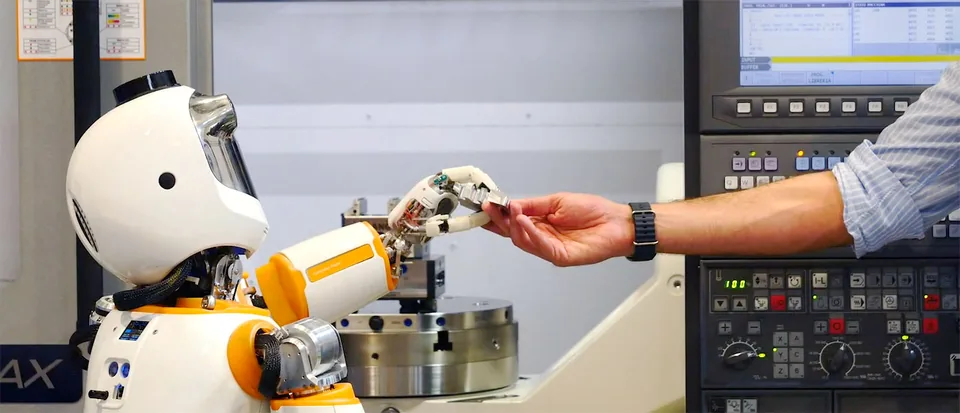 prototype
- prototype
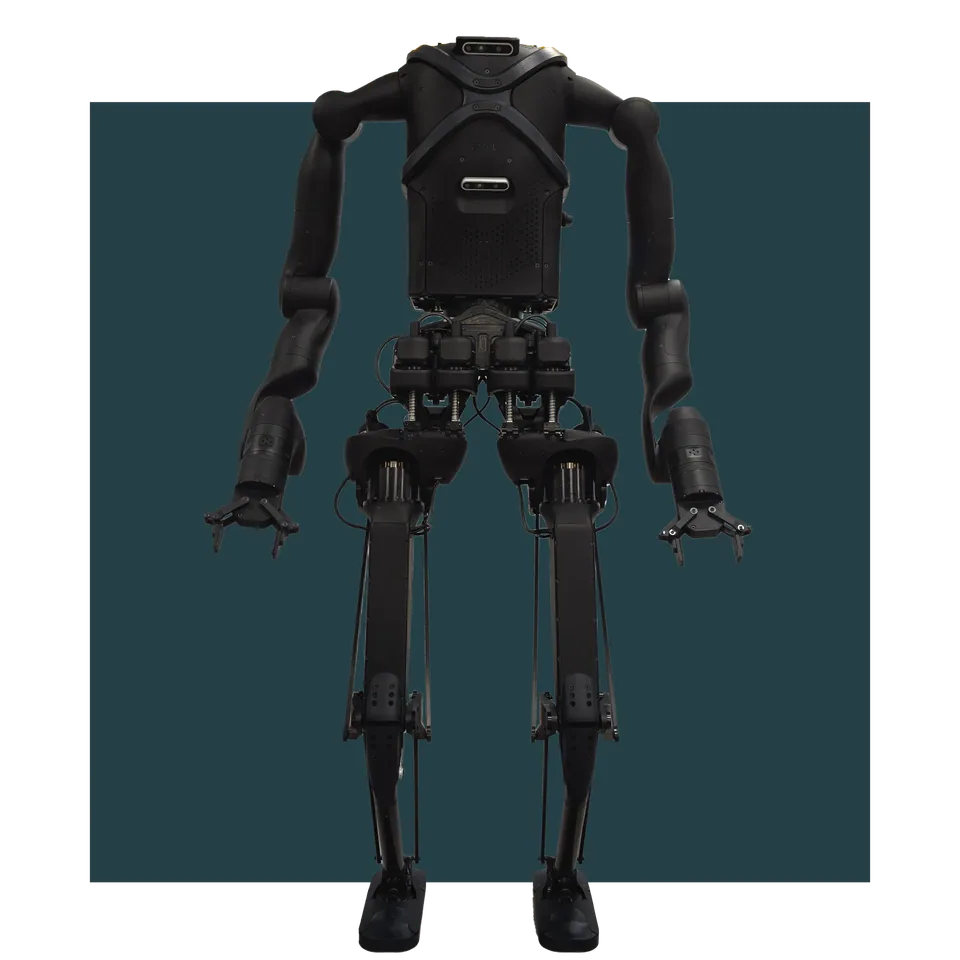 prototype
- on sale
History
Persona AI was founded in 2024 in Houston. Its founders are Nic Radford, previously with NASA and Nauticus Robotics, and Jerry Pratt, who worked at IHMC, Boardwalk Robotics and Figure. The company has raised 27 million USD, and the first and second generations of the humanoid have already been through pilot testing. The third generation was announced for fall 2026, with the launch listed for September 2026. Such a short history means a young company that is still proving it can deliver a robot to the shop floor. Market context is covered in “Humanoid Robot Market Forecasts”.
Model unveiled
Sources
Frequently asked questions
Does the Persona AI Humanoid have a published price?
No. The manufacturer does not publish a price; the robot is offered to industrial customers on a pilot or lease basis.
Where is the Persona AI robot being tested?
In pilots with HD Hyundai (shipyards) and with the State of Louisiana and SSE Steel Fabrication (steel industry).
Is the robot available in Poland?
No. The model is not offered in Poland or through any local representative.
Shop links may become affiliate links in future, details: How we make money · How we check