In this article
Key facts
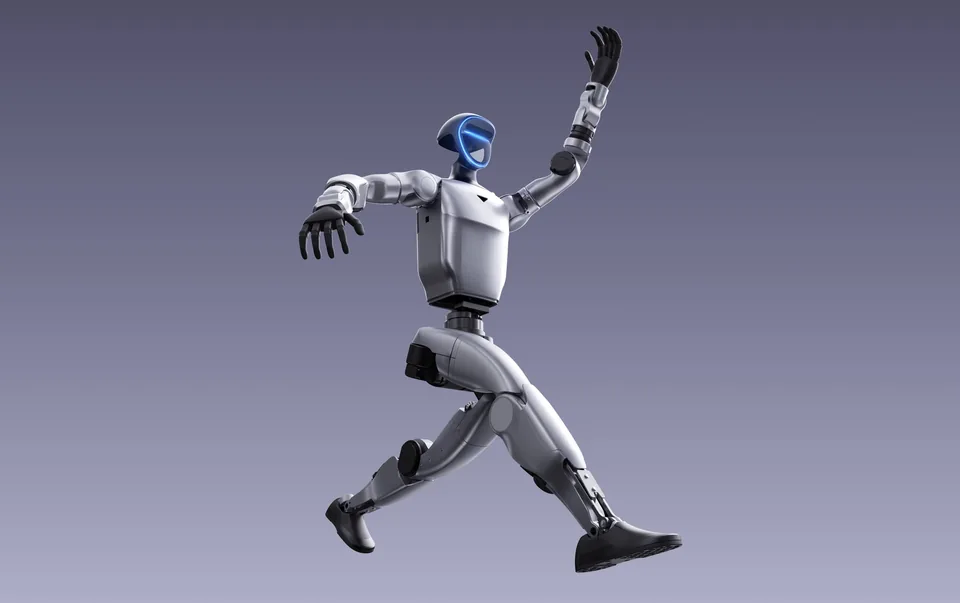
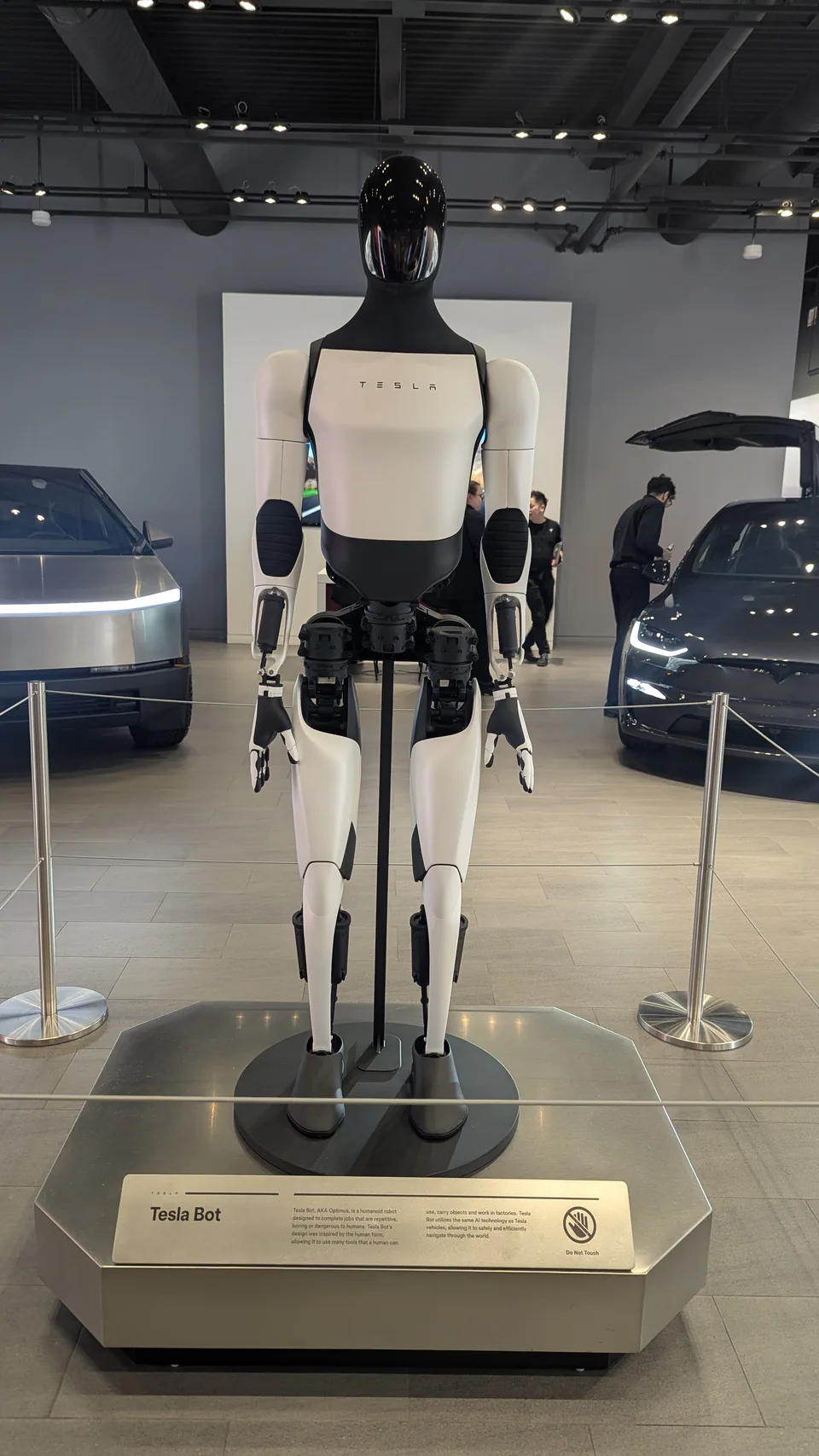
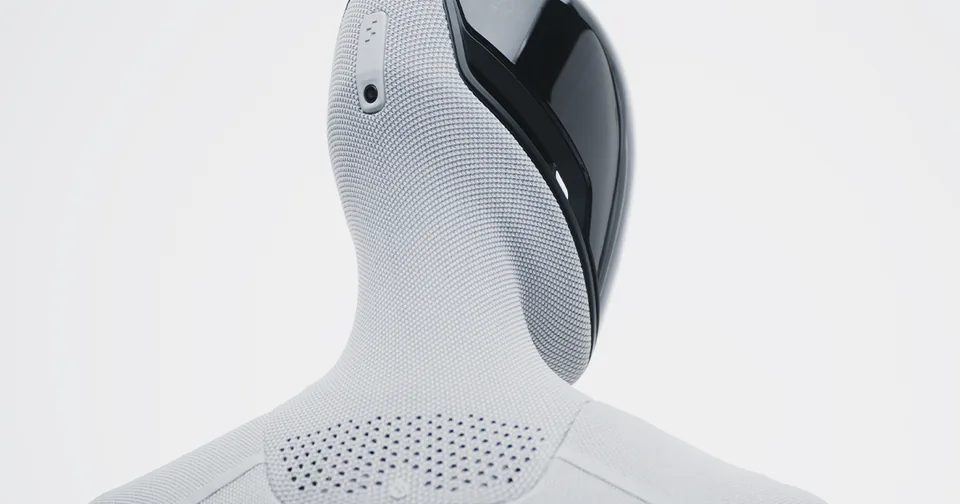
- Models coveredUnitree G1 (Standard), Tesla Optimus Gen 3, Figure 03
- Prices of the models covered79,900 PLN (≈ EUR 18,310 at NBP rate 4.3641 of 21 October 2026)
- Covered models available in Poland1 of 3
- Number of sources12
- Reading time6 min
A market that does not yet exist at the scale the headlines suggest
Humanoid robots are one of the most heavily forecast technology markets today, and at the same time one of the least documented in terms of units actually sold. Investment banks, research firms and manufacturers themselves publish numbers that look like well-founded estimates at first read, but on closer inspection diverge by as much as tenfold depending on the source and the time horizon. This article sets out the figures that can be verified, alongside the arguments of those who doubt them.
Market forecasts: a spread of an order of magnitude
Two research firms specializing in industry forecasts, Precedence Research and MarketsandMarkets, published estimates of the global humanoid robot market in 2026 that differ almost sixfold despite close publication dates.
Precedence Research values the market at $1.84 billion in 2025 and forecasts growth to $8.78 billion in 2035, at a compound annual growth rate (CAGR) of 16.91% over 2026-2035. It names North America as the largest market in 2025 and Asia-Pacific as the fastest-growing region.
MarketsandMarkets gives entirely different numbers: $5.41 billion in 2026, rising to $50.27 billion in 2035, at a CAGR of 28.1%. It also publishes regional forecasts. The US market is to grow from $857.9 million (2025) to $4.6 billion (2030) at a CAGR of 39.9%, the Chinese market from $0.40 billion to $2.80 billion (CAGR 47.6%), and the South Korean market from $112.6 million to $583.5 million (CAGR 39.0%).
The gap between $8.78 billion and $50.27 billion for the same target year (2035) is not an error. It stems from different definitions of what counts as the "humanoid robot market" at all. Narrower definitions cover only sales of the hardware itself; broader ones include software, integration, maintenance services and components (actuators, sensors, batteries), which raises the total considerably.
Investment banks: loud numbers, hard to verify at the source
The investment bank forecast most often quoted in the trade press is Goldman Sachs Research's estimate from February 2024: a total addressable market for humanoid robots of $38 billion by 2035, more than six times the previous projection ($6 billion), with an estimated 1.4 million units shipped over that horizon; in the base case the analysts assume more than 250,000 shipments in 2030, almost all for industrial use (Goldman Sachs). The estimate comes from the Goldman Sachs Research report “Humanoid robot: The AI accelerant” (8 January 2024), discussed in the bank's article of 27 February 2024.
Morgan Stanley published an analysis in May 2025 according to which the humanoid market could exceed $5 trillion by 2050, including sales across the supply chain and networks for repair, maintenance and support; the bank assumes that more than a billion such robots could exist by 2050, about 90% used for industrial and commercial purposes (Morgan Stanley). The gap against the research firms' estimates shows how much the result depends on the market definition: here the whole service ecosystem is counted, and the horizon is 15 years longer.
What the IFR data really shows
The International Federation of Robotics (IFR) is the most reliable source of hard data on robots actually installed worldwide, but its World Robotics 2026 report deals mainly with classic industrial robots (arms), not bipedal humanoids as a separate category. According to IFR, the global stock of operating industrial robots reached a record 5 million units in 2025 (+9% year on year), and new installations exceeded 600,000 units (+11%) (IFR, 24 September 2026).
In professional service robots (World Robotics 2026, published 30 September 2026), IFR recorded almost 250,000 units sold in 2025 (+24%); the largest application is transport and logistics with 117,500 units (+21%, 47% of the market) (IFR). A year earlier IFR reported roughly 200,000 units for 2024 (+9%), including hospitality (more than 42,000, down 11%) and professional cleaning (more than 25,000, +34%) (IFR). That is a real, countable installed base, but it covers service and mobile robots broadly defined, the great majority of which are not bipedal.
In other words, IFR confirms strong, measurable growth in service and industrial robotics, and describes humanoids for the first time in a separate chapter of World Robotics 2026, with an estimate of about 7,000 full-size commercial robots sold in 2025. Set against 250,000 professional service robots, that shows how small the segment still is (IFR).
Optimists versus skeptics
| Optimists' arguments | Skeptics' arguments | |
|---|---|---|
| Cost curve | Prices are falling: Unitree offers the G1 from $13,500 and the R1 from $4,900 (price list in the manufacturer's official store) | A falling hardware price does not mean a mature product; cheaper models have limited autonomy and grip strength compared with expensive research platforms |
| Technology maturity | Successive demonstrations (Tesla Optimus, Figure, Unitree) show ever smoother walking and manipulation | Rodney Brooks, co-founder of iRobot, argues that human-like robot hands have not shown general dexterity or reached real deployments, and that impressive videos show single tasks that do not generalize |
| Safety | Manufacturers announce new safety systems and industrial certifications | Brooks predicts that without new mechanical systems walking humanoids will remain too unsafe to work in close proximity to people |
| Deployment timeline | Companies announce deployments on the scale of millions of units a year as early as the 2030s | Brooks expects deployable dexterity to remain "pathetic" compared with the human hand beyond 2036, so mass deployment in the 2030s would contradict his prediction |
| Source of demand | Market analysts (Precedence Research, MarketsandMarkets) forecast years of double-digit CAGR | Hard IFR data shows that today's real volume is about 250,000 professional service robots a year and about 7,000 full-size humanoids, not millions, and the gap between forecast and the current base is enormous |
Where such large discrepancies come from
Three factors explain most of the spread. First, the market definition: whether only hardware counts, or also software, integration and accompanying services (hence the difference between $8.78 billion and $50.27 billion in the 2035 forecasts of two different research firms). Second, the time horizon and nature of the scenario: investment bank forecasts are often "bull case" scenarios built with investors in mind rather than neutral market estimates, which structurally pushes them toward higher numbers. Third, the lack of a standardized statistic: unlike industrial robots, for which IFR has collected data from hundreds of suppliers for decades, the methodology for humanoids is only now taking shape, so each research firm counts differently and from a different input database.
What this means in practice
For companies and institutions in Poland considering a robotics investment, whether in humanoids or in more mature segments alongside humanoid robots such as cobots, the key takeaway is simple: long-term market forecasts (2030-2050) are useful as a signal of direction, but not as a basis for a specific purchasing decision. Current prices and availability of models such as Unitree G1, Tesla Optimus Gen 3 or Figure 03 change faster than analysts can update their forecasts, so it is worth checking current data rather than extrapolations that are over a year old. For more on the real use of robots in production in Poland and worldwide, see “Humanoid Robots in Factories 2026”; for the differences between the series of the market-leading manufacturer, see “Unitree H1, G1, R1 and H2”; and basic industry terms are explained in “Robotics Glossary: 65 Terms with Polish Equivalents”. We have compiled a map of Polish companies working in humanoid and industrial robotics in “Polish Robotics Companies”.
Frequently asked questions
How big will the humanoid robot market be in 2035?
It depends on who you ask. Precedence Research estimates $8.78 billion, MarketsandMarkets as much as $50.27 billion. The gap comes mainly from what each firm counts as the humanoid robot market: the machine alone, or software and services too. Goldman Sachs Research estimated in February 2024 that the total addressable market for humanoid robots would reach $38 billion by 2035, and Morgan Stanley said in May 2025 that it could exceed $5 trillion by 2050.
Do IFR figures confirm that humanoid robots are already working in factories at scale?
Not at an industrial scale. IFR's World Robotics 2026 reports a record 5 million industrial robots in operation worldwide and more than 600,000 new installations in 2025 (IFR), but these are mostly classic industrial arms. IFR does say, however, that about 7,000 full-size humanoids (above 140 cm) were sold worldwide in 2025 for commercial and professional uses beyond R&D and entertainment, and notes that most current applications are specialized and often require teleoperation (IFR).
Who are the main skeptics of investment bank forecasts?
One of the most-cited critics is Rodney Brooks, co-founder of iRobot and a robotics pioneer. In his 1 January 2026 predictions he says deployable dexterity of humanoid robots will remain "pathetic" compared with the human hand beyond 2036, and that walking humanoids will, without new mechanical systems, stay too unsafe to work in close proximity to people (source: Rodney Brooks' blog).
Why do the forecasts differ so much?
Research firms use different market definitions (hardware versus hardware plus software plus services), different assumptions about how fast costs will fall, and different regulatory and safety scenarios. Investment banks also publish bull-case scenarios, which are by nature more optimistic than the market reports of research firms.
Should I plan a humanoid robot purchase today based on these forecasts?
Long-term forecasts (2030-2050) are no substitute for analyzing your own business case. Current prices, availability and specifications of models already available in Poland should be checked separately; see “How Much Does a Humanoid Robot Cost in 2026”.
Sources
Links to the material this text is based on. Before you base a decision on a figure from the article, check it at the source.
- ifr.org/ifr-press-releases
- ifr.org/ifr-press-releases/news/service-robots-see-global-growth-boom
- precedenceresearch.com/humanoid-robot-market
- marketsandmarkets.com/Market-Reports/humanoid-robot-market-194638918.html
- rodneybrooks.com/predictions-scorecard-2026-january-01
- unitree.com/g1
- goldmansachs.com/insights/articles/the-global-market-for-robots-could-reach-3…
- morganstanley.com/insights/articles/humanoid-robot-market-5-trillion-by-2050
- ifr.org/ifr-press-releases/news/five-million-robots-now-operate-in-factories-…
- ifr.org/ifr-press-releases/news/global-sales-of-professional-service-robots-s…
- rodneybrooks.com/why-todays-humanoids-wont-learn-dexterity
- shop.unitree.com/products/unitree-go2
About the authors
A chief engineer by profession (technical head of a ship's machinery plant, licensed). Sets the site's editorial rules and is responsible for them; he does not read every page before publication.
Texts are prepared by the editorial team using AI tools. We compare data with primary sources on a sample basis, not page by page. Our rules are described here: How we check · About us