on sale
no official photo
Data from manufacturer datasheets and product pages; median over the models of this category in the database.
Cobotson sale
DENSO COBOTTA PRO 900
Price from
approx. 124,000 PLN* (≈ EUR 28,410 at NBP rate 4.3641 of 21 October 2026)
converted from 32,000 USD, NBP rate 3.8762, as of 1 October 2026
No confirmed distributor in Poland
Pros
- DENSO reliability heritage from automotive automation
- Repeatability of ±0.03 mm (per the verdict text)
- Industrial scale, not just light bench tasks
Cons
- The ~32,000 USD price comes from a blog, not DENSO
- No official technical data or price list
- Availability in Poland unconfirmed
- Hard to compare fairly with UR10e or Fanuc CRX
- 6kgPayload
- 6DOFDegrees of freedom
- 29kgWeight
Key facts
- Indicative price (external source)approx. 124,000 PLN* (≈ EUR 28,410) (as of September 2026)
- Specificationspayload 6 kg · degrees of freedom 6 DOF · weight 29 kg
- Statuson sale
- Availability in Polandnot confirmed
- VerdictFor buyers ready to deal with DENSO directly; without a datasheet, UR10e or ABB GoFa is the easier starting point.
Summary
- ManufacturerDENSO Robotics
- CategoryCobots
- Statuson sale
- Availability in PolandNo confirmed distributor in Poland
COBOTTA PRO 900 is the industrial extension of Japan's DENSO Robotics COBOTTA line, intended for full work on the production floor rather than only for light bench-top tasks like the compact COBOTTA. It weighs 29 kg and has a repeatability of ±0.03 mm.
A price of about USD 32,000 (about PLN 124,000 (≈ EUR 28,410) at 3.8762 PLN/USD, rate of 1 October 2026) comes from an external blog with an ROI calculator rather than from an official DENSO price list, so the figure is indicative only. In the mid-range industrial cobot segment it competes with models such as the Universal Robots UR10e or the Fanuc CRX, but without confirmed parameters a sound technical comparison is hard.
The COBOTTA PRO 900's strength remains DENSO's heritage in automotive automation reliability, carried over from the compact COBOTTA to industrial scale; its weakness is the lack of transparent, official technical and price data, which makes it hard to judge value for money. Availability in Poland has not been confirmed.
The model is of interest mainly to purchasing departments ready to contact DENSO directly, rather than for comparisons based solely on public data.
- DENSO Legacy of Innovation - COBOTTA PRO High-Speed Collaborative RobotDENSO Robotics · Load in the player above
Specs
Data checked: · Sources: 2
-
Weight29 kg−10% vs. the category median (32.2 kg, n=31)
-
Degrees of freedom6in line with the category median (6, n=73)
-
Payload6 kg−40% vs. the category median (10 kg, n=75)
- category medianA higher value doesn't always mean a better robot; it depends on the application.
Dimensions and weight
- Weight
- 29 kg
Motion and manipulation
- Degrees of freedom
- 6
- Payload
- 6 kg
Electronics and AI
- Drive
- electric
Price and availability in Poland
approx. 124,000 PLN* (≈ EUR 28,410)
converted from 32,000 USD, NBP rate 3.8762, as of 1 October 2026 · Updated: September 2026 · Source (robotomated.com)
The price comes from a blog with an ROI calculator and has not been confirmed directly by DENSO.
Running and deployment costs
The price of about USD 32,000 (about PLN 124,000 (≈ EUR 28,410) at 3.8762 PLN/USD on 1 October 2026) comes from an external blog with an ROI calculator, not from an official DENSO price list, so treat it as indicative. On top of that come the gripper, software, integration and cell safeguarding; in practice the cost of a whole workstation is often a multiple of the arm's price, but that multiple depends on the task and is an estimate.
Running costs: there is no data on service costs in Poland. Plan an annual budget for inspections and parts, roughly a few percent of the purchase price. Training operators and programmers: usually a few days of basics, plus time to roll out the process.
Poland's robotization tax relief (ulga na robotyzację) can genuinely help here: the rule allows an additional deduction of 50% of costs incurred on robotization, and qualifying costs include new robots, peripheral equipment, safety systems and employee training. Note: under current law, 2026 is the last year in which the relief can be used, and an extension was only announced in August 2026, so check the deadlines with an advisor. Details in “Poland's Robotization Tax Relief” and “Humanoid Robot TCO: How to Calculate Total Cost”.
Dealers in Poland
No confirmed distributor in Poland
Applications
What it's for
The COBOTTA PRO 900 from Japan's DENSO Robotics is a collaborative robot (cobot) for industrial tasks: 6 degrees of freedom, a 6 kg payload, a mass of 29 kg and a repeatability of ±0.03 mm.
That last figure matters. A repeatability of ±0.03 mm means the robot returns to a set position with an accuracy of about three hundredths of a millimeter, which is enough for assembling small components, inserting connectors, machine tending and quality inspection. This is not a small bench-top machine: the PRO 900 is the industrial extension of the compact DENSO COBOTTA (0.5 kg payload), intended for full work on the shop floor.
Production and assembly: CNC machine tending, loading and unloading, dispensing and screwdriving. Quality control: presenting parts to a camera or sensor. Laboratories and test lines: repeatable manipulation in an environment where a human tires. Automotive applications have a solid basis here, since DENSO has extensive experience in that sector.
Limitations: a 6 kg payload rules out heavy workpieces and large grippers. We do not have a full, official list of technical parameters, so arm reach and ingress protection class must be checked in the manufacturer's datasheet. A cobot works next to a person only after a risk assessment under the relevant standards, which we cover in “Robot Safety Standards”.
How cobots work in practice: “What Is a Cobot and How Does It Differ from an Industrial Robot”; applications: “Factories and manufacturing” and laboratories.
Typical applications
Who it's for
Worth considering for: manufacturing plants automating assembly, loading and quality inspection that want a cobot with high repeatability. Purchasing departments ready to contact DENSO directly and agree on a configuration. Automotive and electronics companies that already use the Japanese group as a supplier.
Probably not for: those who want to compare offers using public data. The manufacturer does not provide transparent, complete parameters and pricing, so any comparison table will be incomplete. We also do not recommend it where a payload above 6 kg is needed: the UR10e (12.5 kg) and the Yaskawa Motoman HC10 (10 kg) are better there. Be careful too if you are looking for local service: availability of the model in Poland has not been confirmed.
If you have no cobot experience yet, start by reading “How to Buy a Cobot Step by Step”.
Deployments
The manufacturer points to industrial production automation as its applications, and DENSO's heritage in automotive automation supports that direction.
In Poland there are no confirmed deployments and no confirmed availability. In this category, many Universal Robots and Fanuc deployments operate in the country, covered in “Universal Robots UR5e, UR10e and UR20 Compared” and “Doosan Robotics: Cobots from the Korean Maker in Poland”. If you want to learn more about DENSO, contact the manufacturer directly and ask for European references.
Comparison
Several models are worth comparing in the mid-payload cobot class.
UR10e from Universal Robots: 12.5 kg payload, 33.5 kg weight, a listed price of about PLN 159,645 (≈ EUR 36,580). A large ecosystem of software and accessories.
FANUC CRX-10iA: 10 kg payload, from the CRX series described in “FANUC CRX: The Cobot Series with 8 Years of Zero Maintenance”; the choice for plants that already run Fanuc.
ABB GoFa CRB 15000: 5 kg payload, 28 kg mass, 2.2 m/s speed and a listed price of about PLN 147,724 (≈ EUR 33,850); very close to the PRO 900 in its parameters.
Yaskawa Motoman HC10: 10 kg payload, 47 kg mass; heavier and stronger, but bigger and less versatile. When choosing a cobot, compare payload, reach, repeatability and the availability of an integrator in Poland; we describe the selection rules in “How to Buy a Cobot Step by Step”.
Similar models
 on sale
 on sale
 on sale
 on sale
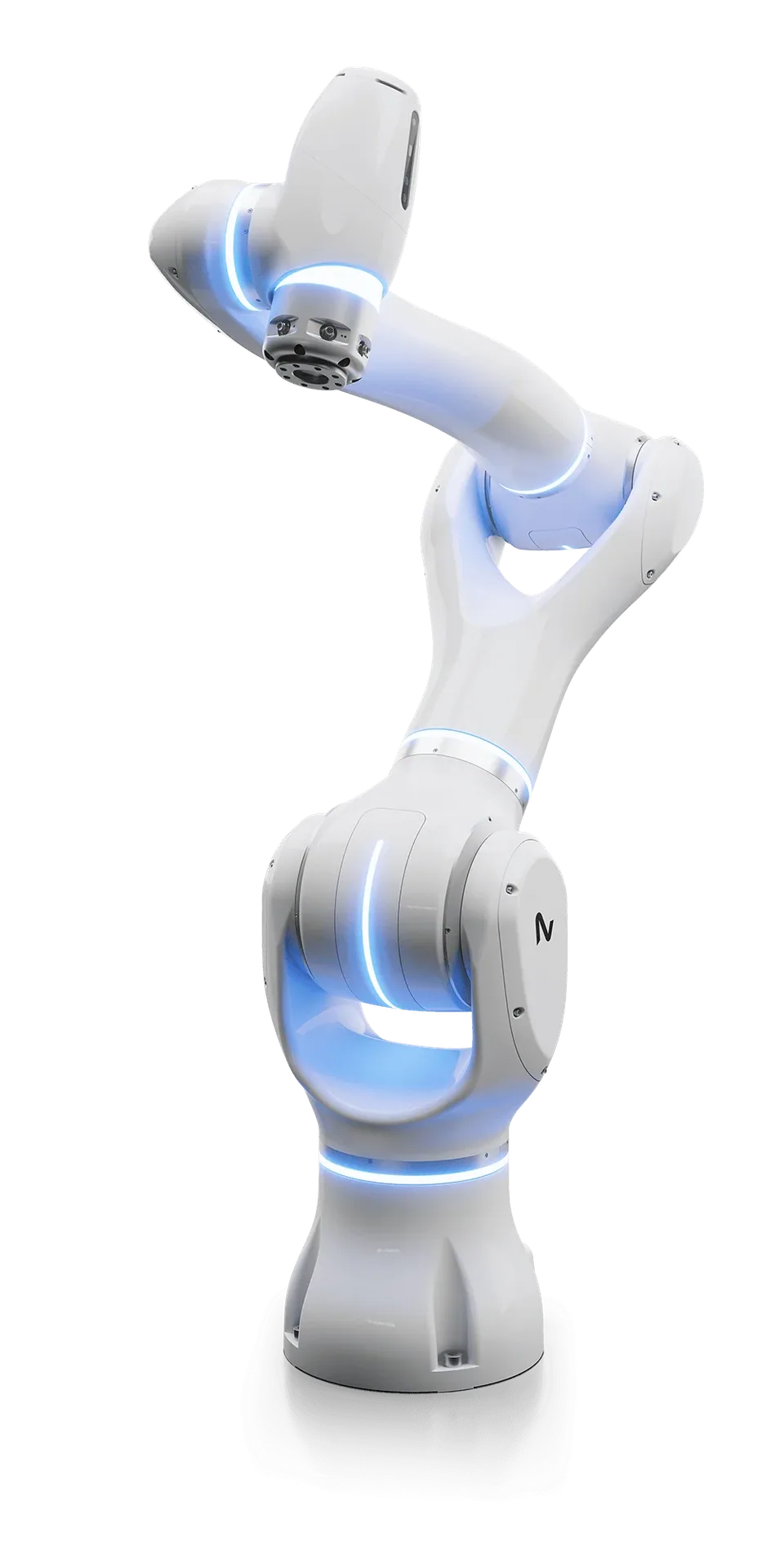 on sale
History
DENSO Robotics is the robotics division of the Japanese group known for the automotive industry. The COBOTTA line begins with the compact DENSO COBOTTA for light bench-top tasks, and the COBOTTA PRO 900 is its industrial version, intended for full work on the shop floor.
There is no confirmed launch date for the PRO 900 and no details of its generation, so we give no year. What we can describe is the logic of the family: a small bench cobot built trust, and the larger PRO 900 carries the brand onto the production floor, into competition with Universal Robots and Fanuc. The 29 kg mass and ±0.03 mm repeatability are confirmed.
Sources
Frequently asked questions
Is the COBOTTA PRO 900 price confirmed by DENSO?
No. The figure of about USD 32,000 comes from an external blog with an ROI calculator, not from the manufacturer's official price list.
How does the COBOTTA PRO 900 differ from the compact COBOTTA?
It is an industrial extension with a higher payload class, intended for full production, unlike the light, bench-top COBOTTA.
Is the full technical specification of the COBOTTA PRO 900 publicly available?
Not fully. Payload and reach have not been confirmed directly on DENSO's official website.
Shop links may become affiliate links in future, details: How we make money · How we check