on sale
Application: Hospitals and rehabilitation
Robots in the hospital: from the operating room to gait rehabilitation
Most robots in Polish hospitals work where a surgeon needs a third and fourth hand, and a stroke patient needs a first step.
This page is informational and has not been reviewed by a named expert (lawyer, tax adviser, safety engineer or physician). It is not legal, tax, medical or certification advice; for decisions (for example reimbursement, the robotization tax relief, data protection or safety), check the rules and standards in the official sources.
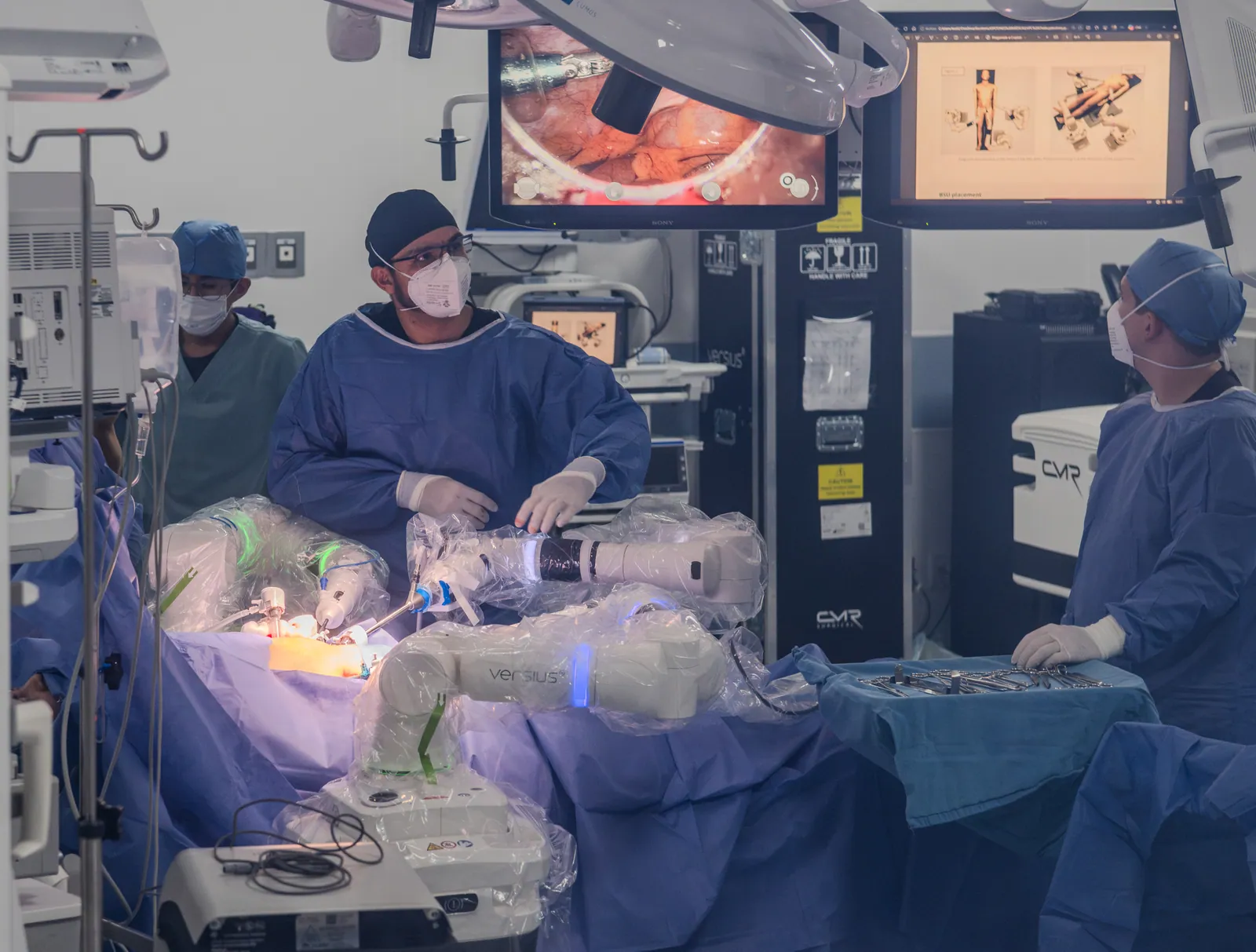
Photo: EneasMx, Wikimedia Commons, CC BY 4.0; resized and converted to WebP
Robotic surgery as the benchmark
In an operation with the da Vinci 5 system and its predecessors, the surgeon sits at a console and guides thin instruments through small incisions, while an assistant at the table changes the instruments. In January 2024, da Vinci operations were performed in Poland at 43 centers (OSOZ).
That is the strongest proof that a robot in a hospital is not a gadget. Less visible is a second, quieter front: gait rehabilitation, logistics, disinfection and the first trials with reception robots. On this page we separate what works today from what is only appearing.
The starting point in Poland
The Polish health care system struggles with a shortage of staff, and robotic surgery has grown very fast in recent years. We describe the details in “da Vinci Robots in Polish Hospitals”. NFZ reimbursement of robotic prostate cancer surgery began in April 2023 and in August 2023 was extended to endometrial and colorectal cancer (OSOZ); in 2024 the NFZ financed nearly 11,000 robotic oncology operations (Alert Medyczny). In January 2024, da Vinci operations were performed at 43 centers (OSOZ), and at the end of 2025 Poland had 83 da Vinci systems (Synektik).
According to data for 2023, robotic procedures already accounted for 55% of all prostate cancer operations in Poland (OSOZ). That figure shows the robot is not a niche here but the standard in oncological urology.
What robots in the hospital can really do today
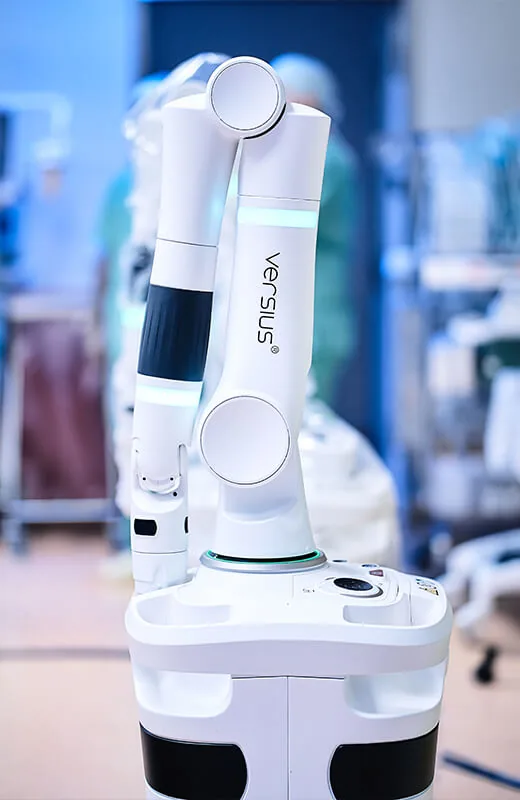
Surgery. The da Vinci handles more than 50 types of urological procedures, more than 80 general surgery procedures and about 20 in gynecology (Alert Medyczny). Competition is growing: the Versius is a modular system with V-Wrist arms, approved for use in Europe, Australia and Brazil (CMR Surgical); the Hugo (Medtronic) and the Chinese Edge Medical are also entering the Polish market. The price of the da Vinci 5 is not public.
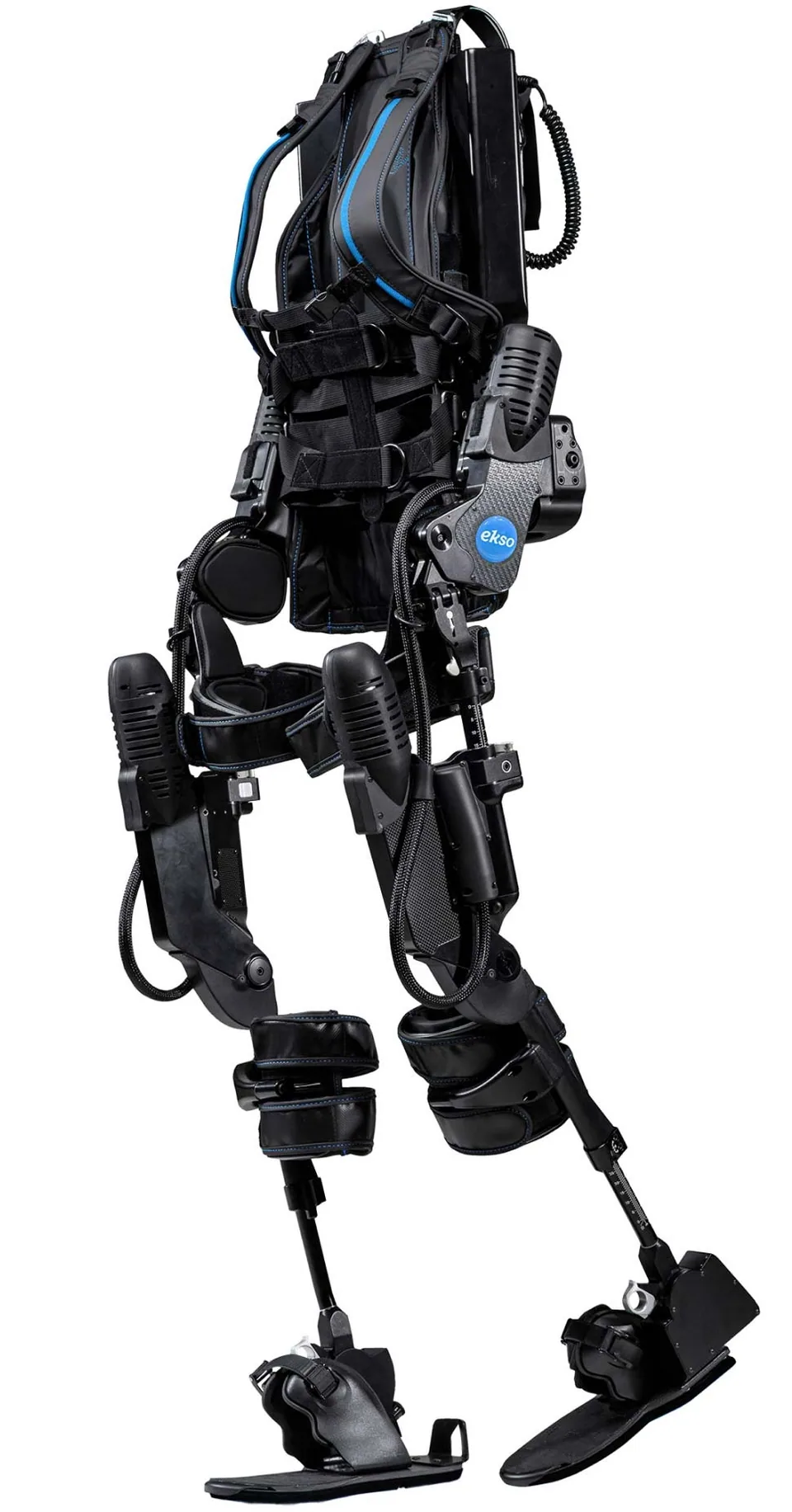
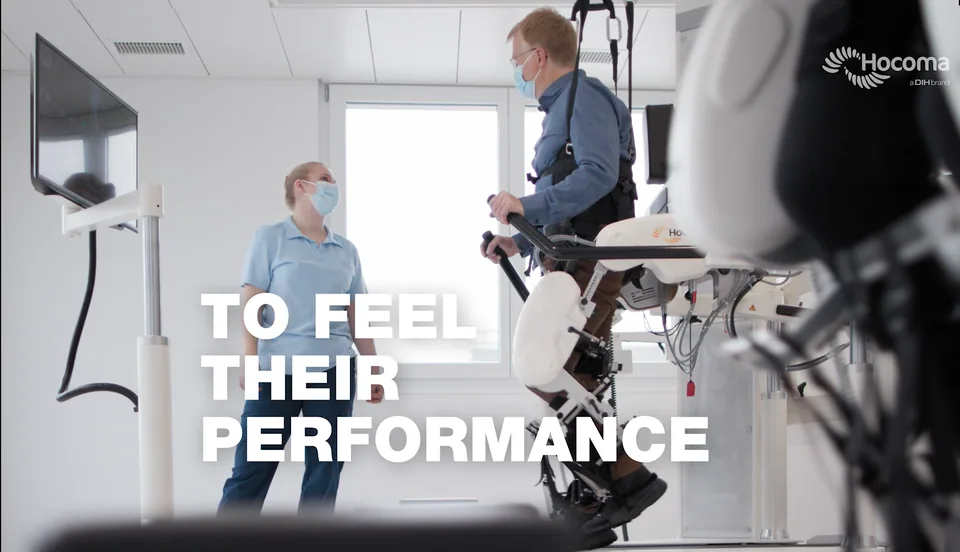
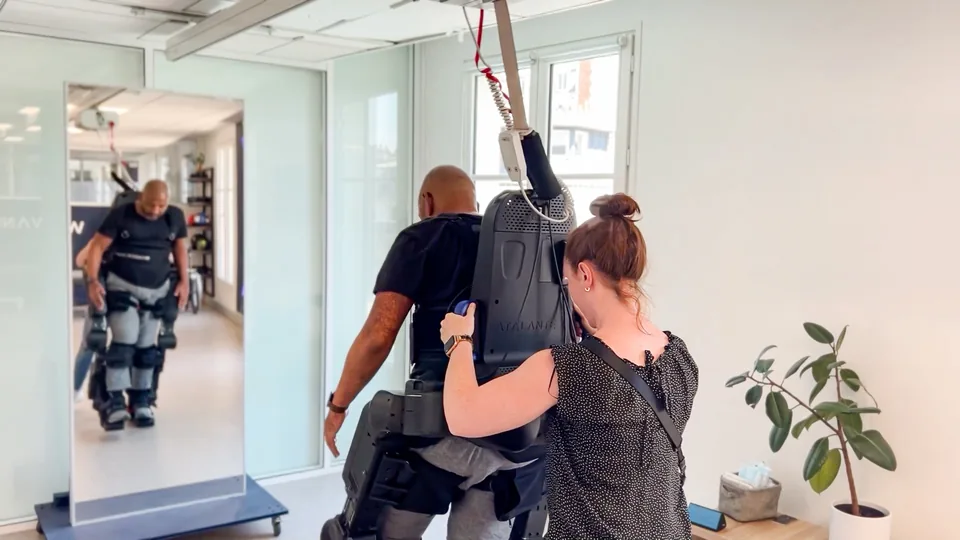
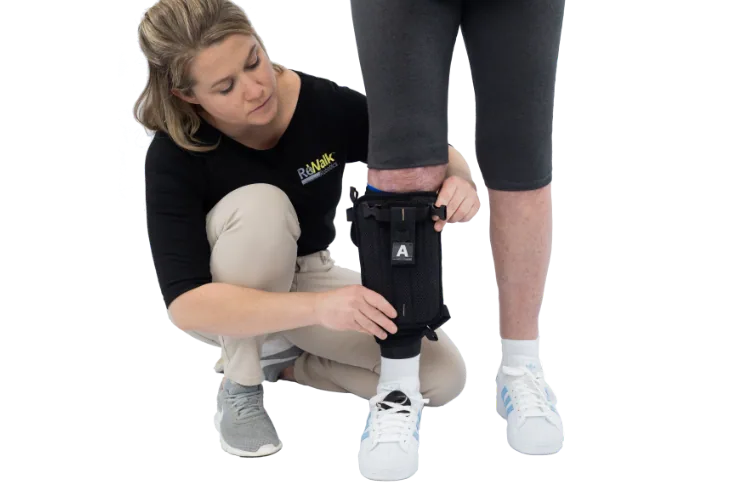
Rehabilitation. Rehabilitation exoskeletons let a patient after a spinal cord injury or stroke stand up and take steps. The EksoNR is one of the best-known systems of this kind and has FDA clearance for stroke, brain injury, MS and spinal cord injury rehabilitation (Ekso Bionics). The LokomatPro is a different kind of device: a stationary treadmill gait training system, with more than 1,000 installations worldwide according to the manufacturer (Hocoma). The Atalante X is a self-balancing exoskeleton without crutches (Wandercraft), and the ReStore Exo-Suit is a soft exoskeleton for gait rehabilitation after stroke (Lifeward). Prices are not public; sales are through individual offers to facilities. Details in “Exoskeletons in Rehabilitation and Industry” and in the category “Exoskeletons”.
Logistics. The Diligent Moxi 2.0 carries samples, drugs and supplies in American hospitals; the manufacturer claims more than a million deliveries (The Robot Report). According to the manufacturer it works in more than 25 US hospitals (Diligent Robotics). It has no confirmed availability in Poland today, and the manufacturer sells mainly by fleet. For simpler tasks, such as transporting supplies, mobile robots from the category “Mobile robots (AMR)” serve.
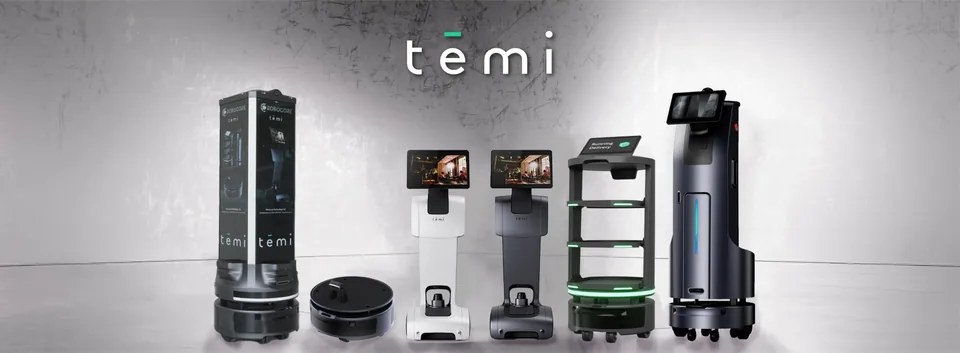
Reception and telepresence. The temi V3 is a reception and telepresence robot from USD 4,499 (about PLN 17,400 (≈ EUR 3,980 at NBP rate 4.3716 of 20 October 2026)) or from USD 125 a month under RaaS (RobotLAB). We have not confirmed availability in Poland or support in hospitals.
What robots in the hospital will not do
A surgical robot does not operate on its own. The surgeon guides every movement, and the system only scales and stabilizes it. It requires long training of surgeons and of the whole team, as shown by the fact that in January 2024 Poland had 108 certified surgeons across 43 centers (OSOZ).
An exoskeleton does not treat on its own: it is a tool in the hands of a trained physiotherapist. Not every patient qualifies; the EksoNR, for example, has limits on age (18 and over), body weight (under about 100 kg) and height (about 152–193 cm). Logistics and reception robots will not replace a nurse at the bedside, and we know of no deployments of robots in direct care in Poland.
With robots that have a camera and microphone, patient data must be kept in mind; “Data Security: Robots with Cameras and the GDPR” explains what to watch for.
Examples from Poland
In Kraków, the Rydygier hospital announced in July 2026 its 1,000th operation with the da Vinci; the program began in October 2023, and the system is used there in four specialties: urology, gynecology, general surgery and otolaryngology (Tygodnik Medyczny). The hospital is considering buying a second robot because one system serves four departments.
How to buy
Hospitals buy surgical robots through tenders, usually directly from the manufacturer or its representative. Rehabilitation exoskeletons are offered in Poland by specialist medical equipment sellers and prices are individual. For reception and logistics robots the model is sometimes different: leasing or RaaS. Before you sign a contract, ask for answers to four questions: who services the equipment in Poland, how quickly they respond, how much consumables cost and how staff training is to be billed.
The last point is especially important: a system is not just a purchase, but also service, consumables and a trained team.
Costs and funding
The average da Vinci operation is about PLN 30,000 (≈ EUR 6,860), in complex cases up to PLN 60,000 (≈ EUR 13,720) (Alert Medyczny), financed in public hospitals mainly by the NFZ under oncology programs. Poland's robotization tax relief (ulga na robotyzację, see “Poland's Robotization Tax Relief”; podatki.gov.pl) applies to industrial robots and CIT/PIT taxpayers, so it is not a funding route for a public hospital; a private clinic should ask an adviser whether given equipment qualifies. Other programs (KPO, FENG, NCBR) are covered in the section on funding.
Bottom line
A robot in a hospital makes sense where it replaces a hand a person lacks, not where it would replace the person. The da Vinci is already part of the infrastructure, exoskeletons are entering rehabilitation, and logistics and reception are only getting started, mainly outside Poland. When buying, look at service, training and total cost, not the brochure. If you want more context: what a robot does in a production plant is described in “Factories and manufacturing”, and you can read about the terms used on this page in “Robotics Glossary: 65 Terms with Polish Equivalents”. You can browse the choice of exoskeletons in exoskeletons.
About the authors
Robolupa editorial team
Prepared by · Editorial team; texts are prepared with AI tools
Joshua Kantner
Publisher · Publisher
A chief engineer by profession (technical head of a ship's machinery plant, licensed). Sets the site's editorial rules and is responsible for them; he does not read every page before publication.
Texts are prepared by the editorial team using AI tools. We compare data with primary sources on a sample basis, not page by page. Our rules are described here: How we check · About us
Recommended robots
Robots for this application
Models chosen for this scenario, with prices and availability in Poland.
 on sale
 on sale
 on sale
 on sale
 on sale
 on sale
 on sale
Knowledge
Articles to read
-
da Vinci Robots in Polish Hospitals: How Many There Are and How They Work
Where the da Vinci surgical robot operates in Poland, what a procedure costs and how NFZ funding has changed in recent years.
-
Data Security: Robots with Cameras and the GDPR
A robot with cameras at work processes personal data. GDPR duties, the stance of Poland's data protection authority (UODO) and a rollout checklist.
-
What Is a Cobot and How Does It Differ from an Industrial Robot?
A cobot is a collaborative robot. Here is how it differs from a classic industrial robot and when it pays off.
-
Robotics Glossary: 65 Terms with Polish Equivalents
Degree of freedom, actuator, torque and 60+ other robotics terms explained briefly in English, with the Polish equivalent for reading local sources.
Frequently asked questions
How many da Vinci robots operate in Poland?
According to data from January 2026, about 83 da Vinci systems operate in Poland, and other platforms (Versius, Hugo, Edge Medical) are entering the Polish market.
How much does a robotic operation cost and who pays for it?
The average cost of one operation using the da Vinci is, according to available sources, about PLN 30,000 (≈ EUR 6,860), and in complex cases up to PLN 60,000 (≈ EUR 13,720). Most procedures in public oncology and university hospitals are financed by the NFZ (the National Health Fund), so a qualified patient does not bear a direct charge.
How much does a rehabilitation exoskeleton cost, and a session with one?
Manufacturers do not publish prices of rehabilitation exoskeletons; facilities buy them through individual offers, and each center sets its own session fee, so it is worth asking directly.
Which tasks besides surgery do robots perform in hospitals?
Logistics robots carry samples, drugs and supplies (for example the Diligent Moxi 2 in US hospitals), reception robots take over some simple questions, and exoskeletons and gait-training systems serve rehabilitation. We know of no deployments of robots in direct bedside care in Poland.
Can a hospital buy a logistics robot from the US, such as Moxi?
According to the manufacturer, the Diligent Moxi 2.0 works in more than 25 hospitals in the US and has no confirmed availability in Poland. Before you put such equipment into a plan, ask the manufacturer about service, certificates and support in Polish.
Sources
Links to the material this text is based on. Before you base a decision on a figure from the article, check it at the source.
- alertmedyczny.pl/roboty-da-vinci-w-polsce-gdzie-dzialaja-i-jakie-operacje-wyk…
- blog.osoz.pl/lista-szpitali-wykonujacych-operacje-robotem-davinci-2024
- mzdrowie.pl/w-biznesie/na-polskim-rynku-roboty-da-vinci-utrzymuja-silna-pozycje
- tygodnikmedyczny.pl/tysieczna-operacja-robotyczna-w-szpitalu-rydygiera-system…
- eksobionics.com/eksonr
- hocoma.com/solutions/lokomat
- wandercraft.eu
- golifeward.com/products/restore-exo-suit
- therobotreport.com/diligent-robotics-hits-1m-picks-with-moxi-robot-in-healthc…
- diligentrobots.com/blog/moxi2-0
- robotlab.com/store/temi-robot
- cmrsurgical.com/versius
- podatki.gov.pl/ulgi/ulga-na-robotyzacje-cit
Other applications
Garden and lawn
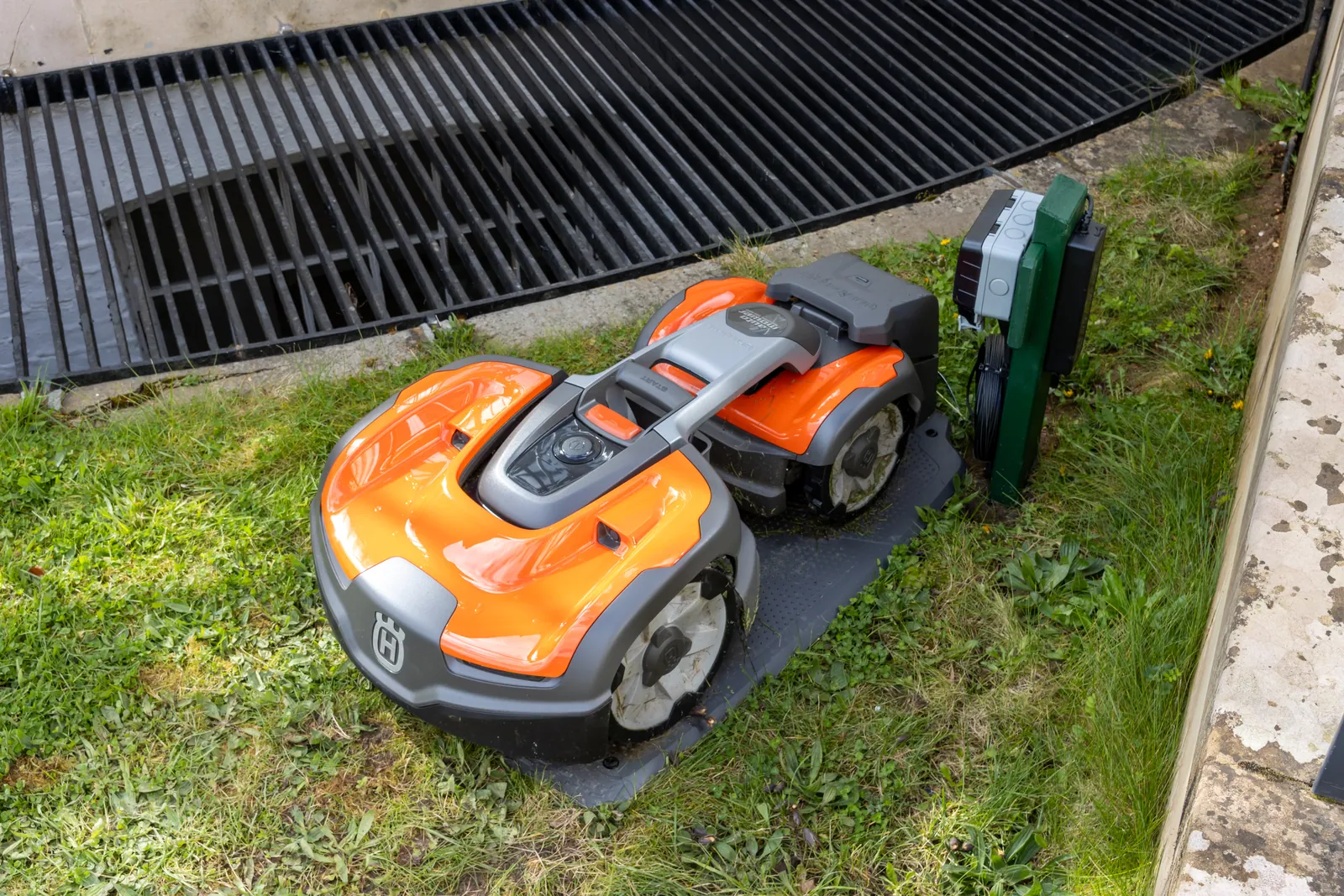
In the garden, robot mowers are mature; the Naio Oz is for professional vegetable growers, and the Unitree Go2 costs from about PLN 9,900 (≈ EUR 2,260) in Polish shops.
Agriculture
A laser that burns weeds without a gram of chemicals, a solar robot sowing with eight-millimeter accuracy: the field is no longer the exclusive domain of the tractor and the hoe.
Warehouse and logistics
Robots really work here: Amazon reports more than 5,000 robots in its new Dobromierz center, and some AMR offers can be borrowed on trial.
Schools
Schools buy robots from USD 175 (Ozobot Evo) to robot arms for more than EUR 2,000; the LEGO SPIKE Prime 45678 was retired on 30 June 2026.
Universities and research
Universities buy research platforms: the Unitree G1 humanoid from USD 13,500, the Franka arm for about EUR 25,000, and the open SO-101 in parts for about USD 230.