on sale
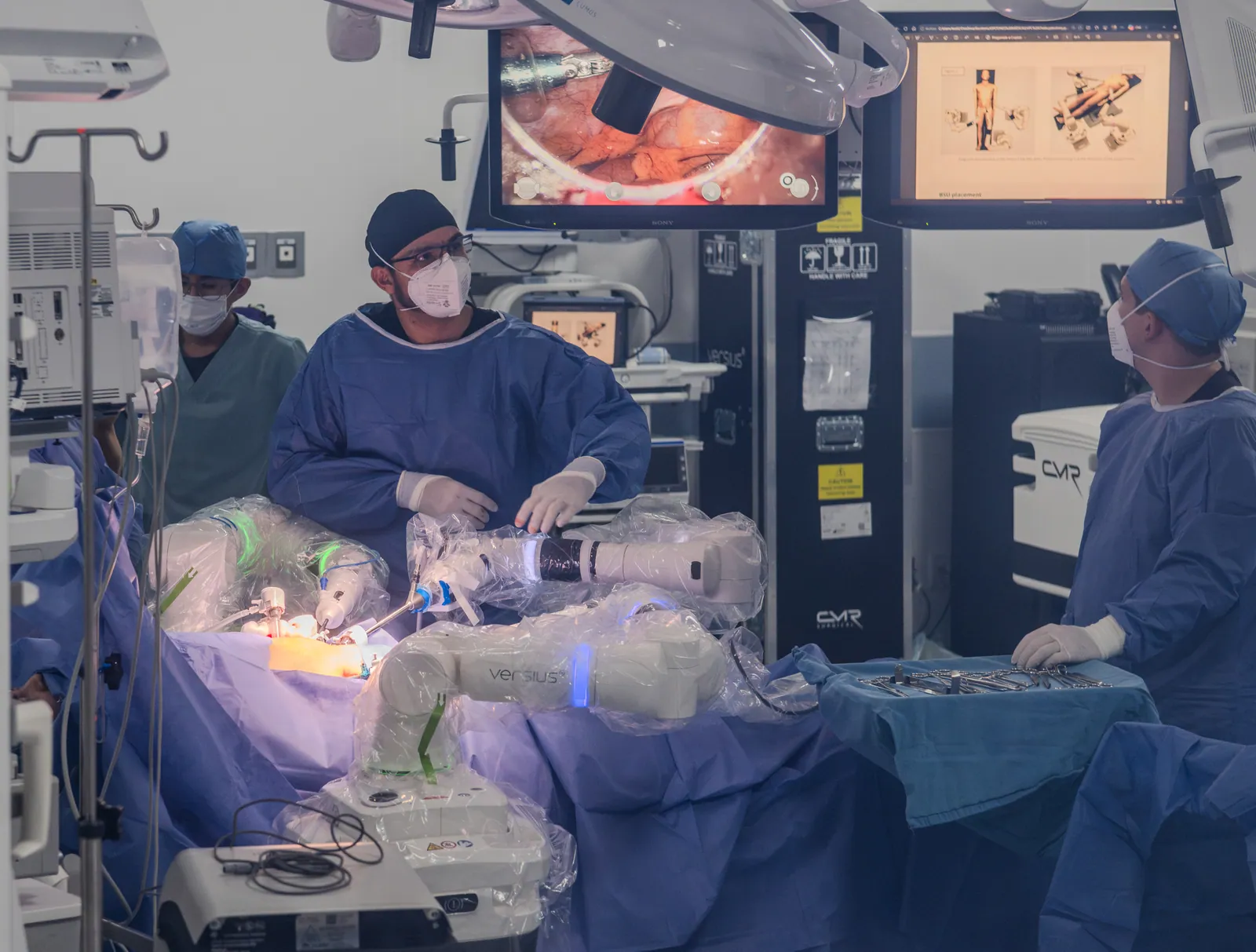
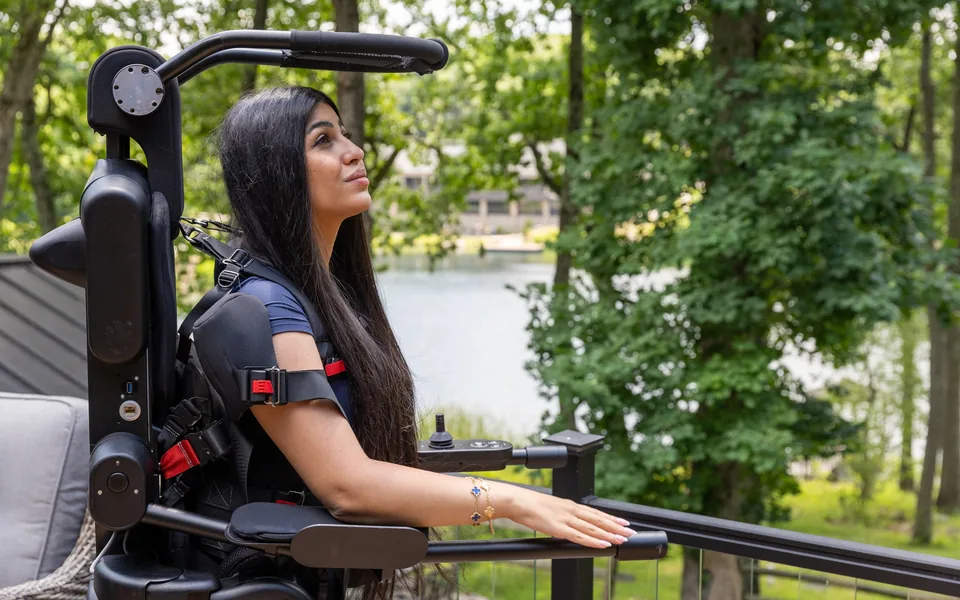
Atalante X, from the French company Wandercraft, is a rehabilitation exoskeleton built around one defining feature: it balances itself. Unlike competing systems from Ekso Bionics or ReWalk, the patient does not need crutches to stay upright during gait training.
The device can run for more than 8 hours a day, which the manufacturer presents as an operational edge for clinics that schedule therapy sessions back to back. Wandercraft claims more than 150 customers on five continents and more than 25 million steps logged in real-world use, along with distribution partnerships in the US with National Seating & Mobility and Good Shepherd Rehabilitation.
The gaps in the data are significant, though: the manufacturer does not publish the device's weight, height, degrees of freedom or price, and all of those fields remain undisclosed on the company's website. There is also no information on availability in Poland or a local distributor.
Atalante X is intended for clinical facilities and rehabilitation centers that provide gait therapy to patients after spinal cord injuries or strokes, not for individual use. For that, Wandercraft is introducing a separate model, Eve.
Data from manufacturer datasheets and product pages; median over the models of this category in the database.
no data
Atalante X's price is not on the manufacturer's website and we found it in no source, so the field stays empty and we give no figures. As a rough estimate, clinical exoskeletons of this class typically cost hundreds of thousands of zlotys, but that is an order of magnitude, not a quote; get a price from the manufacturer. Beyond the device itself, expect costs for training the therapist team, service inspections and possibly a software agreement. The payback is worth calculating differently than in industry: not how many hours of labor a robot replaces, but how many additional patients the clinic can treat and what therapy outcomes it can show a payer. Funding sources for medical facilities are an entirely different path from industrial grants, and we have no confirmed information on them.
No confirmed distributor in Poland
Atalante X has one job: to restore walking to patients in a clinical setting. Wandercraft designed the device to balance itself: the system holds the equilibrium, so a patient after a spinal cord injury or a stroke does not have to lean on crutches, as with competing solutions from Ekso Bionics or ReWalk. For the physiotherapist this changes the job: instead of spotting the patient, they can concentrate on the quality of each step and the choice of exercises. The manufacturer says the device runs for more than 8 hours a day, which matters for clinics running sessions one after another; there is no waiting for a recharge between patients. The use case is gait rehabilitation in clinical facilities and rehabilitation centers. This is equipment for supervised therapy, not an exoskeleton for everyday use at home; that role is meant for a separate model, Eve. For a broader overview of the technology, from rehabilitation to industry, see “Exoskeletons in Rehabilitation and Industry”, and for all devices of this type see the exoskeletons category. The natural home of Atalante X is a hospital with a neurological rehabilitation ward (hospitals).
Atalante X is for clinics, hospitals and rehabilitation centers that provide gait therapy to patients after spinal cord injuries or strokes and see many patients a day. It makes sense where throughput matters: the manufacturer stresses more than 8 hours of operation per day. It is not for private individuals, either because of its purpose or for organizational reasons. Nor is it for facilities that expect local service and a Polish distributor: the manufacturer names neither a distributor nor a price for Poland. A hospital considering a purchase should therefore ask up front about service, team training and parts availability. Anyone looking for a solution to use outside a clinic should take a look at Eve or ReWalk Personal.
Wandercraft cites more than 150 customers on five continents and distribution partners in the US (National Seating & Mobility, Good Shepherd Rehabilitation). We do not, however, have an independently verified list of specific facilities. As for Poland: no confirmed deployments in Poland; the manufacturer names neither a local distributor nor a price. Meanwhile, about 30 centers in the country offer robotic rehabilitation, based mainly on EksoNR, Indego, ReWalk and similar systems; we describe the details in “Exoskeletons in Rehabilitation and Industry”. For comparison, Wandercraft also offers Eve for personal use, but it too has no confirmed availability in Poland.
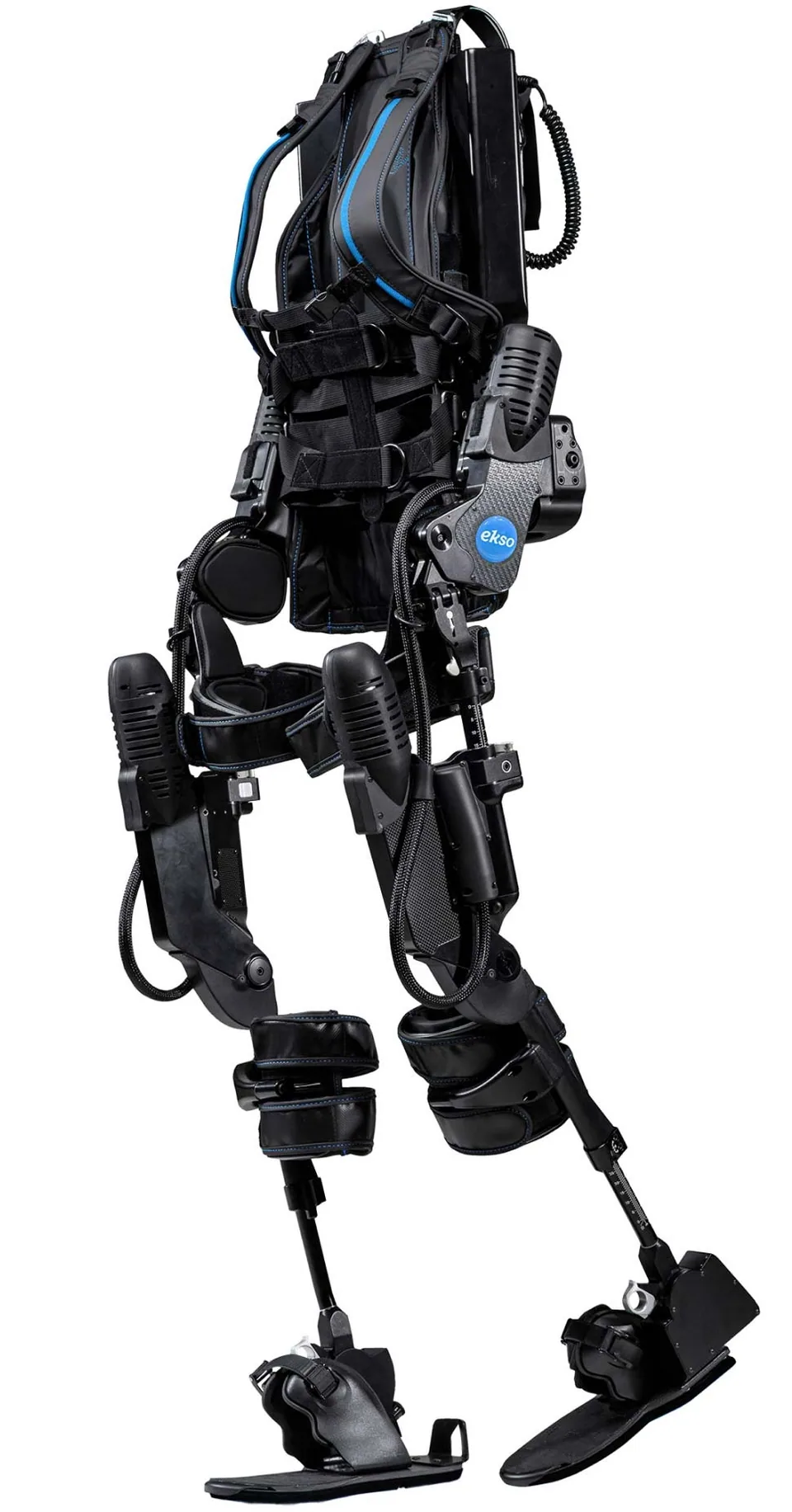
There are three sensible routes in rehabilitation exoskeletons. EksoNR is an American system with FDA clearance, sold to clinics, weighing 25 kg with about 3 hours of runtime; in Poland it is one of the best-known options. LokomatPro is not a wearable exoskeleton but a stationary gait-training system with more than 1,000 installations worldwide; it works well in large centers. ReWalk Personal is an exoskeleton for everyday mobility for people with lower-limb paralysis, introduced in 2025; it is personal rather than clinical equipment. The choice depends on whether balance without crutches (Atalante X), a proven installed base (Lokomat) or availability in Poland (Ekso) matters most. Before ordering anything, ask each supplier for a visit to a working center and for a list of the training your team will need.
Sarcos Technology and Robotics (now Palladyne AI)
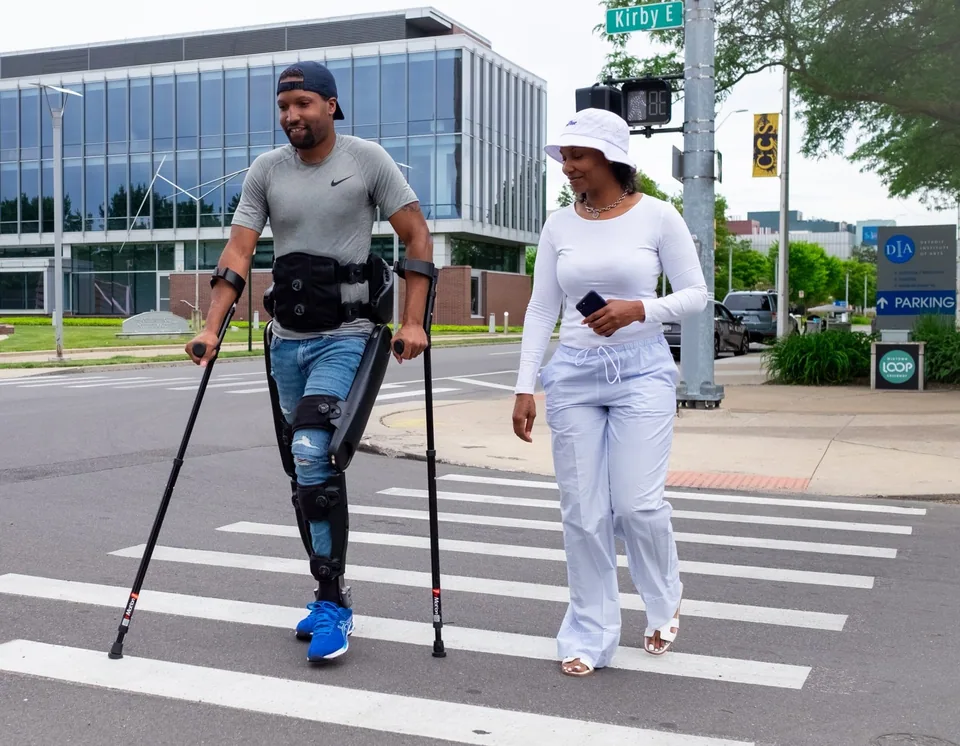
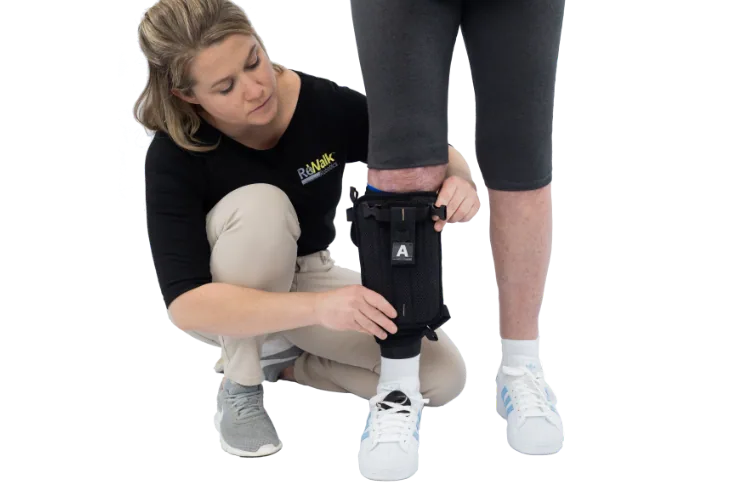
Wandercraft is a Paris-based company specializing in self-balancing exoskeletons (Wandercraft). Atalante X is its flagship rehabilitation product, already sold to clinics. The company claims more than 150 customers on five continents and more than 25 million steps logged in real-world use; these are the manufacturer's claims, not an independent audit. In the United States, Wandercraft works with National Seating & Mobility and Good Shepherd Rehabilitation. In 2026 the company went a step further: it launched Eve for personal use and is also developing the industrial humanoid Calvin-40.
It balances itself, so the patient does not need crutches during gait training.
More than 150 across five continents, with 25 million steps logged in real-world use.
The manufacturer names no Polish distributor and gives no price.
Author, source and licence of the photo are given in the caption. Shop links may become affiliate links in future, details: How we make money · How we check