In this article
Key facts
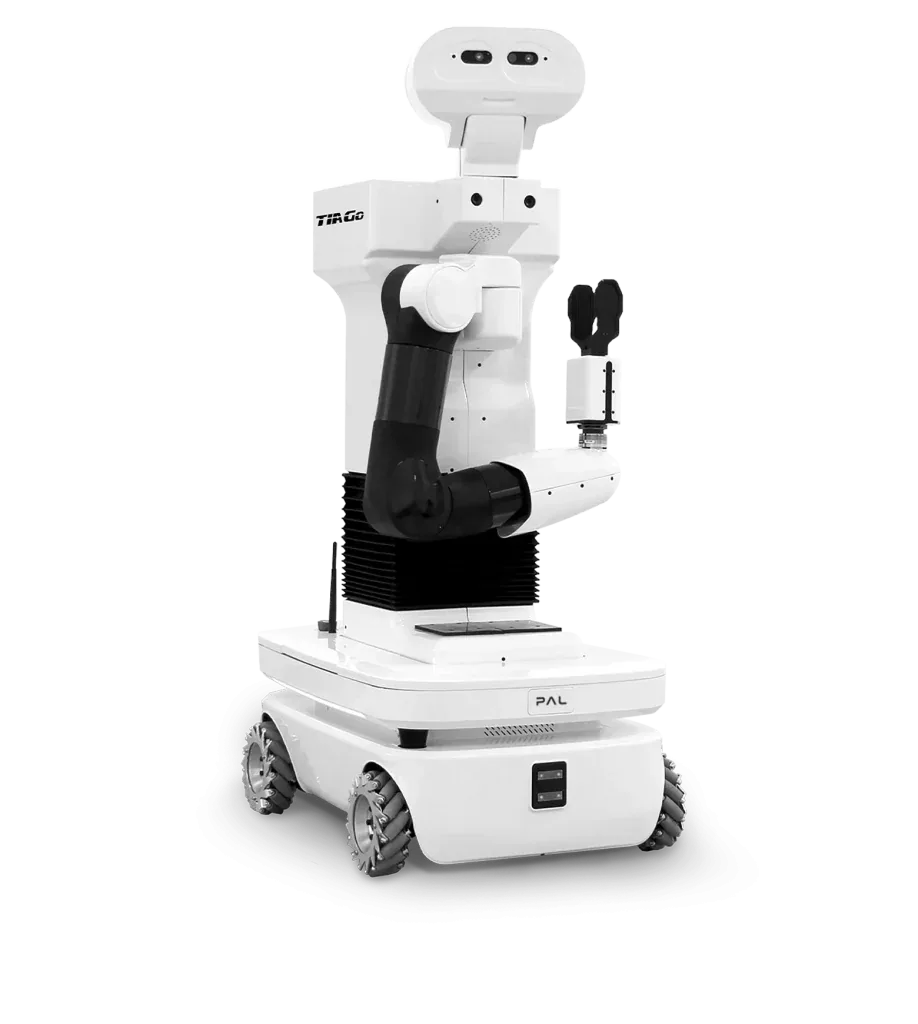
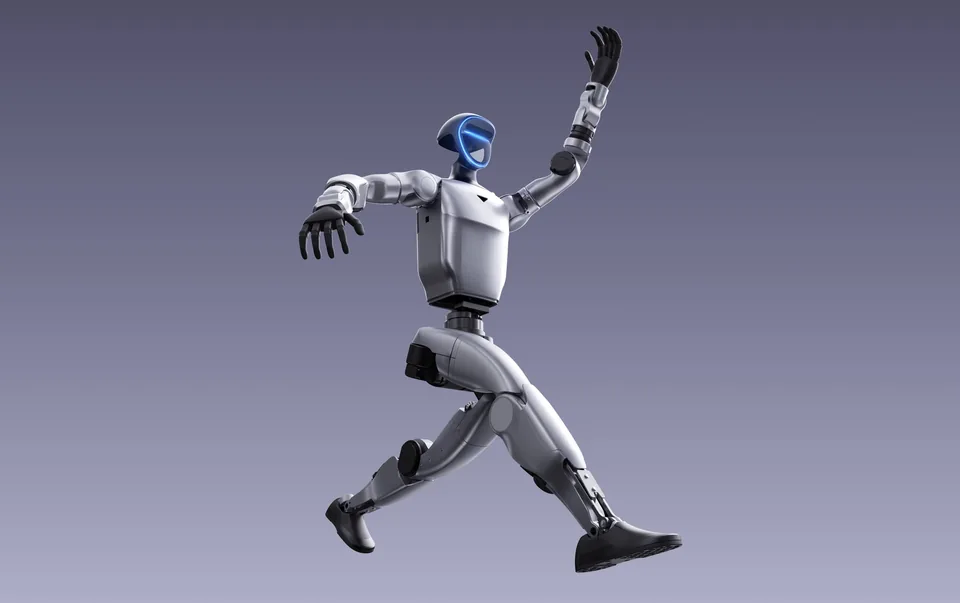
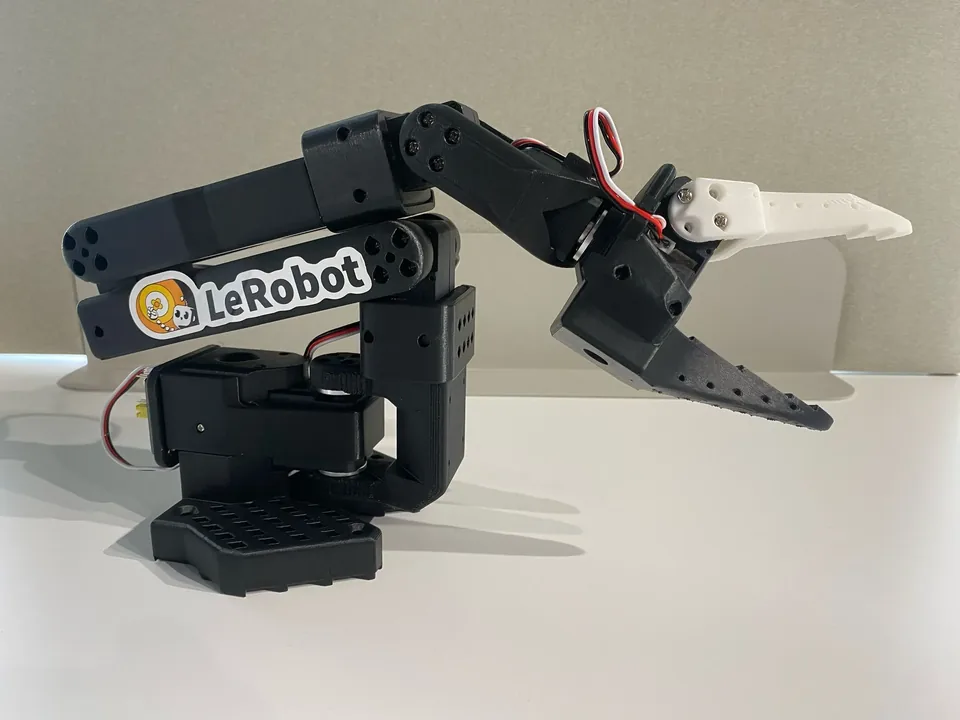
- Models coveredPAL Robotics TIAGo, Unitree G1 (Standard), SO-101
- Prices of the models covered891 PLN (≈ EUR 205 at NBP rate 4.3641 of 21 October 2026) – 79,900 PLN (≈ EUR 18,310)
- Covered models available in Poland1 of 3
- Number of sources12
- Reading time12 min
How to use this glossary
The 65 terms below are grouped by topic: mechanics and drive, perception and control, artificial intelligence, robot types, and market and business. Each term is given in English with its Polish equivalent in parentheses, because manufacturers' datasheets (Unitree, Boston Dynamics, PAL Robotics and others) are almost always published in English only, while Polish distributors and trade media use the Polish forms. More on reading a robot's technical specification in “How to Read a Robot Datasheet”. Normative definitions of terms (including robot, industrial robot, service robot) are given in ISO 8373:2021 "Robotics — Vocabulary" (ISO); the glossary below is popular in style and may simplify.
Mechanics and drive
Degree of freedom (DOF; Polish: stopień swobody) — the number of independent directions of motion of a given joint or of the whole robot. A typical quadruped robot has 12 DOF (3 per leg — for example 12 joint motors in the Unitree Go2, Unitree), and a humanoid hand alone can have a dozen or more. More in “Degrees of Freedom (DOF) in Humanoid Robots”.
Actuator (Polish: aktuator) — the component that converts energy (electrical, hydraulic, pneumatic) into mechanical motion; the robot's equivalent of a muscle. We describe actuators in more detail in “Actuators in Humanoid Robots”.
Torque (Polish: moment obrotowy) — the twisting force acting around an axis of rotation, expressed in newton-meters (N·m); it determines how heavy a load the robot can lift or how hard it can push or pull.
Servo (Polish: serwomechanizm / serwo) — a drive unit with a built-in feedback loop that holds a set position or speed precisely; the basic building block of low-cost educational arms.
Brushless motor (BLDC, brushless DC motor; Polish: silnik bezszczotkowy) — an electric motor without mechanical brushes, with higher efficiency and durability than a brushed motor; standard in modern leg and arm actuators for robots.
Harmonic drive (Polish: przekładnia harmoniczna) — a type of gear reducer that delivers a high gear ratio with zero backlash, widely used in the joints of industrial robots and humanoids because of its compactness.
Linear actuator (Polish: siłownik liniowy) — an actuator that produces back-and-forth motion along a straight line instead of rotation, used for example in the spines and hips of some humanoids.
Payload (Polish: ładowność / udźwig) — the maximum mass a robot can safely lift, carry or hold, given in kilograms; a key comparison parameter in datasheets.
Reach / working envelope (Polish: zasięg roboczy) — the maximum distance a robot arm can reach from its base; for stationary arms usually given in millimeters.
Ingress protection rating (IP rating; Polish: klasa szczelności IP) — a two-digit standard (for example IP67) describing an enclosure's resistance to dust and water; the first digit covers protection against solid objects, the second against liquids.
Gripper / end effector (Polish: chwytak) — a tool mounted at the tip of a robot arm for grasping, moving or manipulating objects; it can be a jaw, a vacuum gripper or a multi-fingered hand.
Mobile base (Polish: podstawa mobilna) — a wheeled or legged platform carrying the robot's upper module (for example an arm or torso), allowing it to move around a room.
Perception, navigation and control
LiDAR (light detection and ranging) — a sensor that measures distance by emitting and receiving laser light beams, building a three-dimensional map of the surroundings; the basis of navigation for most mobile and quadruped robots.
SLAM (simultaneous localization and mapping) — a technique for building a map of an unknown environment while locating the robot within it; essential for autonomous navigation without a pre-made map.
Depth camera / RGB-D (Polish: kamera głębi) — a camera that records a color image and the distance to every point in the scene at once, used to recognize obstacles and objects.
Inertial measurement unit (IMU; Polish: jednostka inercyjna) — a sensor combining an accelerometer and a gyroscope that measures the robot's acceleration and orientation in space; indispensable for keeping walking robots balanced.
Encoder (Polish: enkoder) — a sensor that measures the rotation angle or position of a motor shaft, feeding data to the position and speed control loops.
Force/torque sensor (Polish: czujnik siły/momentu) — a sensor that measures the force and torque acting on a joint or gripper, allowing the robot to feel contact with its surroundings (for example in collaborative robots).
Whole-body control (Polish: sterowanie całym ciałem) — an algorithm that coordinates all of a robot's joints at once (for example a humanoid's legs and arms) so that it keeps its balance while performing a manipulation task.
Teleoperation (Polish: teleoperacja) — remote control of a robot by a human operator, often used to collect training data for imitation learning algorithms.
Imitation learning (Polish: uczenie przez naśladowanie) — a method of training a robot from recorded demonstrations by a human operator, instead of manual programming or trial and error.
Reinforcement learning (RL; Polish: uczenie ze wzmocnieniem) — a machine learning method in which a robot learns an optimal strategy through a system of rewards and penalties, in simulation or in the real world; widely used to train the gait of quadruped and humanoid robots.
Autonomy level (Polish: autonomia poziomu) — a scale describing how independent a robot is, from full teleoperation through supervised autonomy to full autonomy with no human involvement.
Collaborative robot / cobot (Polish: robot współpracujący) — an industrial robot designed to work safely in direct proximity to people, without physical safety barriers, in line with the ISO 10218 requirements for collaborative operation (formerly also described in the specification ISO/TS 15066). More in “Cobot or Industrial Robot”.
Artificial intelligence in robotics
VLA model (vision-language-action model) — an artificial intelligence model that combines understanding of images and natural language with generation of the robot's physical actions in a single architecture; the current direction of development for humanoid robot "brains". More in “VLA Models: How AI Controls Humanoid Robots in 2026”.
Foundation model (Polish: fundament modelowy) — a large AI model trained on a huge, diverse dataset that can then be fine-tuned for specific robot tasks instead of being trained from scratch for every application.
Physics simulation (Polish: symulacja fizyczna) — a software environment that reproduces the laws of physics, in which robot control algorithms are trained and tested before deployment on real hardware, lowering cost and the risk of damage.
Sim-to-real transfer (Polish: transfer sim-to-real) — the process of moving behaviors trained in simulation to a robot operating in the real world, together with the problem of the so-called reality gap caused by imperfections in the simulation.
Perception (Polish: percepcja) — all the processes of handling sensor data (from cameras, LiDAR, microphones) to build the robot's understanding of its surroundings.
Motion planning (Polish: planowanie ruchu) — the algorithmic calculation of a robot's trajectory from point A to point B, taking obstacles and physical constraints into account.
Cloud robotics (Polish: chmura obliczeniowa dla robotów) — a model in which part of the robot's AI computation (for example image recognition) is run on remote servers instead of on board, which lowers the robot's hardware requirements at the cost of depending on a network connection.
Edge computing (Polish: przetwarzanie brzegowe) — running AI computation directly on the robot's on-board computer, without sending data to the cloud; essential for applications that need low latency, such as keeping balance.
Robot types and categories
Humanoid robot (Polish: robot humanoidalny) — a robot with roughly human proportions (two legs, two arms, a torso, a head), designed to work in environments and with tools built for people. See humanoid robots and “How Does a Humanoid Robot Work”.
Quadruped robot (Polish: robot czworonożny) — a mobile robot that moves on four limbs and can cope with uneven terrain and stairs. See quadruped robots.
Autonomous mobile robot (AMR; Polish: robot mobilny autonomiczny) — a wheeled robot that moves independently through an environment (for example a warehouse), planning its route and avoiding obstacles without a physically predefined path. See mobile robots.
Automated guided vehicle (AGV; Polish: automatycznie prowadzony wózek) — an older generation of transport robots that follow a predefined route (for example magnetic lines or tape), as opposed to fully autonomous AMRs.
Industrial robot (Polish: robot przemysłowy) — a stationary robot arm that usually works in a separate, fenced production zone without direct contact with people, unlike cobots.
Service robot (Polish: robot usługowy) — a robot that performs service tasks outside industry, for example serving meals, commercial cleaning or reception duties. See service robots.
Domestic robot (Polish: robot domowy) — a consumer robot intended for private household use, for example a robot vacuum cleaner or a companion robot. See home robots.
Exoskeleton (Polish: egzoszkielet) — a wearable mechanical structure that assists the user's movement or strength, used in medical rehabilitation and in physical work in industry and logistics. See exoskeletons.
Research platform (Polish: robot badawczy / platforma badawcza) — a robot sold mainly for scientific laboratories, usually with an open SDK and the possibility of deep software modification, for example PAL Robotics TIAGo or Unitree G1.
Open-source robot (Polish: robot open-source) — a robot whose mechanical design, electronics and/or software are publicly available, allowing you to build it yourself without a manufacturer's license, for example SO-101.
Business, market and purchasing
RaaS (Robot-as-a-Service) — a sales model in which the customer pays a recurring subscription for access to a robot along with service and updates, instead of buying the hardware outright, similar to the SaaS model in software.
TCO (total cost of ownership; Polish: całkowity koszt posiadania) — the sum of all costs associated with a robot over its whole period of use: purchase or lease, energy, service, spare parts and staff training, not just the purchase price.
ROI (return on investment; Polish: zwrot z inwestycji) — a measure of how long it takes for the savings or revenue generated by a robot to offset the cost of deploying it.
Systems integrator (Polish: integrator robotyczny) — a company that specializes in adapting and deploying a ready-made robot on a customer's specific production line or process, including programming, tooling and training.
Robotization tax relief (Polish: ulga na robotyzację) — a Polish tax relief in force since 2022 that lets businesses deduct an additional amount of up to 50% of qualifying robotization costs from their taxable base (MDDP). More in “Poland's Robotization Tax Relief”.
Distributor / reseller (Polish: dystrybutor) — a company that mediates sales of a manufacturer's robots on a given local market, often also responsible for warranty and post-warranty service.
Quote-based pricing (Polish: wycena na zapytanie) — a sales model with no public price list, where the price is set individually after analyzing the customer's needs; often found in the premium industrial robot segment (for example Boston Dynamics does not publish a price list for Spot).
Funding round (Polish: runda finansowania) — a stage at which a robotics startup raises investment capital (for example Series A, B, C), often deciding the pace of product development and the scale of production.
Unicorn (Polish: jednorożec) — the informal term for a private technology company valued at $1 billion or more, a category that includes some of the leading humanoid robot makers.
SDK (software development kit) — a set of programming tools supplied by the robot's manufacturer that lets you write your own control software; how open the SDK is strongly affects how attractive a robot is to research labs.
Datasheet (Polish: karta katalogowa) — the manufacturer's official document with the robot's full technical specification; the primary source of comparison data on this platform. See “How to Read a Robot Datasheet”.
Standards and safety
ISO 10218 — the international standard setting safety requirements for industrial robots (part 1: ISO 10218-1:2025) and their integration in the workplace (part 2: ISO 10218-2:2025); both parts were published in February 2025, replacing the 2011 editions. More in “Robot Safety Standards”.
ISO/TS 15066 — a 2016 technical specification (ISO) supplementing ISO 10218 with requirements for collaborative robots (cobots), including limit values for contact forces and pressures on a human; according to industry analyses most of its requirements were incorporated into ISO 10218-2:2025.
Collaborative workspace (Polish: strefa współpracy) — a work area in which a robot and a person can perform tasks at the same time without a physical barrier, provided cobot safety standards are met.
Power and force limiting (PFL; Polish: ograniczenie mocy i siły) — one of the four modes of safe human-robot collaboration described in ISO/TS 15066, in which the robot automatically limits its force and speed in the presence of a person.
Emergency stop (e-stop; Polish: zatrzymanie awaryjne) — a physical or software mechanism that immediately halts all of the robot's movements in a hazardous situation.
Drive and power
Lithium-ion battery (Li-ion; Polish: akumulator litowo-jonowy) — the dominant battery type in mobile robots, valued for its high energy density relative to weight; capacity is usually given in watt-hours (Wh).
Watt-hour (Wh) — a unit of energy describing battery capacity; the product of power and the time after which the battery discharges at constant power draw.
Hot-swappable battery (Polish: bateria wymienialna na gorąco) — a battery that can be replaced without switching the robot off, allowing continuous work with no downtime for charging; in some humanoid robots the swap is autonomous: UBTech gives about 3 minutes for the Walker S2 (UBTech), and Boston Dynamics' Atlas swaps its own batteries (Boston Dynamics).
Runtime / battery life (Polish: czas pracy na baterii) — how long a robot works continuously on one full charge, strongly dependent on the intensity of its tasks.
Charging dock / docking station (Polish: stacja dokująca) — a point to which the robot returns autonomously to charge its battery without human involvement.
Structure and materials
Composite frame (Polish: rama kompozytowa) — the robot's load-bearing structure made of composite materials (for example carbon fiber) to reduce weight while keeping stiffness.
Direct drive (Polish: napęd bezpośredni) — a setup in which the motor drives the joint directly, with no intermediate gearing, which increases responsiveness at the cost of needing a larger, more powerful motor.
Quasi-direct drive (QDD; Polish: aktuator quasi-bezpośredniego napędu) — a compromise with a low gear ratio that combines the advantages of direct drive (responsiveness, mechanical transparency) with the option of using a smaller motor.
Stiffness (Polish: sztywność mechaniczna) — a measure of a structure's resistance to deformation under load; the trade-off between stiffness and compliance affects how safe a robot's contact with people is.
Summary
The 65 terms above do not exhaust the whole industry vocabulary, but they cover the terms that appear most often in datasheets, manufacturers' press materials and articles on this site. As the market develops and new architectures appear (especially in AI models for robots), the glossary will be updated regularly.
Frequently asked questions
Why does the glossary give Polish equivalents of the terms?
Because this platform serves the Polish market: Polish distributors, integrators, tax rules and trade press use Polish terminology, while manufacturer documentation, datasheets and most research papers in robotics are written in English. Knowing both makes it easier to read datasheets and source articles and to talk to local suppliers.
Are these terms standardized in Polish technical literature?
Partly. Terms from mechanics and automation (for example degree of freedom, torque) have established, uniform Polish equivalents. Newer concepts at the edge of AI (for example VLA model, teleoperation) have not yet settled on a single standardized Polish form and are often used interchangeably with the English original.
Does this glossary cover every term used on the site?
No. It is a basic set of the most frequently occurring terms. More complex topics (for example specific VLA models or safety standards) are covered separately in dedicated articles, which we link to in the text.
Sources
Links to the material this text is based on. Before you base a decision on a figure from the article, check it at the source.
- unitree.com/g1
- bostondynamics.com/products/spot
- pal-robotics.com/robots/tiago
- huggingface.co/docs/lerobot/so101
- iso.org/standard/75539.html
- iso.org/standard/73933.html
- iso.org/standard/73934.html
- iso.org/standard/62996.html
- mddp.pl/?p=111575
- ubtrobot.com/en/humanoid/products/walker-s2
- bostondynamics.com/blog/boston-dynamics-unveils-new-atlas-robot-to-revolution…
- unitree.com/go2
About the authors
A chief engineer by profession (technical head of a ship's machinery plant, licensed). Sets the site's editorial rules and is responsible for them; he does not read every page before publication.
Texts are prepared by the editorial team using AI tools. We compare data with primary sources on a sample basis, not page by page. Our rules are described here: How we check · About us