on sale
Manufacturer
Ekso Bionics (NASDAQ: EKSO): EksoNR and Indego exoskeletons, the latter acquired from Parker Hannifin in 2022.
Ekso Bionics, listed on NASDAQ under the symbol EKSO, traces its roots to Berkeley ExoWorks in California and has operated since 2005, making medical and industrial exoskeletons in San Rafael, California. In 2022 the company took over the Indego product line from Parker Hannifin, and then split its business into Ekso Health (rehabilitation, the EksoNR model) and Ekso Works (the industrial segment).
Its public-company status sets Ekso apart from Japan's Cyberdyne, which is listed only in Tokyo, and makes it more transparent to Western investors. The EksoNR is used in neurological rehabilitation after strokes and spinal cord injuries, and the Indego Personal is a lighter version for everyday use.
The manufacturer gives no information on distribution in Poland, which remains an open question for Polish rehabilitation centers.
Ekso Bionics traces its roots to Berkeley ExoWorks in California and has been operating since 2005. Today the company is listed on NASDAQ under the symbol EKSO and makes medical and industrial exoskeletons from San Rafael, California. The turning point for its portfolio came in 2022, when the company took over the Indego product line from Parker Hannifin. After that acquisition it split its business into two parts: Ekso Health, covering rehabilitation and the EksoNR model, and Ekso Works, the industrial segment. That structure shows that an exoskeleton can be sold to two completely different customers: a clinic that teaches a patient to walk again, and a plant where a worker spends hours lifting or working with arms raised. The EksoNR has been sold since 2019 and has FDA clearance, while the Indego Personal, a lighter version for everyday use, has been covered by Medicare reimbursement in the US since 2024. More about the two paths of application for exoskeletons is in “Exoskeletons in Rehabilitation and Industry”, and the category is described in “Exoskeletons”. Two pillars, rehabilitation and industry, let the company weather the swings of each market separately.
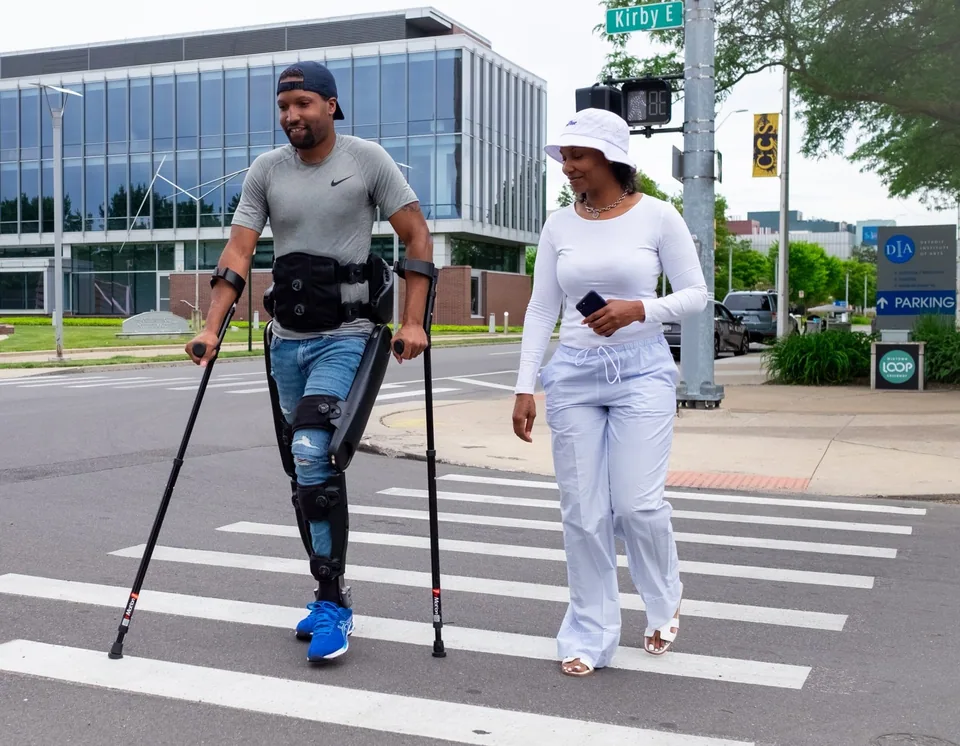
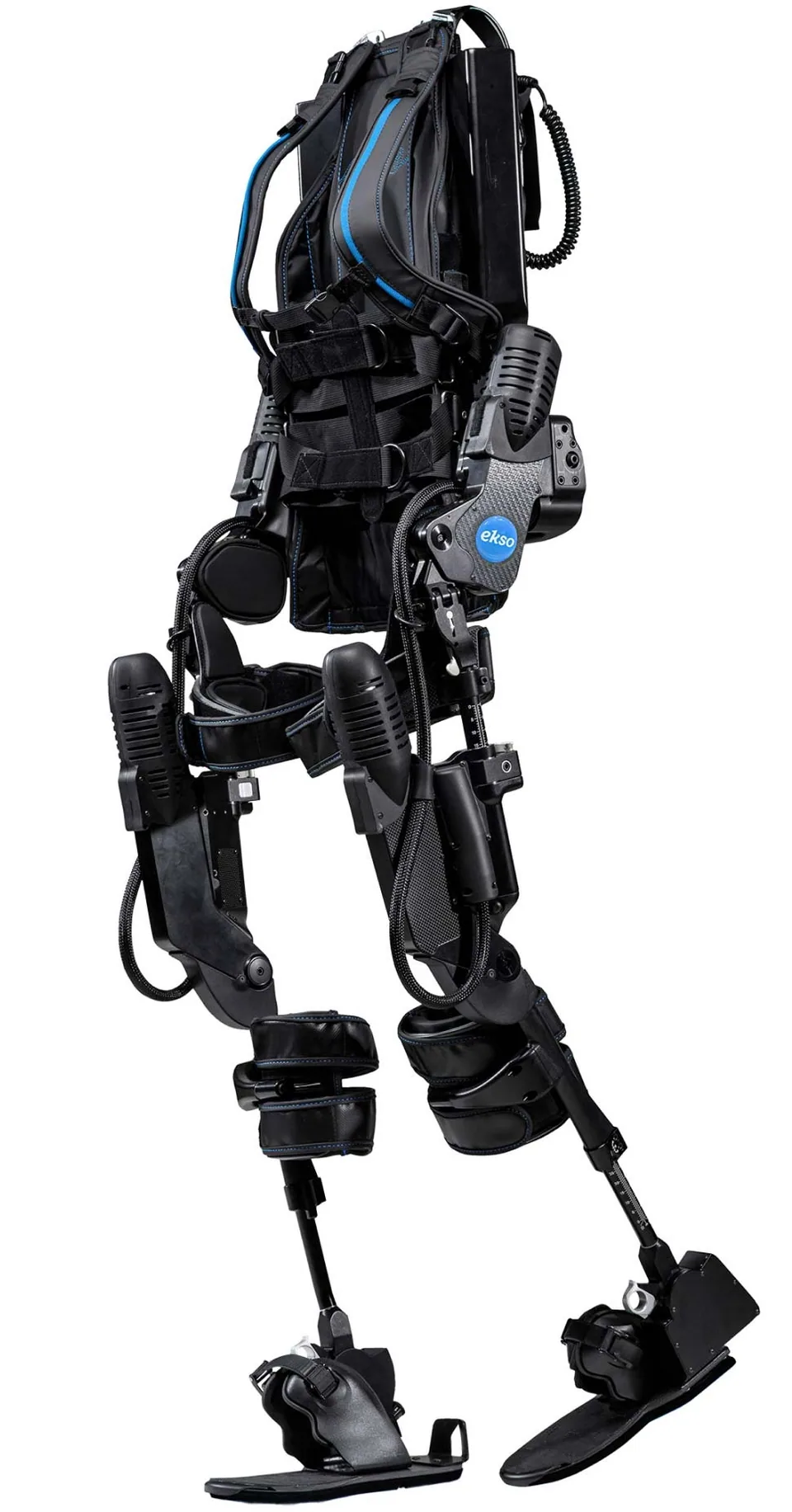
EksoNR is an FDA-cleared rehabilitation exoskeleton for gait training, sold to clinics without a public price since 2019. It is used after stroke, spinal cord and traumatic brain injuries, and in multiple sclerosis; that is a rich list of indications, but each requires the supervision of a therapist. Ekso Indego Personal is a home exoskeleton for people with paraplegia; since 2024 it has been reimbursed by Medicare in the US, its load capacity is 113 kg, and the price and availability in Poland are not confirmed. The two models serve two situations: therapy in the clinic and everyday life. Hospital use is described at hospitals. For comparison, look at a competitor's product, ReStore Exo-Suit, or the personal Eve, which targets similar needs. You will find the wider category context in exoskeletons. For the therapist, the training protocol matters; for the patient, comfort; and for the facility administrator, service and running costs, which the manufacturer does not discuss publicly. That is why a purchase requires a sales conversation, not just reading a datasheet. “How to Read a Robot Datasheet” will help with comparisons, and products from other companies are shown in the category “Exoskeletons”.
Its public-company status sets Ekso apart from Japan's Cyberdyne, listed only in Tokyo, and makes it more transparent to Western investors. Our sources, however, lack open data on funding, valuation and headcount, so we give no figures. Competitors in rehabilitation are Lifeward, Wandercraft and Hocoma, and in the industrial segment German Bionic Systems, Sarcos Technology and Robotics and Ottobock SE & Co. KGaA. Ekso's advantages are FDA clearance and Medicare reimbursement; its weaknesses are the lack of public prices and weak visibility in Europe. The exoskeleton market is still a niche compared with cobots, as the overview “Exoskeletons in Rehabilitation and Industry” shows. In the exoskeleton market the company's strength comes from the combination of a stock listing and certification, but the lack of open financial figures makes a reliable comparison of scale with Lifeward or Wandercraft impossible. For an investor it is a transparent company; for a customer it is a supplier whose price list has to be coaxed out in conversation.
We know of no dealer, local price or facility that has confirmed using the EksoNR or Indego. Medicare reimbursement applies to the US and does not carry over to the Polish system. Facilities looking for local support can compare with the Gliwice-based maker EGZOTech, which builds EMG-controlled rehabilitation robots, and with other companies on the map in “Polish Robotics Companies”. An inquiry to the manufacturer is the only sure route. Before buying, it is worth checking the requirements for certifying a medical device in the European Union, because FDA clearance does not replace European requirements.
Ekso Bionics is an established brand with FDA clearance and a stock market history, sensible for clinics that are able to import the device themselves. For Polish centers, the lack of confirmed distribution is a real barrier. The EksoNR is worth considering; the Indego Personal is one to watch for now. Advice: if you run a rehabilitation center, ask for a demonstration and clinical data before you plan a budget. For Polish facilities three questions will be key: who will supply the device, who will service it, and what certification looks like in the European Union.
Ekso Bionics