on sale
EksoNR is a rehabilitation exoskeleton from US maker Ekso Bionics, cleared by the FDA for gait training after stroke, spinal cord injury, traumatic brain injury and in multiple sclerosis. It is meant for clinical settings only, under the supervision of trained staff. It weighs about 25 kg with batteries, reaches a walking speed of up to 0.89 m/s and runs for up to 3 hours per charge.
It comes with GaitCoach, which analyzes gait in real time, and a cloud dashboard for tracking therapy progress. On sale since August 2019 as the successor to the EksoGT, it has several years of clinical deployments behind it, which sets it apart from newer rivals in rehabilitation exoskeletons such as ReWalk or Indego (the latter, incidentally, acquired by Ekso Bionics from Parker Hannifin in 2022).
EksoNR's strength is its established clinical standing and existing reimbursement pathways in some countries. Its weak points: no public price (Ekso Bionics publishes no price lists; sales run through individual quotes to facilities) and limits on the patient's weight and height (up to about 100 kg, height 152-193 cm). Neither availability nor a distributor in Poland has been confirmed.
The device is aimed at hospitals and rehabilitation centers investing in robot-assisted gait therapy, not at home use.
Data checked: · Sources: 2
Data from manufacturer datasheets and product pages; median over the models of this category in the database.
no data
Ekso Bionics does not publish prices; sales are made through individual quotes to clinics. So we have no price at all. As a rough guide, devices in this class run to hundreds of thousands of zloty, but that is orientation only, not an offer - ask for a quote. Beyond the purchase, a facility bears the cost of training therapists (operation is permitted only for trained staff), servicing, replacing accessories and therapist time in every session. The cloud dashboard and the GaitCoach module are part of the software, so it is worth asking about license terms. Return on investment in a clinic depends on the number of patients per device and on whether the therapy can be billed to the payer; check that locally, because for Poland we have no confirmed reimbursement pathways. Medical facilities usually look for funding in national and EU programs (for example the KPO, Poland's national recovery plan, and European funds), and the terms of the calls change all the time. How to calculate the whole picture: “Humanoid Robot TCO: How to Calculate Total Cost”.
No confirmed distributor in Poland
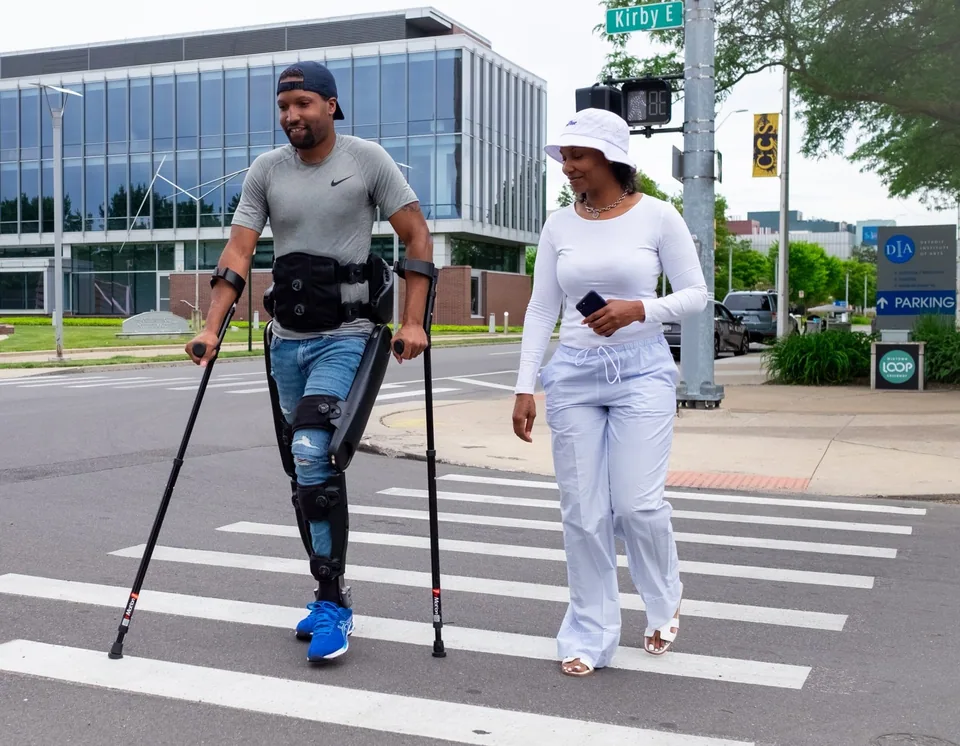
EksoNR is an exoskeleton for gait training, used only in clinical settings under the eye of trained staff. In the US it is FDA-cleared for rehabilitating patients after stroke, after spinal cord injury, with traumatic brain injury and with multiple sclerosis. In practice the therapist fits the patient with a frame with powered joints, sets the parameters and walks alongside. The exoskeleton supports the body and carries out part of the movement, while the patient relearns a proper gait pattern. The robot measures progress: the GaitCoach function analyzes gait in real time, and a cloud dashboard lets the therapist track results across sessions. The device weighs about 25 kg with batteries, reaches a walking speed of up to 0.89 m/s and runs for up to 3 hours per charge. The limits concern the patient: up to about 100 kg and a height of 152-193 cm. It is a tool for hospitals and rehabilitation centers, not for home use. We cover this class of devices more broadly, including industrial applications, in “Exoskeletons in Rehabilitation and Industry”. The actuators in such designs are a topic that borders on “Actuators in Humanoid Robots”.
A good fit: hospitals, neurology wards and rehabilitation centers that want to introduce robot-assisted gait therapy. The model has several years of clinical deployments behind it and, according to the manufacturer, an established standing and existing reimbursement pathways in some countries.
Who it is not for: patients looking for a device for the home. For that there is the lighter Ekso Indego Personal or ReWalk Personal. Nor is it for people outside the weight and height limits. A facility without trained staff and without a budget for a device with no public price list will also struggle. Availability and a distributor in Poland have not been confirmed. Overview of this class: exoskeletons.
The manufacturer names no distributor in the country. What is confirmed is FDA clearance for clinical use in the US and sales since 2019, but there are no named clinics we could point to. For Polish facilities this means asking Ekso Bionics directly. Polish centers can find other rehabilitation exoskeletons in the category “Exoskeletons”.
In gait rehabilitation the choice is wide, and what follows is positioning, not a ranking.
ReWalk Personal - an exoskeleton for people with spinal cord injury, often named as a competitor to clinical solutions; the pick when the patient is to use the equipment outside the clinic.
Ekso Indego Personal - a lighter Ekso version for everyday use; an option for the patient, not for the ward.
Atalante X - a French proposal for gait rehabilitation; worth checking if you are considering an alternative from a different manufacturer.
LokomatPro - a stationary treadmill-based gait training system; a different philosophy: the robot stands still and the patient trains on it.
HAL - a Japanese solution controlled by signals from the body; for centers looking for a different assistive technology.
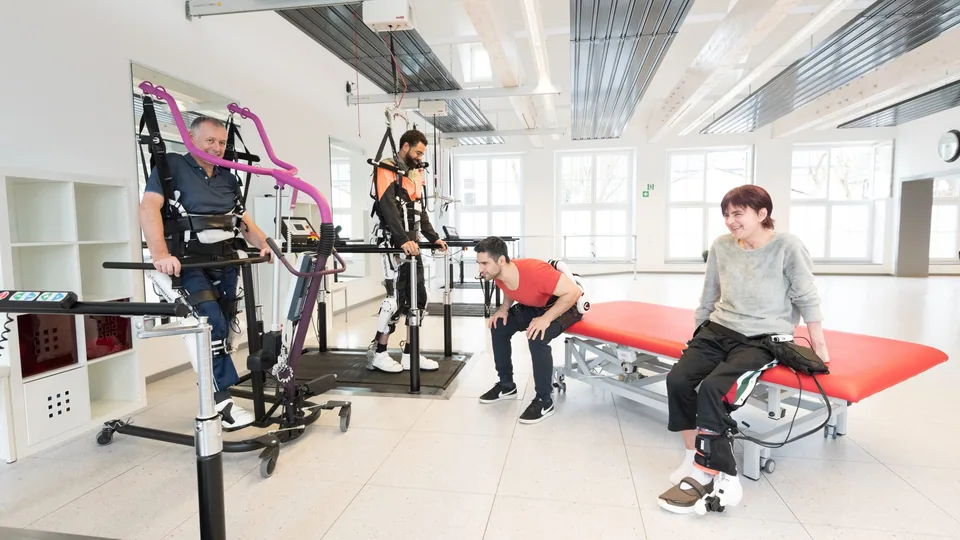
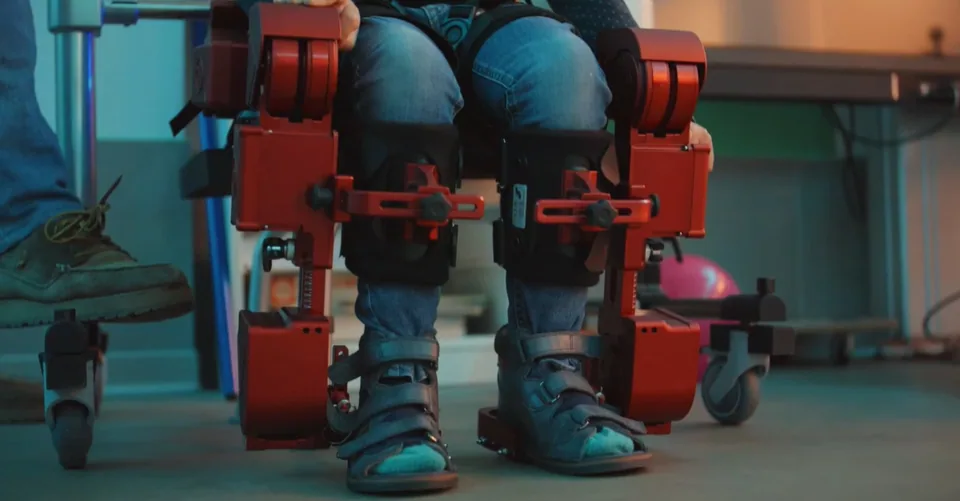
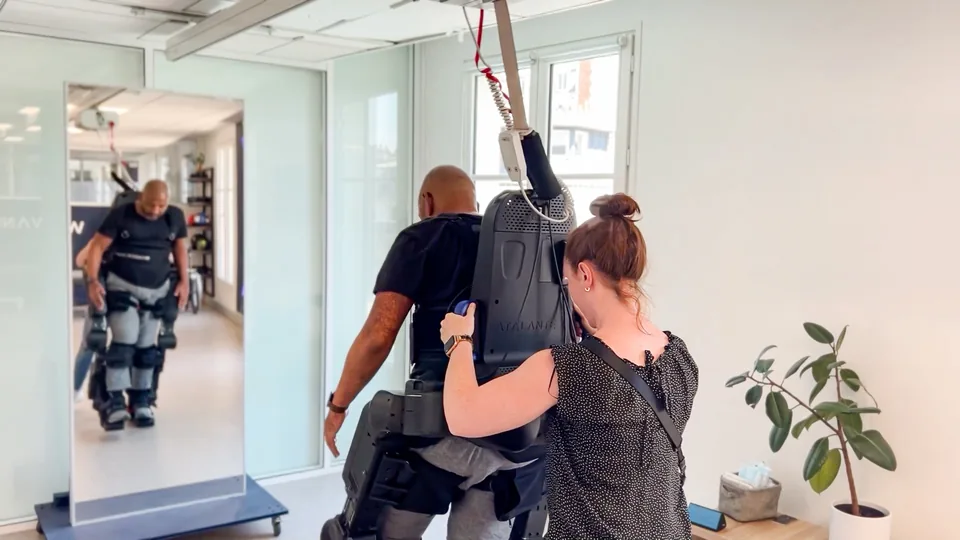
Ekso Bionics grew out of Berkeley ExoWorks in California, has operated since 2005, is headquartered in San Rafael and is listed on NASDAQ under the symbol EKSO. EksoNR went on sale in August 2019 as the successor to the EksoGT. In 2022 the company acquired the Indego line from Parker Hannifin and split its business into Ekso Health (rehabilitation, the EksoNR model) and Ekso Works (industry). Company profile: Ekso Bionics.
Sales start
No. The manufacturer Ekso Bionics (USA) names no Polish shop or official distributor for the EksoNR; enquiries go through the manufacturer's website (eksobionics.com). Confirm service in Poland before buying.
Gait rehabilitation after stroke, spinal cord injury and other neurological conditions.
About 25 kg with batteries.
The manufacturer does not publish prices; sales are made through individual quotes to clinics.
Author, source and licence of the photo are given in the caption. Shop links may become affiliate links in future, details: How we make money · How we check