on sale
Manufacturer
Wandercraft: the Atalante X exoskeleton already on sale, Eve on sale in the US, and the Calvin-40 humanoid with 12 customers.
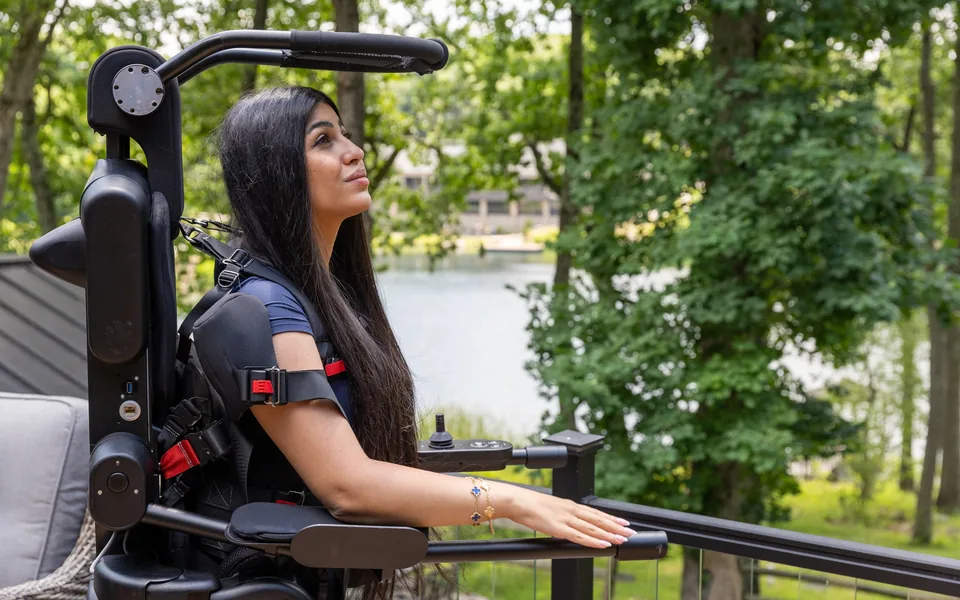
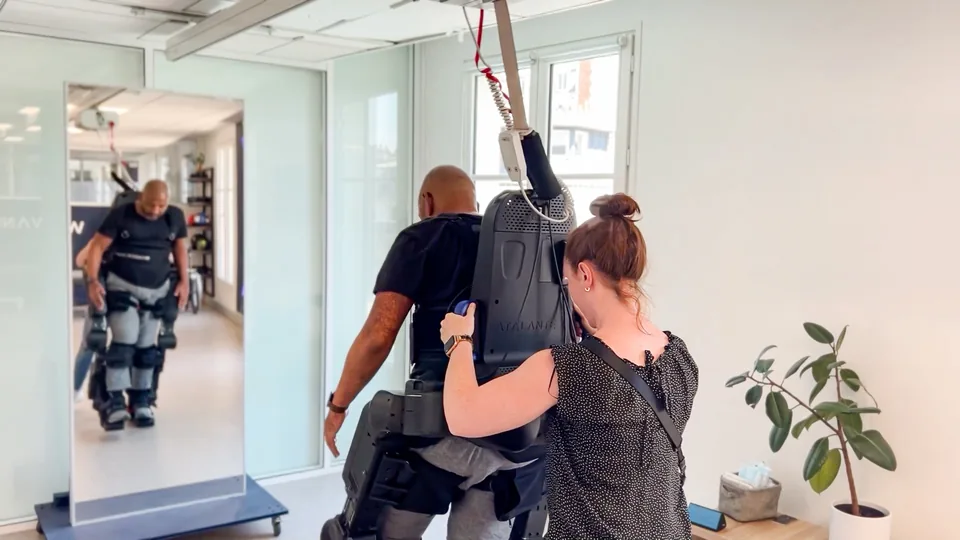
Paris-based Wandercraft specializes in self-balancing exoskeletons, which sets it apart from most companies on this list, focused on humanoids or cobots. Its flagship rehabilitation product, the Atalante X, is already on sale, offers up to 8 hours of operating time and is used in rehabilitation facilities. The company also offers a personal-use exoskeleton, Eve, on sale in the US since September 17, 2026.
In medical exoskeletons Wandercraft competes with the likes of ReWalk Robotics and Ekso Bionics, standing out precisely for its self-balancing mechanism that requires no crutches. None of the three models has a stated price, and the company is not present on the Polish market.
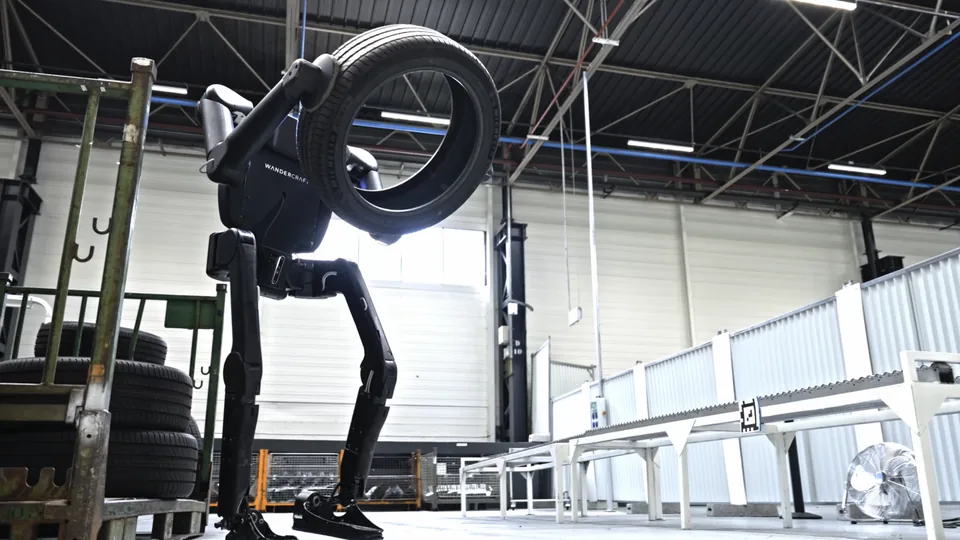
A person with a spinal cord injury stands up and walks across a rehabilitation room without crutches while a robot keeps the balance for them. That image best describes Wandercraft of Paris, a company that has bet on self-balancing exoskeletons from the start. The founding year does not appear, so we do not give it, but the path of development is visible in the products. First comes the Atalante X, a rehabilitation exoskeleton already on sale, used in clinics, with up to 8 hours of operation a day and, according to the manufacturer, more than 150 customers worldwide. The next step is Eve, a personal exoskeleton, shown in July 2026 and on commercial sale in the US from September 17, 2026; earlier it had been announced for summer 2026. The third strand will surprise anyone who knows the company only from medicine: the industrial humanoid Calvin-40 with a 40 kg payload, which by the company's own claim had twelve pilot customers in September 2026, including Renault, where there is even talk of 350 units by 2027. The same knowledge of gait, stabilization and safe contact with humans thus feeds two worlds: clinics and factories. Context for both is in the article “Exoskeletons in Rehabilitation and Industry” and in the category “Exoskeletons”.
Atalante X is the core of the offer: a self-balancing rehabilitation exoskeleton without crutches, for clinics and neurological centers. The price is not public, as is usual in this segment. Eve takes the same idea outside the treatment room: a personal exoskeleton for walking in everyday life, with a claimed load capacity of 100 kg, on commercial sale in the US from September 17, 2026. We know neither the full specification nor the price. Wandercraft Calvin-40 is the most unusual: an industrial humanoid with a 40 kg payload, in a pilot with Renault, unavailable in Poland. Its purpose is moving materials in factories, warehouses and logistics, and car production. Such a split, one knowledge platform and three segments, is rare in the industry. For medical uses see hospitals, for industrial ones factories and warehouses. How to read degrees of freedom in an exoskeleton and a humanoid is explained in “Degrees of Freedom (DOF) in Humanoid Robots”, and how the drives work in “Actuators in Humanoid Robots”. Note the timing: Eve has only its first weeks of sales behind it, so user reviews are yet to appear. The Atalante X has a longer clinical history, but here too the manufacturer publishes no price list, which for a hospital means negotiating from scratch. The Calvin-40 is a project spoken of in terms of pilots and claims, not datasheets.
In medical exoskeletons Wandercraft competes with Lifeward and Ekso Bionics, and nearby Cyberdyne operates too with Japan's HAL. Wandercraft's differentiator is a self-balancing mechanism that eliminates crutches. In industrial humanoids there are Agility Robotics with Digit, Apptronik and Figure AI, rivals far better documented financially. About the company itself, data on funding, valuation and headcount is missing, so we do not build on guesses. The only hard reference points are the number of Atalante X customers, the twelve pilot customers of the Calvin-40 (a company claim) and the pilot contract with Renault. None of the three models has a stated price, which makes it hard to estimate the scale of the business. A comparison with the rest of the market is offered by humanoid robots together with the article “Humanoid Robots in Factories 2026”. For a clinic, then, the question is not "does it work" but "who services it and how fast". On that point the Paris company has no documented service network in Central Europe, which sets it apart from the big industrial players.
Wandercraft is not present on the Polish market: we track no Polish distributor, and for the Calvin-40 it is explicitly recorded that it is unavailable in Poland. We also know of no Polish hospital or center that has confirmed use of the Atalante X. For Polish clinics this means having to contact the manufacturer directly, and for patients, not knowing about reimbursement. Here an overview of domestic players in “Polish Robotics Companies” is useful, where you will find the Gliwice company EGZOTech with EMG-controlled rehabilitation robots, a local alternative, though of a different type. Until a partner appears in the country, talks about the Atalante X or Eve remain in the realm of requests for quotation and foreign contacts.
Wandercraft is one of the more interesting European robotics companies, because it combines medicine with industry and has concrete deployments behind it, not just announcements. The Atalante X is a mature product, Eve is only starting in the US, and the Calvin-40 is still a pilot. For Polish clinics it matters that the company is not in the country and does not publish prices. If you are considering a purchase, start with an inquiry about access and service.
Wandercraft