on sale
Price from
The LokomatPro is the reference system for robotic gait training, used in neurological rehabilitation and regarded in the professional literature as the market leader. The patient walks on a treadmill under a dynamic body-weight support system while an exoskeleton drives the lower limbs, with adjustable hip and knee angles; the Sensation variant adds adaptive-intensity algorithms and VR/AR game feedback synchronized with music.
Behind its effectiveness stands a body of evidence that is rare in this industry: 70 published clinical studies, 39 of them randomized controlled trials (RCTs). By 2020, more than a thousand units had been installed at over 260 facilities worldwide, and a pediatric version is available as well.
The Swiss manufacturer Hocoma, founded in 1999, competes in the medical exoskeleton segment with systems for early mobilization (its own Erigo) and mobile gait training (Andago), among others, building an entire rehabilitation portfolio around the Lokomat.
The weak point, from the standpoint of this lineup, is the lack of a public price: the device is sold institutionally to clinics and rehabilitation centers rather than to individual users, so pricing is set case by case. Availability in Poland has not been independently confirmed.
Data from manufacturer datasheets and product pages; median over the models of this category in the database.
no data
There is no public price for the LokomatPro. The device is sold institutionally and quoted individually, so any figure you see on a forum is speculation.
As a rough estimate, a stationary system of this class is an investment of at least several hundred thousand zloty, and once you add the room, installation (the device weighs about a ton) and a service contract, the total cost could be several times higher. That is an order of magnitude only, not an offer. On top of that come therapist training as well as regular calibration and technical inspections.
Instead, it is worth looking at the public programs listed here, including KPO (the National Recovery Plan) and FENG (the European Funds for a Modern Economy program), as well as leasing; the exact terms depend on the calls for applications announced. The return on the investment is measured not in saved jobs but in the number of therapies delivered and the quality of outcomes.
No confirmed distributor in Poland
The LokomatPro is a stationary system for robotic gait training in neurological rehabilitation (hospitals). The patient hangs in a harness that takes part of the body weight, and powered orthoses on both sides guide the hips and knees through the rhythm of a walking stride, repeating the same pattern hundreds of times, something no therapist could sustain by hand for half an hour.
The lower-limb drive has adjustable hip and knee angles, and the Sensation variant adds adaptive-intensity algorithms and VR/AR game feedback synchronized with music. The patient is not "doing exercises" but playing a game, which raises motivation for many people. A pediatric version is also available, so the device reaches children with gait disorders too.
The use case is narrow and well defined: neurological rehabilitation in a clinic, not services and not industry. That is the key difference from the mobile exoskeletons described in “Exoskeletons in Rehabilitation and Industry”. Those let a person walk across the floor, whereas here the treadmill with its body-weight support system is part of the device, and the whole unit weighs about a ton. That is why the LokomatPro is equipment for a therapy room, not something you can rent for a weekend. The Swiss manufacturer Hocoma sells it institutionally to clinics and rehabilitation centers.
In the wider picture, it is one of the best-documented medical robots, alongside the surgical systems covered in “da Vinci Robots in Polish Hospitals”.
Yes: for clinics, rehabilitation hospitals and larger neurology centers that run intensive gait therapy and have a qualified team of therapists plus a dedicated room for a device weighing around 1,000 kg. Yes for facilities that value repeatable therapy and documented outcomes; the manufacturer points to 70 clinical studies, including 39 randomized controlled trials (RCTs).
No: for individual patients looking for an exoskeleton for everyday walking at home. Personal designs such as the Ekso Indego Personal or the ReWalk Personal serve that purpose. No for small physiotherapy practices without specialized staff and a budget for installation, servicing and training. No for companies looking for a robot to do work: exoskeletons split into medical and industrial, and the LokomatPro belongs to the first group. Availability in Poland has not been independently confirmed, so check it directly with the manufacturer before buying.
Worldwide: more than 1,000 installed units at over 260 facilities by 2020, the most complete confirmation of scale available. The clinical documentation comprises 70 publications, including 39 randomized trials.
In Poland: we have no confirmed deployments on record, and availability in the country has not been independently verified. If you are planning a purchase, ask the manufacturer for a list of reference facilities in your region. Related solutions are mobile clinical and personal exoskeletons such as the EksoNR or the ReWalk Personal, and a broad market overview in “Exoskeletons in Rehabilitation and Industry”.
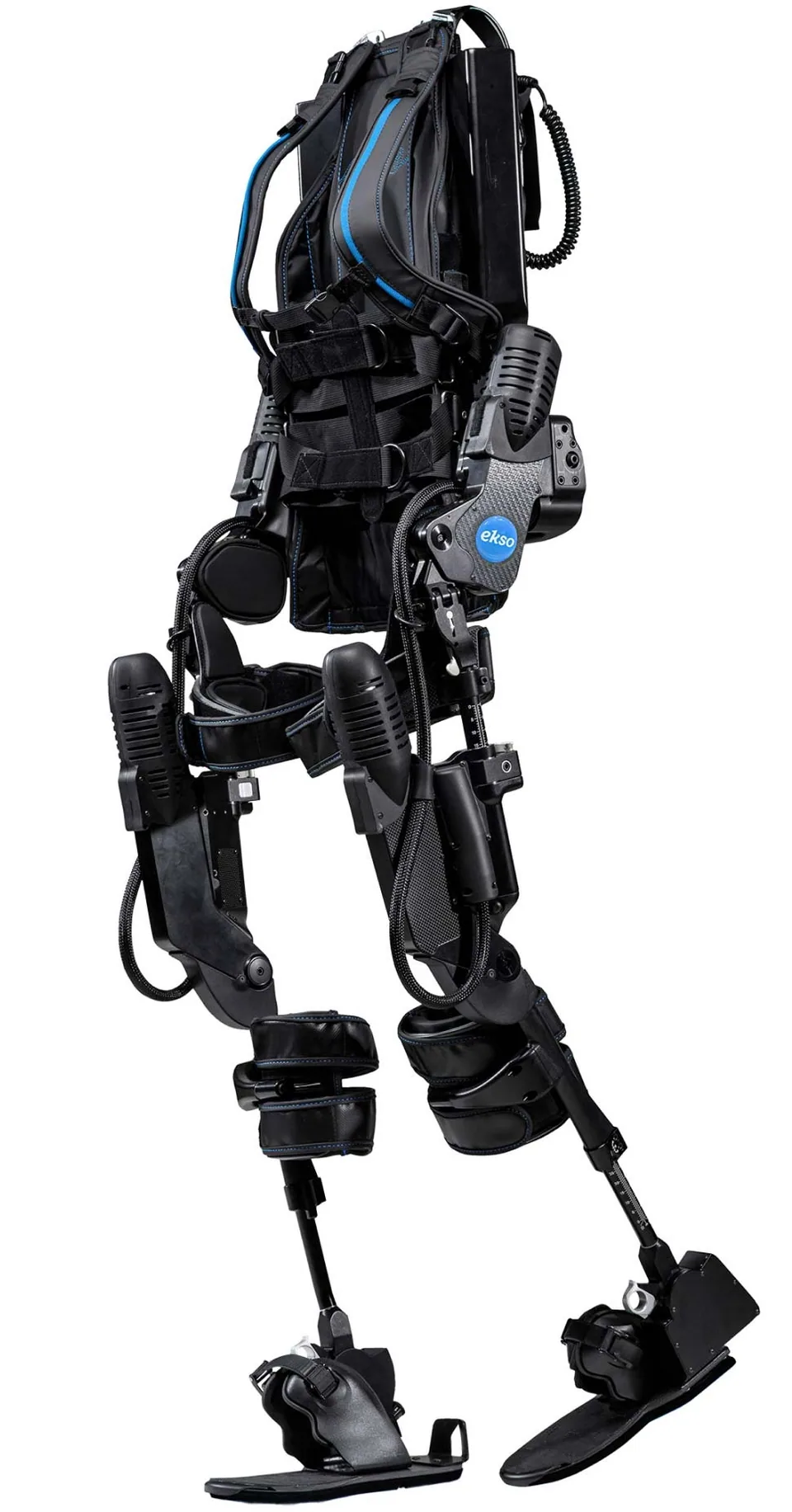
EksoNR: an FDA-cleared rehabilitation exoskeleton for gait training, sold to clinics with no public price. Instead of a treadmill with body-weight support, the patient walks across the floor with the device, which can feel closer to real life.
Eve: Wandercraft's personal exoskeleton for walking outside the clinic, on commercial sale in the US since September 17, 2026; its price and full specifications are not known. For clinics it signals a new direction, from treadmill therapy to walking in real surroundings.
HAL: the Hybrid Assistive Limb, which works from bioelectric signals in the muscles, available since 2009, mainly through leasing with no retail price list. A different philosophy: the device responds to the patient's intention to move.
Ekso Indego Personal: a home exoskeleton for people with paraplegia, reimbursed by Medicare in the US since 2024; no confirmed price or availability in Poland.
Sarcos Technology and Robotics (now Palladyne AI)
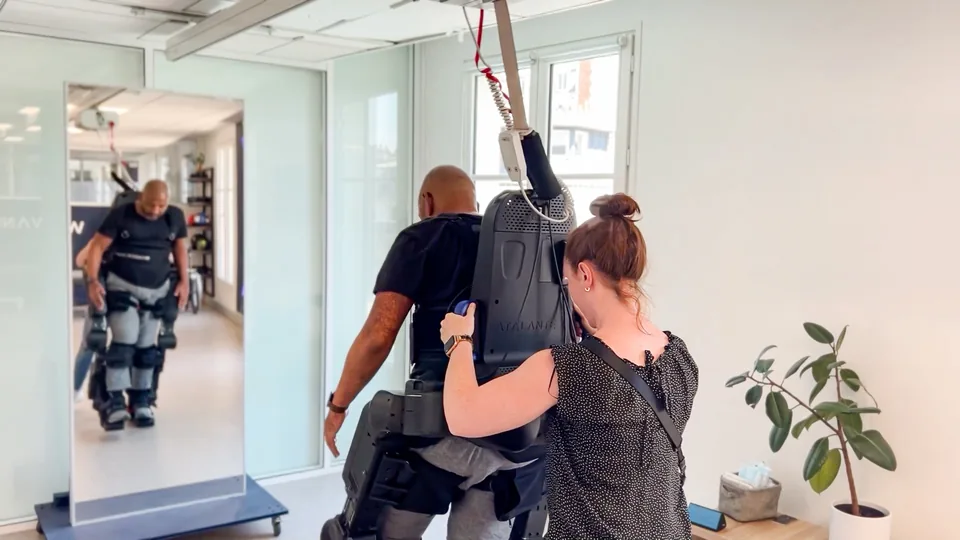
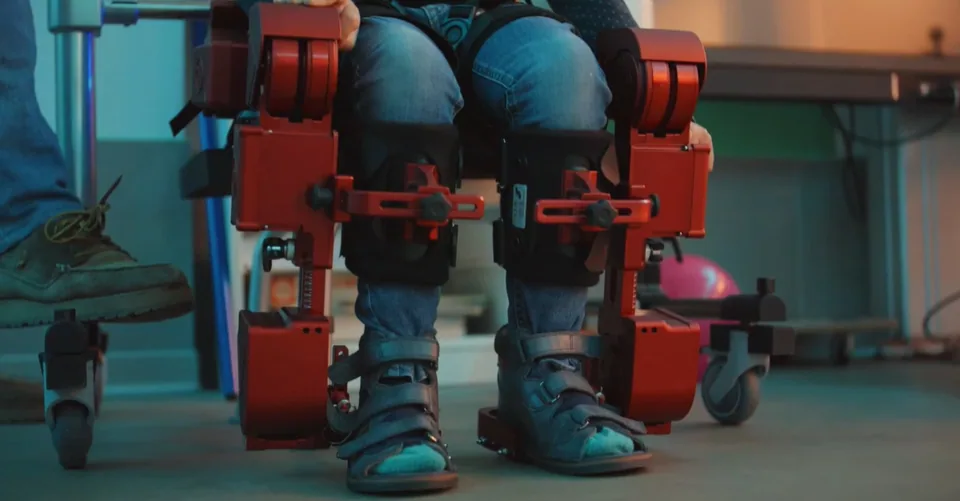
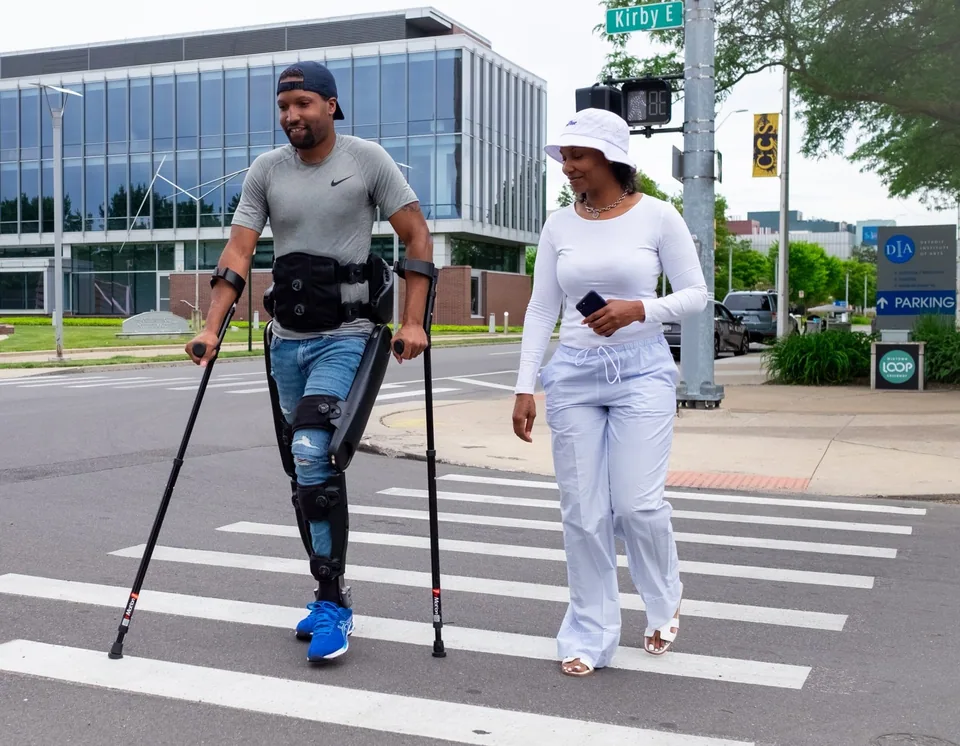
Hocoma was founded in Switzerland in 1999 and has built a portfolio of rehabilitation robotics from the start. The Lokomat became its flagship product: by 2020, more than a thousand units had been installed at over 260 facilities worldwide.
Successive versions added features: a pediatric variant and Sensation, with adaptive-intensity algorithms and VR/AR games. Around the Lokomat, the manufacturer has built a whole family of devices: Erigo for early mobilization and Andago for mobile gait training. This lets a patient move through the successive stages of therapy on equipment from the same supplier. We do not have exact launch dates for the individual versions, so we do not give any.
No. The manufacturer Hocoma AG (Switzerland) names no Polish shop or official distributor for the LokomatPro (with Sensation variant); enquiries go through the manufacturer's website (hocoma.com). Confirm service in Poland before buying.
The manufacturer cites 70 published studies, including 39 randomized controlled trials (RCTs).
More than 1,000 by 2020, at over 260 rehabilitation facilities around the world.
Yes. A pediatric variant, the LokomatPro Pediatric, is available alongside the standard adult version.
Author, source and licence of the photo are given in the caption. Shop links may become affiliate links in future, details: How we make money · How we check