
on sale
Price in Poland
Manufacturer price: approx. 19,000 PLN* (≈ EUR 4,350) (converted from 4,900 USD, NBP rate 3.8762, as of 1 October 2026). In Polish shops this model costs more.
We mark shop links as sponsored (rel=sponsored); today we receive no commission. How we make money
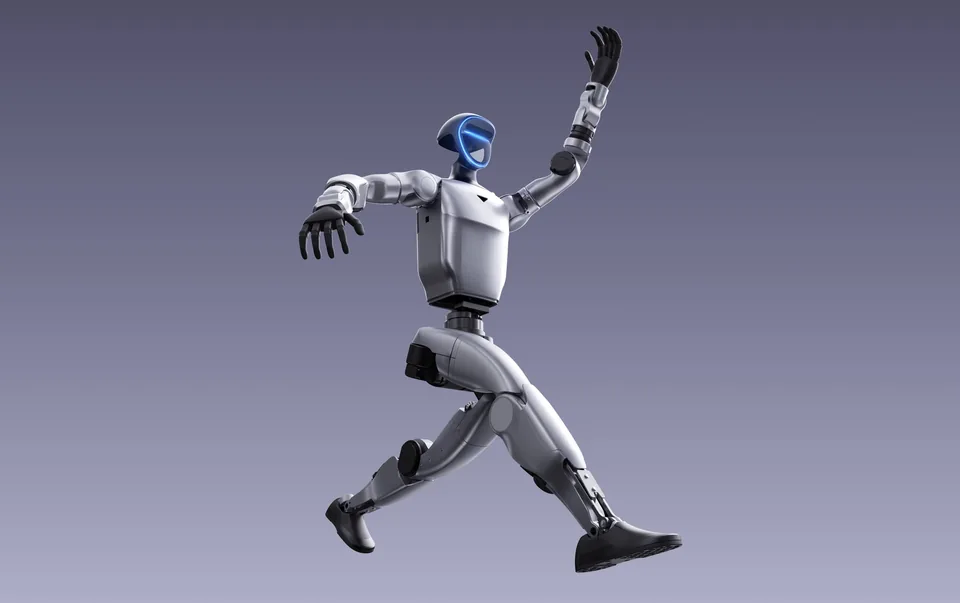
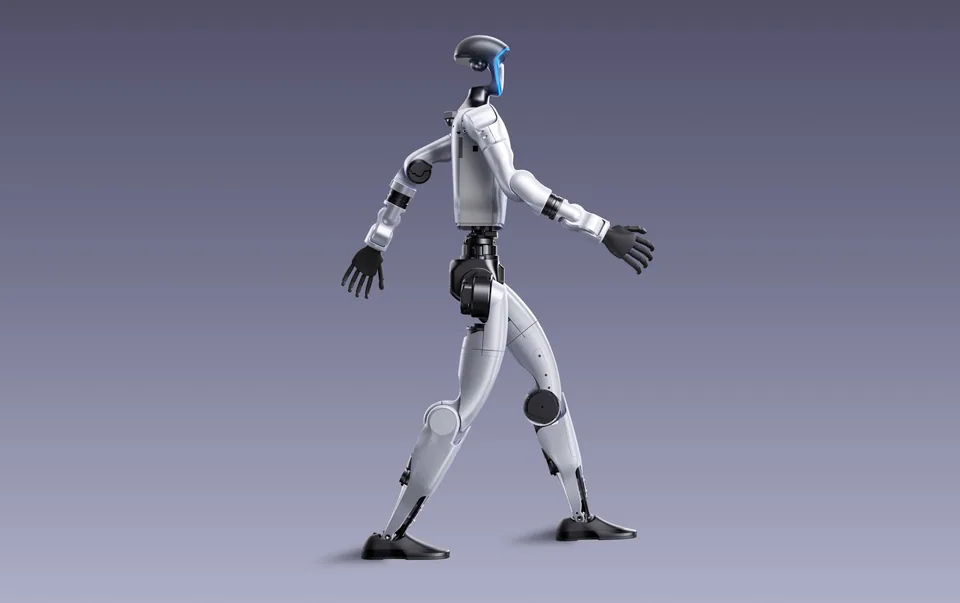
Available in PolandThe R1 Air is the entry-level version of the R1 series and the cheapest humanoid in Unitree's lineup covered here. At 123 cm tall it weighs 25 kg, 4 kg less than the standard R1, and it trims the degrees of freedom to 20, against 26 on the EDU version. The list price is 4,900 USD, or roughly 18,993 PLN (≈ EUR 4,350) at an exchange rate of 3.8762 (as of 1 October 2026).
A third-party reseller says shipping can add another 300-1,200 USD on top. An 8-core CPU/GPU handles the computing, and the sensor suite consists of binocular vision plus a 4-microphone array. The manufacturer publishes no payload, speed or battery-life figures for this variant.
The R1 Air is aimed at hobbyists and educational institutions looking for the lowest possible entry point into humanoid robotics, not at work that demands manipulation or precision. In that respect it gives way to the pricier R1 EDU and R1 (Standard) from the same family, which offer more degrees of freedom. Availability through Polish distributors has not been confirmed.
Data checked: · Sources: 4
Data from manufacturer datasheets and product pages; median over the models of this category in the database.
Entry-level variant; official price from the Unitree store. Shipping is extra at 300-1,200 USD, according to a reseller source.
Purchase: the price in the Unitree store is 4,900 USD, about 19,000 PLN (≈ EUR 4,350) at a rate of 3.8762 (as of 1 October 2026). On top of that comes shipping, which a reseller source puts at 300-1,200 USD, plus customs duty and VAT on import. In Poland, x-kom.pl listed the robot at 41,000 PLN (≈ EUR 9,390) (28 September 2026), more than double the converted manufacturer price; we do not know the exact reasons, so compare offers and ask what is included.
Running costs: an estimated few hundred zloty a year on accessories and repairs; the robot does fall over, so a stock of spare parts makes sense. The manufacturer does not state battery life for this variant.
Training: for a teacher with programming basics, an estimated few days to get comfortable with the robot.
Total-cost calculations for this class: “Humanoid Robot TCO: How to Calculate Total Cost”.
| Date | Price (PLN) | Variant | Source |
|---|---|---|---|
| 2026-09-28 | 41,000 PLN (≈ EUR 9,390) | — | x-kom.pl |
The R1 Air (123 cm, 25 kg) is the entry-level version of the R1 series and the cheapest humanoid in Unitree's range, at 4,900 USD in the manufacturer's store. It weighs 25 kg (4 kg less than the R1 Standard) and has 20 degrees of freedom (“Degrees of Freedom (DOF) in Humanoid Robots”) against 26 on the EDU version. Sensing comes from binocular vision and a 4-microphone array, and an 8-core CPU/GPU does the computing.
Applications. “Schools”: a robotics club, a classroom demonstration, material for programming projects. universities: open days, promoting a degree program, an introduction to humanoid robotics. events: a small humanoid on a trade-show stand that draws a crowd and fits in a shipping crate. homes: for enthusiasts who want a humanoid on the desk, though it is not a working household robot. For teaching speech and computer vision, the microphones and the pair of cameras let you experiment with image recognition and voice commands.
What it will not do: the manufacturer publishes no payload, speed or battery-life figures for this variant. Do not plan on object manipulation or continuous operation. In terms of use, this is a robot for demonstration and learning, not for tasks that require precision.
Yes: schools, libraries, community centers and universities that want to show off a humanoid for relatively little money. Yes for hobbyists and content creators who count their budget in thousands, not hundreds of thousands. Yes for anyone who wants to “touch” humanoid robotics before committing to pricier hardware.
No: anyone who needs firm specifications, since there is no data on payload, speed or runtime (“How to Read a Robot Datasheet”). No for research teams that want to study manipulation: fewer degrees of freedom than the R1 EDU and no hand with tactile sensing. No for companies looking for automation. And no for anyone who assumes the extra costs are pocket change: according to a reseller source, shipping can cost 300-1,200 USD, and prices in Polish shops are many times higher than in the manufacturer's store.
The only thing on record is an x-kom.pl listing. Worldwide, the R1 Air is sold to hobbyists and educational institutions, but we know of no documented commercial deployments. The humanoid robots category includes models being brought into factories; the R1 Air is not among them. If you want to see how robots work in schools and universities, see “Educational Robots for Schools and Universities”.
Unitree R1 is the higher variant in the series: 29 kg and 26 degrees of freedom, 1,000 USD more than the Air under the earlier price list; more range of motion.
Unitree R1 EDU adds programmability for schools and universities; it suits those who want to write code, not just put on a show.
Noetix Bumi is a children's humanoid, 94 cm and 12 kg, for about 1,400 USD, cheaper still; for the smallest budgets and introductory classes.
Noetix N2 stands 118 cm, weighs about 30 kg, has 18 degrees of freedom and about 5 kg of payload, at 5,500-8,400 USD; a similar price bracket from a different maker.
Booster K1 is 95 cm and 19.5 kg, around 12,500 USD; a compact educational humanoid, pricier than the Air.

Unitree Robotics
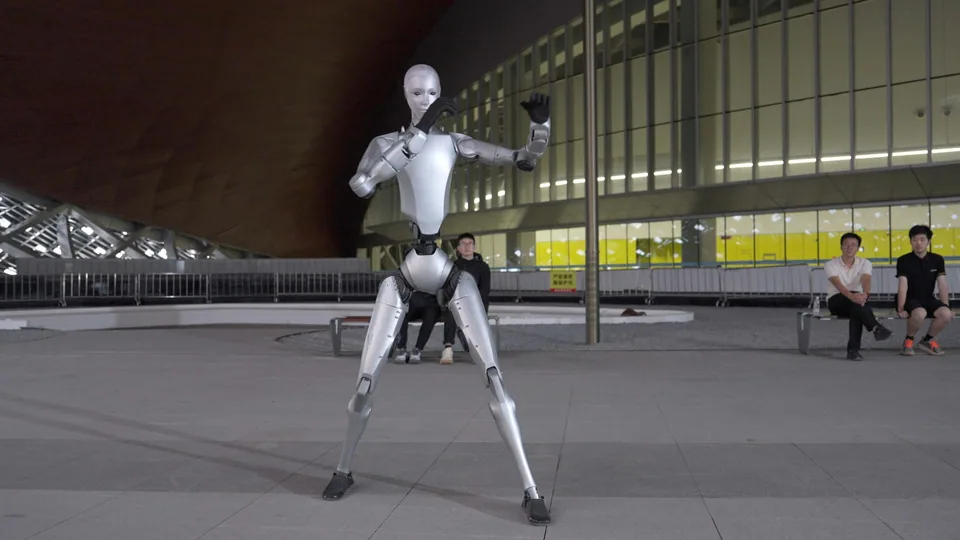
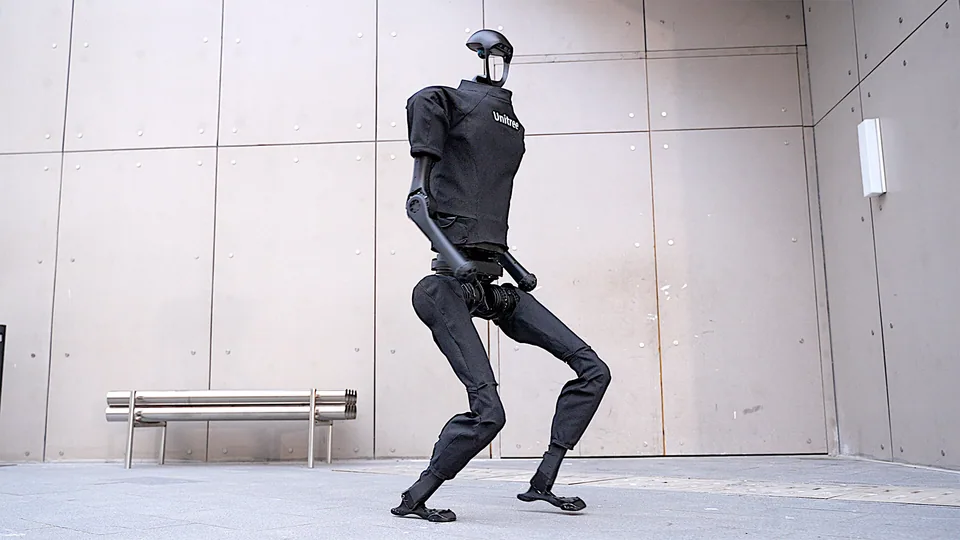
The R1 series debuted in August 2025 as Unitree's cheapest full-size humanoid, and reports of sales starting followed in September 2025. The Air is the entry variant: 4 kg lighter than the R1 Standard and with fewer degrees of freedom than the R1 EDU (20 versus 26). Before the R1 the company showed the H1 (2023) and the G1 (on sale from August 2024), and after it came the H2 (October 2025). In August 2026 Unitree listed on Shanghai's STAR Market. We cover the family in “Unitree H1, G1, R1 and H2” and the manufacturer in Unitree Robotics.
Unitree completes its listing on the Shanghai Stock Exchange; shares rise nearly 500% on the first day Unitree Robotics
Unitree demonstrates its 'Superman' humanoid running at 12.66 m/s, faster than Usain Bolt's world record Unitree Robotics
Unitree Robotics debuts on Shanghai's STAR Market, with shares opening 629% above the offer price; the company raises about $905 million Unitree Robotics
Unitree demonstrates the first fully autonomous humanoid robot fight, powered by the UnifoLM-X2-1.0 model Unitree Robotics
Yes, the model is available through the retailers in Poland listed on this page.
The R1 Air has fewer degrees of freedom (20 versus 26) and is lighter (25 kg versus 29 kg), but it costs 1,000 USD less.
According to a third-party (reseller) source, shipping can add 300-1,200 USD, though the manufacturer has not confirmed this.
Hobbyists and educational institutions looking for the cheapest way into humanoid robotics.
Author, source and licence of the photo are given in the caption. Shop links may become affiliate links in future, details: How we make money · How we check