pilot
Price from
Behind the name TORO is a bipedal research robot from Germany's DLR institute in Oberpfaffenhofen, publicly shown since 2013 and still not sold commercially; it is a pure science platform. The structure weighs 76 kg at a height of 174 cm and has as many as 39 degrees of freedom, a high figure even by research standards; the arms derive from the family of lightweight KUKA-DLR manipulators and lift up to 10 kg.
TORO's key feature is torque control in nearly all joints, backed by two IMUs and force-torque sensors in both feet. This system lets the robot keep its balance in multi-point contact, for example when climbing stairs or negotiating obstacles.
Unlike the commercial humanoids from China and the US that are now entering production lines, TORO was never meant to be a product: no price, no distribution, no industrial version. The manufacturer does not state walking speed or battery capacity.
For engineers working on bipedal gait dynamics, TORO remains one of the longer-running reference platforms in Europe; for companies looking for a ready-made solution to deploy, it is the wrong address.
Data from manufacturer datasheets and product pages; median over the models of this category in the database.
no data
There is no TORO price: the platform has not reached the market and has no price list or commercial offer.
Operating costs at a research institute are mainly the engineering team and equipment upkeep. A cost calculation for a real humanoid is in “Humanoid Robot TCO: How to Calculate Total Cost”, and a price overview in “How Much Does a Humanoid Robot Cost in 2026”.
No confirmed distributor in Poland
TORO will not stand at a conveyor or in a warehouse, and that is precisely its purpose. It is a laboratory biped from the German institute German Aerospace Center, Institute of Robotics and Mechatronics, built so that engineers can test how a human-like body handles balance. The research question here is not “how many cartons can it lift” but “how do I distribute forces in the feet and knees so it does not fall when touching in several points at once”. TORO is used for research into walking, stair climbing, negotiating obstacles and scenarios with multiple contact points with the environment.
It works best where torque-control research matters. Torque sensors in nearly all joints allow “soft” behavior to be programmed, rather than only stiff trajectories, the same idea behind today's commercial humanoids in humanoid robots. For a laboratory (laboratories), TORO is therefore a benchmark for comparing gait algorithms, and for robotics departments (universities) it is proof of what a design made for research, not for sale, looks like.
There is no point looking for a job for it on the factory floor (factories) or in services. The arms derive from the family of lightweight KUKA-DLR manipulators and, according to the description, lift up to 10 kg, but that is a design parameter, not a promise of production performance; the manufacturer gives neither walking speed nor battery capacity. For background on how bipedal locomotion translates into practice, see the explainer “how a humanoid robot works” (“How Does a Humanoid Robot Work”) and the text on degrees of freedom (“Degrees of Freedom (DOF) in Humanoid Robots”); with its 39 DOF, TORO is a great example of why a robot needs so many axes.
Best suited to: research teams and universities working on bipedal gait dynamics and stabilization in multi-point contact, as inspiration and a reference point in the literature, since the robot itself is not offered for purchase. Also journalists, students and engineers who want to understand where the solutions seen today in commercial humanoids came from, for example in the LOLA or the PAL Robotics TALOS.
A poor fit: companies looking for a ready robot to deploy. DLR does not sell TORO, publishes no price or industrial version, and there is no distributor in Poland. Not for purchasing departments, not for integrators, not for schools looking for a robot to teach programming; those needs are better served by the Unitree G1 or one of the educational robots described in the text “Educational Robots for Schools and Universities”. The manufacturer also does not give the parameters typical of a commercial datasheet, so a “paper” comparison with products on the market would be unfair.
There are no deployments in the commercial sense: TORO is a DLR research platform and does not work at customers. We also know of no documented installations in other countries beyond the institute itself.
Research robots are used at universities and institutes: the iCub is sold to institutions, and the PAL Robotics TALOS is offered as a platform for laboratories. The market for commercial humanoids in factories is covered in the text “Humanoid Robots in Factories 2026”; there you will find real deployments, which TORO does not have and was never meant to have.
Research robots with a similar philosophy:
LOLA: a biped from Munich (26 DOF, 176 cm, 68 kg) for fast walking over uneven terrain; it too is purely a scientific platform.
PAL Robotics TALOS: a 175 cm, 95 kg research humanoid with force control in nearly every joint; unlike TORO, it is listed as available, though runtime is only about 1.5 hours.
Valkyrie: 187 cm, 136 kg, 44 degrees of freedom; NASA's robot from 2013, TORO's contemporary but far heavier.
iCub: a small iCub (104 cm, 22 kg) with 53 motors, sold to research institutions; good if you are studying manipulation and interaction rather than walking.
Unitree G1: if you need a cheap platform for algorithm experiments, the G1 costs about PLN 52,300 (≈ EUR 11,980 at NBP rate 4.3641 of 21 October 2026) and is available in Poland.
Toyota Motor Corporation / Toyota Research Institute (TRI)
Cyborg Robotics (Shenzhen Cyborg Robotics Co., Ltd. / 深圳赛博格机器人有限公司)
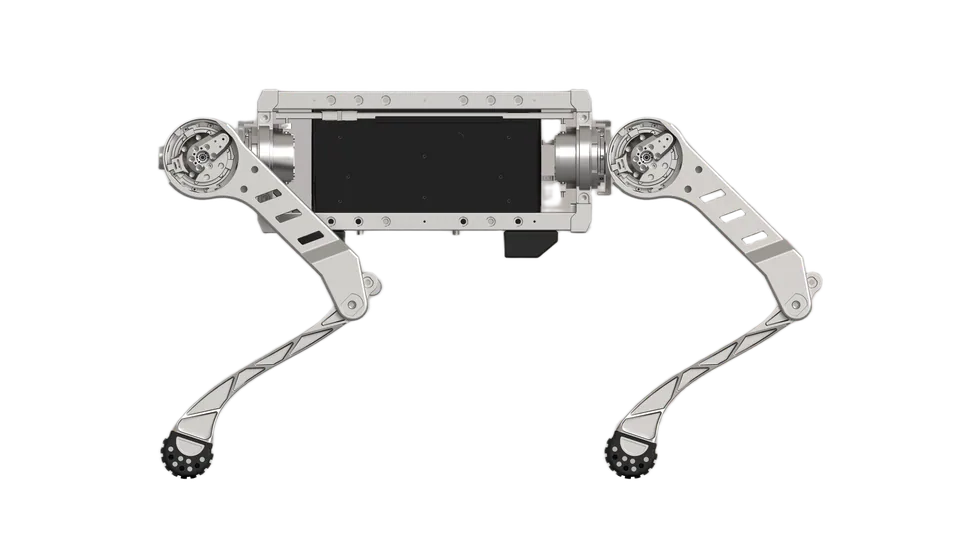
TORO has been publicly shown since January 2013. In the same year NASA presented the Valkyrie; those were the years when large electric research humanoids began to appear in one laboratory after another. The German Aerospace Center, Institute of Robotics and Mechatronics institute in Oberpfaffenhofen (DLR has existed since 1969) developed TORO as a platform for research on torque control, not as a product.
We have no documented later generations or sales announcements, and that is part of the story: TORO remains commercially unsold and works as a laboratory tool. For comparison with newer designs, see “Humanoid Robot Market Forecasts”.
Model unveiled
No. The TORO (TOrque-controlled humanoid RObot) is a prototype or research platform with no commercial offer in Poland; any sale would be announced by the manufacturer (Germany).
No. TORO is a DLR research platform with no sales offer or list price; it has not entered commercial production.
39 degrees of freedom, including torque-controlled joints across nearly the whole structure.
Research on dynamic bipedal walking, stair climbing and keeping balance in multi-point contact.
Author, source and licence of the photo are given in the caption. Shop links may become affiliate links in future, details: How we make money · How we check