prototype
AIDOL (ООО «Айдол» / AI Dynamic Organism Lab)
AIDOL (Айдол, Laufversion)
- 186 cmheight
- 10 kgpayload
- —price
Price from
TALOS, PAL Robotics' second flagship humanoid alongside TIAGo and Kangaroo, is aimed at laboratories working on bipedal manipulation and walking. At 175 cm tall and 95 kg, the robot can lift up to 6 kg with one hand, and its distinguishing feature is torque control in nearly every joint (it is missing only in the head, wrist and gripper), backed by force/torque sensors at the wrists and ankles.
The EtherCAT control loop runs at 2 kHz with the option of boosting it to 5 kHz, and a full URDF dynamic model is provided for simulation, which makes life easier for academic teams. Its biggest weakness is endurance: just 1.5 hours of operation while walking, clearly less than competitors claim.
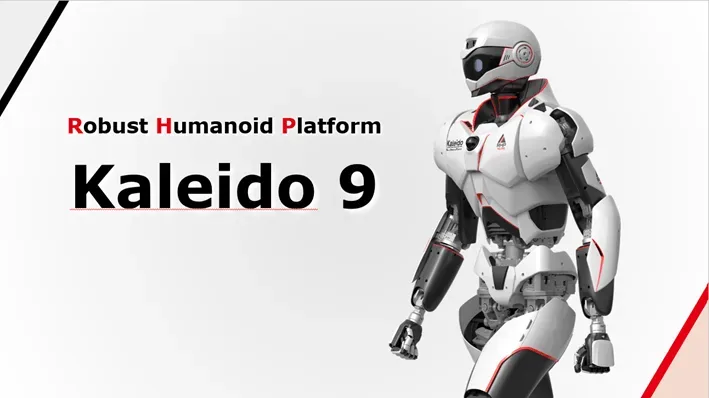
In this weight and height class it competes directly with the electric Boston Dynamics Atlas (190 cm/90 kg, 56 DOF) and the Kawasaki Kaleido 9 (190 cm/99 kg), both taller but comparable in weight. The price is not published, and the robot is sold project by project to research institutions; it is not commercially available in Poland.
TALOS is the choice for labs that put high-fidelity torque control ahead of long endurance.
Data checked: · Sources: 2
Data from manufacturer datasheets and product pages; median over the models of this category in the database.
no data
Purchase: the manufacturer does not publish a price. No amount was found on pal-robotics.com, and the robot is sold project by project to research institutions. To be honest: we do not know the price and will not guess it. As a rough reference, looking at the related class of research platforms (the iCub from IIT costs about 250,000 euros, and Reachy 2 costs 70,000 USD), you should expect an outlay in the hundreds of thousands of euros, but that is only a benchmark, not a quote.
Running costs: 1.5 hours of walking time means frequent charging and interruptions to experiments. The robot weighs 95 kg, so you need a reinforced floor, space, and a procedure for safe lifting and suspension during service work. Service and parts are items the manufacturer does not describe publicly; when buying, it is worth negotiating a service agreement and the scope of support up front.
Training: ROS itself is no obstacle for a robotics team, but torque control across many joints requires experience. The real cost is months of engineering work, not weeks.
Universities more often look for funding in research projects; a full cost calculation is described in “Humanoid Robot TCO: How to Calculate Total Cost”.
No confirmed distributor in Poland
TALOS is a 175-centimeter humanoid weighing 95 kilograms, built as a research platform. It is not meant for packing parcels or shift work; what counts in it is what happens in the joints: how much torque the sensors pick up in the ankle, how quickly the control loop reacts to a disturbance. TALOS was built for this kind of work, and that is how all of its "applications" should be read. The first area is research on bipedal walking and balance in a laboratory. The manufacturer, PAL Robotics of Barcelona, equipped the robot with torque sensors in nearly every joint (they are missing only in the head, wrist and gripper) and with force/torque sensors at the wrists and ankles. The control loop on the EtherCAT bus runs at 2 kHz, with the option of boosting it to 5 kHz. For a team writing its own whole-body control algorithms, that matters more than any demo. The second area is two-handed manipulation with a stabilized torso: a payload of up to 6 kg per arm lets you test grasps, door opening and tool handoffs. The third is teaching. The full dynamic model in URDF format, provided for simulation, and a software stack based on Ubuntu with a real-time system, ROS and ros_control mean students (universities) can run their code in the simulator first and only then on real hardware, provided the university can afford the robot. Two areas of use are listed for TALOS: research and bipedal manipulation, and the target groups are science and industry. Industry here means R&D departments rather than a production floor. TALOS is not a robot that unplugs from its charger after an eight-hour shift: the stated walking runtime is about 1.5 hours, so every experiment is planned in blocks. If you are interested in humanoids for factories, see “Humanoid Robots in Factories 2026”; if you want to understand why joint torque sensors matter so much, turn to “How Does a Humanoid Robot Work” and “Actuators in Humanoid Robots”.
Worth considering for: research teams and university labs working on whole-body control, bipedal walking and two-handed manipulation that want access to raw data from the torque sensors; centers that already use ROS and value platforms built on that ecosystem, as with other designs from PAL Robotics; R&D departments comparing different approaches to actuation and sensing before designing their own robot.
Probably not for: a company looking for a robot for shift work, since 1.5 hours of walking is too little; an integrator who needs a public price and off-the-shelf delivery, since the price is not published and the robot is sold project by project to institutions; small teams and schools, because the cost and upkeep of such a machine are beyond their means. It is also a poor choice for someone who simply wants an eye-catching humanoid for trade shows: Engineered Arts Ameca, designed as an interaction robot although it does not walk, is a better fit for that. TALOS has no distributor in Poland, so you direct any inquiry straight to the manufacturer.
We know of no Polish university or company with a TALOS, and the robot has no local representative. Publicly available information points only to sales to research institutions, without naming specific buyers, so we will not guess at them.
For comparison: similar research platforms operate in institutes around the world. NASA developed Valkyrie (Valkyrie), the German institute DLR built TORO (TORO), and the iCub (iCub) goes to institutions as a scientific product. In this company TALOS stands out because it is sold by a commercial firm rather than a government agency. More on the Polish robotics scene: “Polish Robotics Companies”.
Kangaroo from the same manufacturer (PAL Robotics Kangaroo) is a shorter, lighter humanoid: 160 cm instead of 175, modular arms with a variable number of degrees of freedom, and up to 30 kg two-handed payload. Choose it when arm strength matters more than the finesse of torque control in every joint.
The Kawasaki Kaleido 9 (Kawasaki Kaleido 9) is a prototype measuring 190 cm and 99 kg, with an 18 kg payload. It weighs only slightly more than TALOS, is taller and clearly stronger, but it is a design with no price and no sales in Poland, so the comparison is more for reference.
The electric Atlas (Atlas) offers 56 degrees of freedom and a 50 kg payload, except that its entire 2026 production is reserved for Hyundai and Google DeepMind. For an ordinary lab it is out of reach today.
If a cheaper and more accessible research platform is enough, consider Reachy 2 (Reachy 2): a mobile torso with 7-DOF arms, ROS 2 and LeRobot, at 70,000 USD, ordered by email. It does not walk, but for manipulation research it is often sufficient. Teams building their own platform should also check which gearing the industry uses; the overview is at Harmonic Drive.
AIDOL (ООО «Айдол» / AI Dynamic Organism Lab)
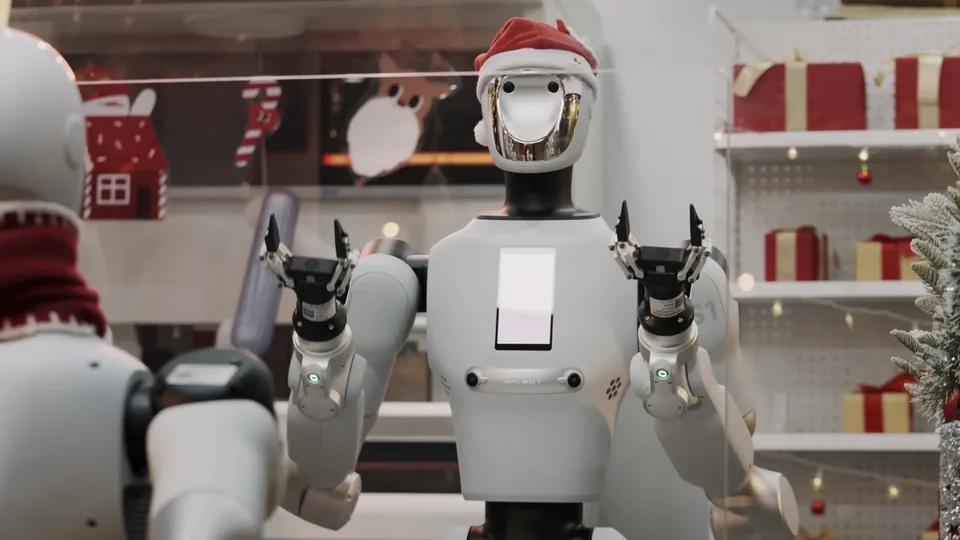
Galbot (Beijing Galaxy General Robot Co., Ltd. / Beijing Galbot Co., Ltd.)
PAL Robotics has operated in Barcelona since 2004 and built its position on robots for laboratories: the TIAGo mobile manipulator, TALOS, and newer designs, TIAGo Pro and Kangaroo. TALOS is described in the company's lineup as its second flagship humanoid alongside TIAGo and Kangaroo, and its datasheet was published on the manufacturer's website as a PDF dated May 2024. There is no confirmed launch date or list of later generations, so we do not give a year we cannot document. What is known is that the company builds on ROS and that TIAGo is among the most frequently cited research platforms in Europe; TALOS is, within that lineage, its bipedal, heavier relative. How the capabilities of such designs grew is explained in the article on “Degrees of Freedom (DOF) in Humanoid Robots”.
No. The manufacturer PAL Robotics (Spain) names no Polish shop or official distributor for the PAL Robotics TALOS; enquiries go through the manufacturer's website (pal-robotics.com). Confirm service in Poland before buying.
The manufacturer states only about 1.5 hours of operation while walking, a clear weakness compared with other research humanoids.
Up to 6 kg with one hand at full extension.
TALOS is taller and heavier (175 cm/95 kg versus 160 cm/58 kg) and relies on torque control in nearly all joints, while Kangaroo offers modular arms with variable payload.
Author, source and licence of the photo are given in the caption. Shop links may become affiliate links in future, details: How we make money · How we check