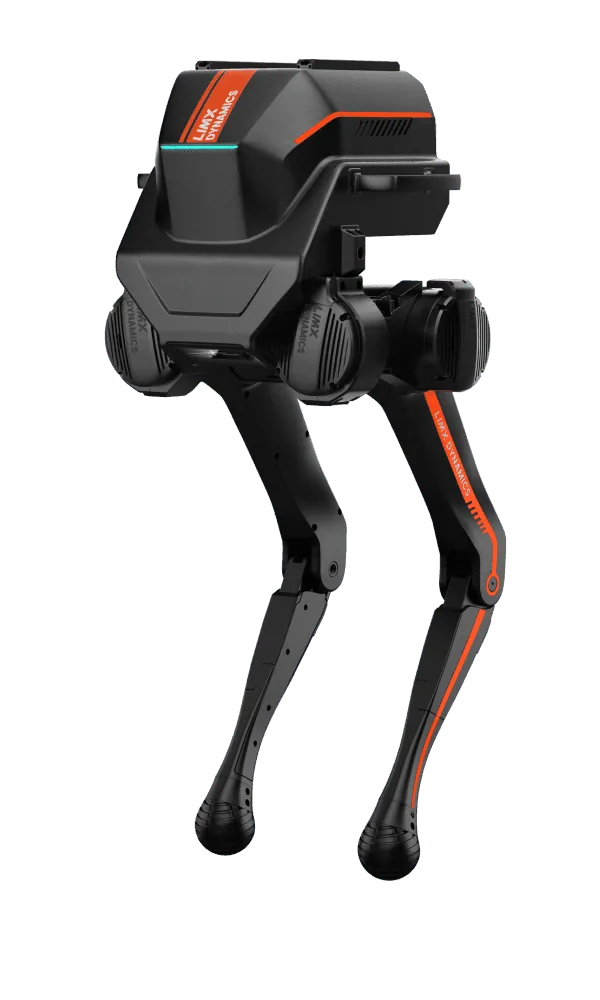
on sale
The successor to the acclaimed T1 arrived in July 2026 as the T2 and immediately bet on computing power rather than sporting publicity: at the heart of the Professional edition is an NVIDIA Jetson Thor chip rated at 2070 TFLOPS, significantly more than the Jetson AGX Orin (up to 200 TOPS) that powers the earlier T1.
Its maker, Beijing's Booster Robotics, positions the T2 as a development platform for embodied AI research, not as a finished commercial product or a starter platform for competitions.
The problem is that beyond computing power the available sources give practically no other parameters: there is no data on height, weight, degrees of freedom, payload or battery runtime, which together with the lack of a public price makes the robot very hard to judge against rivals, including its own predecessor, the T1.
The only source identified is the manufacturer's official website, in its "about the company" section; no independent reviews or tests were found. The T2 is not offered in Poland. At this stage the robot mainly interests research teams tracking the development of embodied-AI hardware who want to assess the potential of Booster's new generation of onboard computers early, before full mechanical specifications appear.
no data
Purchase. The manufacturer does not give a price for the T2, and there is no public pricing data. We do not guess a figure.
Lab deployment costs (estimated, without amounts): purchase of the platform, software licenses and development tools, service, possibly insurance, transport and customs duty when importing from China, and the engineering team's time. With computing power on the order of Jetson Thor, power supply and cooling must also be counted, along with compatibility with your training infrastructure.
Training. This is a platform for programmers and researchers; the manufacturer describes no formal training program, so it has to be confirmed with the supplier.
A framework for assessing humanoid costs: “How Much Does a Humanoid Robot Cost in 2026”.
No confirmed distributor in Poland
The Booster T2 is a platform for people who teach robots to think, not just to walk. Beijing's Booster Robotics introduced it in July 2026 as a flagship development model and bet on computing power: the Professional edition runs an NVIDIA Jetson Thor chip with a declared performance of 2070 TFLOPS (see the component NVIDIA Jetson). By comparison, the predecessor T1 used a Jetson AGX Orin, up to 200 TOPS. The manufacturer positions the T2 as a platform for embodied AI research, not as a finished product for work.
Labs and R&D teams. The main use is software development: training and testing perception, motion-planning and control models on hardware with headroom for large onboard models. A powerful onboard computer makes it possible to run large models, for example vision-language ones, directly on the robot, without sending the image to the cloud. More on models of this kind in “VLA Models: How AI Controls Humanoid Robots in 2026”.
Universities and competitions. The previous model, the T1, made the brand's name in competition: the July 2024 debut at the World Robot Conference brought two IEEE-RAS Humanoids championships. The T2, however, is not positioned as a starter platform for competitions, but as a development tool. Academic uses are described at universities and lab uses at laboratories.
What we do not know. And this is the key point. The available sources do not give the T2's height, weight, degrees of freedom, payload or runtime. The only identified source is the manufacturer's official website, with no independent reviews or tests. That is why no physical-work uses are described: there is no data for them. How to read such gaps in a specification is explained in “How to Read a Robot Datasheet”.
Who it suits. Research teams and companies developing software for humanoid robots who want to assess early the potential of a new generation of onboard computers and are ready to accept a product with an incomplete specification. University labs with experience in embodied AI that can verify the mechanical parameters themselves.
Who it doesn't. Enterprises looking for a robot for a specific physical job: without data on payload, runtime and degrees of freedom, no return can be calculated. Schools and buyers on a limited budget: the manufacturer gives no price. Polish customers looking for local support, because the T2 is not offered in Poland.
A practical tip: before talking to a distributor, prepare a list of questions that public sources do not answer: weight, payload, runtime, degrees of freedom, warranty terms, SDK availability and support in Europe. Useful here are “Degrees of Freedom (DOF) in Humanoid Robots” and “How to Read a Robot Datasheet”.
The model appeared in July 2026, and the sources point only to use in embodied-AI development. There are no confirmed deployments in Poland; the manufacturer has no official sales channel here. What is available in the category for Polish universities? Unitree platforms are popular, for example Unitree G1, along with other Chinese humanoids described in “Chinese Humanoid Robots”. The predecessor T1 earned its standing in competition, which shows that the company knows how to build capable sporting machines.
More options for universities: “Chinese Humanoid Robots”.
Cyborg Robotics (Shenzhen Cyborg Robotics Co., Ltd. / 深圳赛博格机器人有限公司)


Booster Robotics was founded in 2023 in Beijing and raised about USD 150 million in funding. It debuted in July 2024 with the T1 humanoid at the World Robot Conference and won two IEEE-RAS Humanoids championships; the brand is also tied to the RoboCup 2025 title won on the T1 platform. In July 2026 the company introduced the flagship T2 Professional Edition, built on the NVIDIA Jetson Thor (2070 TFLOPS). That is a jump in computing power of an order of magnitude over the AGX Orin in the T1, although the comparison measures different units (TFLOPS versus TOPS) and does not have to translate linearly to real tasks.
Booster Robotics debuts the T1 humanoid at the World Robot Conference and wins two IEEE-RAS Humanoids championships Booster Robotics
Model unveiled
Sales start
Booster Robotics launches its flagship T2 Professional Edition, built on NVIDIA Jetson Thor (2070 TFLOPS) Booster Robotics
No. The manufacturer Booster Robotics (China) names no Polish shop or official distributor for the Booster T2; enquiries go through the manufacturer's website (boosterobotics.com). Confirm service in Poland before buying.
Above all a much more powerful onboard computer: the NVIDIA Jetson Thor (2070 TFLOPS) versus the Jetson AGX Orin (up to 200 TOPS) in the T1.
The manufacturer does not give a price; there is no public pricing data.
No, the available sources do not give the model's height, weight, degrees of freedom or payload.
Author, source and licence of the photo are given in the caption. Shop links may become affiliate links in future, details: How we make money · How we check