pilot
Price from
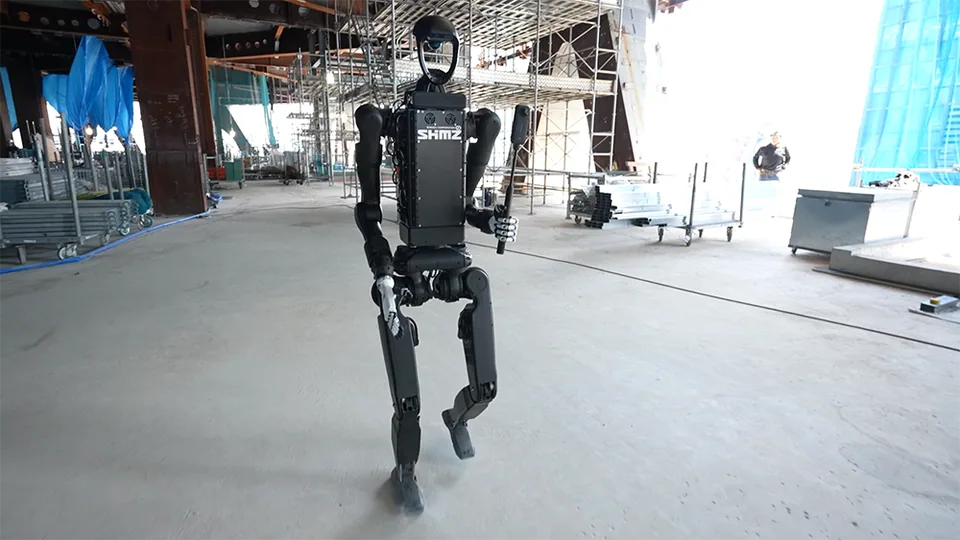
Fifteen years after KAIST's research robot HUBO 2 Plus (130 cm, 43 kg), Japan's Kaleido 9 shows how the humanoid category has changed: 190 cm tall, 99 kg, with an 18 kg payload, unveiled in December 2025 as the ninth generation Kawasaki has been developing since 2015.
The robot uses LiDAR and stereo cameras to build a three-dimensional map of its surroundings and to walk autonomously while avoiding obstacles, and it can be controlled both autonomously and by teleoperation through VR goggles. It was designed at a near-human scale so that it can use standard tools and personal protective equipment and move through spaces built with people in mind.
Kaleido 9's strength is a clear leap in stability and payload over generations 7 and 8; its weaknesses are the lack of commercial deployment, an unknown price and an unstated number of degrees of freedom. In Poland, Kawasaki is represented by ASTOR of Krakow, an authorized distributor of industrial robots since 2007, but as an R&D prototype the Kaleido 9 is not yet offered in any market, Poland included.
The robot is mainly of interest to R&D departments tracking the development of industrial humanoids, not to integrators looking for a ready deployment.
Data from manufacturer datasheets and product pages; median over the models of this category in the database.
no data
There is no price for the Kaleido 9. Kawasaki has not announced one, there is no price list and there is no distributor that could issue an offer in Poland. Kawasaki's Polish representative is ASTOR of Kraków, but it handles industrial robots, not this prototype.
To help think about scale, look at models that do have a price: NEURA 4NE-1 Gen 3.5 is about PLN 443,800 (≈ EUR 101,690 at NBP rate 4.3641 of 21 October 2026) in our catalog (roughly USD 114,500) and Unitree H1 about PLN 348,500 (≈ EUR 79,860) (roughly USD 89,900). As an estimate, higher-class full-size industrial humanoids therefore cost hundreds of thousands of zloty apiece. That is an order of magnitude derived from these prices, not a forecast for the Kaleido 9. On top of that come costs that are rarely talked about: integration with a warehouse system or MES, operator training, safety zones and service. You will find the method of calculation in “Humanoid Robot TCO: How to Calculate Total Cost”.
It covers costs incurred up to the end of 2026 on factory-new industrial robots within the statutory definition, as an additional deduction of 50% of the costs. Whether a humanoid meets that definition is a matter of interpretation that has to be consulted with an adviser. For the Kaleido 9, however, the question is theoretical, because no purchase will take place.
No confirmed distributor in Poland
The Kaleido 9 is a humanoid meant to go where everything is built for people: narrow passages, rooms with stairs, zones with ladders and tools made for a human grip. It stands 190 cm tall, weighs 99 kg and has an 18 kg payload, plus LiDAR and improved stereo cameras that let it build a three-dimensional map of its surroundings and walk while avoiding obstacles. It can be run autonomously or remotely: the operator puts on VR goggles and "stands" in the robot's place.
The manufacturer names three specific activities: sweeping, carrying objects and walking autonomously. With an 18 kg payload and a LiDAR-and-stereo-camera map of its surroundings, the robot is prepared to carry loads and steer around obstacles along its route; it has to be said, however, that this is an R&D prototype and no commercial deployment has been confirmed.
Teleoperation is an important thread. Remote work through VR is not a gimmick, because it lets you send the robot where it is dangerous or far away for a person: a zone with elevated temperature, a construction site after the crews have left, the site of a failure. The manufacturer also notes that a scale close to a human's is meant to allow the use of standard tools and personal protective equipment, that is, a helmet or gloves of normal sizes, which is a concrete advantage over robots with non-standard proportions.
In the sectors we follow, sensible fields are factories, construction sites and laboratories, anywhere researchers want to check whether a human-scale humanoid really pays off. You can read more about the role of such machines on the shop floor in “Humanoid Robots in Factories 2026”, and about how such a robot works in “How Does a Humanoid Robot Work”.
Who does the Kaleido 9 make sense for? For the R&D departments of large manufacturers that follow the development of industrial humanoids and want to know what the ninth generation, developed by Kawasaki since 2015, can do. For technology journalists, market analysts and universities that need a fresh example from Japan. For integrators who want to understand where the segment is heading and which parameters set the bar: 190 cm, 99 kg, 18 kg payload.
A poor fit: For companies looking for a robot to deploy this year. There is no price, no sale in any market, Poland included, and the number of degrees of freedom has not been stated. You will not find confirmed data on battery runtime or walking speed either, so it is impossible to calculate real utilization in a shift. A small or medium-sized company that wants to automate packing or palletizing will get far more from classic collaborative robots; see “What Is a Cobot and How Does It Differ from an Industrial Robot” and cobots.
If what matters to you is a humanoid you can order today, check Unitree G1 or AgiBot A2. And if you want to understand how to read a datasheet with gaps like this one, “How to Read a Robot Datasheet” will help.
Kawasaki is represented in Poland by ASTOR of Kraków (an authorized distributor since 2007), but that is a channel for classic industrial robots, not for the humanoid.
Other humanoids are going through pilots in plants, as we write in “Humanoid Robots in Factories 2026”. Anyone who wants to see who in Poland really deploys robots should look at “Polish Robotics Companies” and at the category “Humanoid robots”.
The industrial humanoid market is still young, so the alternatives divide into those you can buy and those you have to watch.
UBTech Walker S2: a Chinese industrial humanoid, one of the most talked-about designs on the factory front. It is the reference point if you want a deployment-oriented contrast to the Japanese prototype.
Atlas: the electric Atlas, a design in a similar weight class with similar industrial ambitions.
MagicLab MagicBot Gen1: 174 cm, 70 kg, up to 15 kg payload with both hands and a well-described datasheet. Lighter and more modest, but clearly documented.
AgiBot A2: a humanoid from a Chinese maker that is available on the market and shows what prices look like in this segment: about PLN 212,400 (≈ EUR 48,670) in our catalog (roughly USD 54,800).
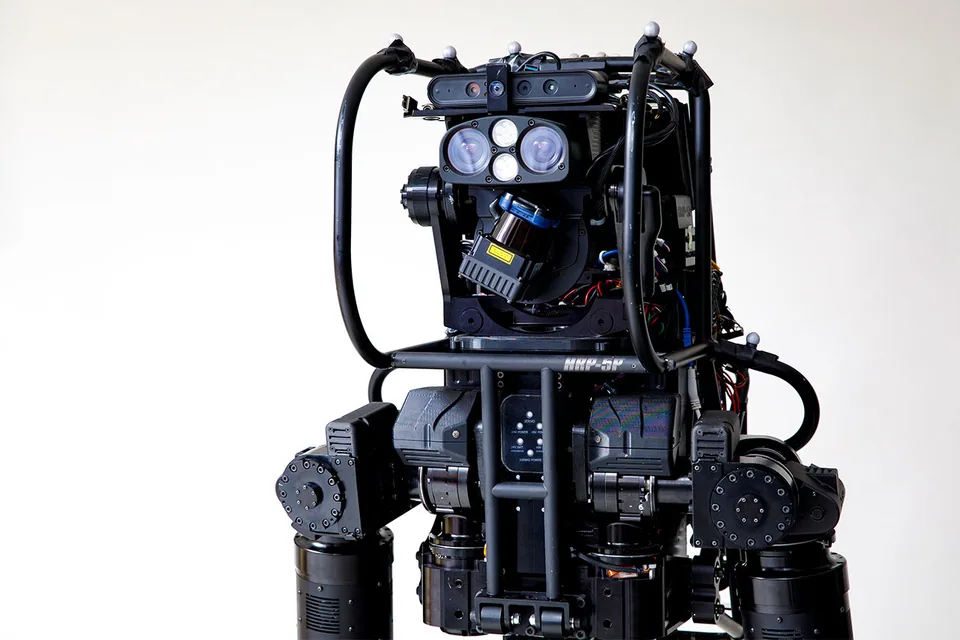
HRP-5P: another Japanese prototype (AIST, 2018, 182 cm, 37 degrees of freedom), useful for comparing how the parameters have changed over a few years.
National Institute of Advanced Industrial Science and Technology (AIST)
Kawasaki is one of the oldest robotics companies in the world: its robot division in Akashi has been active since 1968, and its first industrial robot appeared in 1969. The company has been running humanoid experiments since 2015, and the Kaleido 9 is the ninth generation of this line. The manufacturer compares the earlier versions 7 and 8 with the new design, speaking of a clear jump in stability and payload, although it does not publish exact comparison data.
The Kaleido 9 was publicly unveiled in December 2025, when it was announced as a humanoid carrying up to 18 kg. The Japanese design is a reminder that the country has a long tradition in bipedal robotics, visible also in the HRP-5P. The manufacturer's background is described by the profile Kawasaki Heavy Industries, and the sales channel in Poland by the distributor ASTOR.
Model unveiled
Kawasaki unveils Kaleido 9, a ninth-generation humanoid that can carry up to 18 kg Kawasaki Heavy Industries (Robot Division)
It is 190 cm tall, weighs 99 kg and has an 18 kg payload.
No. It is an R&D prototype; Kawasaki's Polish distributor, ASTOR, handles industrial robots but not this model.
The manufacturer stresses clearly better stability and a higher payload (18 kg) thanks to improved LiDAR and stereo vision, although it does not publish exact comparison data.
Author, source and licence of the photo are given in the caption. Shop links may become affiliate links in future, details: How we make money · How we check