on sale
Manufacturer
Spain's PAL Robotics: TIAGo, TALOS and Kangaroo for research labs across Europe, built on ROS.
Spain's PAL Robotics of Barcelona, operating since 2004, is one of the more important European suppliers of research and service robots for the academic community. Its portfolio includes the TIAGo mobile service robot, the humanoid TALOS used in research on bipedal locomotion, and the newer TIAGo Pro variants and the Kangaroo robot.
The platforms are built on ROS, which makes them a standard choice in laboratories working on mobile robotics, human-robot interaction (HRI) and navigation across Europe; TIAGo is among the most frequently cited research platforms on the continent.
Compared with NASA JSC's purely research-oriented Valkyrie, PAL Robotics sells its robots commercially to universities and institutes, not just to an agency's in-house teams. The manufacturer does not state prices for individual platforms or any information on a presence in Poland; purchasing is usually done through quotes for institutions.
PAL Robotics has operated since 2004 in Barcelona and is one of the more important European suppliers of research and service robots. The company today describes itself as a team of about a hundred people with twenty years of experience, more than 200 partners and robots working in over 30 countries; besides Barcelona it has offices in Toulouse and Bari, and its CEO is Francesco Ferro. It says its team presented Europe's first fully autonomous bipedal humanoid. REEM-C, its first humanoid, appeared in 2013. Over time a family of platforms on the ROS system emerged: the TIAGo mobile manipulation robot, then its newer ROS 2 version TIAGo Pro, the humanoid TALOS for research on bipedal walking, the social robot ARI for reception and human-robot interaction, and the modular Kangaroo. It earned trust in the academic community, where TIAGo is among the most frequently cited research platforms in Europe. PAL is active in industry bodies, including EU Robotics and HispaRob. Unlike NASA's Valkyrie, it sells its robots commercially to universities and institutes, not just to an agency's in-house teams.
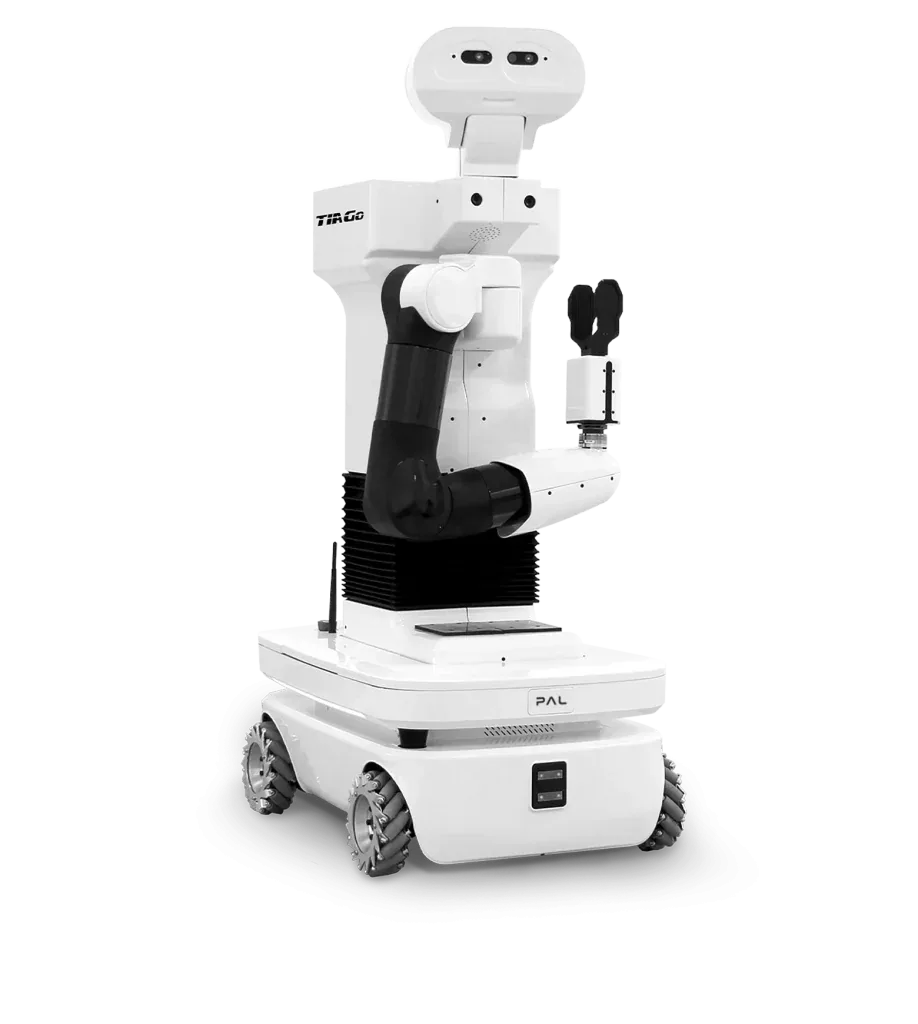
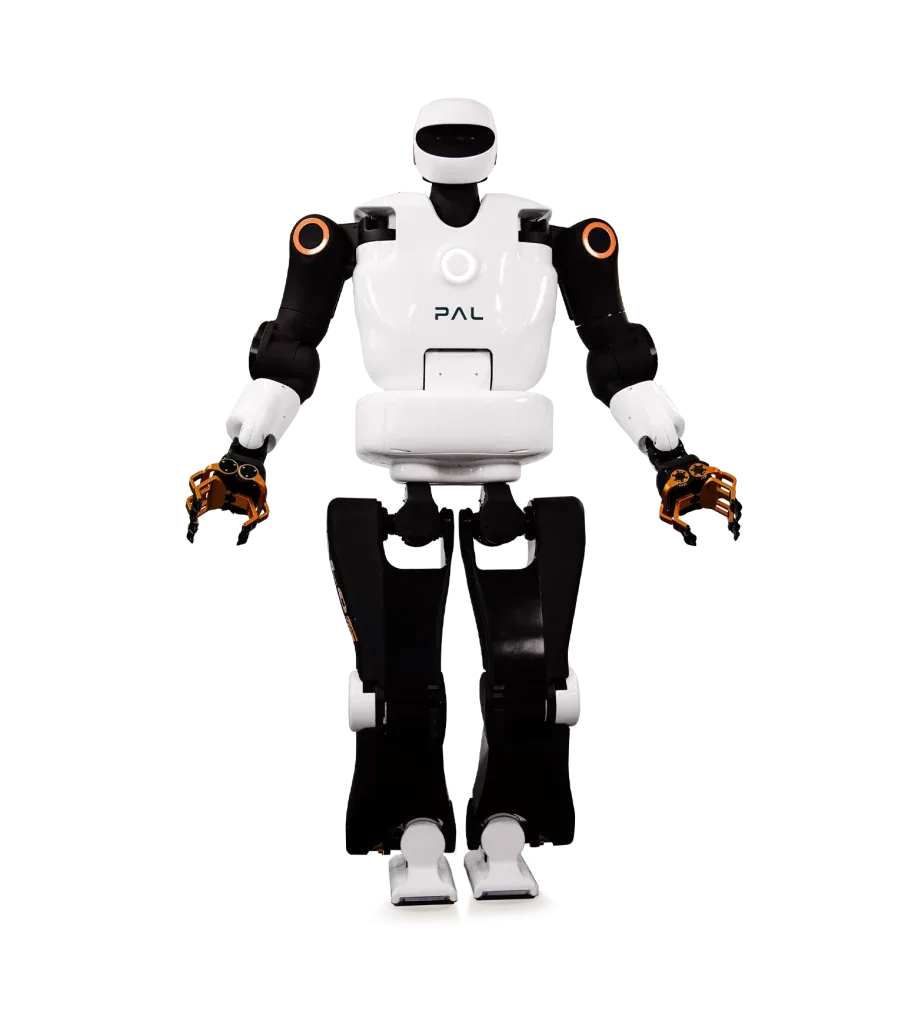
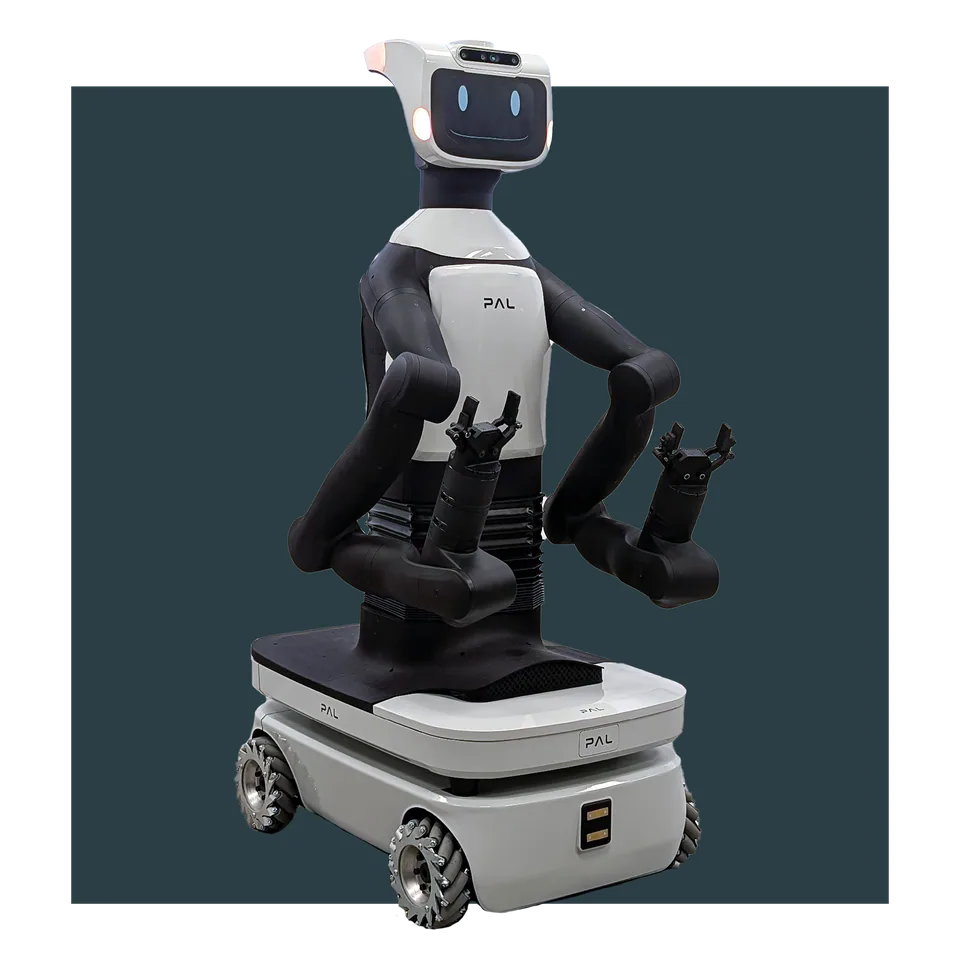
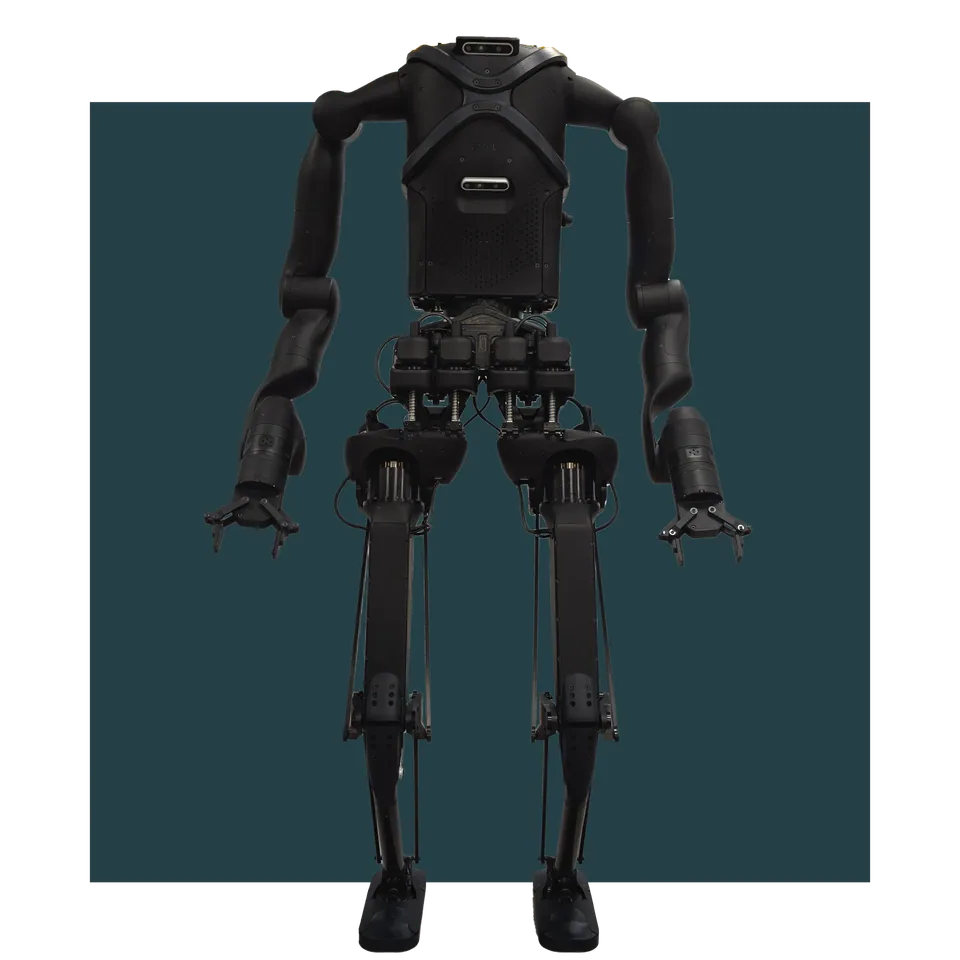
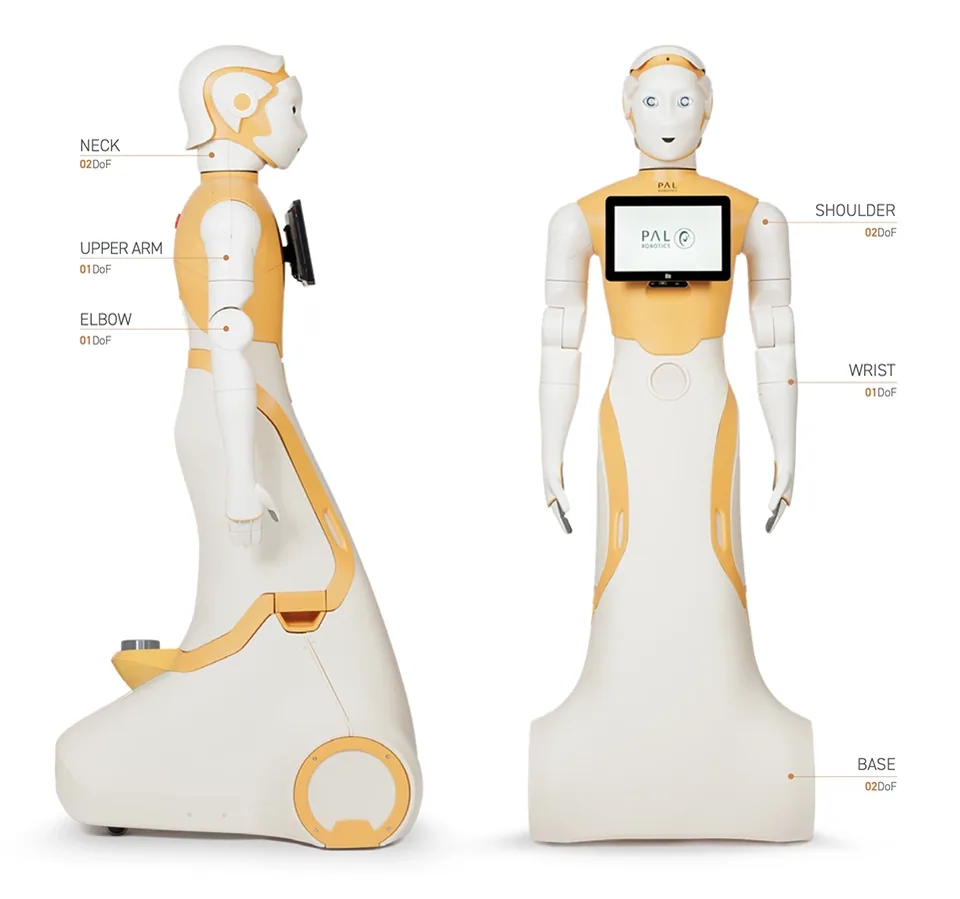
The five models in our directory show what an offering for a laboratory looks like. PAL Robotics TIAGo is a wheeled mobile manipulation robot 1.10-1.45 m tall with a seven-degree-of-freedom arm and a 3 kg payload; its description lists Hokuyo or SICK laser scanners. Its successor is PAL Robotics TIAGo Pro: 23 DOF, a mecanum base and ROS 2, though with no weight or height given. For interaction with people there is PAL Robotics ARI, a social robot 165 cm tall that speaks more than 20 languages; its configuration includes an Intel RealSense D435i camera and an optional NVIDIA Jetson module. The two humanoids are PAL Robotics TALOS (175 cm, 95 kg, torque in almost every joint, but only 1.5 h of runtime) and PAL Robotics Kangaroo (1.60 m, arms with 4-7 DOF, payload up to 30 kg with both hands). Prices are on request. More on components: Hokuyo, SICK, Intel RealSense and NVIDIA Jetson. Categories: “Service robots” and humanoid robots. All are electrically driven and built on ROS or ROS 2, so they suit labs that program their robots themselves.
PAL does not sell robots in volume, only to order for institutions, so its yardstick is influence on science rather than sales figures. In the research community it competes with Pollen Robotics, Kinova Robotics and SoftBank Robotics in interaction robots, and in humanoids with Istituto Italiano di Tecnologia and Boston Dynamics, though those are entirely different price classes. A strong card is its ROS foundation, an environment every lab engineer knows; a weaker one is the lack of public prices and sales scale. The company has about 100 employees, so it is hard to compare with the giants. In recent years commercial variants such as StockBot have joined its range. We found no valuation or funding rounds in verified sources. Background: “How to Start Learning Robotics in Poland”. A caveat: the information on headcount and partners comes from the manufacturer's website, so we treat it as a claim, not an independent audit. For Polish universities this usually means a long quotation process.
PAL Robotics does not give information on a presence in Poland. In our directory none of the five models has confirmed availability in the country or a Polish distributor, and purchasing is usually done through quotes for institutions. We also have no documented Polish deployments naming a university. If you are looking for a research platform for a Polish department, contact the Barcelona office directly and compare offers with “Educational Robots for Schools and Universities” and laboratories. A practical tip: ask about delivery time and software licenses, because in research robots these are often a hidden cost.
PAL is the address for laboratories that want a platform built on ROS with documentation and support. Anyone looking for a cheap toy or a ready-made robot for services in a Polish company will find better options elsewhere. Who it suits: robotics departments, institutes, research projects and accelerators. Also check whether you need a mobile platform (TIAGo), a social robot (ARI) or a humanoid (TALOS), because each of these classes has different requirements.
PAL Robotics