on sale
Price from
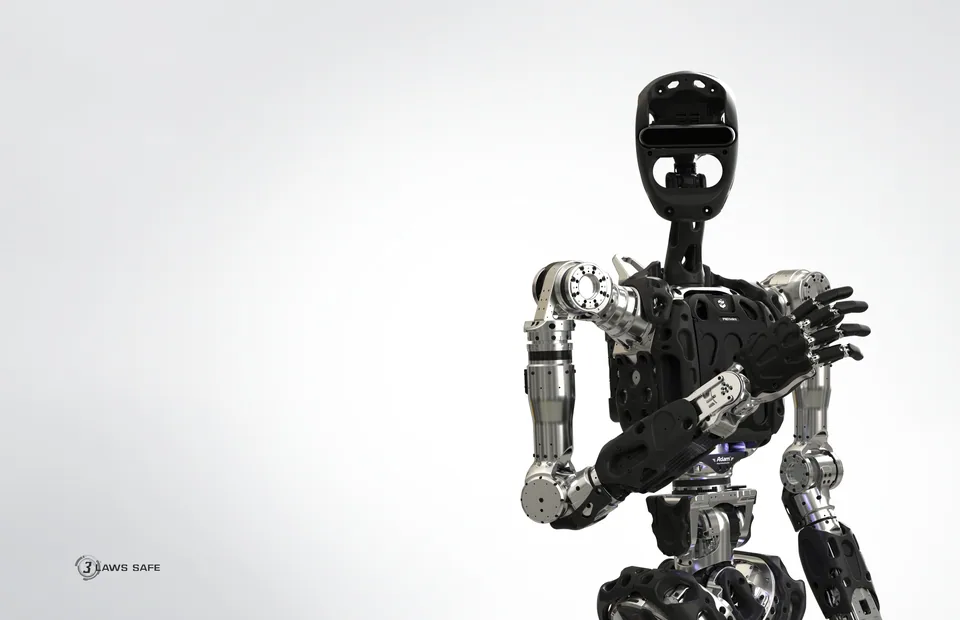
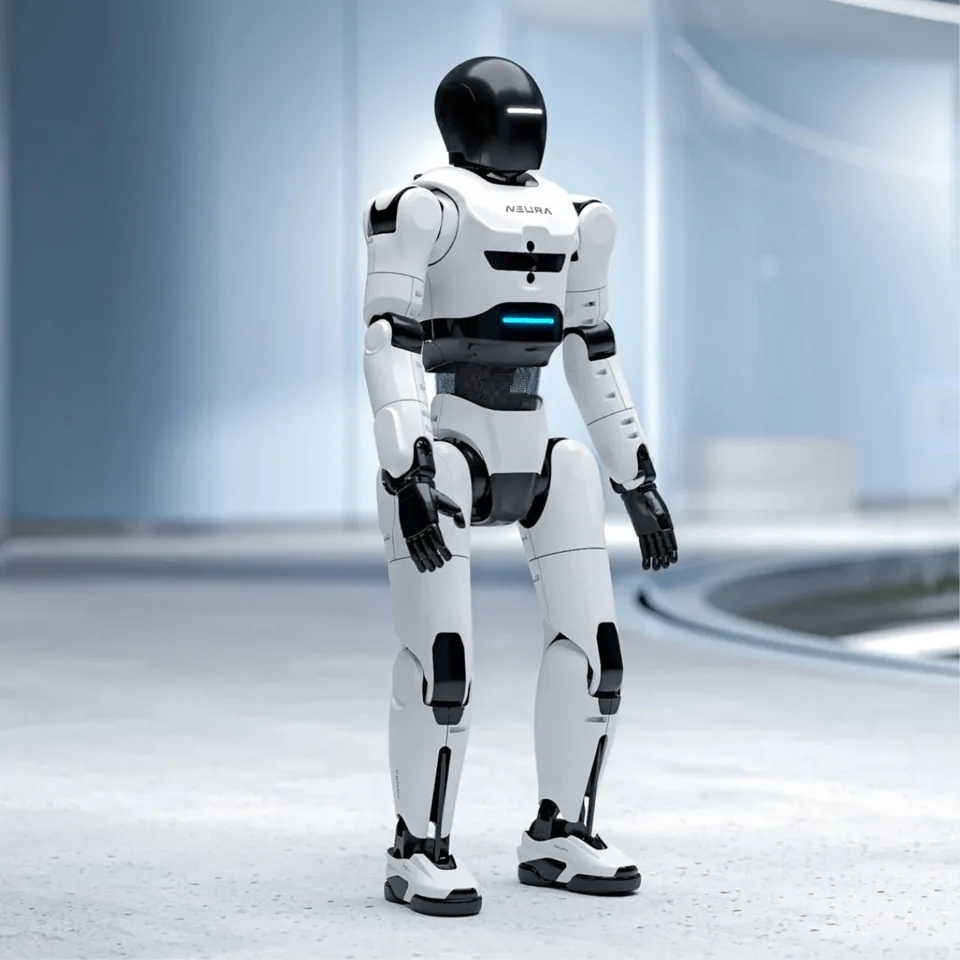
Germany's Neura Robotics is taking reservations for the 4NE-1 Gen 3.5, an industrial humanoid 180 cm tall and weighing 80 kg, whose look was co-designed by the studio Porsche Design and whose computing is built on NVIDIA hardware. The maker claims a full 100 kg payload, a walking speed of 1.39 m/s and up to 8 hours of work thanks to swappable batteries.
The payload figure, however, has not been independently verified and may refer to the whole system rather than a single arm. The robot has swappable forearms and a remote-control mode as an emergency safeguard. A reservation can be placed for a refundable fee of 100 euros; the target price is about 98,000 euros (about 428,950 PLN (≈ EUR 98,120)), falling to around 60,000 euros per unit for fleet purchases.
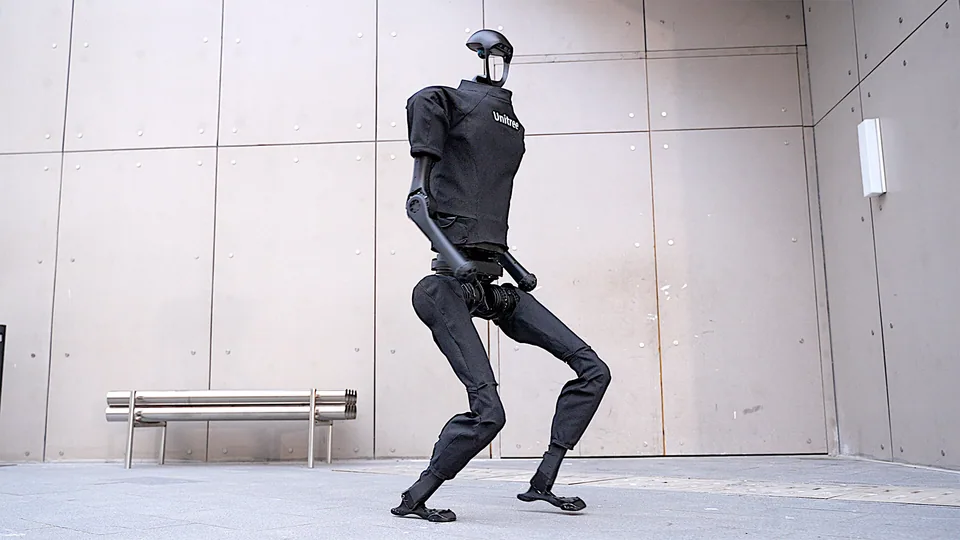
Deliveries are planned to start at the end of 2026. Compared with the Chinese Unitree G1, already available for a fraction of that price, the 4NE-1 targets an entirely different segment, heavy logistics industry, and is closer in price to the Figure 02 or the Agility Digit. A strength of the project is the company's strong financial backing (a Series C of up to 1.4 billion USD).
The robot is not yet available in Poland.
Data checked: · Sources: 2
Data from manufacturer datasheets and product pages; median over the models of this category in the database.
Reservation with a refundable deposit of 100 EUR; fleet price from 60,000 EUR at scale. The maximum payload claimed by the maker (100 kg) is very high and not independently verified; it may refer to the load of the whole system, not a single arm.
The reservation costs 100 euros and is refundable. The target price is about 98,000 euros (about 428,950 PLN (≈ EUR 98,120) at the 4.3770 rate of 1 October 2026), or about 105,000 USD; for fleet orders the maker indicates about 60,000 euros per unit. VAT comes on top (estimated at 23%). Running costs are not known. As a rough order of magnitude for heavy industrial robots, annual service and parts run from a few to a dozen or so percent of the price; for the Gen 3.5 there is no data. Swappable batteries (the maker claims up to 8 hours of work) and integration with plant systems are a separate item. Training is usually offered by the maker; its price list is not public. For a total cost calculation see “Humanoid Robot TCO: How to Calculate Total Cost”.
No confirmed distributor in Poland
The NEURA 4NE-1 Gen 3.5 is a humanoid with which the German Neura Robotics of Metzingen wants to show that a robot in human form can be an industrial machine rather than a toy. It stands 180 cm and weighs 80 kg, and the maker claims a payload of a full 100 kg, a speed of 1.39 m/s and up to 8 hours of work thanks to swappable batteries. The studio Porsche Design is responsible for the look, the computing is built on NVIDIA hardware, and perception includes 360-degree vision and a sensor skin. The uses the maker names are material handling and in-plant logistics. In such tasks payload (a claimed 100 kg) and runtime on one set of batteries (up to 8 hours) count most, and those are the figures that stand out in this model's specification. Swappable forearms would let you change the working end depending on the task, and teleoperation mode lets an operator take over when the autonomy cannot cope. Caution is needed, though. The 100 kg payload is a claim by the maker and has not been independently verified; it may refer to the whole system, not a single arm. The model's status is pre-order: reservations are taken for a refundable fee of 100 euros, and deliveries were planned for the end of 2026. The sources lack data on continuous operation and on failure rates. A real strength is the backing: the company secured a record funding round and partnerships with Bosch and AWS, which raises the odds that the project survives to production. A practical discussion of where humanoids work is in the article “Humanoid Robots in Factories 2026”, and the topic pages are factories and warehouses.
The Gen 3.5 is for large industrial plants and integrators in Europe planning strategic pilots of a humanoid from a German maker with access to EU-based support. It suits companies that already work with Neura on cobots (the MAiRA and LARA lines) and want to build a coherent ecosystem. It will interest innovation departments in large corporations that can afford close to 100 thousand euros for a pilot unit.
It is not a robot for small and medium companies looking for a quick return on investment. The target price of about 98,000 euros (about 429 thousand PLN) is among the highest in the category, deliveries have not started, and the technical claims have not been independently confirmed. We also do not recommend it to those who need confirmed deployments: there are none in the sources. In Poland the model is not available.
Outside Poland we also found no documented deployment of the Gen 3.5 in production work: the robot is in pre-order, and the closest step to an announcement is the partnership with Bosch (January 2026) on industrialization, that is, preparation for production, not confirmation of work in a factory. How humanoids actually work in industry is better shown by more thoroughly documented cases: the Apptronik Apollo with Mercedes (“Apptronik Apollo in Mercedes-Benz Factories”) and the electric Atlas (“Boston Dynamics Electric Atlas”). The state of humanoid deployments changes fast; we will add a confirmed case in Poland here.
The Figure 03 is the main competitor in industrial and home work: 172 cm, 20 kg payload, 5 hours of work; no published price. The Apptronik Apollo claims a 25 kg payload and 71 DOF; it works with Mercedes, so its automotive track record is better documented than Neura's. The Atlas is 190 cm, with a claimed 50 kg payload and 56 DOF; it is a design from a well-known brand with a long robotics history, still at the prototype stage. The Agility Digit 5 is smaller but has been tested in warehouses for years. The Unitree H2 at 29,900 USD (about 116 thousand PLN) is a fraction of Neura's price and available today, though without a claimed payload and without a European backing. If the buyer values a European maker, the choice narrows to Neura.
Robot Era (Beijing Xingdong Epoch Technology / Robotera)
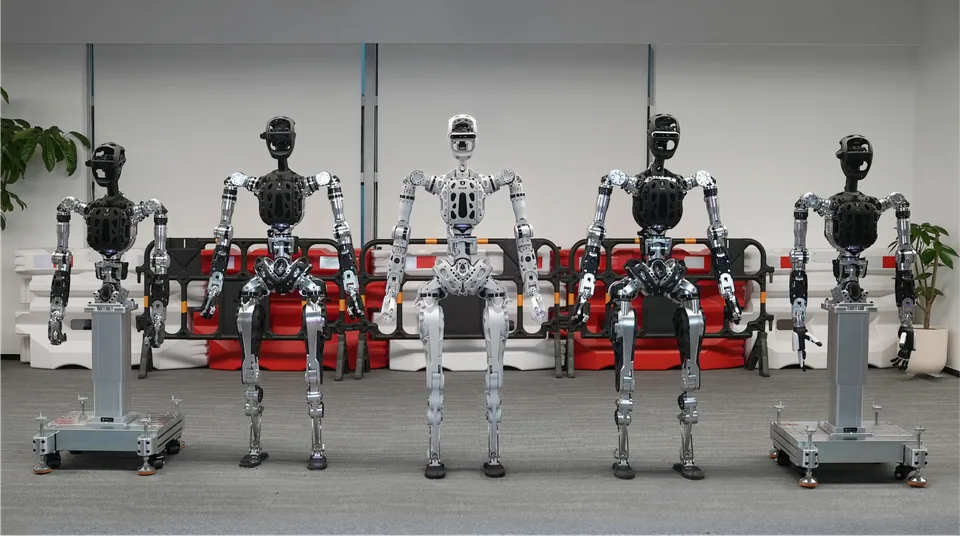
Neura Robotics was founded in 2019. Key points on the timeline according to our catalog: in January 2025 the company raised 120 million euros in a Series B and doubled headcount to more than 300; in May 2025 it acquired B.A.H. Industrial Solutions, and in June 2025 it presented the third-generation 4NE-1 humanoid at the Automatica trade fair. In October 2025 it bought ek robotics (AGVs), passing 1,100 employees, and in December it opened a development center in Zurich, where it concentrates work on the 4NE-1. In January 2026 it announced a partnership with Bosch on industrializing humanoids. In June 2026 the company closed a Series C round of about 1.4 billion USD with participation from, among others, Tether, Qualcomm, Amazon, Nvidia, Bosch and Schaeffler, along with a partnership with AWS; the official announcement speaks of an amount of up to 1.4 billion USD, so that is a maximum, not confirmed inflow.
Neura Robotics announces a strategic partnership with Bosch to industrialize humanoids Neura Robotics
Bloomberg reports that Neura Robotics is negotiating a 1 billion euro Series C round with Tether's participation, at a 4 billion euro valuation Neura Robotics
Neura Robotics confirms a Series C round of up to $1.4 billion with strategic investors, and a partnership with AWS Neura Robotics
Neura Robotics (Germany) closes a record Series C round of about $1.4 billion with Tether, Qualcomm, Amazon, Nvidia, Bosch, Schaeffler and EBI; valuation reaches about $7 billion Neura Robotics
Not through a Polish seller. The NEURA 4NE-1 Gen 3.5 is on pre-order with the manufacturer (Germany); we have not confirmed a Polish distributor.
About 98,000 EUR (428,950 PLN), with a reservation for 100 EUR; for fleet orders the price falls to about 60,000 EUR.
No. It is a claim by the maker and may refer to the whole system, not a single arm.
The maker announces a start at the end of 2026.
Author, source and licence of the photo are given in the caption. Shop links may become affiliate links in future, details: How we make money · How we check