on sale
Data from manufacturer datasheets and product pages; median over the models of this category in the database.
Price from
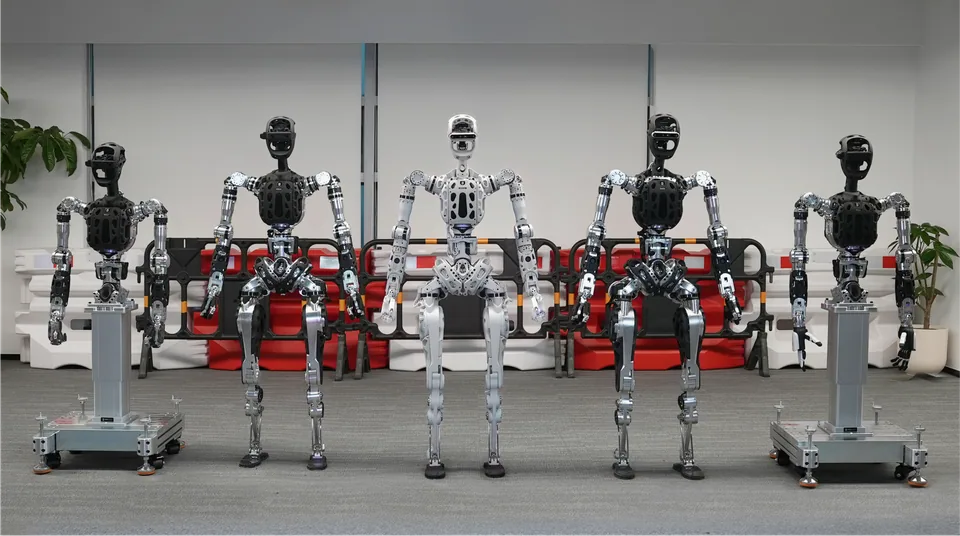
STAR1 is the earlier of the two full-size humanoids from Beijing-based RobotEra, and it is known above all for its speed record: in mid-2025 it ran outdoors at 3.6 m/s, a record for bipedal robots at the time. The machine stands 171 cm tall and has 55 degrees of freedom, with joint torque of up to 400 N·m at 25 rad/s, the same drive specifications RobotEra later carried over to the younger L7.
Unlike the L7, STAR1's weight, payload and price remain undisclosed, and the robot is still listed as a research prototype with no path to mass production. Among rivals chasing speed, such as Unitree's H-series models, STAR1 stands out for a documented outdoor record rather than a manufacturer's claim alone.
Its strength is the verified speed result; its weakness is a complete lack of information on commercial uses, availability or a sales timeline. In Poland the robot is not available and most likely will not be until it reaches a production phase. It is of interest mainly to people tracking progress in walking and running speed for bipedal robots, and of little relevance to buyers looking for a finished product.
Purchase: a third-party aggregator catalog gives roughly US$120,000, or about PLN 465,100 (≈ EUR 106,570) at the 1 October 2026 rate of 3.8762. This is not a price from a sales list, however: the robot is a prototype and unavailable in Poland, so treat the figure as indicative. Additional costs, estimated: customs duty and VAT on import from outside the EU, transport, costly servicing of high-torque parts, and specialized control software; for hardware like this, the annual maintenance budget can reach a dozen or so percent of the purchase price. Battery runtime is about 4 hours, which for shift work means spare cells or planned charging. Training: making sensible use of 55 DOF takes a team experienced in reinforcement learning and whole-body control; training people usually takes longer than getting the robot running (roughly several months, as an estimate).
No confirmed distributor in Poland
STAR1 was built to show how much can be squeezed out of a bipedal body, and in that respect it is one of the more interesting prototypes we track. The robot is 171 cm tall, weighs 63 kg and has 55 degrees of freedom (DOF), 12 of them in each hand. The payload listed in a third-party aggregator catalog is 20 kg, and the onboard compute unit delivers 275 TOPS. The manufacturer cites typical uses such as precision assembly, quality control, packaging, goods transport and guest reception. That, however, describes the manufacturer's intentions, not documented deployments. The only firmly confirmed feat is a 3.6 m/s outdoor run in mid-2025, a record among bipedal robots at the time. The joints deliver up to 400 N·m of torque at 25 rad/s, the same drive parameters that later appeared in the RobotEra L7. For factories or retail, then, this is for now a showcase and research robot, not a tool you can buy.
Makes sense for: research teams and companies gathering knowledge on how to build a fast, agile humanoid with multi-DOF hands, plus market watchers who want a benchmark for walking and running speed. Who it is not for: anyone looking for a finished product. STAR1 is a prototype with no path to mass production and no published sales date, and the manufacturer does not disclose a delivery schedule, at least. In Poland it is unavailable and there is no sign it will appear here. We do not recommend it to integrators, schools or companies that need a robot working tomorrow; models already on sale, covered in the humanoid robots category, are a better address for them. Before comparing specs, read the article “How to Read a Robot Datasheet”: with prototypes, the numbers often describe a goal, not hardware handed to a customer.
We have no confirmed commercial deployments of STAR1: in the sources it appears as a research and showcase prototype. In the category, Chinese humanoids are entering factories mainly as pilots at large corporations; an overview of that market is in the article “Chinese Humanoid Robots”, and real-world use in manufacturing plants in “Humanoid Robots in Factories 2026”. It is also worth checking the market as a whole; forecasts are covered in “Humanoid Robot Market Forecasts”.
The closest relative is the RobotEra L7 from the same Beijing manufacturer: 171 cm, 65 kg, 55 DOF and a 20 kg payload, available for pre-order, so nearer to market than the STAR1 prototype. If you want a model you can buy in Poland, reach for the Unitree H2: 180 cm, 70 kg, 31 DOF, a list price of US$29,900, and distribution through Polish resellers. For a team that wants multi-DOF hands and prestigious research hardware, the Fourier GR-2 (175 cm, 63 kg, 53 DOF, unveiled in 2024) is often of interest. The Leju Kuavo-5 is similar in size (168 cm, 55 kg, 40 DOF, around US$38,000, prototype). And if the speed race is what fascinates you, compare it with the Unitree H1, which Unitree promoted precisely through running, with a published walking speed of 3.3 m/s.
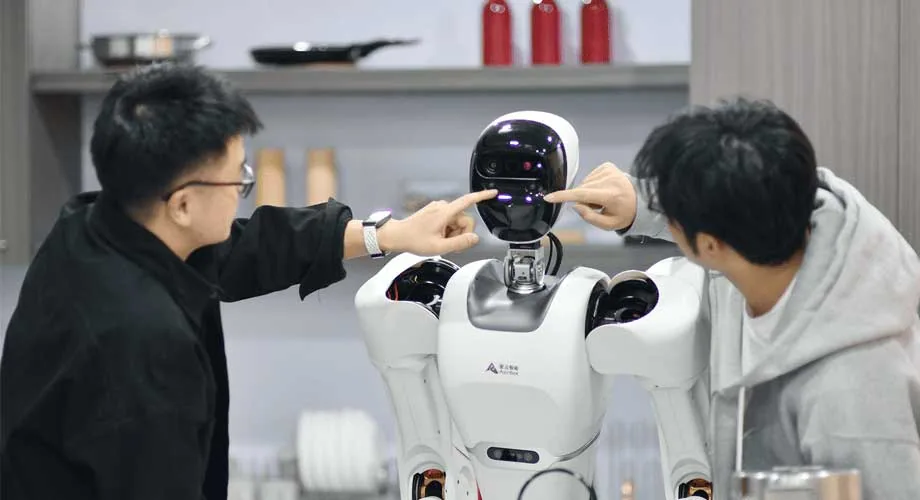
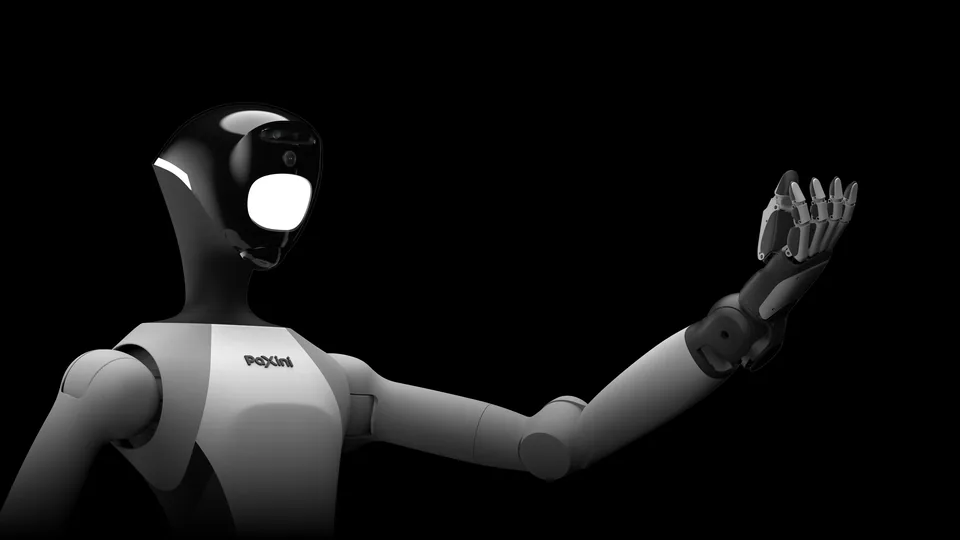
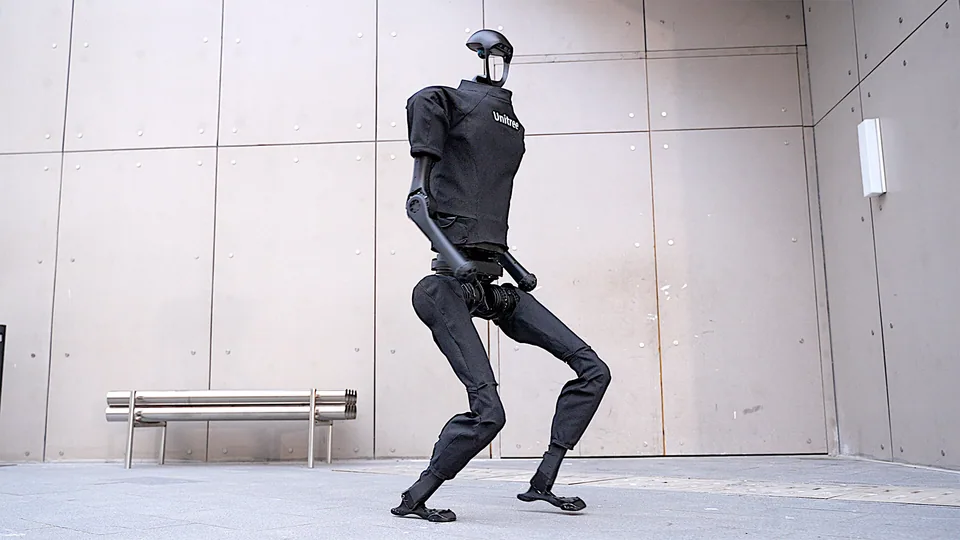

Robot Era is a Beijing company; its name appears under several spellings across sources, which suggests a single organization described in different ways. STAR1 was unveiled in October 2024 as a full-size research humanoid. It gained the most attention from its mid-2025 run: 3.6 m/s outdoors, a record among bipedal robots at the time. The direct-drive joints, with torque of up to 400 N·m at 25 rad/s, later became the shared basis for the younger L7, shown in July 2025. With the L7, the manufacturer moved from showcasing capability toward a design closer to sale: the L7 is in pre-order, while STAR1 remains a prototype.
Model unveiled
According to the latest available data (as of September 2026) the price is approx. 465,144 PLN (≈ EUR 106,580).
Its record running speed of 3.6 m/s, achieved outdoors in mid-2025.
No. It remains a research prototype with no disclosed price or production schedule.
It shares the L7's joint drive specifications, but the L7 is newer and comes with disclosed payload and hand data.
Shop links may become affiliate links in future, details: How we make money · How we check