on sale
Pros
- Fully open hardware and software
- 20 degrees of freedom on Dynamixel XM430-W350-R servos
- Intel NUC i3 (8 GB RAM) and Logitech C920 camera
- Proven at RoboCup and in university courses
Cons
- Official software supports ROS1 only (Kinetic/Melodic)
- No public price in our sources
- Modest compute by today's AI standards
- In Poland only via generationrobots.com
- 51cmHeight
- 3.5kgWeight
- 20DOFDegrees of freedom
Key facts
- Specificationsheight 51 cm · weight 3.5 kg · degrees of freedom 20 DOF
- Statuson sale
- Availability in Polandnot confirmed
- VerdictFor university labs and RoboCup teams; not suited to commercial or industrial use.
Summary
- ManufacturerROBOTIS
- CategoryEducational robots
- Statuson sale
- Availability in PolandNo confirmed distributor in Poland
ROBOTIS's OP3, from Korea, is one of the longest-standing open humanoids for research and education on the market, on sale since January 2018 as the successor to the OP2. At just 51 cm tall and 3.5 kg (without cover), it offers 20 degrees of freedom driven by Dynamixel XM430-W350-R servos, an Intel NUC i3 onboard computer (8 GB RAM, 250 GB SSD) and an OpenCR sub-controller; a Logitech C920 HD camera, supported by a gyroscope, accelerometer and magnetometer, observes the surroundings.
The official software repository (ROBOTIS-GIT/ROBOTIS-OP3) supports only ROS1 (Kinetic on Ubuntu Xenial and Melodic on Ubuntu Bionic); although related repositories were updated in 2025, we found no confirmation that the main package has migrated to ROS2.
Compared with other classic educational robots such as France's Poppy or Japan's NAO, the OP3 stands out for a fully open hardware and software architecture, prized at RoboCup competitions and in university courses. Its weak points are the lack of a published price and computing power that is modest by today's AI standards.
In Poland the OP3 is in theory obtainable through the French distributor generationrobots.com, which ships to the Polish market, although this is not a local brick-and-mortar shop. The robot suits university labs and RoboCup teams, and definitely not commercial or industrial applications.
Photo gallery
-
Photo: ROBOTIS, product page (emanual.robotis.com) -
Photo: DavidMansolino, Wikimedia Commons, CC BY-SA 4.0; resized and converted to WebP
Specs
Data checked: · Sources: 1
Data from manufacturer datasheets and product pages; median over the models of this category in the database.
-
Height51 cm+69% vs. the category median (30.1 cm, n=8)
-
Weight3.5 kgin line with the category median (3.45 kg, n=12)
-
Degrees of freedom20+167% vs. the category median (7.5, n=12)
-
Battery36.6 Wh+17% vs. the category median (31.3 Wh, n=6)
- category medianA higher value doesn't always mean a better robot; it depends on the application.
Dimensions and weight
- Height
- 51 cm
- Weight
- 3.5 kg
Motion and manipulation
- Degrees of freedom
- 20
Power
- Battery
- 36.6 Wh
Electronics and AI
- Drive
- electric (XM430-W350-R Dynamixel servos)
- Sensors
- 3-axis gyroscope, Acceleration sensor, Magnetometer, Logitech C920 HD camera
- Computing unit
- Intel NUC i3 (8 GB RAM, 250 GB SSD) + OpenCR sub-controller
Price and availability in Poland
no data
Running and deployment costs
We have no published price for the OP3, in zloty or in euros, so we do not give a figure. As an order of magnitude, a humanoid research platform with Dynamixel servos and a built-in computer costs an estimated several tens of thousands of zloty; this is an estimate for the class of hardware and should be confirmed with the distributor generationrobots.com.
Running costs are low: there is none of the wear typical of industrial robots, but Dynamixel servos can overheat during intensive training, so it is good to keep spares. The battery capacity is 36.6 Wh, and runtime depends on load. Add your team's time: configuring ROS and tuning the gait usually take weeks of work, not hours (an estimate).
Training is usually not needed if you have someone who knows ROS; the manufacturer's online documentation is available.
Dealers in Poland
No confirmed distributor in Poland
Applications
What it's for
The OP3 is a small humanoid (51 cm tall, 3.5 kg, 20 degrees of freedom) designed so that people can learn robotics on it, not so that it can carry anything. Its true habitat is the lab room, the student workshop and the RoboCup pitch. ROBOTIS of Seoul, maker of the Dynamixel servos, built it as an open platform: an Intel NUC i3 computer (8 GB RAM), a Logitech C920 camera, a gyroscope, an accelerometer and a magnetometer.
The first use is universities (universities) and RoboCup competitions: the platform is open, and the servos and controllers can be taken apart and understood, so nobody has to wait for manufacturer updates. That is the OP3's value: transparency.
The second use is schools and courses (schools). A humanoid about half a meter tall fits on a table, yet lets you show students the problems of balance, computer vision and controlling many joints at once. The third is lab prototyping (laboratories): researchers test control in the ROS environment on it before moving an idea to a larger robot.
A practical note: according to the manufacturer, the OP3's official software runs on ROS1 (Kinetic/Melodic), not ROS2. If your lab has already migrated, you will have to do your own integration work. You will find more on what the robot is for and how to get started in “Educational Robots for Schools and Universities” and “How to Start Learning Robotics in Poland”.
Typical applications
Who it's for
The OP3 is for universities, student science clubs, RoboCup teams and teachers who want to show real humanoid robotics, not a toy. It works where someone can program (Linux, ROS, C++/Python) and likes digging into code.
It is not a robot for a primary school that wants a simple drag-and-drop course; educational kits such as LEGO Education SPIKE Prime Set fit better there. It is not suited to work in a company: it lacks the payload and reliability needed in production. Nor should you buy it if you need support in Polish; distribution to Poland is indirect, through the French shop generationrobots.com.
Deployments
We only know that orders for the Polish market are fulfilled by the French distributor generationrobots.com. Worldwide, the OP3 serves mainly research and education: RoboCup competitions and university courses. In the wider category, take a look at educational robots and at the SO-101, an open arm for learning AI-based control.
Comparison
NAO: a classic educational humanoid of similar scale, popular at universities. It has mature software and plenty of learning materials, but it is a more closed platform than the OP3.
LEGO Education SPIKE Prime Set: for younger students and teachers who want to start from zero. It is not a humanoid, but it is cheap compared with the OP3 and comes with ready-made lesson scenarios.
myCobot 280: a small educational manipulator from Elephant Robotics. A good choice if you want to teach arm programming rather than walking.
Dobot MG400: a desktop arm from Dobot close to an industrial one, useful in automation labs.
ToddlerBot: an open-source small humanoid from Stanford University, for those who like to build and modify their own design.
Similar models
 on sale
Dobot (Shenzhen Yuejiang Technology)
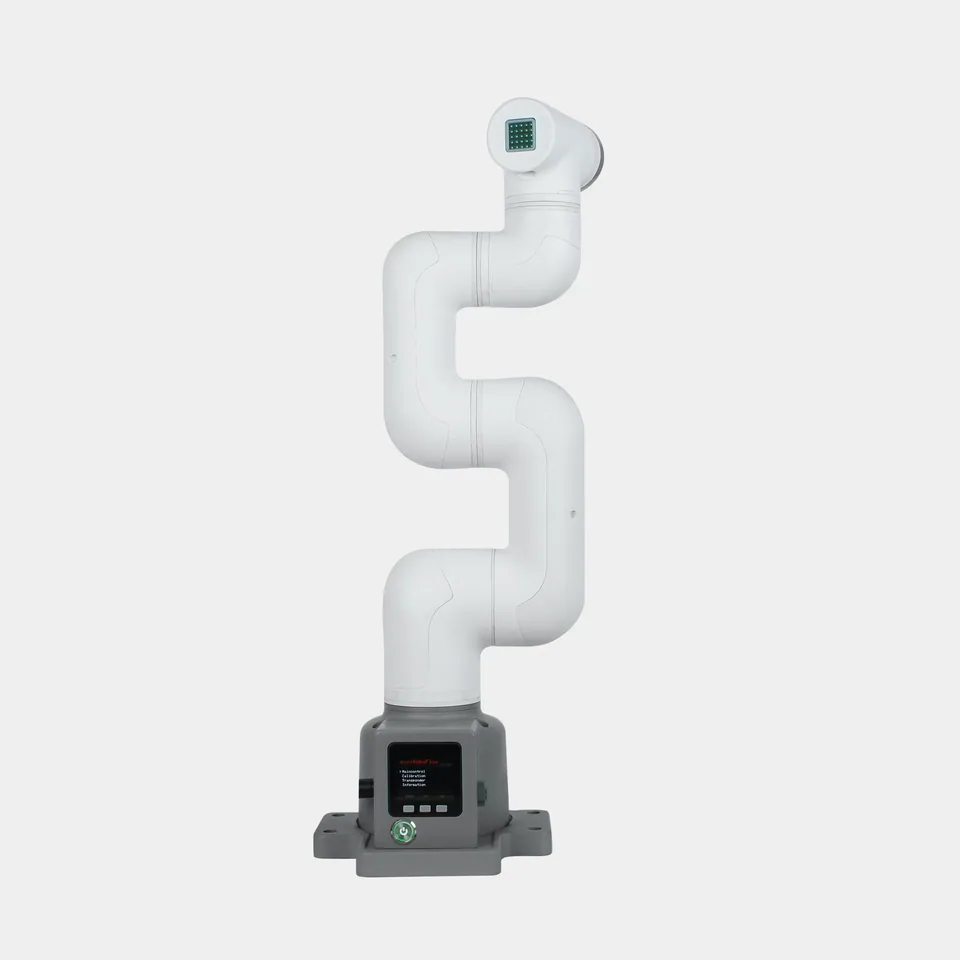
Dobot Magician
- 3.4 kgweight
- 4 DOFdegrees of freedom
- —price
 on sale
 on sale
Clearpath Robotics (Rockwell Automation)
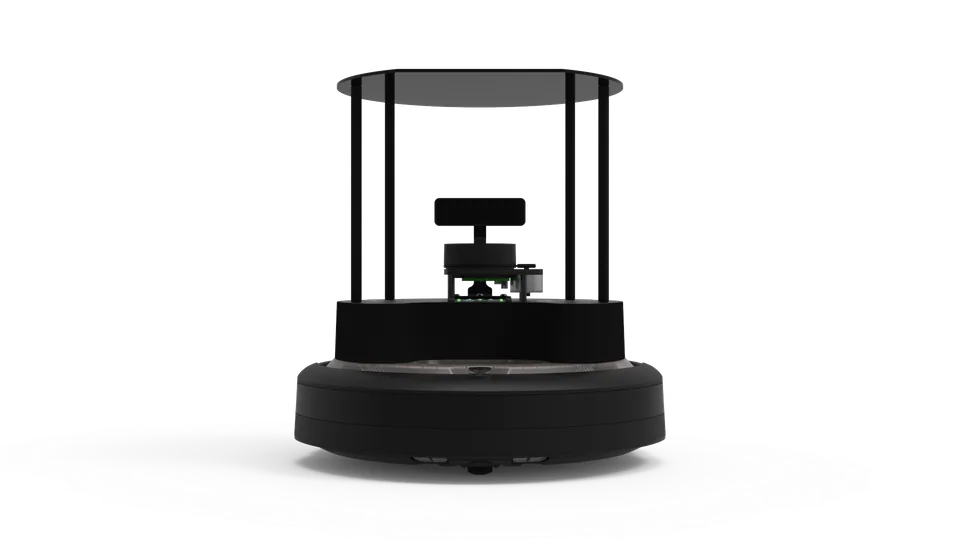
TurtleBot 4 (Standard)
- 35.1 cmheight
- 3.9 kgweight
- 13,000*price (PLN)
 on sale
 on sale
History
The OP3 went on sale in January 2018 as the successor to the OP2 and was built from the start as an open research platform. Its maker, ROBOTIS (Seoul, 1999), earned its standing through the Dynamixel servos, which also power many other people's designs, and its platforms, including the TurtleBot3, are well known in the ROS community. It is worth comparing with the NAO, which has an even longer history in education. The OP3 has been used in RoboCup competitions for years, which follows from its purpose.
Model unveiled
Sales start
Sources
Frequently asked questions
Is the ROBOTIS OP3 available in Poland?
No. The manufacturer ROBOTIS (South Korea) names no Polish shop or official distributor for the ROBOTIS OP3; enquiries go through the manufacturer's website (robotis.com). Confirm service in Poland before buying.
Since when has the ROBOTIS OP3 been on sale?
Since January 2018, as the successor to the OP2.
Can the OP3 be bought in Poland?
Yes, indirectly: the French distributor generationrobots.com ships orders to the Polish market.
What is the OP3 used for?
Mainly research and robotics education, including RoboCup competitions and university courses; the official software runs on ROS1 (Kinetic/Melodic), not ROS2.
Author, source and licence of the photo are given in the caption. Shop links may become affiliate links in future, details: How we make money · How we check