research platform
Pros
- Gait and grasping control based on reinforcement learning
- Team from Tsinghua University and the Chinese Academy of Sciences
- Orders for N1 and N2 above 2,000 units (over 100 million RMB)
- Silver medal in the Yizhuang humanoid half marathon
Cons
- No data on height, weight or degrees of freedom
- Unit price not disclosed
- No Polish distributor or service
- No datasheet on the level of Unitree
Key facts
- Statuson sale
- Availability in Polandnot confirmed
- VerdictA brand worth watching, but without specs and price it is a market signal today, not a buying recommendation.
Summary
- ManufacturerSongyan Power (Beijing) Technology Co., Ltd. / Noetix Robotics
- CategoryHumanoid robots
- Statuson sale
- Availability in PolandNo confirmed distributor in Poland
The Songyan N1 is a bipedal humanoid robot from Beijing-based Songyan Power (which also operates as Songyan Dynamics and Noetix Robotics), founded in September 2023 by a team with roots in Tsinghua University and the Chinese Academy of Sciences.
Walking and grasping are controlled with deep reinforcement learning: training happens first in simulation, then in a sim-to-sim transfer, and only at the end in the real world. The company runs two product lines: the bipedal N1 and N2 humanoids and training platforms for simulation.
Reported orders for both models combined exceeded 2,000 units, with a contract value of more than RMB 100 million, but the unit price of the N1 alone has not been disclosed. The available materials do not allow us to confirm basic parameters: height, mass or degrees of freedom. The company also won a silver medal in the humanoid half marathon in Yizhuang with its compact model, "Hedgehog".
Compared with Unitree, which publishes a full specification and an open SDK, Songyan remains less transparent technically, despite a comparable scale of industrial orders. The robot is not offered in Poland.
Specs
Data checked: · Sources: 1
Electronics and AI
- Drive
- electric (bipedal)
- AI stack
- Deep reinforcement learning (simulation training → sim-to-sim → real world)
Price and availability in Poland
no data
Running and deployment costs
We found no price for the N1. All we know is the combined value of orders for the N1 and N2 (more than RMB 100 million across more than 2,000 units), from which a unit price cannot be derived, because the split between the models is unknown. The only price indication concerns the sister N2: USD 5,500-8,400 according to sources, or PLN 21,319 (≈ EUR 4,890 at NBP rate 4.3641 of 21 October 2026) at the lower bound. As a rough guess, the N1 sits in the same "cheap Chinese humanoid" segment, but that is an order of magnitude, not an offer.
On top of the price, add import from outside the EU (customs duty and VAT), team training, batteries (swappable on the N2, about 2 hours of runtime), software and service, which does not exist in Poland. The cost structure is described in “How Much Does a Humanoid Robot Cost in 2026” and “Humanoid Robot TCO: How to Calculate Total Cost”.
Dealers in Poland
No confirmed distributor in Poland
Applications
What it's for
The Songyan N1 is a bipedal humanoid from Beijing, and its maker talks about functions rather than numbers. The material we have covers four areas it was designed for: motion control, grasping, navigation and obstacle avoidance. The foundation is deep reinforcement learning: the robot learns first in simulation, then in a sim-to-sim transfer, and only at the end steps out into the real world. This method is meant to deliver a stable gait and a confident grip without hand-programming every movement.
Uses. First, research and teaching. The N1's target group is industry and research centers, and a machine driven by policies learned in simulation appeals to a team that wants to see how policies trained in a simulator behave on real hardware.
Second, demonstrations and education. The sister model, the N2, won a silver medal in the humanoid half marathon in Yizhuang (April 19, 2025), which shows that the company invests in speed and gait stability; such appearances build the brand and serve as a reference point for event organizers. Renting a robot for events is covered in “Renting a Humanoid Robot for an Event”.
Third, industrial pilots. The company reports orders for the N1 and N2 combined exceeding 2,000 units, worth more than RMB 100 million, but it does not split them by model and does not name customers, so we don't know what exactly the N1 units were used for.
The most important caveat: we have not confirmed the N1's basic parameters (height, mass, degrees of freedom, payload) in the sources checked. So we do not describe real capabilities or promise applications; we show a direction. The sister Noetix N2 has concrete data. The category is organized under “Humanoid robots”, and university scenarios under “Universities and research” and laboratories.
Typical applications
Who it's for
The N1 is not yet a ready recommendation for anyone: the data is too sparse. Those who might look at it first are research teams and integrators seeking Chinese platforms built on reinforcement learning, ready to write to the manufacturer and demand a data sheet, a price and service terms. It is also a proposition for people tracking how quickly the Chinese market is scaling; orders in the thousands of units are impressive.
It is not for you if: you want to compare prices and parameters, because there are none; you are looking for hardware with a Polish distributor, warranty and service, because the robot is not offered in Poland; you require an open SDK with full documentation of the kind Unitree publishes (see Unitree G1); or you need an industrial application with confirmed compliance with standards (“Robot Safety Standards”). Before ordering anything, learn to read manufacturer data: “How to Read a Robot Datasheet”.
Deployments
Worldwide, the company reports orders for the N1 and N2 combined of more than 2,000 units, without naming customers or locations. In the category of humanoids sold to research and education customers, the documented models are the Unitree G1 and Unitree R1. Polish robotics centers and companies are covered in “Polish Robotics Companies”. Before you start purchase talks, ask for a list of references and check whether the data relates to the N1 or the sister N2.
Comparison
The closest alternative is the Noetix N2 from the same manufacturer: it comes in at 30 kg, 18 DOF, up to 3.5 m/s, about 5 kg of payload and a price equivalent to roughly PLN 21,300 (≈ EUR 4,880) (USD 5,500-8,400 according to sources), a fuller data sheet than the N1. If you want a cheap learning platform, look at the Unitree R1 (about PLN 19,000 (≈ EUR 4,350)). For more serious experiments with gait and grasping, the Unitree G1 (about PLN 52,300 (≈ EUR 11,980), 23 DOF, 2 kg payload) is suitable, and for more ambitious research projects, the LimX Oli (about PLN 84,500 (≈ EUR 19,360), 31 DOF). Those who want to get to know another cheap Chinese design will find the EngineAI PM01 (about PLN 46,514 (≈ EUR 10,660), 24 DOF). For comparison: none of these models has orders on Songyan's scale, but each has a public parameter sheet, which is worth more to a buyer than a number of orders.
Similar models
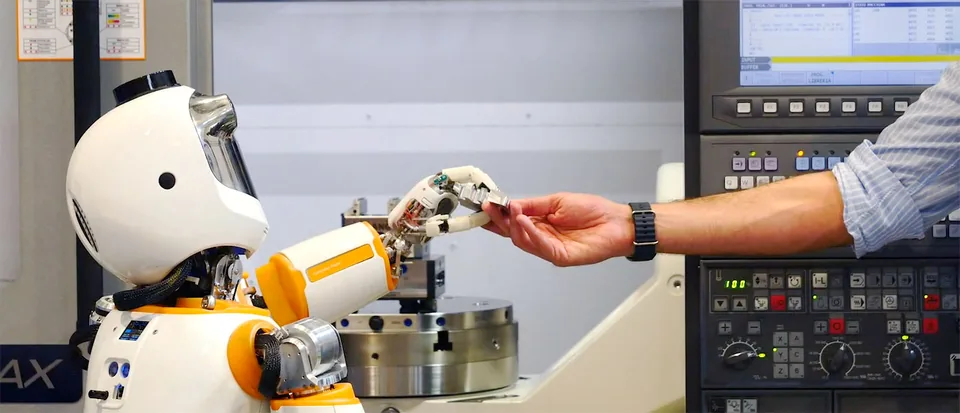 prototype
- prototype
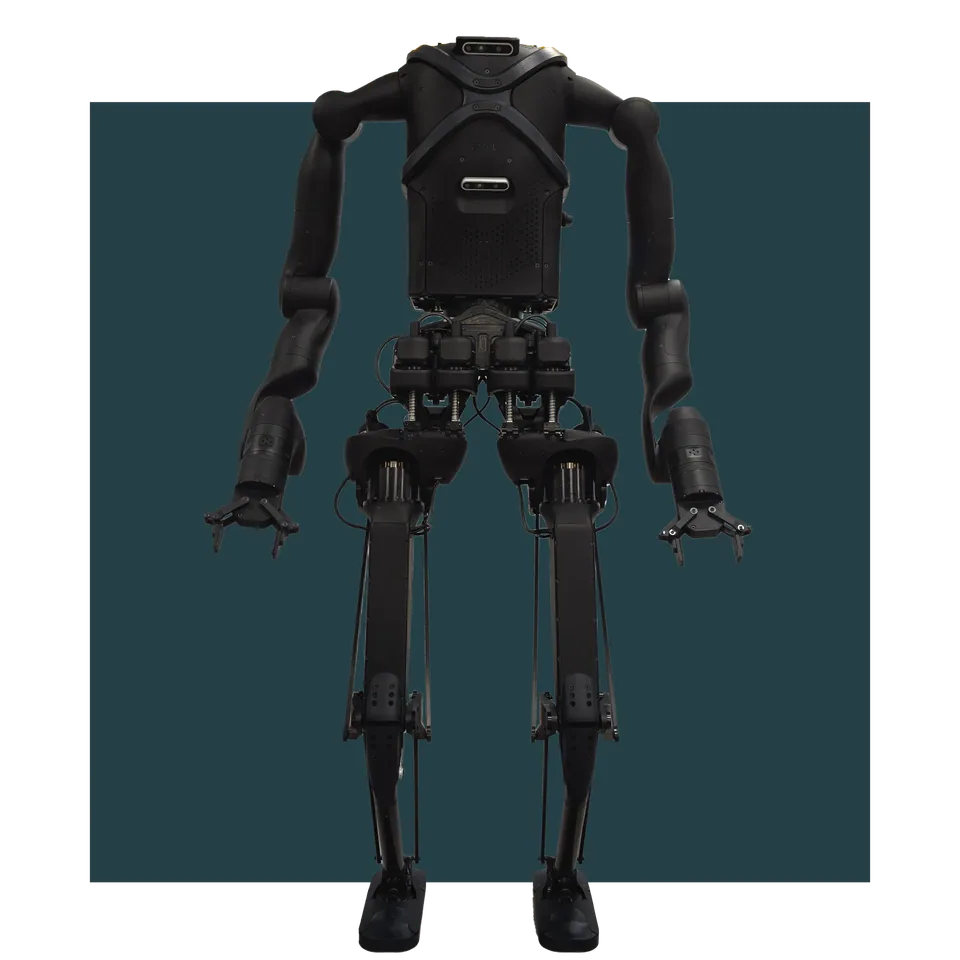 prototype
- on sale
- on sale
History
Songyan Power (also operating as Songyan Dynamics and Noetix Robotics) was founded in September 2023 in Beijing by a team with roots in Tsinghua University and the Chinese Academy of Sciences. Its biggest publicity success remains the silver medal in the humanoid half marathon in Yizhuang (April 19, 2025), won by the N2, not the N1. No launch date is given for the N1 itself. You will find the manufacturer's profile at Songyan Power Technology.
Sources
Frequently asked questions
Is the Songyan N1 available in Poland?
No. The manufacturer Songyan Power (China) names no Polish shop or official distributor for the Songyan N1; enquiries go through the manufacturer's website (en.noetixrobotics.com). Confirm service in Poland before buying.
How much does the Songyan N1 cost?
The manufacturer gives no unit price; all that is known is a combined contract for the N1 and N2 models worth more than RMB 100 million.
How does the Songyan N1 learn to walk?
Through deep reinforcement learning: training starts in simulation, passes through a sim-to-sim stage, and finishes with fine-tuning in the real world.
Are the Songyan N1's dimensions and mass known?
No. The available sources contain no verified data on this model's height, weight or degrees of freedom.
Author, source and licence of the photo are given in the caption. Shop links may become affiliate links in future, details: How we make money · How we check