on sale
ROBOTERA (Beijing Xingdong Jiyuan Corporation)
ROBOTERA M7
- 79 cmheight
- 65 kgweight
- 271,300*price (PLN)
The L7, unveiled in July 2025, is the second full-size bipedal robot from Beijing-based RobotEra and the company's flagship, faster and more agile than the earlier Star1. At 171 cm tall and 65 kg it offers 55 degrees of freedom, including 12 in the XHAND1 hands, driven by fully direct-drive motors with torque of up to 400 N·m at a speed of 25 rad/s. It moves at up to 4 m/s, matching the pace of the Star1, and lifts as much as 20 kg, a result that stands out against, for example, a 35 kg humanoid (almost half the mass of the L7) with a payload of around 2-3 kg, so the comparison involves machines of clearly different weight rather than similar ones.
Despite open pre-sales, RobotEra has not disclosed the price of the L7, which makes a real cost comparison with Chinese and American competitors difficult. The company is backed by Tsinghua University, reportedly the only university holding a stake in the humanoid's maker, an unusual academic-business tie in this industry.
The L7's strength is the combination of high speed and high payload, rare among competitors; its weakness is the lack of a public price and the limited number of independent tests beyond the manufacturer's materials. The model is not available in Poland, with no distributor announced. It suits research centers and industrial integrators tracking the Chinese humanoid market, not an "off the shelf" purchase.
Data checked: · Sources: 3
Data from manufacturer datasheets and product pages; median over the models of this category in the database.
no data
The L7's price is not public: the manufacturer ran pre-sales but did not disclose the amount, so we will give it neither in zlotys nor in dollars. What we can show are reference points from our catalog: the full-size Unitree H1 costs about PLN 349 thousand (≈ EUR 79,970 at NBP rate 4.3641 of 21 October 2026), and the market for research humanoids with rich hands usually lands in the hundreds of thousands of zlotys (as a rough estimate; an order of magnitude, not an offer for the L7).
Beyond the purchase itself, count on: shipping and customs duty on imports from China, team training, software and licenses, service without local support, batteries and spare parts, and securing the workstation (fencing, risk assessments). As a rough estimate, the first year of operation can add from ten-odd to a few dozen percent of the hardware price; we work out the details in “Humanoid Robot TCO: How to Calculate Total Cost” and “How Much Does a Humanoid Robot Cost in 2026”.
No confirmed distributor in Poland
The RobotEra L7 was designed for work where speed and strength both count. The manufacturer quotes a 4 m/s walking speed and a 20 kg payload, a combination you do not see in most humanoids of similar mass (65 kg at 171 cm tall). Below are scenarios derived from those parameters; they are not descriptions of confirmed deployments.
In industry the most obvious use is internal transport: a robot that carries 20 kg and moves at a brisk walking pace could in theory move crates weighing a dozen or so kilograms between workstations. The XHAND1 hands (our catalog lists 12 degrees of freedom in the hand) give a chance of grasping objects other than even cartons: containers, tools, single parts.
The second area is laboratories and research centers, and here the manufacturer directly names its audience: industry and research. 55 degrees of freedom (DOF) make a rich platform for training whole-body control models, grasping tests and imitation learning. A university team gets a machine on which both gait and manipulation can be studied without assembling a robot from parts.
The third scenario is pilots at integrators. Our catalog mentions "pilot projects", but without customer names, so we treat it as a signal of direction, not a reference.
What the L7 is not suited for: the home, the office or a store. There is no price, distributor or service in Poland, and the materials come mainly from the manufacturer and trade outlets. If you are looking for a robot to work tomorrow, look instead at Unitree G1 or EngineAI PM01; if the whole category interests you, start with humanoid robots and the article “Humanoid Robots in Factories 2026”. We cover shop-floor applications more broadly in factories, and research ones in universities.
The L7 is for those who follow the Chinese humanoid market closely and have the budget and patience for a machine with no public price list. It suits research centers, robotics labs and industrial integrators who want to compare how a new generation of Beijing designs handles payload and speed. It also fits the plans of a team developing its own control software that needs hardware with rich kinematics (55 DOF).
It is not for you if: you need an offer with a price, a delivery date and an invoice from a Polish distributor, since none exists; you are looking for a robot to work around people without your own health-and-safety department and risk assessment (a humanoid with a 20 kg payload is a serious machine, see “Robot Safety Standards”); you want to buy "off the shelf", because the L7 is in pre-sales; and finally, if you count on independent tests, since there are few beyond the manufacturer's materials. For beginners in robotics we suggest first “How to Read a Robot Datasheet” and a cheaper educational platform from educational robots.
The L7 has no distributor or official offer here. Worldwide, the manufacturer speaks of "pilot projects" run in parallel with pre-sales, but without customer names, locations or results, so we do not treat that as a reference. In this category, pilots are documented: humanoids with a similar purpose work in logistics and manufacturing pilots, for example Agility Digit 5 (22.7 kg payload, status: pilot) and Figure 03. Polish realities are described in “Humanoid Robots in Factories 2026”. If references matter to you, ask the manufacturer for the names of pilot customers and measurement results; only then can you judge whether a 20 kg payload works outside a demo.
If the L7 is out of reach, there are several paths worth considering. Unitree G1 is on sale, has a price of around PLN 52 thousand (≈ EUR 11,920) for the base version in our catalog and an open specification; it is the simplest way to start working with a humanoid, although its payload (2 kg) is many times smaller than the L7's. EngineAI PM01 (about PLN 46.5 thousand (≈ EUR 10,660), 24 DOF) is a cheaper research platform, good for learning gait and control. Unitree H1 costs about PLN 349 thousand (≈ EUR 79,970) in our catalog and is a larger, full-size design, so it is the closest comparison with the L7 in class. Fourier GR-2 has 53 DOF and is on sale to business and research customers, and its big plus is its presence in the enterprise market. Finally, Figure 03: a 20 kg payload like the L7 and 35 DOF, aimed at fleet work in industry. We collect comparisons of these machines in “Unitree H1, G1, R1 and H2”.
ROBOTERA (Beijing Xingdong Jiyuan Corporation)
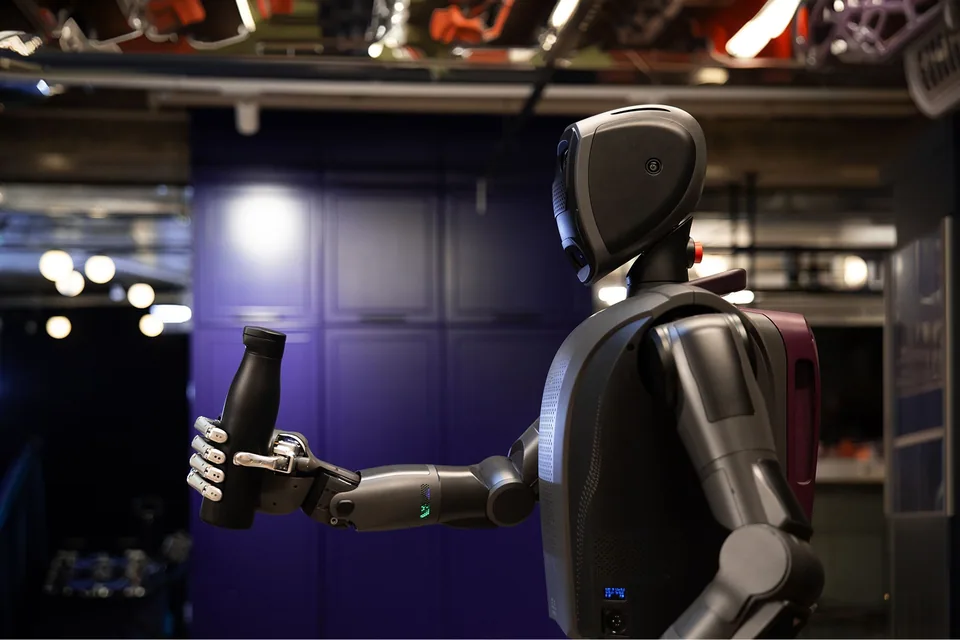

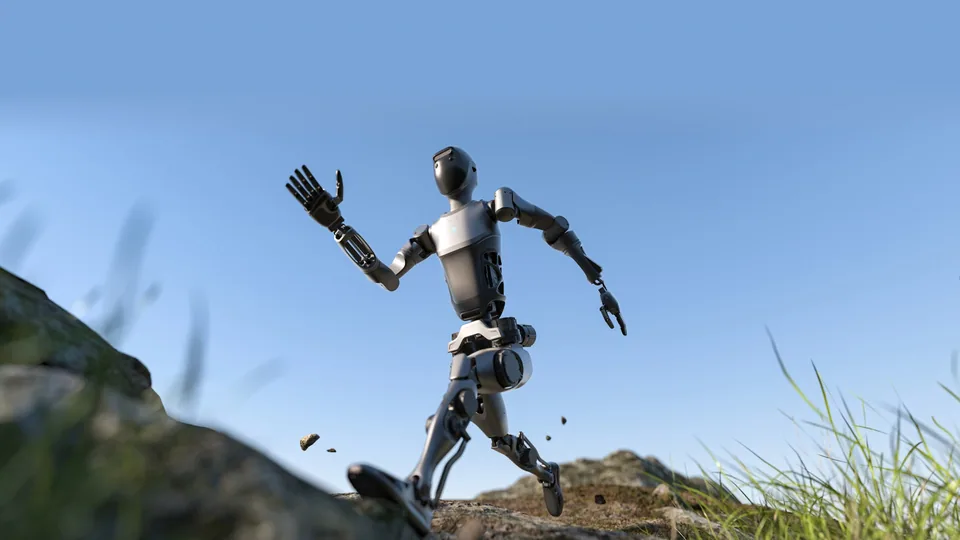
RobotEra is a Beijing company founded in 2023. Its first full-size bipedal robot was the Star1, and in July 2025 the company unveiled the L7, the second such model and the brand's flagship, described as faster and more agile than its predecessor. The 4 m/s speed matches the Star1's pace, while what is new are the XHAND1 hands and motors with torque of up to 400 N·m. A business curiosity is Tsinghua University's stake in the company: according to our catalog, it is the only university holding a stake in this type of humanoid maker. In 2026 the company also appeared at the WAIC trade show. You will find the brand profile at ROBOTERA, and how such machines work in the article “How Does a Humanoid Robot Work”.
Model unveiled
RobotEra unveils L7, a faster second-generation humanoid ROBOTERA (Beijing Xingdong Jiyuan Corporation)
Not through a Polish seller. The RobotEra L7 is on pre-order with the manufacturer (China); we have not confirmed a Polish distributor.
Up to 20 kg, which sets it apart from competing humanoids of similar weight.
The manufacturer has not given a price despite open pre-sales.
The L7 is newer, faster in manipulation and has a higher payload, although both models reach a similar walking speed.
Author, source and licence of the photo are given in the caption. Shop links may become affiliate links in future, details: How we make money · How we check