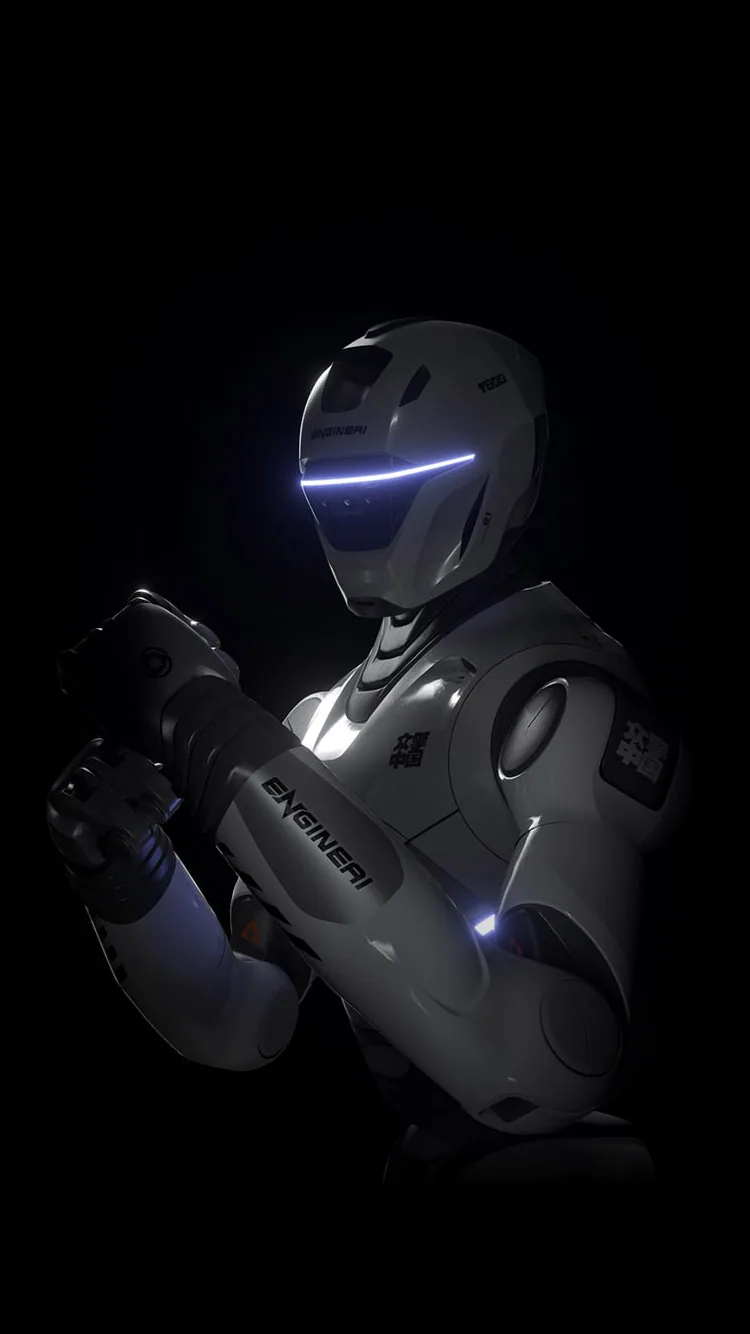
on sale
EngineAI Robotics (Shenzhen EngineAI Robotics Technology Co.)
EngineAI T800
- 173 cmheight
- 29 DOFdegrees of freedom
- 157,000*price (PLN)
Data from manufacturer datasheets and product pages; median over the models of this category in the database.
Price from
The Chinese manufacturer Leju Robotics reports in its IPO prospectus a marked decline in the average selling price of its Kuavo-5 humanoid, from about CNY 413,900 in 2024 to about CNY 308,100 (roughly $45,500) in 2025. It is one of the few cases in the humanoid segment where a price decline is documented in an official financial filing rather than a marketing claim.
The software is based on KaihongOS, a system derived from Huawei's HarmonyOS, an unusual choice compared with competitors that rely mainly on Linux or their own stacks. Set against other Chinese humanoids such as the Unitree G1 or Fourier GR-1 (outside our catalog), the Kuavo-5 stands out for an openly falling market price, which suggests competitive pressure in the segment rather than premium positioning.
The robot is not available in Poland or in Europe; the manufacturer concentrates on the Chinese market, with an assembly plant in Foshan. For a European integrator this means, for now, only watching the market, not a real purchasing option.
Data checked: · Sources: 3
Average selling price per Leju's IPO prospectus fell from about CNY 413,900 (2024) to about CNY 308,100 (2025, roughly $45,500). Two height and weight variants are available: 150 cm / 50 kg and 168 cm / 55 kg (the larger variant is listed).
Our listing uses a price of $38,000 (about PLN 147,300 (≈ EUR 33,690) at the October 1, 2026 exchange rate of 3.8762), taken from a third-party aggregator and robottesters.com. The IPO prospectus gives an average selling price of about CNY 308,100 in 2025 (about $45,500), so actual transaction prices may be higher than the list price. Two variants are available: 150 cm / 50 kg and 168 cm / 55 kg.
On top of the purchase price, budget roughly 23% VAT, transport and possible customs duty; the lack of a local distributor means importing on your own, so CE conformity and machinery documentation have to be arranged yourself. Service and training costs are unknown: the manufacturer does not publish them, and for comparable research platforms a few to a dozen or so percent of the price per year for service and parts is a rough assumption, only an order of magnitude.
No confirmed distributor in Poland
The Kuavo-5 is a Chinese humanoid with one trait that is rare in this industry: we know its price from a financial document. According to the IPO prospectus of its maker, Leju Robotics, the average selling price fell from about CNY 413,900 in 2024 to about CNY 308,100 in 2025 (roughly $45,500). That is a signal that the robot is actually reaching customers, and not only the stage at trade fairs.
The manufacturer lists industry, automation and home services. In industry, 40 degrees of freedom (DOF) and a stereoscopic depth camera make it possible to program the robot for simple transport operations: carrying light containers or tending an inspection station. A six-microphone array and LiDAR add the senses it needs to move among people and respond to voice. In teaching and research, the Kuavo-5 serves as a platform for imitation learning: an operator demonstrates a movement and the robot learns to reproduce it; the software is based on KaihongOS, a system derived from HarmonyOS.
In practice, for now, the Kuavo-5 is more a robot for R&D teams and technology demonstrations than a line operator. Its status in our listing is “prototype,” and a third-party aggregator also labels it a Prototype. We therefore treat industrial scenarios as a direction, not a confirmed capability. The sources give no data on payload, walking speed or battery life, so there is no way to judge whether it would last a working shift. At 55 kg it is not a heavy machine: for the safety of people around it that is an advantage, for carrying loads a limitation.
A closer look at applications on factory floors is in the article “Humanoid Robots in Factories 2026”, and for education see the pages “Schools” and universities.
The Kuavo-5 is for laboratories and technology companies that follow the Chinese humanoid market and want a physical unit for testing algorithms, especially imitation learning. It will interest teams that want to try the software based on KaihongOS, rare in this industry, instead of the usual Linux.
It is not a robot for plants that need a confirmed payload, run time and service. The manufacturer concentrates on the Chinese market, the robot is not officially available in Poland or in Europe, and the sources contain no data on run time or payload. We also do not recommend it as a “robot for the home”: although home services appear among its applications, there is no evidence the product is ready for use in dwellings, and a price in the range of $38,000-45,000 rules it out of the consumer market.
The IPO prospectus speaks of sales but does not say who buys the Kuavo-5 or for what tasks, so we cannot name customers. Wider background on the Chinese humanoid market is in the article “Chinese Humanoid Robots”, and better-documented deployments in the category are Agility Digit in warehouses (“Agility Digit in Warehouses”) and Apptronik Apollo with Mercedes (“Apptronik Apollo in Mercedes-Benz Factories”).
The Unitree H2 is 180 cm tall with 31 DOF, priced at $29,900 (about PLN 115,900 (≈ EUR 26,510)), and it is actually on sale. The Booster T1 costs about $33,949 (about PLN 131,600 (≈ EUR 30,100)); it is a shorter, 118 cm robot with 23 degrees of freedom, meant for programming and competitions rather than human-scale work. The AgiBot A2 at about $54,999 (about PLN 213,200 (≈ EUR 48,770)) offers 169 cm and 40 DOF, the specification closest to the Kuavo-5 but at a higher price. The Fourier GR-3 has 55 DOF, but its price is undisclosed. The RobotEra L7 (171 cm, 55 DOF, 20 kg payload) is available for pre-order. If price is your priority, choose Unitree; if you want human height and more degrees of freedom, look at Fourier and AgiBot.
EngineAI Robotics (Shenzhen EngineAI Robotics Technology Co.)
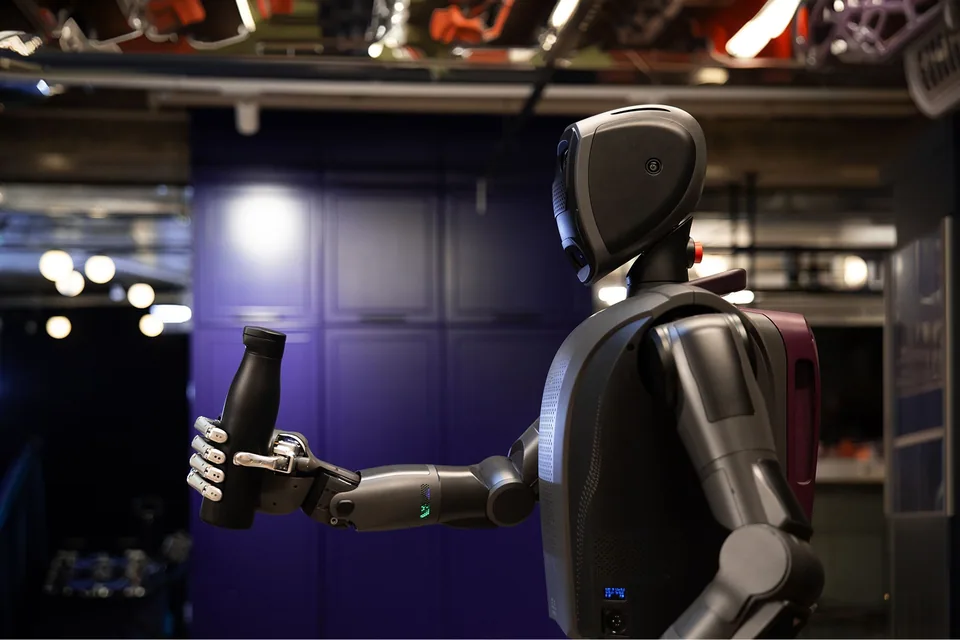
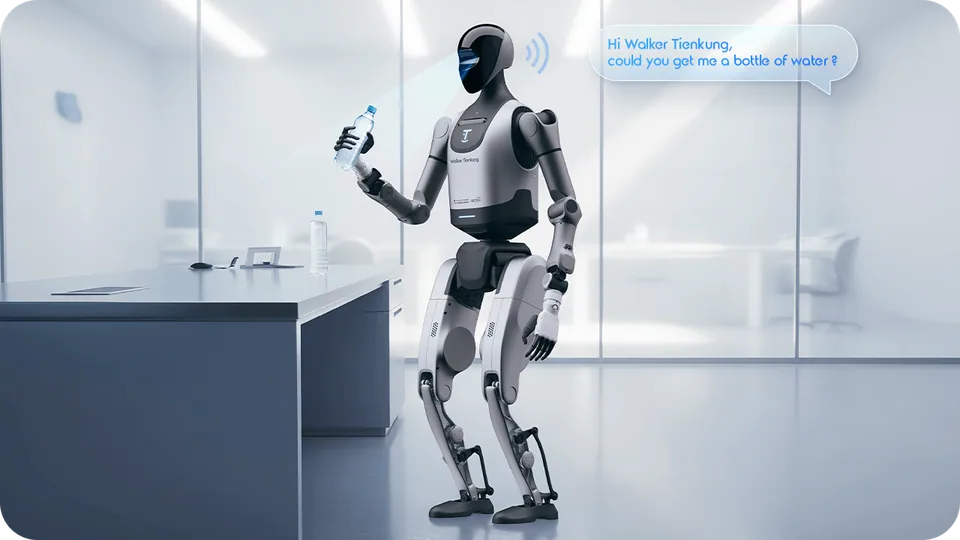

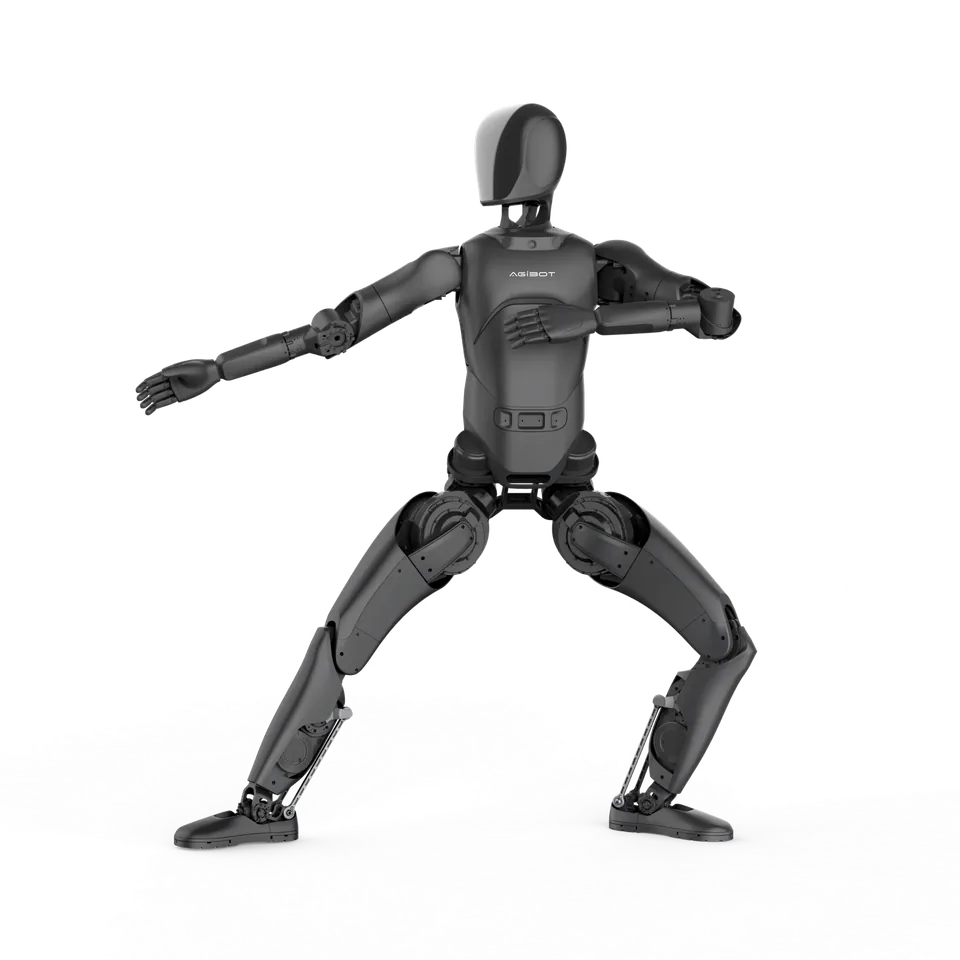
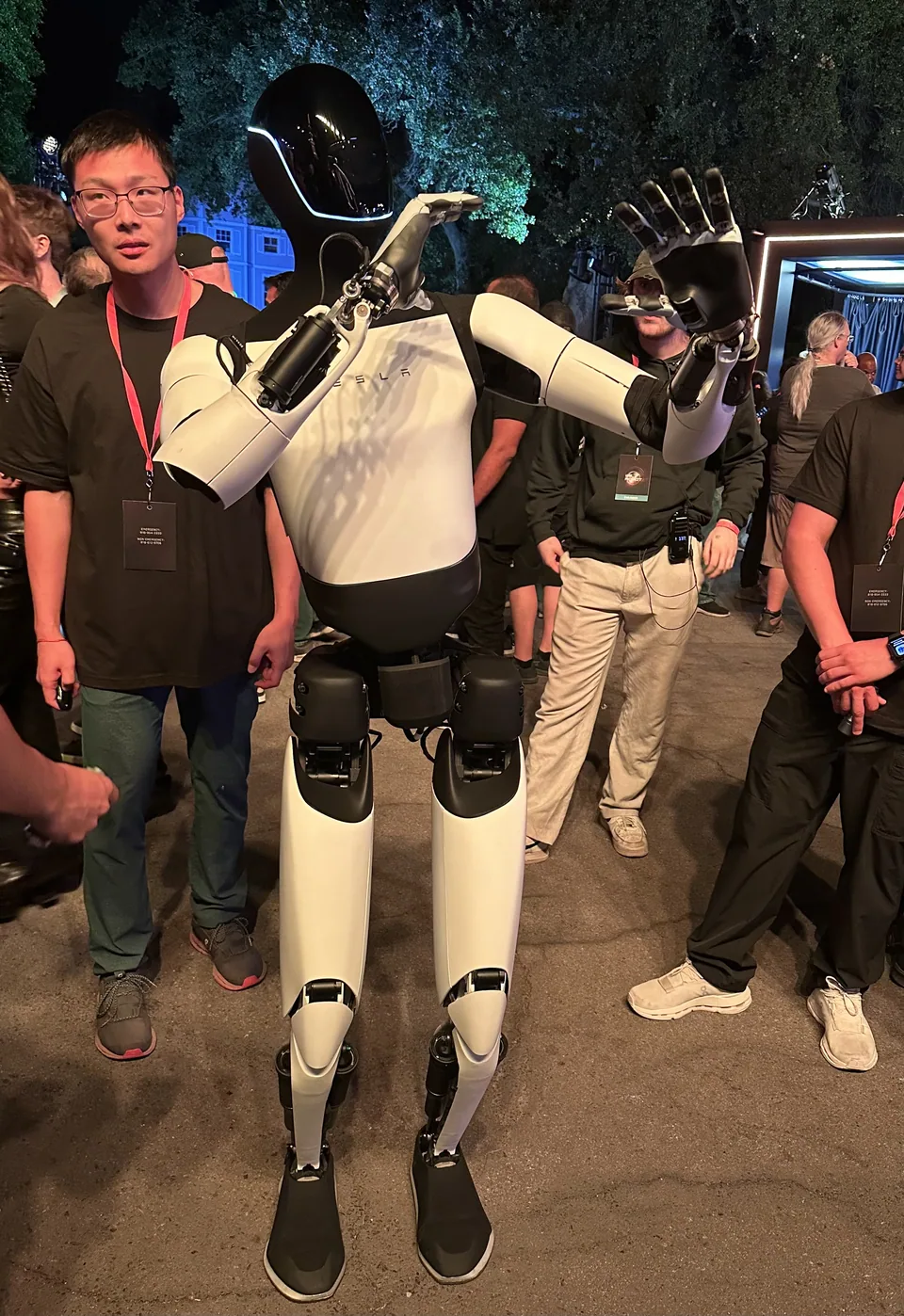
Leju Robotics operates in China, and its production is located in Foshan, in cooperation with Dongfang Precision. Our catalog on the manufacturer mention an assembly line with a throughput of about one humanoid every 30 minutes and a target of 10,000 units a year. These are claims, not verified results. The most important documented moment in the Kuavo-5's history is the IPO prospectus, which shows the average price falling from CNY 413,900 (2024) to CNY 308,100 (2025). The sources give no launch dates for individual generations, so we do not state any. According to a third-party aggregator, the robot is 168 cm tall with 40 DOF.
According to the manufacturer's IPO prospectus, the average selling price fell to about $45,500 (about PLN 176,367 (≈ EUR 40,340)) in 2025, from the equivalent of about $57,000 a year earlier.
It stands 168 cm tall, weighs 55 kg and has 40 degrees of freedom (a 150 cm / 50 kg variant is also available).
No, the available sources indicate it is not available in Poland; the manufacturer concentrates on the Chinese market.
Shop links may become affiliate links in future, details: How we make money · How we check