on sale
Humanoid robotspilot
Boston Dynamics Atlas (Hyundai factory deployment, Korea/USA)
Price from
no public price
No confirmed distributor in Poland
Pros
- Production-intent version, not just a demo
- 56 degrees of freedom, 4 hours runtime
- 30 kg continuous payload, up to 55 kg occasionally
- Plant planned for 30,000 units a year from 2028
Cons
- No price, sold only through fleet contracts
- No independent test results
- First deployments only at Hyundai and DeepMind
- 190cmHeight
- 30kgPayload
- 56DOFDegrees of freedom
- 4hRuntime
Key facts
- Specificationsheight 190 cm · payload 30 kg · degrees of freedom 56 DOF
- Statuspilot
- Availability in Polandnot confirmed
- VerdictFor large automakers as a market signal; it cannot be bought.
Summary
- ManufacturerHyundai Motor Group / Boston Dynamics (Atlas, deployment in Korea)
- CategoryHumanoid robots
- Statuspilot
- Availability in PolandNo confirmed distributor in Poland
Where the previous generation of Atlas was a showcase of what is possible, this version is meant to reach factory floors. Boston Dynamics, controlled by Hyundai Motor Group, describes the robot as "production-intent" - built for deployment, not just demonstration.
The specs match the electric version (190 cm height, 56 degrees of freedom, 4 hours of work with a fast battery swap), but payload is stated differently: 30 kg for continuous work and up to 55 kg occasionally.
First customer deployments are planned for 2026 at the Robotics Metaplant Application Center and in Google DeepMind's labs, and Hyundai has announced a dedicated factory near Savannah in the USA with a target capacity of 30,000 units a year from 2028, tied to USD 87 billion of Korean investment in robotics.
Against Chinese rivals in the Asian segment (Unitree, UBTech), Atlas stands out for its degrees of freedom and the scale of planned production, but it remains an American-Korean project, not a purely Asian one. There is no consumer price - this is an industrial robot sold only under fleet contracts.
It suits large automotive manufacturers considering automating assembly lines over a horizon of several years, not smaller integrators.
- The Humanoid Mission in Manufacturing | Boston Dynamics Tech TalkBoston Dynamics · Load in the player above
- Atlas Airborne | Boston Dynamics & RAI InstituteBoston Dynamics · Load in the player above
Photo gallery
-
Photo: Hyundai Motor Group / Boston Dynamics, product page (bostondynamics.com) -
Photo: Damian B Oh, Wikimedia Commons, CC BY-SA 4.0; resized and converted to WebP -
Photo: Damian B Oh, Wikimedia Commons, CC BY-SA 4.0; resized and converted to WebP
Specs
Data from manufacturer datasheets and product pages; median over the models of this category in the database.
-
Height190 cm+12% vs. the category median (169 cm, n=220)
-
Degrees of freedom56+90% vs. the category median (29.5, n=200)
-
Payload30 kg+329% vs. the category median (7 kg, n=166)
-
Runtime4 hin line with the category median (4 h, n=135)
- category medianA higher value doesn't always mean a better robot; it depends on the application.
Dimensions and weight
- Height
- 190 cm
Motion and manipulation
- Degrees of freedom
- 56
- Payload
- 30 kg
Power
- Runtime
- 4 h
Electronics and AI
- Drive
- electric
Price and availability in Poland
no data
Running and deployment costs
No source gives a price: the robot is offered under fleet contracts, without a price list. The only financial figure the sources cite concerns the scale of the strategy - USD 87 billion of Korean investment in robotics tied to the factory near Savannah - not the cost of a single unit. It must not be converted into a per-unit price. As a rough order of magnitude only: "serious" humanoids available today cost from a few tens of thousands of dollars (Unitree H2: USD 29,900) to over USD 100,000 (Unitree H1: USD 90,000; NEURA 4NE-1 Gen 3.5: about USD 105,000). The factory version of Atlas will probably cost more than the cheap Chinese models, but until Hyundai publishes numbers, that is a hypothesis, not a forecast. Operating costs to plan for in any pilot: integration with MES/WMS, spare batteries and swap stations, service, insurance and crew training. The method for calculating total cost is shown in “Humanoid Robot TCO: How to Calculate Total Cost”.
Dealers in Poland
No confirmed distributor in Poland
Applications
What it's for
This catalog entry describes less a new robot than a new way of using one: the production Atlas, prepared to work in the factories of the Hyundai group. Boston Dynamics - controlled by Hyundai Motor Group - calls it "production-intent", meaning designed for deployment rather than for show. The difference is visible in the tasks: the manufacturer lists part sequencing, machine tending and order fulfillment - three classic "gaps" in factory automation, where a person has so far walked around with a cart, loaded a machine tool or gathered a kit of parts for assembly. Look at it from the perspective of factories. A car assembly line is automated where motion repeats: welding, painting, moving bodies. Between those stages, though, there is a lot of "in-between" work that cannot easily be fenced into an industrial robot's cage, because the layout is a little different every time. A humanoid 190 cm tall, with 56 degrees of freedom (DOF) and a payload of 30 kg for continuous work (up to 55 kg occasionally), is meant to move around existing halls without rebuilding the infrastructure. That is its main argument: you do not have to adapt the plant to the robot. Runtime is 4 hours per battery, with a fast swap, which in a factory running shifts means rotating packs rather than downtime for charging. The first units are scheduled for 2026 at the Hyundai Robotics Metaplant Application Center and Google DeepMind. This should not be mistaken for mass deployment - it is a stage at which processes are learned, not savings counted. The technology background (how such a robot works and why 56 DOF specifically) is explained in the article “How Does a Humanoid Robot Work”.
Typical applications
Who it's for
Best suited to: large car makers and their tier-one suppliers considering automation of in-plant logistics and machine tending over a horizon of several years. Strategy departments that must judge whether to invest in their own humanoid pilots or wait for a ready-made fleet. Market analysts, because the scale of the announced factory (30,000 units a year) is a signal for the entire supply chain (“Humanoid Robot Market Forecasts”).
Who it does not suit: smaller integrators and companies with one or two halls. The robot is sold only under fleet contracts, and there is no consumer price. Not for those who want a robot "right now" - the first deliveries beyond Hyundai and DeepMind still lie ahead. Not for those who expect confirmed, independently measured productivity results: such data simply does not exist yet. The robot's manufacturer is Hyundai Motor Group.
Deployments
First deployments planned for 2026: the Hyundai Robotics Metaplant Application Center and Google DeepMind; deployment at Hyundai's HMGMA plant is planned for 2028. There are no descriptions of completed deployments at outside customers. In the humanoids-in-factories category, other manufacturers are running pilots - we collect them in the piece “Humanoid Robots in Factories 2026”.
Comparison
The closest alternative in ambition is Tesla Optimus Gen 3 (173 cm, 20 kg payload): also a "factory as first customer" project, except that Tesla develops the robot mainly for its own needs. Figure 03 (172 cm, 20 kg) targets a working fleet and service logic - a good counterpoint to the "fleet contract" model. Apptronik Apollo (173 cm, 25 kg payload, 71 DOF) has an automotive pilot behind it, described in the article “Apptronik Apollo in Mercedes-Benz Factories”. Agility Digit 5 (22.7 kg payload) bets on warehousing and logistics - less ambitious, but closer to real processes. If you need something you can price and order for research, look at Unitree H2: USD 29,900 (about PLN 115,898 (≈ EUR 26,560 at NBP rate 4.3641 of 21 October 2026)), 180 cm tall.
Similar models
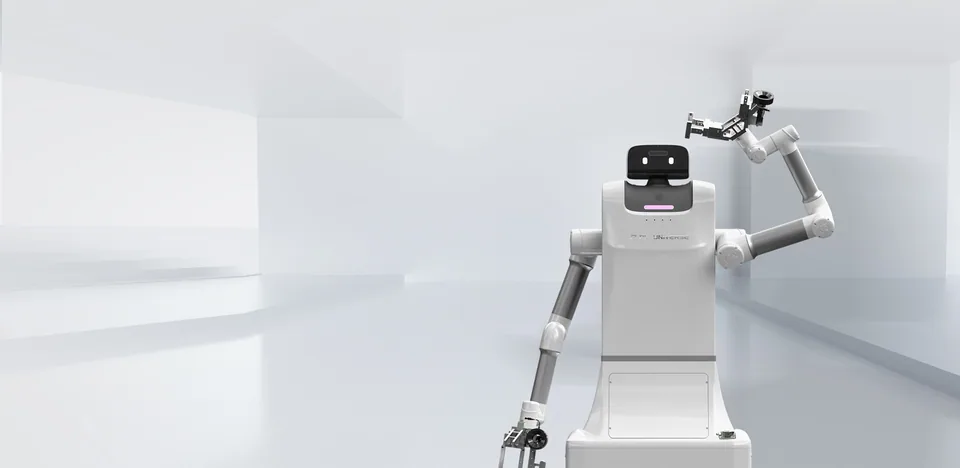 on sale
PL-Universe Robotics Technology (Suzhou) Co., Ltd. (普罗宇宙)
ProWhite Robot 2.0 (普罗宇宙大白)
- 203.5 cmheight
- 12 kgpayload
- —price
- pilot
- on sale
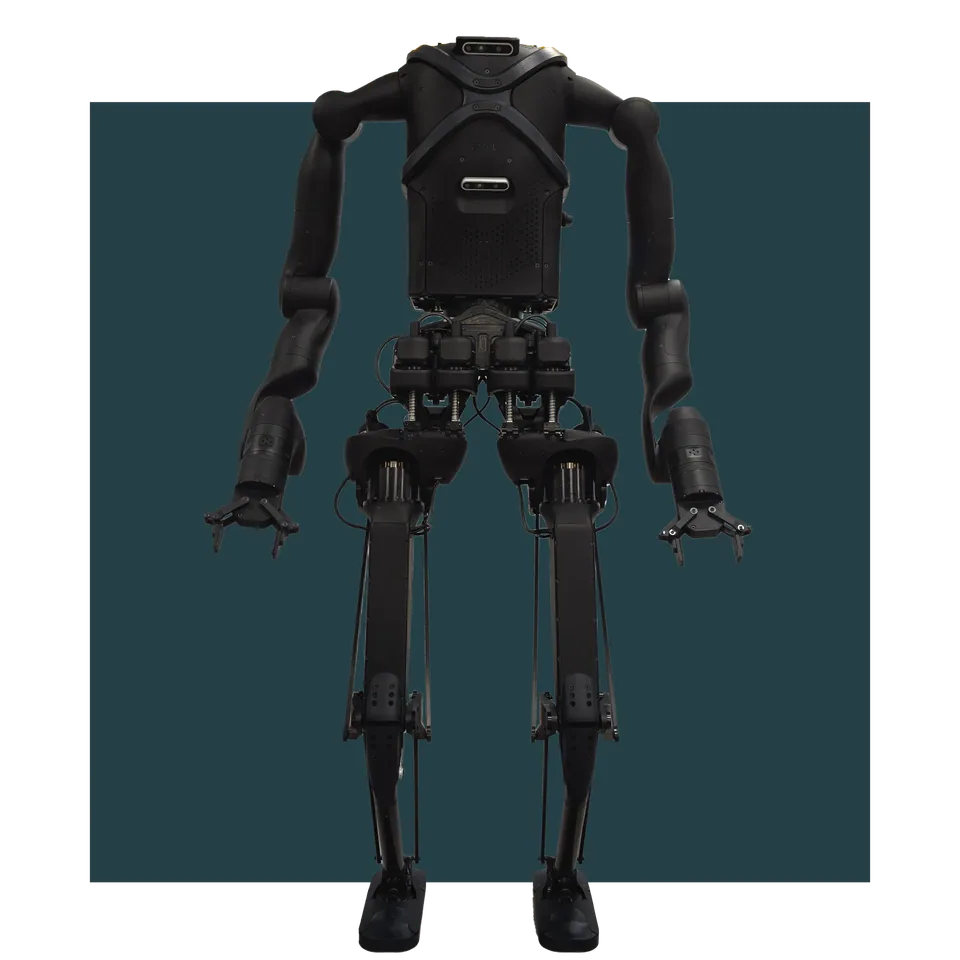
Digit Huaxia (数字华夏(深圳)科技有限公司; bei a third-party aggregator „Digit Robotics“)
Xialan S02
- 169 cmheight
- 69 kgweight
- —price
 prototype
 on sale
History
The production version was shown in 2025 and publicly announced in January 2026 (Axios report of 5 January 2026), together with a plan for a factory producing 30,000 units a year from 2028. Its predecessor is the electric Atlas of April 2024, which replaced the hydraulic machine after 11 years. In August 2026 Hyundai confirmed the production scale and the contracting of 25,000 units of the initial volume at its Investor Day, and tension over the deployment plan grew on the union side in Korea. The full timeline is at Atlas.
Model unveiled
Sources
Frequently asked questions
Is the Boston Dynamics Atlas (Hyundai factory deployment, Korea/USA) available in Poland?
Not off the shelf. The Boston Dynamics Atlas (Hyundai factory deployment, Korea/USA) runs in pilot programmes with selected customers, and there is no official seller in Poland.
Where will the first units go?
To Hyundai's Robotics Metaplant Application Center and to Google DeepMind, according to the 2026 deployment plan.
What is the planned production volume?
Hyundai has announced a factory near Savannah in the USA with a capacity of up to 30,000 units a year, starting in 2028.
What is the robot's payload?
30 kg for continuous work and up to 55 kg for occasional tasks, according to the manufacturer's data.
Author, source and licence of the photo are given in the caption. Shop links may become affiliate links in future, details: How we make money · How we check