on sale
Magiclab (Magic Atom Robotics Technology / Magiclab Robotics Technology Wuxi Co., Ltd.)
MagicBot X1
- 180 cmheight
- 70 kgweight
- —price
Price from
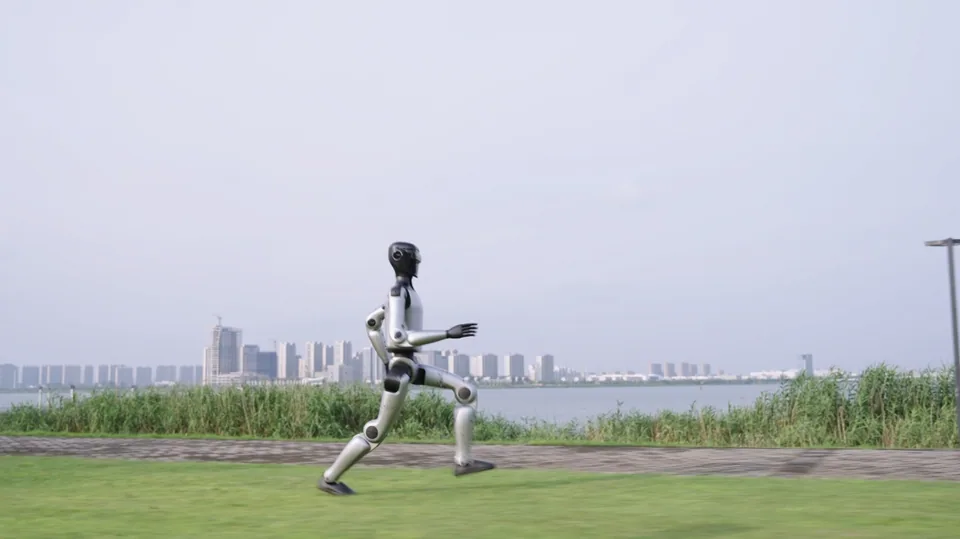
The MagicBot Gen1 is an industrial humanoid robot from Magiclab, a Chinese company based in Wuxi and founded in December 2023. It is 174 cm (5 ft 9 in) tall, weighs 70 kg (154 lb) and has 42 active degrees of freedom, including an optional gripping hand with 11 degrees of freedom and a sense of touch. Payload reaches 7.5 kg with one arm and 15 kg with both, and the 1.35 kWh battery lasts 3-5 hours of work. The robot navigates with 3D LiDAR, a depth camera, a triple camera and an omnidirectional microphone, and connectivity comes from Wi-Fi 6, Bluetooth 5.2 and an optional 5G module.
Compared with other Chinese industrial humanoids of this generation, such as the Unitree G1 or UBTech Walker S, the MagicBot Gen1 stands out for a solidly documented manufacturer datasheet, which is not the norm in this segment. The weak point is the lack of a public price: sales run on the contact-sales model typical of industrial robotics, and the robot is not offered in Poland.
The MagicBot Gen1 is aimed at factories and production lines rather than the service or home sector. For a Polish industrial integrator it may be interesting as a specification benchmark, but without a confirmed purchasing channel in the country.
Data from manufacturer datasheets and product pages; median over the models of this category in the database.
no data
There is no public price for the MagicBot Gen1: the manufacturer sells on a request-for-quotation basis, typical of industrial robotics. No price list or price variants are available, so no figure here is confirmed.
Purchase, as an estimate: industrial humanoids with a comparable payload (15 kg) and a similar number of degrees of freedom cost anywhere from several tens to several hundreds of thousands of dollars (AgiBot A2 around USD 54,999, Leju Kuavo-5 USD 38,000, PNDbotics Adam USD 100,000). The MagicBot Gen1 probably falls in this range; that is an estimate, to be confirmed by a quote.
Operation: a 1.35 kWh battery for 3-5 hours means charging or battery-pack swaps must be planned for shift work; add servicing, software updates and connectivity (Wi-Fi 6, optionally 5G). Training of operators and the person responsible for safety is usually handled by the integrator, roughly a few days to a few weeks by our estimate.
Whether the MagicBot Gen1 qualifies is a question for a tax adviser. The full calculation method is shown in “Humanoid Robot TCO: How to Calculate Total Cost”.
No confirmed distributor in Poland
The MagicBot Gen1 is an industrial humanoid from the Chinese company Magiclab of Wuxi: 174 cm tall, 70 kg, 42 active degrees of freedom, including an optional gripping hand with 11 degrees of freedom and a sense of touch. The 1.35 kWh battery lasts 3-5 hours, and walking speed is 2 m/s. The manufacturer targets it at factories and production lines, not services or the home.
Payload is up to 15 kg with two hands (7.5 kg with one). It finds its way with 3D LiDAR, a depth camera, a triple camera and an omnidirectional microphone; connectivity comes from Wi-Fi 6, Bluetooth 5.2 and an optional 5G module.
Specific scenarios in a factory: moving parts between stations, handling light crates and pallets, and tasks where a person would stand in place performing repetitive hand movements. A hand with a sense of touch opens the way to gripping objects of varying fragility, which matters in assembly. The public information, however, names no specific deployments, so this is a list of capabilities that follow from the specification, not of confirmed tasks. How such robots enter plants is described in “Humanoid Robots in Factories 2026”, and the rules for safety assessment in “Robot Safety Standards”. See also “Degrees of Freedom (DOF) in Humanoid Robots” to understand what 42 degrees of freedom mean.
Best fit: R&D departments at manufacturing plants that want to test an industrial humanoid and value a complete datasheet; integrators looking for a specification benchmark among Chinese humanoids; and companies planning a pilot that are ready for import and for negotiating directly with the manufacturer.
Less suited to: a Polish company that expects a local distributor, servicing and a listed price, since the robot is not offered in Poland and the price is on request only. Not for small plants seeking a quick return on investment: for transport tasks, an mobile robots or a cobot from cobots is often cheaper. Not for home and service customers, as the model is designed for industry.
The robot is not offered in the country and has no confirmed purchasing channel.
Worldwide: the public information lists “manufacturing” as the target use but names no plants where the MagicBot Gen1 is working. We do not invent references: there are no confirmed commercial deployments that we know of.
Industrial humanoids are being piloted in warehouses and factories; documented examples are described in “Agility Digit in Warehouses”, and plans by carmakers in “Apptronik Apollo in Mercedes-Benz Factories”. For a Polish integrator, the MagicBot Gen1 is mainly a specification benchmark. If a company is considering a pilot, ask the manufacturer for references from factories and for safety documentation; without them it is hard to judge how mature the solution is.
What to compare the MagicBot Gen1 with?
Unitree G1: cheaper (from USD 13,500), smaller (132 cm) and far more widely available; a good choice if you need a research platform rather than a shop-floor worker.
UBTech Walker S2: an industrial humanoid from UBTech, positioned for factories; the comparison makes sense if you are interested in the Chinese production class.
MagicLab MagicBot Z1: a smaller, 140 cm and 40 kg model from the same company, known for its appearance on the CCTV gala; a cheaper entry point into the ecosystem.
AgiBot A2: the AgiBot A2, at around USD 54,999, also aimed at commercial uses.
Leju Kuavo-5: USD 38,000 with a public price, so it is easier to plan a budget. The selection criterion is price transparency (Leju, AgiBot), scale (Unitree G1) or an industrial profile (UBTech, MagicBot).
Magiclab (Magic Atom Robotics Technology / Magiclab Robotics Technology Wuxi Co., Ltd.)
Magiclab (Magic Atom Robotics Technology / Magiclab Robotics Technology Wuxi Co., Ltd.)
Magiclab (Magic Atom Robotics Technology / Magiclab Robotics Technology Wuxi Co., Ltd.)
Magiclab (Magic Atom Robotics Technology, Wuxi) was founded in December 2023, making it a young player in the humanoid market. In July 2025 the company unveiled the compact humanoid MagicBot Z1, which performed on the CCTV gala watched by 1.2 billion viewers; an interesting proof of the brand’s recognition in China.
The MagicBot Gen1 is an industrial model, placed in the portfolio alongside the smaller Z1. No launch date or later generation numbers are public, so we cannot describe how the design evolved. What is characteristic of this manufacturer is that its datasheet is published thoroughly, which is not the norm among Chinese humanoids. Company profile: Magiclab; broader context: “Chinese Humanoid Robots”.
MagicLab unveils MagicBot Z1, a compact humanoid Magiclab (Magic Atom Robotics Technology / Magiclab Robotics Technology Wuxi Co., Ltd.)
Up to 7.5 kg with one arm and up to 15 kg with both arms, with 42 active degrees of freedom across the whole robot.
The manufacturer does not publish a price; sales run on the contact-sales model typical of industrial robotics.
No. The robot is not offered in Poland, and there is no confirmed purchasing channel in the country.
Author, source and licence of the photo are given in the caption. Shop links may become affiliate links in future, details: How we make money · How we check