on sale
Price from
According to a manufacturer announcement dated October 16, 2024, the third-generation delivery robot from Serve Robotics (a Nasdaq-listed company under the ticker SERV, spun out of Postmates/Uber) is meant to be about twice as fast and to have roughly twice the range of the second generation, with an additional 6 hours of field operation per day.
For Gen 3 itself, the manufacturer gives weight, dimensions, payload and top speed only in relative terms in that announcement, with no absolute figures. The values of 73 kg, 79×64×105 cm, 23 kg of cargo and 2.68 m/s relate to the earlier baseline "Serve" model from 2018/2019, not to Gen 3.
Navigation relies on an Ouster REV7 360° LiDAR, RGB and ToF cameras and GPS, with an NVIDIA Jetson Orin handling the computing. The deployment of up to 2,000 robots was announced as a 2025 target. The fleet operates through partnerships including Uber Eats. The main rival in sidewalk delivery is Estonia's Starship Technologies, present in Europe, while Serve concentrates on the US market.
Unit price undisclosed: the robot is run as a service. Not available in Poland.
Data checked: · Sources: 2
no data
The unit price of Serve Robotics Gen 3 is not public: the robot runs on a service model, so the customer pays for deliveries, not for the machine. We do not know per-trip rates and will not guess them. Roughly, from the logic of the model alone, costs would consist of a per-delivery fee, integration with the ordering app and arrangements with the city, but that is a direction, not a calculation. For comparison: a Starship robot is sometimes priced in secondary sources at USD 5,000-15,000 per unit, but that figure is unconfirmed and given only as an order of magnitude. Under a fleet model, staff training is handled by the operator, not the customer. General principles for calculating robot costs are covered in “Humanoid Robot TCO: How to Calculate Total Cost”.
No confirmed distributor in Poland
Serve Robotics Gen 3 is a delivery robot from a US company listed on Nasdaq (SERV) and working with Uber Eats. Its job is narrow, and therefore easy to grasp: carry a meal or parcel over the last stretch, from the venue's door to the customer's door. Navigation relies on an Ouster REV7 360° LiDAR, RGB and ToF cameras and GPS, with an NVIDIA Jetson Orin doing the computing. The manufacturer claims Level 4 autonomy, but the October 16, 2024 press release does not define it on the SAE scale, so we treat it as a claim. Broader uses, such as campuses or retail deliveries, are logical, but we have no confirmed examples of them. Don't confuse it with robots inside venues: those serve dining rooms, see restaurants and retail, and are an entirely different class of machine, such as Pudu BellaBot. Gen 3 drives on city sidewalks, among pedestrians and crossings, which poses challenges a warehouse floor never presents. The manufacturer gives relative progress over the second generation: about twice the speed and range, plus an additional 6 hours of field work per day. It has not disclosed absolute figures for Gen 3.
Who it's for: restaurant chains and delivery platforms in the United States that want to buy a delivery service rather than their own hardware, since the robot runs as a fleet operated by the manufacturer. Market analysts tracking SERV stock (this is not investment advice). Cities and universities evaluating what sidewalks with autonomous vehicles would look like; we describe the context in the service robots category. Who it's not for: a Polish restaurant owner looking for a robot to buy. Gen 3 is not available in Poland, and the unit price has not been disclosed. Not for a factory or warehouse: for moving materials around a plant floor, use the robots in mobile robots. Not for anyone who needs a hard specification: no weight, dimensions, payload or top speed has been published for Gen 3. The values of 73 kg, 23 kg of cargo and 2.68 m/s relate to an earlier baseline model from 2018, not to the third generation.
Serve Robotics' partnership with Uber Eats is confirmed, under which the fleet is to handle food deliveries. The announcement of 2,000 robots in 2025 remains a claim. The manufacturer concentrates on the US market, and the robot is unavailable here. In Europe, sidewalk robot deliveries are carried out mainly by Starship Technologies. For service robots in venues and hotels in Poland, read “Service Robots in Restaurants and Hotels”, and for robots driving around warehouses, see “AMR Robots in the Warehouse”.
The direct rival in sidewalk delivery is the Starship Delivery Robot from the Estonian company Starship Technologies: a six-wheeled robot with confirmed specifications (about 38 kg, up to 10 kg of cargo, up to 18 hours of operation) and operations in several European countries. Choose it if you need data to compare, not just announcements. For deliveries inside a venue, between tables, the Pudu KettyBot Pro is the better fit: a compact greeting-and-delivery robot available in Poland for around PLN 54,300 (≈ EUR 12,440 at NBP rate 4.3641 of 21 October 2026), though it is a different class of task. For moving goods around a plant floor there is the MiR250 with a 250 kg payload, priced only on request. None of them can replace Gen 3 on a city sidewalk, but each solves a piece of the same problem: getting things from point A to point B without a person.
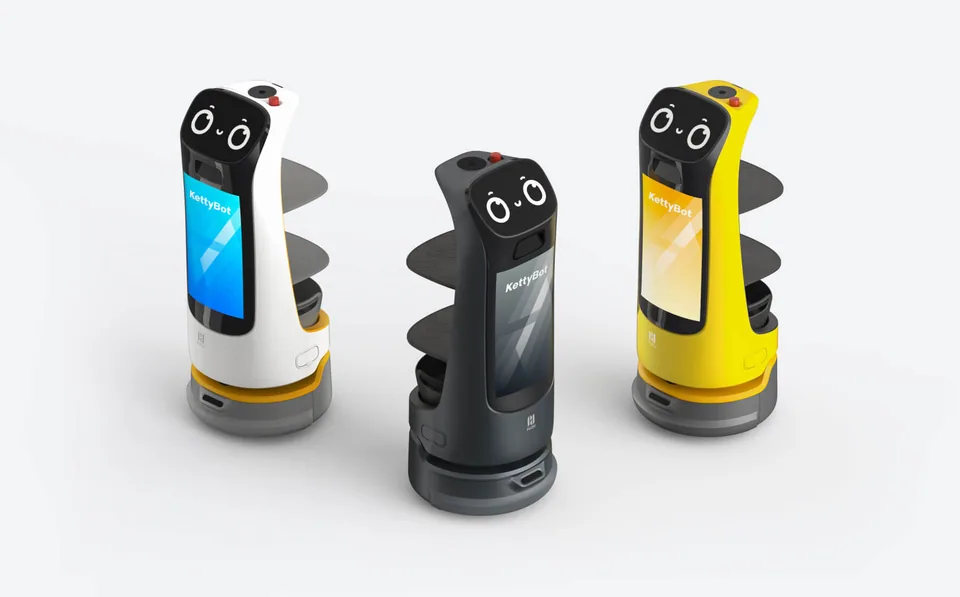
Pudu Robotics (Shenzhen Pudu Technology Co., Ltd.)
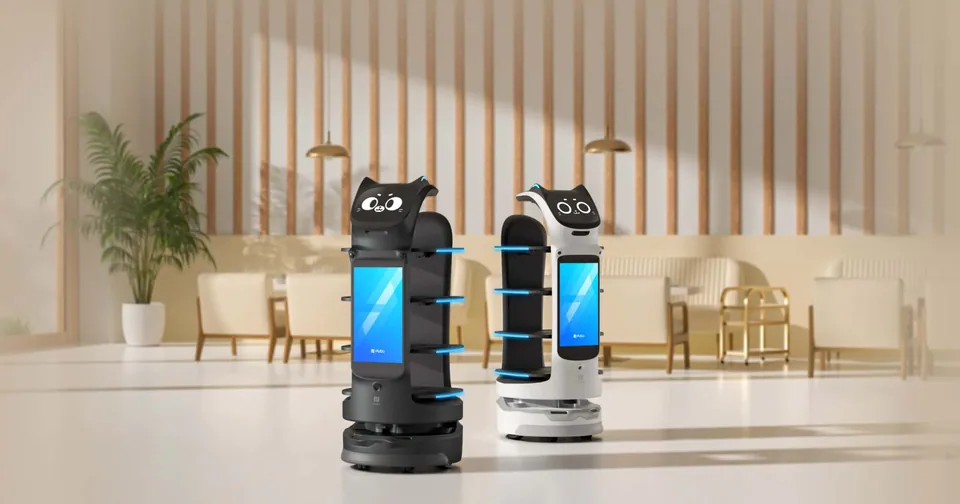
Pudu Robotics (Shenzhen Pudu Technology Co., Ltd.)
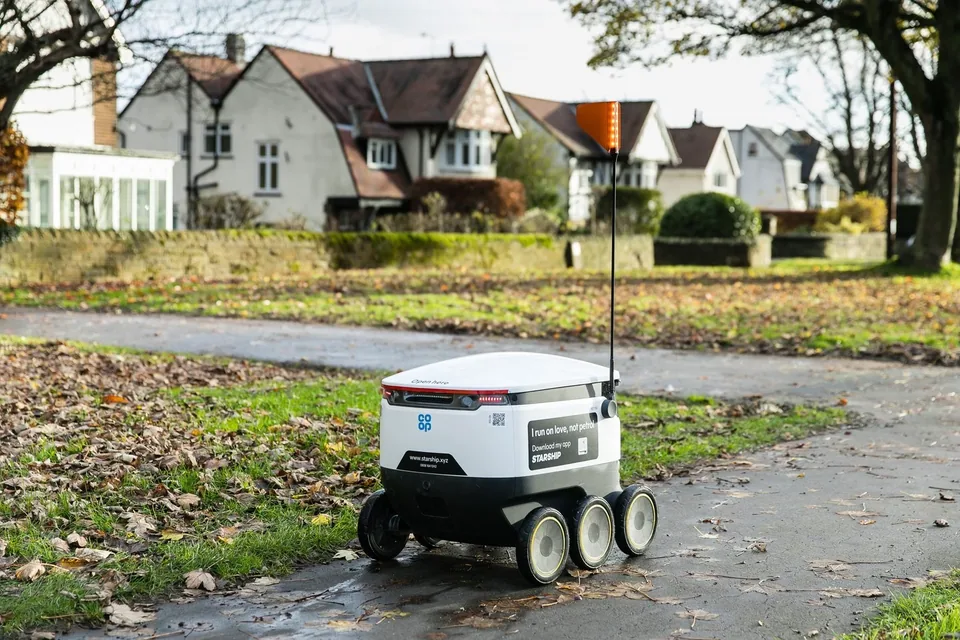

Serve Robotics grew out of Postmates and Uber, and today is a company listed on Nasdaq under the symbol SERV. The third generation was announced in a press release on October 16, 2024: according to the manufacturer, the robot is about twice as fast and has about twice the range of the second generation. The same release mentioned a plan to deploy up to 2,000 robots in 2025. That is a stated target, not a confirmed number of units built. The technical values circulating online come from the description of the first model from 2018 and do not describe Gen 3. We know of no further dated milestones for this machine, so we do not fill in the history with guesses.
No. The manufacturer Serve Robotics (USA) names no Polish shop or official distributor for the Serve Robotics Gen 3; enquiries go through the manufacturer's website (serverobotics.com). Confirm service in Poland before buying.
The manufacturer announcement cited here gives no such figure, so the 99.8% value is not confirmed.
An Ouster REV7 360° LiDAR, RGB and ToF cameras, GPS and an NVIDIA Jetson Orin computer.
The October 16, 2024 announcement speaks of a plan to deploy up to 2,000 robots in 2025. That is a stated target, not a confirmed number of units already built.
Author, source and licence of the photo are given in the caption. Shop links may become affiliate links in future, details: How we make money · How we check