on sale
Data from manufacturer datasheets and product pages; median over the models of this category in the database.
Beomni 1.0 is a humanoid robot in a wheeled version: it has only an upper body, with a movable head, shoulders, waist, arms and hands with an opposable thumb, able to lift up to 15.88 kg (35 lb) per arm. It is controlled remotely by a pilot in VR goggles and exoskeleton gloves, while the Beomni AI Brain system learns from the operator in order to take over tasks autonomously step by step.
That approach is closer to the teleoperated Sanctuary AI Phoenix platforms than to the fully autonomous humanoids of Figure AI, which bet on independent operation from the start. In 2022 Beyond Imagination received an order for 1,000 units, a significant number for such an early stage of humanoid robotics.
The manufacturer does not give height, weight or the number of degrees of freedom; a technical specification sheet has not been published. The applications include healthcare, manufacturing, agriculture and senior care, but the robot is not available in Poland, with neither a distributor nor plans to enter the market confirmed.
It is more a research and deployment platform than a finished commercial product you can buy off the shelf.
no data
Purchase: the manufacturer does not publish a price for Beomni 1.0, and there is no reliable price list in the sources. We give no figure, because any number would be a guess. All that is known is that in 2022 Beyond Imagination received an order for 1,000 units, though we do not know on what terms.
As an estimate: teleoperated platforms need, besides the robot itself, a set for the operator (VR goggles, exoskeleton gloves), a low-latency connection and a trained pilot. That last element is a running cost: until the AI takes over tasks, a human works every session. For the numbers to add up, the savings must come from one expert serving many sites, not from replacing an employee.
Training: the pilot has to master control in VR and learn to "feel" the robot; roughly a few hours to a few days depending on the task, which is our assessment, not manufacturer data. How to calculate the cost of a humanoid is shown in “Humanoid Robot TCO: How to Calculate Total Cost”.
No confirmed distributor in Poland
Beomni 1.0 is a humanoid that takes a person to places where a person physically cannot or should not be. The robot has a movable head, shoulders, waist, arms and hands with an opposable thumb, and it rides on wheels: it has no legs, so it will not climb stairs, but it stands stably at a workstation. Each arm can lift up to 15.88 kg. Control is remote: the operator puts on VR goggles and exoskeleton gloves, and the robot repeats their movements. In parallel, the Beomni AI Brain system learns from the pilot so that over time it can take over part of the tasks on its own.
The manufacturer names four areas of use: healthcare, manufacturing, agriculture and senior care. The common denominator is remote work: an operator controls the robot from another location, which makes sense for tasks in places where a person cannot or should not be.
An important caveat: the manufacturer has not published a specification sheet. We do not know the height, the mass or the number of degrees of freedom, so it is hard to judge the dexterity of the hands in precision tasks. Teleoperation also has an obvious limit: every robot needs a human, at least at first, until the AI takes over repetitive actions. The model of learning from an operator is covered in more depth in “VLA Models: How AI Controls Humanoid Robots in 2026”, and how a humanoid is built at all is explained in “How Does a Humanoid Robot Work”. Uses in a hospital or in agriculture are for now hypotheses to be tested in a pilot.
A good fit: research centers, hospitals and pilot-stage companies that want to test teleoperation as a service, meaning the physical presence of an expert at a distance. The model makes sense where scarce expertise (a doctor, a specialist technician) has to serve many locations.
Who it doesn't: a manufacturing plant looking for a ready robot to work independently on shifts; a customer who needs a public price, a datasheet and local service; anyone who needs a robot that walks up stairs or over uneven terrain. In Poland Beomni is not available: no distributor or plans to enter the market have been confirmed. If your goal is an autonomous humanoid for a factory, see “Humanoid Robots in Factories 2026”; if money is what interests you, see “How Much Does a Humanoid Robot Cost in 2026”.
The confirmed fact is the 2022 order for 1,000 units; we have no sources, however, that would name a specific customer, a location or the scale of actual deliveries.
In the same category, though, there are deployments you can verify: Figure at a BMW plant (Figure 03) or the pilots of Sanctuary AI (Sanctuary AI Phoenix). If you want to see how humanoids reach factory floors, start with “Figure 03: What We Know About Figure AI's Third-Generation Robot”. Put honestly: for a Polish customer Beomni remains for now a curiosity from abroad, not a solution you can order and deploy within a quarter.
Sanctuary AI Phoenix: conceptually close, a wheeled humanoid with sensitive hydraulic hands, a 25 kg payload, in the pilot phase; like Beomni, it relies on learning from an operator. Manufacturer: Sanctuary AI.
Devanthro Robody: a teleoperated humanoid for senior care, also without a public specification or price; the same "avatar" philosophy with a different emphasis (care).
Mirokaï: a French social robot on a balancing ball (123 cm, about 29 kg, 26 DOF), listed at about USD 30,000; pick it if the point is contact with people rather than manipulating heavy objects.
Figure 03: if the goal is full autonomy rather than teleoperation, an industrial humanoid (172 cm, 61 kg, 35 DOF) working in a BMW plant, with no public price. All four are only reference points: none is a direct equivalent of Beomni, because they differ in how they are controlled, in chassis and in maturity. Before you choose, decide whether you need a remote operator or autonomy; the whole calculation depends on it.
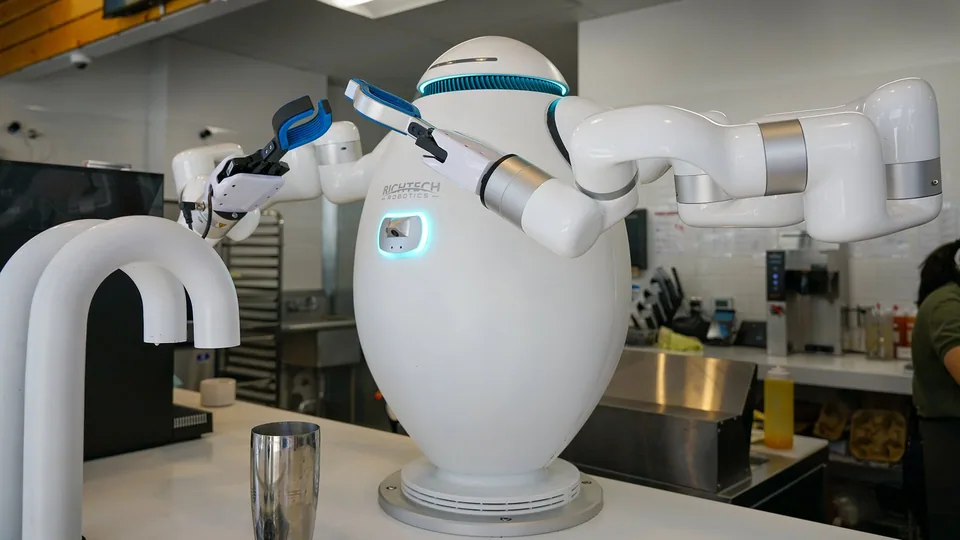
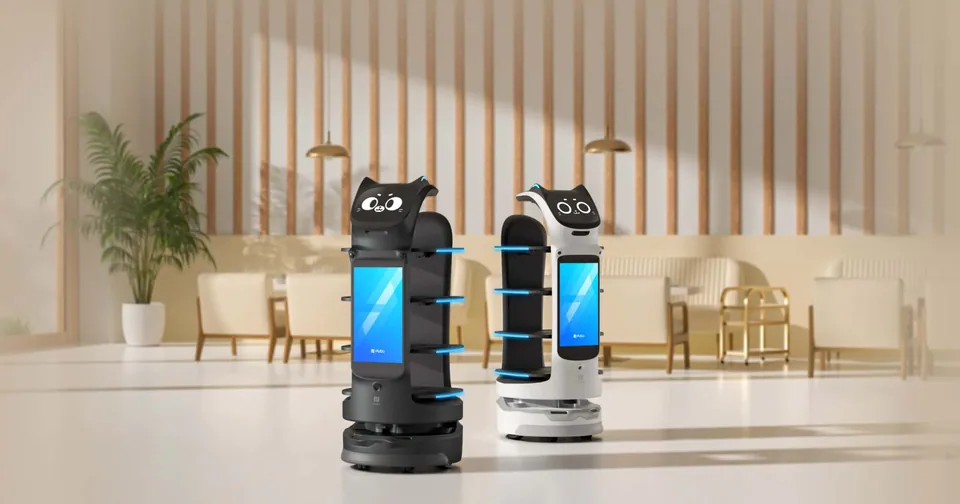
Pudu Robotics (Shenzhen Pudu Technology Co., Ltd.)
The Beomni 1.0 model was presented in January 2022. Behind it stands Beyond Imagination, an American company founded in 2018, linked in sources with Ray Kurzweil and Harry Kloor. Still in 2022 the company received an order for 1,000 units, which for the early phase of humanoid robotics is a significant number.
We have no market events attached to this model and no data on later generations, so it is hard to speak of a product line. Beomni appeared at a time when the humanoid market was heating up; the context and forecasts are described in “Humanoid Robot Market Forecasts”.
Model unveiled
Remotely, by an operator in VR goggles and exoskeleton gloves; the AI Brain system learns from the pilot in order to take over tasks step by step.
Up to 15.88 kg per arm.
No, there is no confirmed distributor or presence on the Polish market.
Shop links may become affiliate links in future, details: How we make money · How we check