prototype
Humanoid robotson sale
Kepler Forerunner K2
Price from
approx. 96,900 PLN* (≈ EUR 22,200 at NBP rate 4.3641 of 21 October 2026)
converted from 25,000 USD, NBP rate 3.8762, as of 1 October 2026
No confirmed distributor in Poland
Pros
- 52 degrees of freedom
- 96 tactile sensors per fingertip
- Payload up to 30 kg in two-handed work
- 178 cm tall, 100 TOPS onboard
Cons
- No official price list, estimates USD 20–30k
- Cloud-based control
- Runtime unclear (3 or 8 hours by source)
- Not available in Poland or Europe
- 178cmHeight
- 30kgPayload
- 85kgWeight
- 52DOFDegrees of freedom
- 3hRuntime
Key facts
- Price from an aggregatorapprox. 96,900 PLN* (≈ EUR 22,200) (as of September 2026)
- Specificationsheight 178 cm · payload 30 kg · weight 85 kg
- Statuson sale
- Availability in Polandnot confirmed
- VerdictFor integrators planning humanoid pilots; not for Polish plants that need local support.
Summary
- ManufacturerKepler Robotics (Shanghai Kepler Exploration Robotics)
- CategoryHumanoid robots
- Statuson sale
- Availability in PolandNo confirmed distributor in Poland
Fifty-two degrees of freedom and 96 tactile sensors on every fingertip: on paper, that puts the Forerunner K2 from Shanghai-based Kepler Robotics among the industrial humanoids with the richest sense of touch. Control is cloud-based (perception, task planning, autonomous learning), backed by 100 TOPS of onboard compute.
The manufacturer aims the K2 at factories, logistics and high-risk tasks where replacing a person cuts accident rates. The weak spot is price: there is no official price list, and industry sources give only a range of USD 20,000-30,000, shown here as the midpoint of USD 25,000 (about PLN 96,900 (≈ EUR 22,200) at the NBP rate of 1 October 2026).
The model is not officially available in Poland or Europe, with no dealer and no local service. The K2 will interest integrators planning pilots in Asia far more than companies looking for a ready-made deployment on the Vistula.
- Kepler Robotics K2 Bumblebee Enters Mass ProductionKepler Humanoid Robot · Load in the player above
Photo gallery
-
Photo: Kepler Robotics, manufacturer's website (gotokepler.com) -
Photo: Kepler Robotics, manufacturer's website (gotokepler.com)
Specs
Data checked: · Sources: 3
Data from manufacturer datasheets and product pages; median over the models of this category in the database.
-
Height178 cm+5% vs. the category median (169 cm, n=220)
-
Weight85 kg+35% vs. the category median (63 kg, n=192)
-
Degrees of freedom52+76% vs. the category median (29.5, n=200)
-
Payload30 kg+329% vs. the category median (7 kg, n=166)
-
Battery2,330 Wh+143% vs. the category median (960 Wh, n=52)
-
Runtime3 h−25% vs. the category median (4 h, n=135)
- category medianA higher value doesn't always mean a better robot; it depends on the application.
Dimensions and weight
- Height
- 178 cm
- Weight
- 85 kg
Motion and manipulation
- Degrees of freedom
- 52
- Payload
- 30 kg
Power
- Battery
- 2,330 Wh
- Runtime
- 3 h
Electronics and AI
- Drive
- electric
- Sensors
- 80+ integrated sensors, 96 sensors per fingertip (tactile hands)
- Computing unit
- 100 TOPS onboard compute
- AI stack
- Cloud-based AI (perception, task planning, autonomous learning)
Price and availability in Poland
approx. 96,900 PLN* (≈ EUR 22,200)
converted from 25,000 USD, NBP rate 3.8762, as of 1 October 2026 · Updated: September 2026 · Source (humanoid.guide)
A price range of USD 20,000-30,000 is quoted; the midpoint is used as the USD price. No fixed official price list was found.
Running and deployment costs
There is no official price list for the K2. Industry sources give a range of USD 20,000-30,000; the midpoint of USD 25,000 is used here, or about PLN 96,900 (≈ EUR 22,200) at a rate of 3.8762 from 1 October 2026. This is an indicative value, not confirmed by the manufacturer. On top of the hardware price, budget roughly 23% VAT plus shipping and insurance from China, and for imports from outside the EU also customs duty; its amount depends on how the goods are classified and is worth confirming with a customs agency.
Operating costs are an unknown. As a rough order of magnitude for advanced robots with manufacturer service, annual servicing and parts run from a few to a dozen or so percent of the purchase price; for the K2, however, there is no data at all, and the lack of service in Poland means shipping the robot out or flying in an engineer. Add connectivity and possible cloud-service fees - we found no information on a subscription. Training programs for operators are not described in the sources.
Buying a humanoid from China for research may not qualify; a tax adviser can confirm eligibility.
Dealers in Poland
No confirmed distributor in Poland
Applications
What it's for
The Kepler Forerunner K2 is a humanoid conceived as a worker for jobs that call for strength and a delicate hand at the same time. The manufacturer, Shanghai-based Kepler Robotics, claims a payload of up to 30 kg in two-handed work and 52 degrees of freedom (DOF), with 96 touch sensors on each fingertip. It is a rare combination: most robots with that kind of lifting power grip by brute force, whereas here the pressure can be metered.
The manufacturer points to production: with the declared 30 kg payload the robot can carry crates of modules, and the fingertip sensors are meant to tell when a container starts to slip. In logistics the manufacturer sees a similar role moving parcels and trays between zones. The third area the K2 is meant to handle is high-risk work, meaning places where a human presence is costly or dangerous, such as hot, dusty or noisy workstations. The fourth is research: 52 degrees of freedom and a cloud AI layer (perception, task planning, autonomous learning) give laboratories a wide playground for manipulation experiments.
It is only fair to say what the sources do not contain. No independently documented K2 deployment in a real factory is known, so the uses listed above follow from the declared specification and intended purpose, not from production reports. Control is cloud-based, which will be a real limitation for plants with data-confidentiality requirements or a weak connection; the onboard unit delivers 100 TOPS, but it is the manufacturer who decides how many tasks run locally. A 2.33 kWh battery with a 3-hour runtime (per a third-party aggregator; another source says 8 hours) means a full-shift scenario needs spare charges or battery swaps. For fast-cycle work such as palletizing, measured in items per minute, there is no documented data.
Heavy transport jobs are today more often done by specialized mobile robots; see warehouses and factories.
Typical applications
Who it's for
The K2 makes sense for an integrator or an R&D department that wants to study two-handed manipulation with a sense of touch and does not need local service. It suits teams planning a pilot outside the European Union, in Asia, where the manufacturer has its base. It also suits research centers interested in machine learning on tactile data: 96 sensors per fingertip is a density most cheaper hands do not offer.
We would not recommend it to a company looking for a plug-and-play solution in Poland. There is no official price list, no dealer and no local service, and the sources do not indicate availability in Poland or Europe. Nor is it a choice for plants where production data must not leave the shop floor, because a cloud-based architecture requires connectivity. And let's not buy it "just in case" as a showpiece: if the goal is purely publicity, it is simpler to rent a machine for a day - see “Renting a Humanoid Robot for an Event”.
Deployments
The manufacturer points to production, logistics and high-risk tasks. To see what real humanoid work in this category looks like, turn to better-documented examples: Agility Digit in warehouses (“Agility Digit in Warehouses”) or Apptronik Apollo working with Mercedes (“Apptronik Apollo in Mercedes-Benz Factories”). The overall picture of the factory market is covered in “Humanoid Robots in Factories 2026”.
Comparison
If the K2 looks too uncertain on formalities, several humanoids of a similar class are on the market. Unitree H2 is 180 cm tall with 31 degrees of freedom, sold from USD 29,900 (about PLN 116k (≈ EUR 26,580)); its hand is weaker than the K2's, but it comes with a clear price list and the backing of China's largest humanoid maker. EngineAI T800 is 173 cm with 29 DOF at about USD 40,500 (about PLN 157k (≈ EUR 35,980)), a distinctly athletic design that is less focused on precise manipulation. Apptronik Apollo, with a 25 kg payload and 71 degrees of freedom, offers more movement in the arms and hands but is in its pilot phase, and prices are unavailable. Figure 03 claims a 20 kg payload and 5 hours of work, but likewise has no published price. The choice depends on what matters more: touch (K2), price (Unitree), or a U.S. support base (Apptronik, Figure).
Similar models
- prototype
- prototype
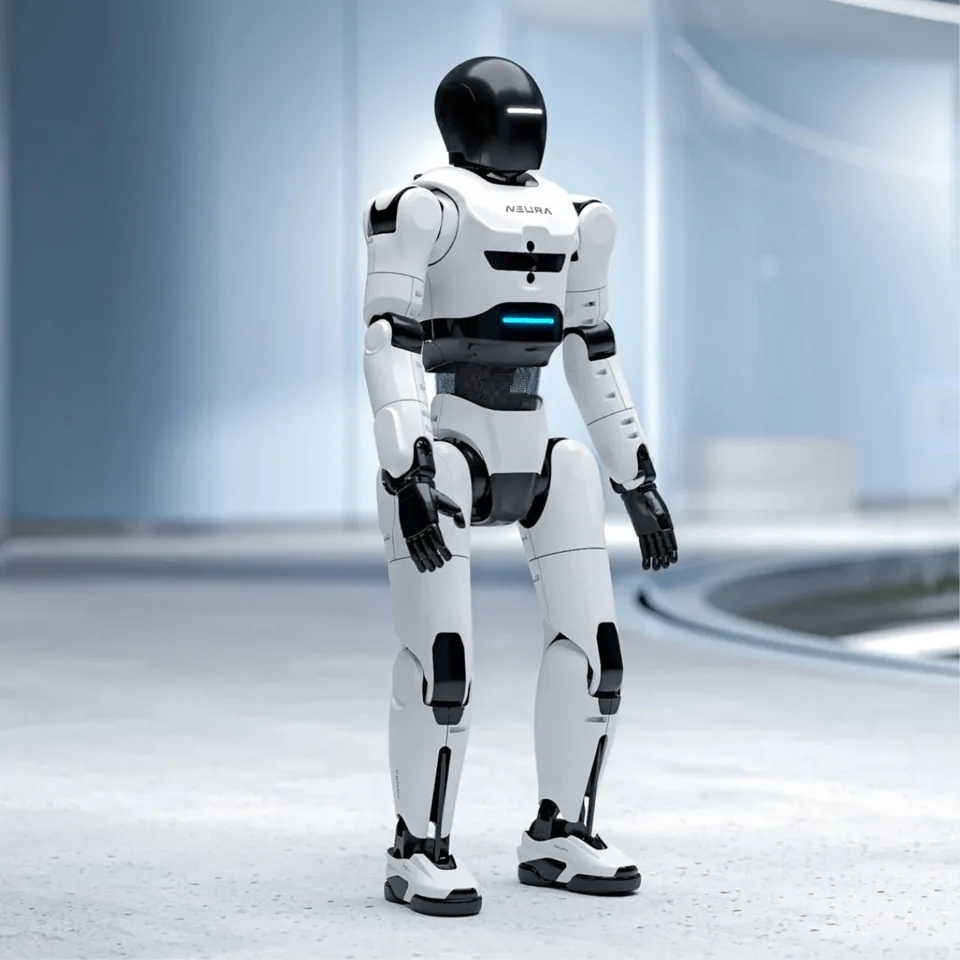
Gento Robotics (Guangdong TianJi Intelligence System Co., Ltd.)
Gento Luna
- 170 cmheight
- 6 kgpayload
- —price
- on sale
 pre-order
- on sale
History
The K2's history is thin. There is no confirmed launch date and no list of earlier generations, so we will not guess at them. What is known is that the robot is made by Kepler Robotics of Shanghai, and that Forerunner is the name of the line in which the K2 is the model described by a third-party aggregator and Interesting Engineering. There is a discrepancy around the specification, which we note openly: a third-party aggregator gives a runtime of 3 hours, another source 8 hours; because the figures come from press materials rather than independent tests, we have taken the lower one as the more cautious. The model is listed as on sale, but without a published price. Once dates and versions appear, we will complete this section.
Sources
Frequently asked questions
Is the Kepler Forerunner K2 available in Poland?
No. The manufacturer Kepler Robotics (China) names no Polish shop or official distributor for the Kepler Forerunner K2; enquiries go through the manufacturer's website (kepler-robots.com). Price from an aggregator: approx. 96,900 PLN* (≈ EUR 22,200). Confirm service in Poland before buying.
What does the Kepler Forerunner K2 cost?
The manufacturer does not publish an official price list. Industry sources give a range of USD 20,000-30,000; the midpoint of USD 25,000 is used here (about PLN 96,900 (≈ EUR 22,200) at the NBP rate of 1 October 2026).
What are the K2's payload and runtime?
The robot lifts up to 30 kg working with both hands and runs for up to 8 hours on its 2.33 kWh battery.
Can the K2 be bought in Poland?
No. The model is not officially available in Poland, and no source names a dealer.
Author, source and licence of the photo are given in the caption. Shop links may become affiliate links in future, details: How we make money · How we check