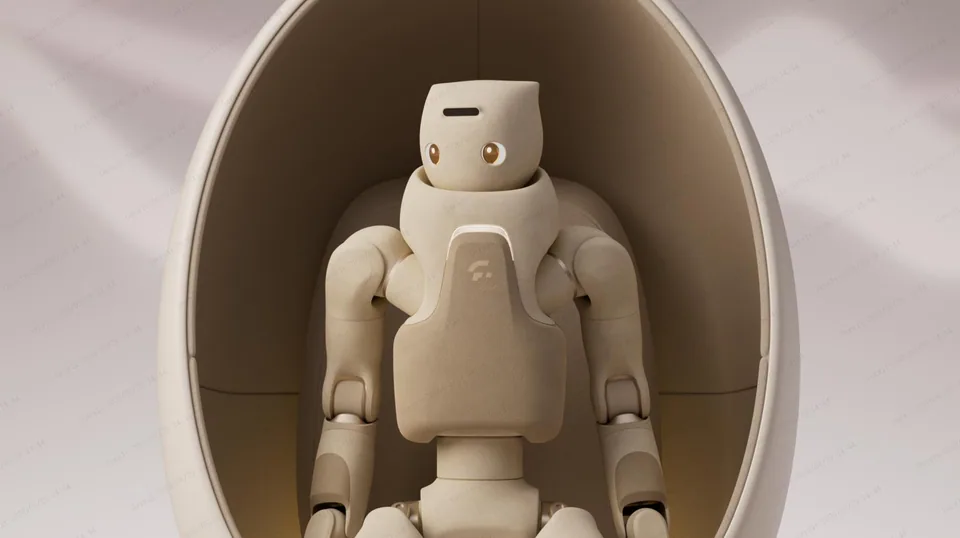
on sale
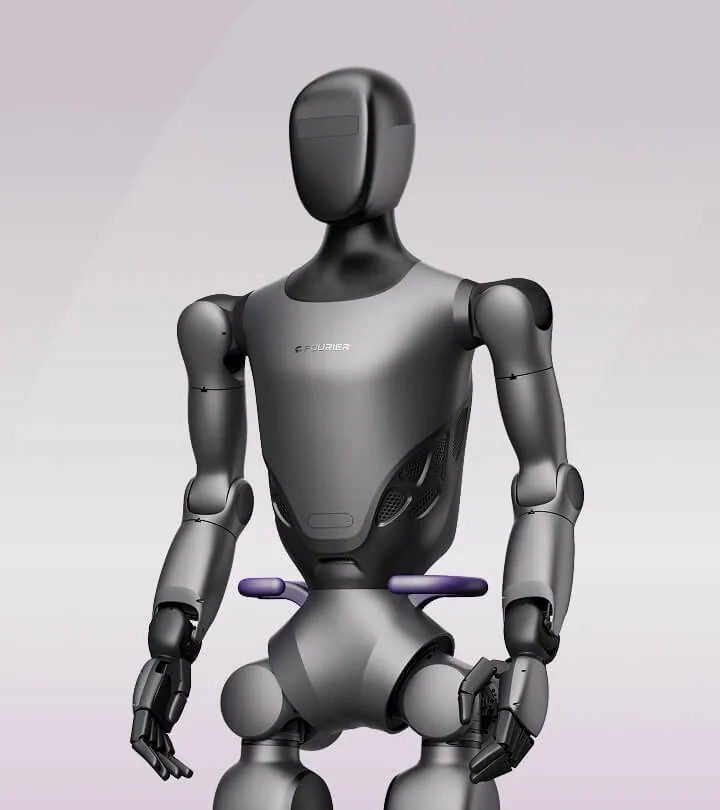
The Fourier GR-1, the first general-purpose humanoid from Shanghai's Fourier Intelligence, is no longer in the manufacturer's current lineup; it was retired in favor of the newer GR-2 and GR-3. The robot stood 165 cm tall, weighed 55 kg, had 40 degrees of freedom and could walk at up to 1.4 m/s (5 km/h) with a peak hip torque of 300 N·m; the manufacturer claimed a payload of up to 50 kg.
It was sold on a quote-only basis, mainly to universities and research centers, with no public price list. The figure of “USD 149,000 and up” circulating online is an aggregator's estimate, not an official Fourier number, so it is not included here.
Next to its successor the GR-2 (175 cm, 63 kg, 53 DOF, tactile hands with 12 DOF), the GR-1 looks like a transitional model: solid for its launch year, but outdated against newer generations with more degrees of freedom and tactile sensors in the hands.
For new research deployments the GR-2, or the care-oriented GR-3, is the more sensible choice; the GR-1 remains interesting mainly historically and for centers that already operate one. The model is not available in Poland.
Data from manufacturer datasheets and product pages; median over the models of this category in the database.
no data
Purchase: Fourier did not publish an official price list. Sales were strictly on individual quotation for universities and research centers. The figure of “USD 149,000 and up” circulating online is an aggregator's estimate, not manufacturer data, so we do not adopt it. If you want a reference point, compare models with official price lists in “How Much Does a Humanoid Robot Cost in 2026”.
Operation and training: as an estimate, the annual upkeep of a research humanoid (service, actuator replacement, software) is a significant fraction of the purchase price, but the manufacturer does not publish this data. Training typically means several weeks of an engineer's time to learn control and safety. Calculation method in “Humanoid Robot TCO: How to Calculate Total Cost”.
Because the model is retired, buying a new unit is not an option.
No confirmed distributor in Poland
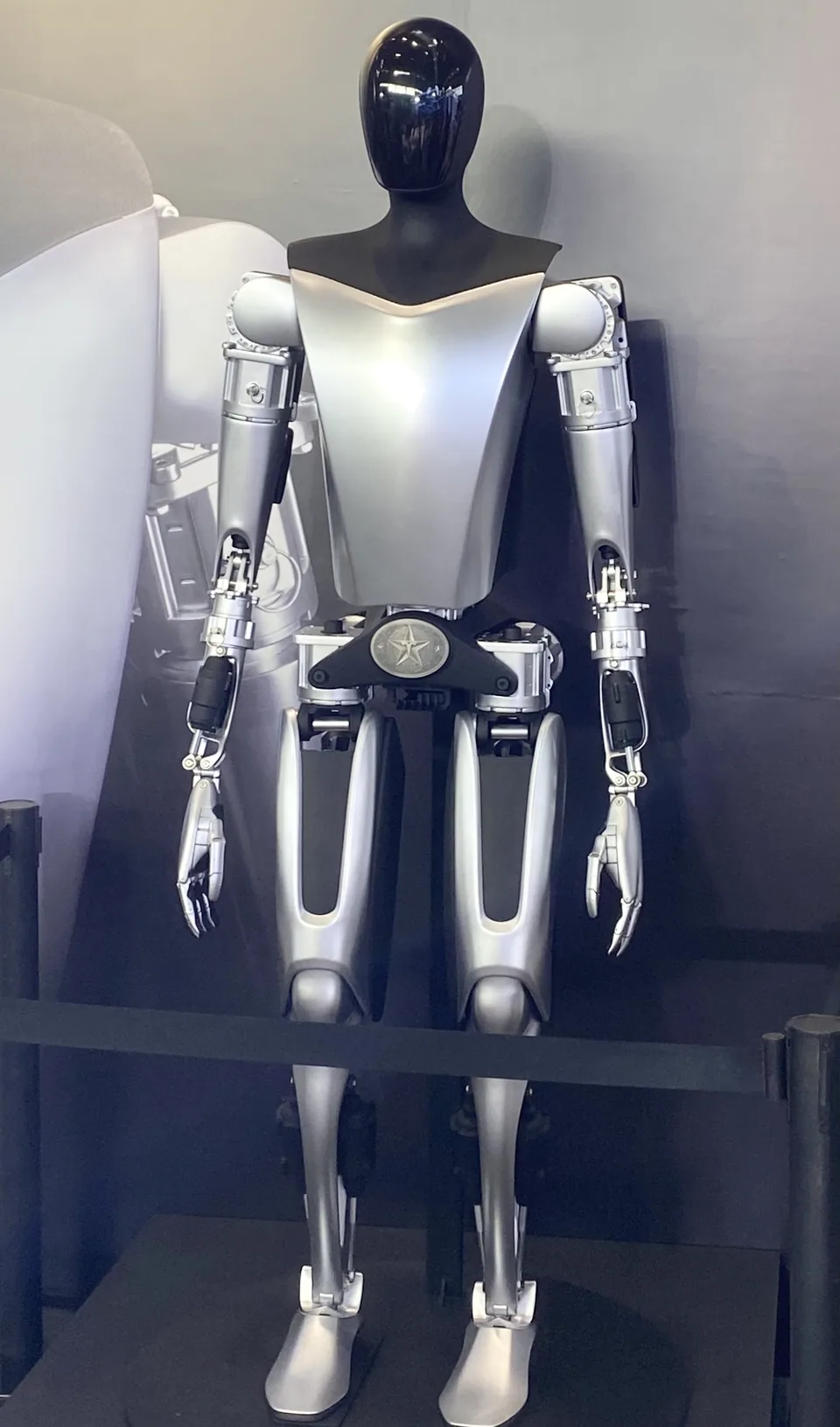
The Fourier GR-1 was one of the first such designs from China, shown at WAIC in Shanghai in July 2023. The robot stood 165 cm tall, weighed 55 kg, had 40 degrees of freedom and walked at up to 1.4 m/s (about 5 km/h). The manufacturer claimed a payload of up to 50 kg, and peak hip torque was 300 N·m.
Where did such a robot prove itself? Above all in the lab: research on bipedal gait, whole-body control and reinforcement learning (laboratories). The second scenario is the university (universities): robotics teaching, master's projects, demonstrations for students; we cover this direction in more depth in “Educational Robots for Schools and Universities”. Sources indicate it was sold mainly to universities and research centers on a quote-only basis. We have no industrial applications on record for the GR-1.
Today the model is retired and replaced by the Fourier GR-2 and Fourier GR-3. For someone who already operates one, the GR-1 remains a fully capable research platform; for someone still choosing, it matters mainly historically. What 40 degrees of freedom mean and how they differ from the GR-2's 53 is explained in “Degrees of Freedom (DOF) in Humanoid Robots”.
Centers that have a GR-1 in their fleet and need knowledge or a comparison with newer generations; research teams analyzing the development of Chinese humanoids; authors of publications who want to compare successive generations from a single manufacturer.
Not for anyone planning a new purchase. The manufacturer withdrew the model from its current lineup, sales were on request only, and it was not available in Poland. New buyers should reach for the Fourier GR-2 (53 degrees of freedom, tactile hands) or, if caring for people is the goal, the Fourier GR-3. If the budget is limited and you need a platform with documentation and an SDK, the Unitree G1 is far more practical.
Worldwide, the GR-1 went to universities and research centers on a quote-only basis, but we have no named institutions or unit counts on record, so we do not state any. For how the humanoid market looks in China and who competes in it, see “Chinese Humanoid Robots”.
Fourier GR-2: the direct successor, 175 cm, 63 kg, 53 degrees of freedom, tactile hands with 12 degrees of freedom per side and joint torque up to 380 N·m. Better for manipulation.
Fourier GR-3: a variant built for care and rehabilitation, with a soft shell and 31 pressure sensors; it makes sense only if your research concerns contact with people.
Unitree G1: a humanoid sold openly for about PLN 52,300 (≈ EUR 11,980 at NBP rate 4.3641 of 21 October 2026) in its base version; a cheaper entry point for a lab.
AgiBot A2: a Chinese platform with a different philosophy; its place in the market is described in “Chinese Humanoid Robots”.
Fourier Intelligence of Shanghai grew out of rehabilitation robotics and exoskeletons. In July 2023 the company showed the GR-1 at WAIC in Shanghai, and in November it launched the MetaMotus Galileo rehabilitation platform. In December 2023, according to our sources, management met Xi Jinping during his visit to Shanghai. In September 2024 the company presented its successor, the Fourier GR-2, with 53 degrees of freedom, and in August 2025 the care humanoid Fourier GR-3 with a soft shell. The GR-1 disappeared from the lineup in favor of those two models. Company profile: Fourier Intelligence. Data on Fourier comes from secondary sources.
Fourier Intelligence launches the MetaMotus Galileo rehabilitation platform Fourier Intelligence
Xi Jinping meets Fourier Intelligence leadership during a visit to Shanghai Fourier Intelligence
Fourier Intelligence unveils the GR-2 humanoid with 53 degrees of freedom Fourier Intelligence
Fourier Intelligence unveils GR-3, a care-oriented humanoid with a soft outer shell Fourier Intelligence
No. The Fourier GR-1 has been discontinued; look for its successor or the second-hand market.
No, the model was withdrawn from the current lineup in favor of the GR-2 and GR-3.
Up to 1.4 m/s (about 5 km/h) with 40 degrees of freedom.
The manufacturer never gave an official price; it was sold on request only.
Author, source and licence of the photo are given in the caption. Shop links may become affiliate links in future, details: How we make money · How we check