prototype
Price from
Calvin-40 is a headless industrial humanoid from the French company Wandercraft, previously known for its Atalante X rehabilitation exoskeletons. The robot has a 40 kg payload and is designed to move loads such as cartons, parcels, tires, panels and carts in logistics, automotive, retail and defense.
Renault has announced a deployment of up to 350 units by 2027, and Wandercraft cites 12 named premium-sector customers as of September 2026, with the first series deliveries planned for the first half of 2027. A real pilot deployment with a concrete numerical target sets Calvin-40 apart from many announced industrial humanoids, where customer claims tend to be vague.
The weak side is the lack of basic physical data: the manufacturer does not disclose height, own weight or degrees of freedom. The price is not officially published either; press estimates put it at EUR 80,000-200,000, but the manufacturer has not confirmed them. The robot is not available in Poland. Calvin-40 targets large industrial plants and logistics centers, not small businesses or consumer use.
Data from manufacturer datasheets and product pages; median over the models of this category in the database.
no data
The manufacturer does not give a price for Calvin-40. The press and aggregators estimate it at EUR 80,000-200,000, but the company has not confirmed that figure, which is why there is no euro or dollar price on this page. As a rough estimate, that would mean anywhere from several hundred thousand zlotys to around a million, so treat it strictly as an order of magnitude.
As a rough estimate, on top of the purchase price come integration with the plant's logistics, risk assessment and fencing off the station (a robot lifting 40 kg requires a different safety analysis than a small cobot; see “Robot Safety Standards”), plus service and training. In a pilot, the cost is sometimes shared with the manufacturer, which matters for large customers.
We describe the general calculation in “Humanoid Robot TCO: How to Calculate Total Cost”.
No confirmed distributor in Poland
Wandercraft knows the human body: the French company built its name on exoskeletons for people with paralysis, including Atalante X. Calvin-40 is its step into industry. The name gives away the main feature: a 40 kg payload, far more than most humanoids, which lift anywhere from a few to a dozen or so kilograms. The robot is intended for moving loads in factories, warehouses and logistics, and one of the scenarios described is car production at Renault.
A 40 kg payload points to moving heavy loads in production, especially at stations an AMR cannot reach because they require bending or lifting a load over an edge. This is an area where a humanoid can make sense alongside mobile robots. In a warehouse, a similar robot could move boxes from a pallet to a conveyor.
The company's background is interesting too. Wandercraft knows the biomechanics of human gait, and that knowledge is also useful when building a two-legged robot that must keep its balance under a heavy load. What we do not know are the details of the specification: the manufacturer does not give height, weight, degrees of freedom or runtime. The sensors are described only as a 3D and vision stack. That is why we treat Calvin-40 as a promising pilot, not a finished product you can order.
Makes sense for: large plants looking for a robot to move heavy loads and willing to take part in a pilot, as Renault is. Innovation departments in automotive and logistics. Technology partners interested in combining biomechanics and robotics.
Less suited to: companies that must buy a robot within a few months, because Calvin-40 is in its pilot phase and the manufacturer gives no price. Polish buyers: the model is not available here and we do not know of a distributor. Those who need a robot for precise manual work: the announced use is mainly load transport. We also do not recommend it for education or homes, where smaller robots from educational robots or home robots are a much better fit.
The only deployment described is a pilot with Renault in car production: a plan for up to 350 units by 2027, and among the applications the manufacturer lists material transport in factories, warehouses and logistics. That is a plan, not a confirmed number of working robots.
Polish plants today tend to look at collaborative robots and AMRs, described in “What Is a Cobot and How Does It Differ from an Industrial Robot” and “Humanoid Robots in Factories 2026”. If you want to see how other humanoids are entering warehouses, read “Agility Digit in Warehouses”.
Closest in purpose for logistics is Agility Digit 5: a humanoid designed to move totes in warehouses.
If you care about payload combined with computing power and availability in Poland, consider Unitree H1-2: peak payload of around 21 kg, though it is a research platform.
For factories, take a look at Apptronik Apollo, developed with industrial partners.
At the other extreme, if you want a proven idea rather than a humanoid, choose Sarcos Guardian XO: an exoskeleton that amplifies a human when lifting, so instead of replacing the worker it supports them.
From the Wandercraft family itself there is Atalante X, a rehabilitation exoskeleton that shows where the company comes from.
For a transport robot with a 40 kg payload, the pilot terms and access to the manufacturer's service matter more than the number of degrees of freedom.
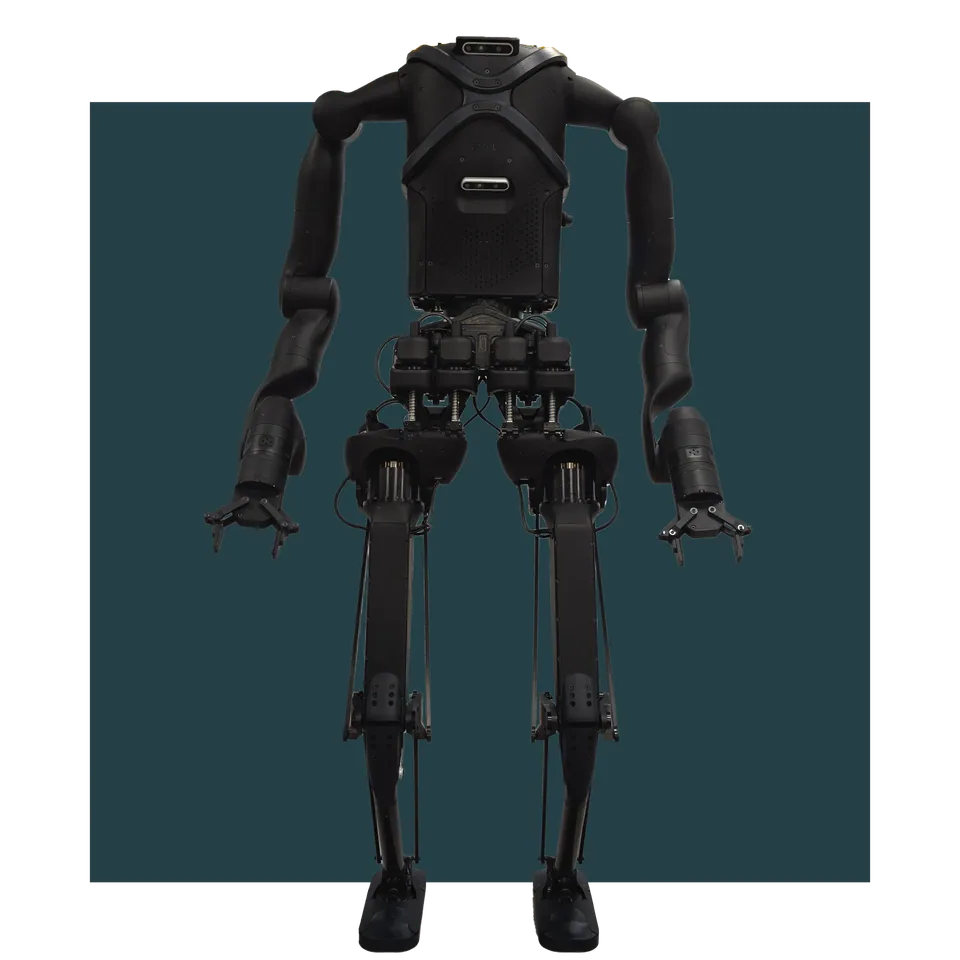
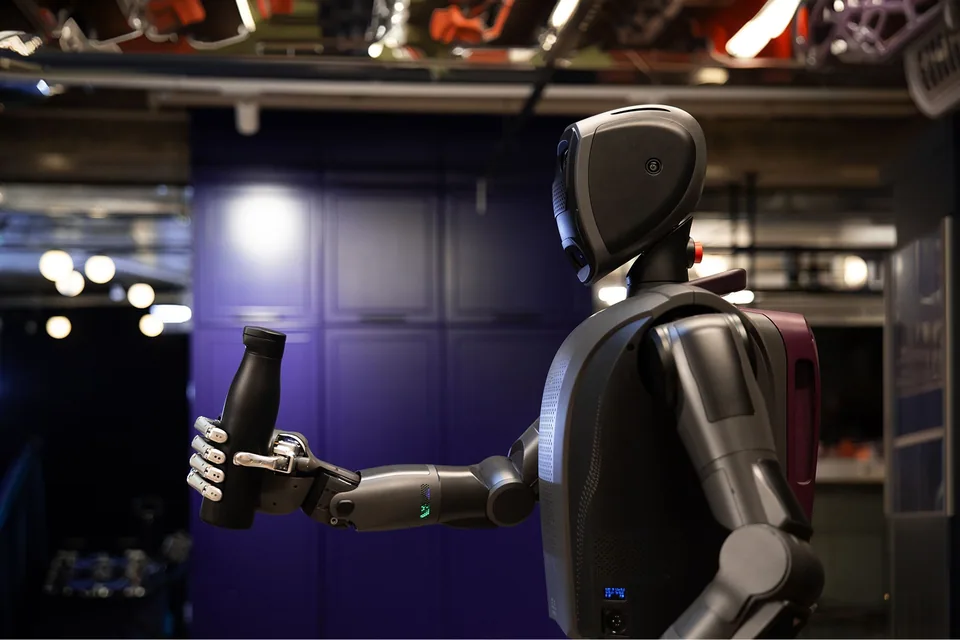

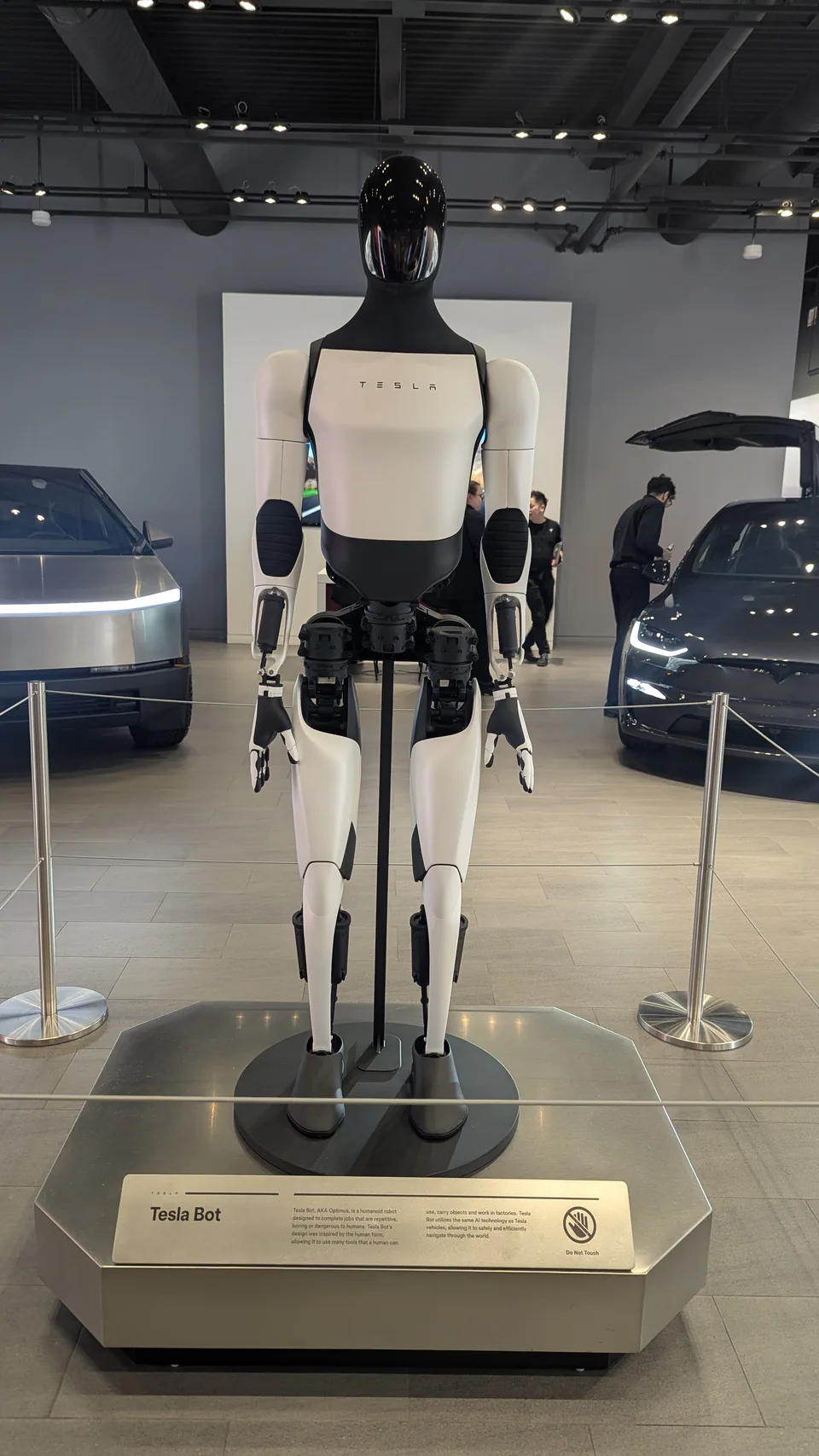
Wandercraft is a Paris company that developed exoskeletons for rehabilitation, including Atalante X and Eve (on sale in the US since September 17, 2026). Calvin-40 is its entry into the industrial humanoid market. The presentation date of this model is not given, so we do not describe generations. What is known is that the robot is in a pilot phase with Renault, which plans up to 350 units by 2027, and that Wandercraft cites about 12 customers for this humanoid. The company's product family is described in the profile Wandercraft.
Not off the shelf. The Wandercraft Calvin-40 runs in pilot programmes with selected customers, and there is no official seller in Poland.
40 kg, intended for moving loads in logistics and industry.
Renault plans up to 350 units by 2027.
The manufacturer gives no price; press estimates (unconfirmed) say EUR 80,000-200,000.
Author, source and licence of the photo are given in the caption. Shop links may become affiliate links in future, details: How we make money · How we check