on sale
Istituto Italiano di Tecnologia (IIT)Humanoid robots
iCub
- 104 cmheight
- 22 kgweight
- 1,094,200*price (PLN)
Manufacturer
IIT Genoa: research humanoids iCub and ergoCub (5 million euros from INAIL); sold to order only, not at retail.
The Istituto Italiano di Tecnologia, a public research institute in Genoa, Italy, has for years developed the open-source iCub humanoid platform, which grew out of the European RobotCub consortium, and now also its successor ergoCub, designed for physical human-robot collaboration. INAIL, the Italian workplace-accident insurer, co-funded ergoCub's development with 5 million euros over three years.
IIT sells iCub hardware (a whole robot, a torso, a head or a hand) as well as the R1 mobile manipulator, only to order and only to research customers, with contact via info@icub.org. It is a profile unlike commercial humanoids such as Figure or Unitree: IIT is aiming not at mass production or retail sales but at science and technology licensing. Two models are described here: ergoCub and iCub.
There is no commercial availability in Poland. For Polish universities and robotics labs this means research equipment can be obtained, but only through an individual order, not a retail purchase.
Genoa is a port city, but in the world of robotics it is associated above all with a small humanoid with a child's proportions. The Istituto Italiano di Tecnologia, a public research institute in Italy, has spent years there developing the open-source iCub platform, which grew out of the European RobotCub consortium. The robot is meant for scientists studying cognition and machine learning. Its successor is ergoCub, designed for physical human-robot collaboration: INAIL, the Italian workplace-accident insurer, co-funded its development with 5 million euros over three years. IIT sells iCub hardware, meaning a whole robot, a torso, a head or a hand, as well as the R1 mobile manipulator, only to order and only to research customers. Contact goes through the email address given on the project's website. The institute's founding year is not confirmed in our catalog. This is a profile entirely different from the commercial humanoids described, for example, in “How Does a Humanoid Robot Work” and in the category “Humanoid robots”. The institute is not aiming at mass production or retail sales but at science and technology licensing. That matters for purchasing decisions, because this is not a company you can ask for a price list and a delivery date.
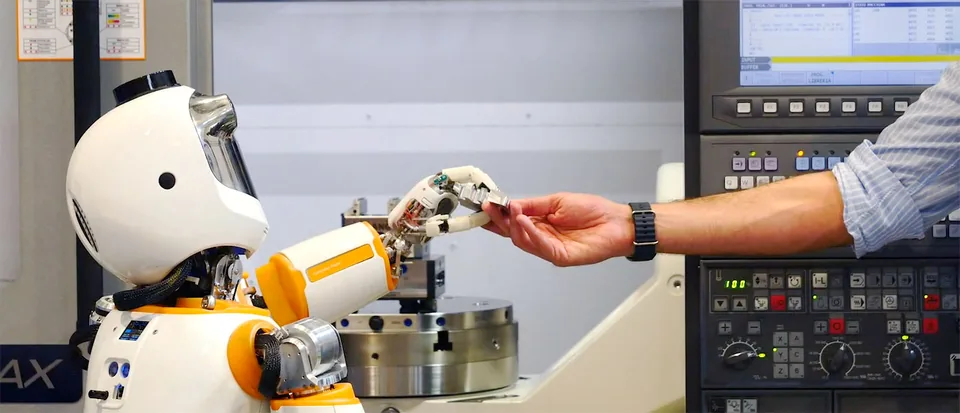
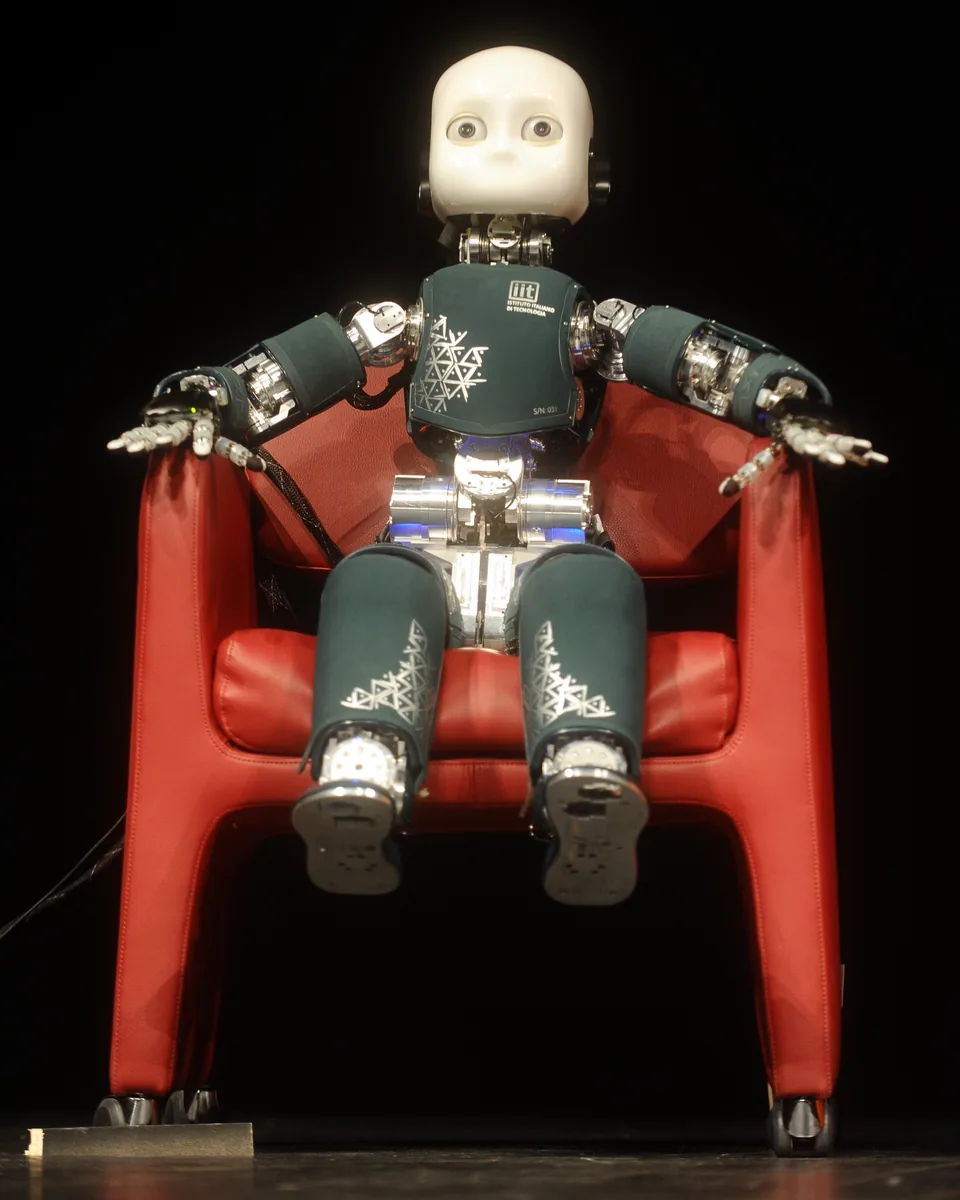
iCub is a research humanoid: 104 cm tall, 22 kg, 53 motors and hands with nine degrees of freedom. The price is around 250,000 euros (roughly 1.09 million PLN (≈ EUR 0.25 million)), and the buyers are scientific institutions. Its uses are research into cognition, artificial intelligence and robotics. ergoCub is a prototype: 150 cm, 55.7 kg, 10 kg payload, intended for physical human-robot collaboration and for lifting loads in the workplace. Its status is prototype, so you cannot buy it from a catalog. Both models make sense only for teams that research robotics, not for companies looking for a helper on the factory floor. For practical factory tasks, Agility Digit 5 or Apptronik Apollo are closer, and you can read about how to count degrees of freedom in “Degrees of Freedom (DOF) in Humanoid Robots”. At 250,000 euros the iCub is clearly further from the mass market than commercial humanoids, but its value lies not in its price but in the platform's openness: researchers can modify the software and teach the robot from scratch. ergoCub, for its part, shows what a robot designed for physical work looks like, rather than one designed for a demonstration, and therefore makes sense in a conversation about ergonomics and workplace safety.
IIT does not compete for a market, it competes for knowledge. It is a public body, not a company geared to mass production, and its strength lies in technology licensing and scientific collaboration. INAIL's support (5 million euros for ergoCub) shows that the project has institutional sponsors in the area of workplace ergonomics. Compared with commercial rivals, namely Figure AI, Unitree Robotics or PAL Robotics, the difference is visible: they sell or plan to sell, while IIT supplies a research platform. In Europe, centers such as German Aerospace Center, Institute of Robotics and Mechatronics or Technical University of Munich belong to a similar group. Market value does not apply here, so we do not give one. Set against commercial rivals, it shows that there is no single scale of value: the institute measures success by publications and the uptake of its technology, companies by valuation and order numbers. That is why we do not compare them in one table. It is worth reading market pieces such as “Humanoid Robot Market Forecasts”, though, to see where research makes its way into products.
Commercial availability in Poland does not exist: iCub is sold by individual order to institutions, so a Polish university or laboratory could obtain it only through a research order. We know of no specific Polish order or collaboration. If you are interested in robotics education in Poland, see “How to Start Learning Robotics in Poland” and the section “Universities and research”, and for Polish research centers read “Polish Robotics Companies”. If you work in research, the first step is to contact the institute and establish whether the configuration meets your project's requirements and how the purchase would be funded, for example from a grant. Without that, cost and lead time are hard to estimate.
iCub and ergoCub are equipment for scientists: expensive, customized and available only to order. As a showcase of European research robotics it is impressive; as a purchase for a company it is a miss. Anyone looking for a humanoid to do work should rather look at Unitree G1 or Apptronik Apollo. If you run a laboratory and have a research budget, it is worth asking the institute about an offer and delivery time, and the piece on learning robotics will help you plan your team's skills.