Figure AI
Compare
Figure AI introduced the Figure 02 in August 2024 and the Figure 03 in October 2025. The predecessor is withdrawn today, but its operating record is some of the best-documented data on a humanoid on a real line. The wider context of the company is in “Figure 03: What We Know About Figure AI's Third-Generation Robot”.
| Feature | Figure 02 | Figure 03 |
|---|---|---|
| Manufacturer | Figure AI | Figure AI |
| Price (PLN) | no data | no data |
| Height (cm) | no data | 172.0 |
| Weight (kg) | no data | 61.0 |
| Degrees of freedom | no data | 35 |
| Payload (kg) | no data | 20.0 |
| Runtime (h) | no data | 5.0 |
| Status | discontinued | on sale |
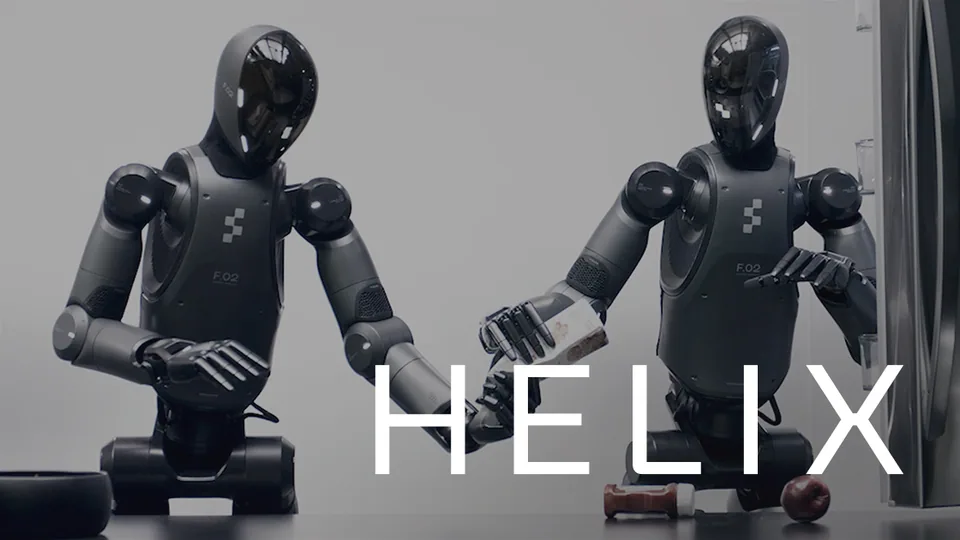
The Figure 02 has an incomplete specification. The manufacturer cites fourth-generation hands with a grip strength close to human, a 2.25 kWh battery in the torso (half as large again as in the Figure 01), and cameras and microphones for voice interaction. There are no confirmed values for its height, mass, payload or whole-body degrees of freedom (DOF). For the Figure 03 the data are complete: 172 cm, 61 kg, 35 DOF, 16 of them in the hand, a 20 kg payload, a runtime of up to 5 hours and 2 kW fast charging. The robot is 9 percent lighter than its predecessor, has touch sensors with 3 g resolution on each fingertip, cameras in the palms and a wide-angle camera system. Note a discrepancy in the sources: for the Figure 03 there is a statement that the predecessor’s hand had 12 DOF, while other data say 16. We do not settle this without a manufacturer document, so do not build the comparison on it. The most important qualitative change is software: the Figure 03 is driven by the company’s own Helix, a vision-language-action (VLA) model, described in “VLA Models: How AI Controls Humanoid Robots in 2026”. How to read such incomplete tables is shown in “How to Read a Robot Datasheet”.
Neither model has a public price list, and neither is available in Poland. The Figure 02 was never sold commercially; it operated only in a B2B pilot with BMW and has been withdrawn. The Figure 03 has officially been on sale since October 2025, but under fleet contracts with large industrial customers. The manufacturer says more than 350 units have left the BotQ factory and that production rate rose from one unit a day to one an hour in under 120 days. That signals the company moving from prototypes to series, although we know nothing about sales volumes or unit prices. For a Polish integrator the practical conclusion is simple: a commercial conversation needs direct contact with the manufacturer. How to count the costs of such a deployment is explained in “Humanoid Robot TCO: How to Calculate Total Cost”.
The two robots share a workplace: BMW’s Spartanburg plant. The Figure 02 worked there from the second quarter of 2024 to about November 2025, nearly 11 months, on body production. According to the sources cited it logged about 1,250 hours, handled more than 90,000 parts and contributed to the building of more than 30,000 X3 cars. The Figure 03 took over that role under the Physical AI project and extended it with a new use case. The manufacturer names industry and logistics as target sectors, that is the factory and warehouses. Comparison with other deployments is in “Humanoid Robots in Factories 2026”, and the safety requirements for working alongside people in “Robot Safety Standards”.
Figure 02 is already history: it is listed as retired, and its pilot at BMW in Spartanburg (body assembly) ran from Q2 2024 until about November 2025. Figure 03, unveiled in October 2025, took over that role and extended it with a new project, described by Figure as Physical AI, at the same BMW plant. Of the documented data, Figure 02 had a 2,250 Wh battery and 16 degrees of freedom in the hand. Figure 03 has the same 16, but the newer model adds a full whole-body specification: 35 degrees of freedom, a height of 172 cm, a weight of 61 kg and a 20 kg payload, none of which are given for Figure 02. The key qualitative change is the proprietary Helix model in Figure 03, which its predecessor had no documented equivalent of. For anyone following the company, Figure 03 is not a cosmetic update but a generational change in both hardware and software.
If you follow the company’s development or write about it, treat the Figure 03 not as a cosmetic update but as a change of hardware and software generation. For an analyst the key performance data come from the Figure 02 pilot, because only for it are there figures for hours, parts and cars. For a purchasing team the matter is simple: the Figure 02 is withdrawn and out of the question, and the Figure 03 is available under fleet contracts. For a Polish company that wants to compare it with other robots, a sensible reference point is the Tesla Optimus Gen 3, although it has not yet been officially shown. The market background is in “Humanoid Robot Market Forecasts”.
No. It is listed as retired, with its BMW pilot ending around November 2025.
A fuller documented body specification (35 degrees of freedom, a 20 kg payload) and the proprietary Helix AI model, which is not confirmed for Figure 02.
Yes, both generations have 16 degrees of freedom in the hand, one of the few parameters the two models share.
No. It has withdrawn status, and its BMW pilot ended around November 2025.
A full, documented body specification (35 DOF, 20 kg payload, 172 cm, 61 kg) and the in-house Helix AI model; for the Figure 02 there are no such data.
According to the sources cited about 1,250 hours over nearly 11 months, on more than 90,000 parts.
No. The manufacturer does not offer it in Poland, and the robot goes to customers under B2B fleet contracts.