Boston Dynamics
Compare
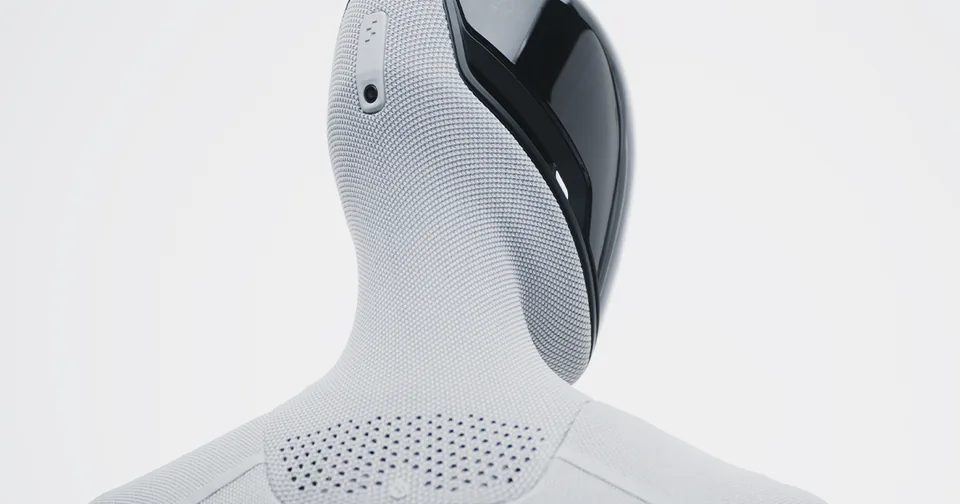
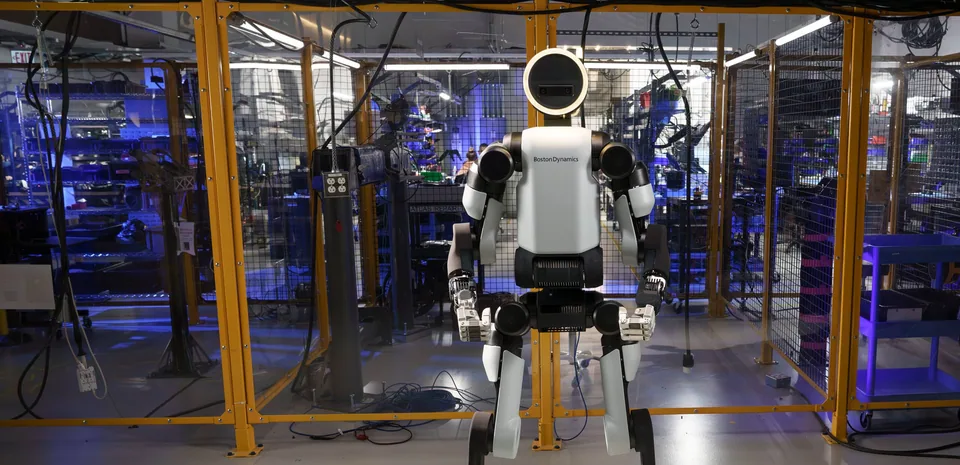
A comparison of the Atlas and the Figure 03. The matter comes down to whether they are two versions of the same promise or two different strategies. Figure 03 comes from the young company Figure AI, which has built a fleet and its own AI model from the start. For the wider market picture, see “Humanoid Robot Market Forecasts”.
| Feature | Atlas | Figure 03 |
|---|---|---|
| Manufacturer | Boston Dynamics | Figure AI |
| Price (PLN) | no data | no data |
| Height (cm) | 190.0 | 172.0 |
| Weight (kg) | 90.0 | 61.0 |
| Degrees of freedom | 56 | 35 |
| Payload (kg) | 50.0 | 20.0 |
| Runtime (h) | 4.0 | 5.0 |
| Status | prototype | on sale |
Atlas is 190 cm tall, weighs 90 kg and has 56 degrees of freedom (DOF). Figure 03 is 172 cm, 61 kg and has 35 degrees of freedom, 16 of them in each hand. Atlas lifts 50 kg briefly and 30 kg continuously, while Figure 03 quotes 20 kg. Runtime is 4 hours against 5 hours. The distinguishing features differ. Atlas has an IP67 enclosure, an operating range of −20 to 40 °C and an autonomous battery swap in under 3 minutes, a design for continuous work on a factory floor. Figure 03 bets on 2 kW charging and on its hands: fingertip tactile sensors resolve force down to 3 g, and the palms carry cameras, backed by a wide-angle vision system.
The “brain” differs too. Atlas computes on an onboard NVIDIA Jetson Thor T5000 (NVIDIA Jetson) and uses Google DeepMind foundation models. Figure 03 runs on its own Helix model, a vision-language-action model; that class of system is covered in “VLA Models: How AI Controls Humanoid Robots in 2026”. Atlas leads on mechanical scale, while Figure 03 looks like a product designed for series production. Neither manufacturer states a walking speed or a battery capacity in Wh, so we do not compare those figures.
Neither robot has a public price. Boston Dynamics quotes no figure, and Atlas production capacity for 2026 is reserved for the Hyundai Robotics Metaplant Application Center and Google DeepMind. Figure AI sells Figure 03 through B2B fleet agreements, not from a price list. The only number to have surfaced concerns a future home version: in May 2026 the company’s chief announced a lease at USD 600 a month, but that is a different product, Figure 03, aimed at 2028.
Production scale speaks strongly in Figure’s favour. According to the company, more than 350 units left the BotQ plant by April 2026, the 1,000th was built in July, and the pace is about one an hour. Inside its own facilities Figure runs 740 robots against 600 employees. Hyundai, for its part, plans 30,000 Atlas units a year in the US by 2028, but that is a plan, and the HMGMA plant is due to get a robot only in 2028. You cannot buy either one in Poland. If you were to work out a budget, the method is in “Humanoid Robot TCO: How to Calculate Total Cost”; charging stations, integration, service and training add to the cost, and eligibility for tax relief can be checked in “Poland's Robotization Tax Relief”.
The best-documented deployment belongs to Figure 03: the BMW plant in Spartanburg, a Physical AI project. BMW and Figure AI say that Figure 02 and 03 robots supported production of more than 30,000 BMW X3 cars over ten months. That is the kind of evidence Atlas lacks. We cover it in more detail in “Figure 03: What We Know About Figure AI's Third-Generation Robot”. Industry and the warehouse are the direction the model data points to as well.
Atlas has two confirmed workplaces: Hyundai plants and DeepMind labs. The CES 2026 demo, in which it moved parts, was by reports run under remote control, so full autonomy is not proven. For the factory that means a machine for an R&D department, not for a production manager. The industry-wide picture of deployments is in “Humanoid Robots in Factories 2026”, and design details in “Boston Dynamics Electric Atlas”.
If a Polish company wanted to start today, neither would help. What is actually available is the Unitree H2 from Polish retailers, or a cobot from the cobots category.
Both robots already work outside the lab, but under very different models. Atlas is tied exclusively to the Hyundai Robotics Metaplant and Google DeepMind research, while Figure 03 has operated at BMW in Spartanburg since October 2025 as part of a Physical AI project. Atlas is bigger and heavier, at 190 cm, 90 kg and a 50 kg payload against Figure 03's 172 cm, 61 kg and 20 kg, but Figure is aiming for broader, though still fleet-based, commercialization through its own Helix model, which links perception with action. Atlas uses the NVIDIA Jetson Thor T5000 chip and its DeepMind partnership on foundation AI models, suggesting a more research-oriented than production-oriented stance at this stage. Neither model has a retail price; both makers work under contracts with individual large industrial customers rather than open sales.
If you are judging readiness for deployment, Figure 03 wins: it has a named customer, a production count, its own software and a clear fleet-based business model. If you are judging mechanical potential, Atlas wins: 56 degrees of freedom, 50 kg of payload and IP67 are values its rival does not claim.
For a large industrial plant that can sign a fleet contract and has a team for a pilot, the more sensible conversation is with Figure AI. For a corporation tracking design standards and researching robot learning, Atlas remains the reference point. For a typical Polish company both machines are topics to watch, not to buy. Before opening talks, ask each manufacturer for a datasheet and references; how to read them is explained in “How to Read a Robot Datasheet”.
Atlas, with 56 degrees of freedom against 35 for Figure 03, at a greater weight (90 kg versus 61 kg).
Not in any simple way. Both makers operate through selected industrial partnerships, with no open price list.
The proprietary Helix model, which links visual perception with action planning, whereas Atlas relies on collaboration with Google DeepMind's foundation models.
Atlas: 56 degrees of freedom against 35 for Figure 03, with greater mass (90 kg against 61 kg) and a payload of up to 50 kg against 20 kg.
Not in any simple way. Atlas is reserved for Hyundai and Google DeepMind for 2026, and Figure 03 reaches customers through B2B fleet agreements without a public price list.
The best-documented deployment is at the BMW plant in Spartanburg. The company also says it runs 740 robots in its own facilities.
Figure 03 uses its own Helix model (vision-language-action), while Atlas relies on Google DeepMind foundation models and a Jetson Thor T5000 computer.