research platform
no official photo
Data from manufacturer datasheets and product pages; median over the models of this category in the database.
Pros
- 22 degrees of freedom, including a lifting axis and three-wheel base
- 10 kg combined arm payload, ±0.1 mm repeatability
- 5-second battery swap without powering down
- 2070 TFLOPS onboard computer
Cons
- Runtime is only about 4 hours
- No independently verified price
- Unveiled August 2026, no deployment track record yet
- Not available in Poland, no distributor
- 10kgPayload
- 22DOFDegrees of freedom
- 4hRuntime
Key facts
- Specificationspayload 10 kg · degrees of freedom 22 DOF · runtime 4 h
- Statuson sale
- Availability in Polandnot confirmed
- VerdictFor warehouses and retail looking for a wheeled humanoid for shelf work; home use is so far only the maker's claim.
Summary
- ManufacturerRoboScience
- CategoryHumanoid robots
- Statuson sale
- Availability in PolandNo confirmed distributor in Poland
REX G1 is a wheeled humanoid robot from the Beijing-based Chinese company RoboScience, unveiled in August 2026. Instead of two legs, the robot moves on a three-wheeled base with a lifting axis, which sets it apart from classic bipedal humanoids such as the Unitree G1 or H2.
It has 22 degrees of freedom (DOF): seven in each arm, two in the head, two in the waist, one in the lifting axis and three in the wheeled base. The combined payload of both arms is 10 kg, with a claimed repeatability of ±0.1 mm. Battery life reaches four hours, and the manufacturer boasts a five-second battery swap without powering the unit down.
Data is processed by an onboard computer rated at 2,070 TFLOPS, paired with a proprietary vision-language model called Visics. The robot targets logistics, manufacturing, retail and home applications. Its strengths are the fast battery swap and high computing power; its weaknesses are the lack of an independently verified price and a shorter runtime than stationary competitors.
For now the robot is not offered in Poland or by any local distributor.
Specs
Data checked: · Sources: 1
-
Degrees of freedom22−25% vs. the category median (29.5, n=200)
-
Payload10 kg+43% vs. the category median (7 kg, n=166)
-
Runtime4 hin line with the category median (4 h, n=135)
- category medianA higher value doesn't always mean a better robot; it depends on the application.
Motion and manipulation
- Degrees of freedom
- 22
- Payload
- 10 kg
Power
- Runtime
- 4 h
Electronics and AI
- Drive
- electric (wheeled chassis, lift axis)
- Sensors
- 360° stereo vision with adaptive lighting
- Computing unit
- 2070 TFLOPS
- AI stack
- Visics vision-language model
Price and availability in Poland
no data
Running and deployment costs
Purchase: the manufacturer gives no sales price, and we found no independently verified price in the sources; we do not guess one. As a rough estimate, looking at neighboring wheeled and humanoid designs with published prices, Galbot G1 (about USD 30-91 thousand according to conflicting sources) and Neura 4NE-1 at about EUR 98,000 (NEURA 4NE-1 Gen 3.5), the realistic cost ranges from several hundred thousand zlotys upward, but this is purely an order-of-magnitude estimate, not a RoboScience offer. For sales outside China, add customs duty, shipping and taxes.
Operation: 4 hours of work plus an instant battery swap mean that, with a stock of batteries, the robot can work almost without a break; you do have to buy extra batteries and a charging station. Service in Europe does not exist yet, so every fault means logistics from China.
Training: operation is based on a vision-language model, which simplifies commands, but the manufacturer does not describe a training program. Integration with the warehouse system has to be planned separately.
For the full calculation see “Humanoid Robot TCO: How to Calculate Total Cost”.
Dealers in Poland
No confirmed distributor in Poland
Applications
What it's for
REX G1 from Beijing-based RoboScience, unveiled in August 2026, has no legs: instead of steps it has three wheels and an axis that raises the torso up and down so the arms can reach both the bottom shelf and a higher one. The manufacturer is aiming at four environments: order picking in warehouses, manufacturing, restocking in retail, and home services.
Let's start with the warehouse. The robot has 22 degrees of freedom: seven in each arm, two in the head, two in the waist, one in the lifting axis and three in the wheeled base. The combined payload of both arms is 10 kg and the claimed repeatability is ±0.1 mm, which in practice means even a small part lands in the same place every time. Panoramic 360° stereo vision with adaptive lighting is meant to help with orientation in changing light, for example between a bright packing area and the dim shelving (warehouses).
The second scenario is manufacturing (factories): a wheeled robot does not need complex balancing on legs, so it can stand at a workstation and tend a machine, move parts or feed a line. The third is retail (retail): stocking shelves in a store requires reaching at different heights, which is exactly what a lifting axis is made for. The fourth, home services, appears in the manufacturer's description as a direction, but for a Polish reader it is rather a distant prospect (homes).
The key feature is a runtime of around 4 hours and a battery swap in five seconds without shutting the robot down. That is how the manufacturer wants to avoid long charging downtime. Computation is handled by a 2,070 TFLOPS computer working with the proprietary Visics vision-language model. One caveat: a TFLOPS figure without information on numerical precision is hard to compare with other robots, so let's not treat it as a ranking. We cover control models in general in “VLA Models: How AI Controls Humanoid Robots in 2026”, and AMRs in warehouses in “AMR Robots in the Warehouse”.
Typical applications
Who it's for
Best suited to: large logistics centers and retail chains looking for a robot for smooth floors, with processes that require reaching at different heights; teams that want to trial a wheeled humanoid as a cheaper and simpler alternative to bipedal ones; manufacturers looking for a robot with ±0.1 mm repeatability for fine operations, provided the manufacturer confirms it under shop-floor conditions; market watchers following Chinese designs (“Chinese Humanoid Robots”).
A poor fit: a customer who has to travel over stairs, uneven terrain or a hall with thresholds, since the wheeled base limits off-road mobility; a company that needs an independently verified price and specification, as height, weight and price are missing; anyone who wants local service, since the robot is not offered in Poland or in Europe, and distribution is for now limited to the Chinese market and early pilot deployments. Nor is it a robot for a household in Poland.
Deployments
REX G1 is not offered by any distributor here or in Europe. Distribution is for now limited to the Chinese market and early pilot deployments, whose details are not publicly documented.
What exists in the category: wheeled humanoids and mobile manipulators are already working in retail and logistics, with Galbot G1 in stores in China, while in warehouses large corporations are looking at them, as with Apollo at Mercedes-Benz and GXO Logistics (Apptronik Apollo). In Poland, robots in the warehouse usually start with AMRs: “AMR Robots in the Warehouse”.
Comparison
Agility's Digit (Agility Digit 5) is a bipedal logistics humanoid: payload 22.7 kg (40% more than v4), vertical reach 7.2 ft, early access from H1 2027. Choose it when you need to work in environments designed for people, with platforms and walkways.
Galbot G1 (Galbot G1) is a retail humanoid: 173 cm, 92.5 kg, already working in stores in China. Price estimated at USD 30-91 thousand, with conflicting data. The closest conceptual cousin of REX G1 in retail.
AgiBot A2-W (AgiBot A2-W) is an industrial wheeled variant of the A2, but the manufacturer gives no specifications or confirmed price; as with REX G1, evaluation requires an inquiry.
Sanctuary Phoenix Gen8 (Sanctuary AI Phoenix) is a humanoid on wheels with hydraulic hands, payload 25 kg, in the pilot phase with no price. Choose it if exceptional hand dexterity matters to you more than runtime.
Addverb Elixis-W (Addverb Elixis-W) is an Indian wheeled humanoid in the pilot phase, with much data undisclosed. A sensible reference point for judging what other platforms in the same style look like outside China.
Similar models
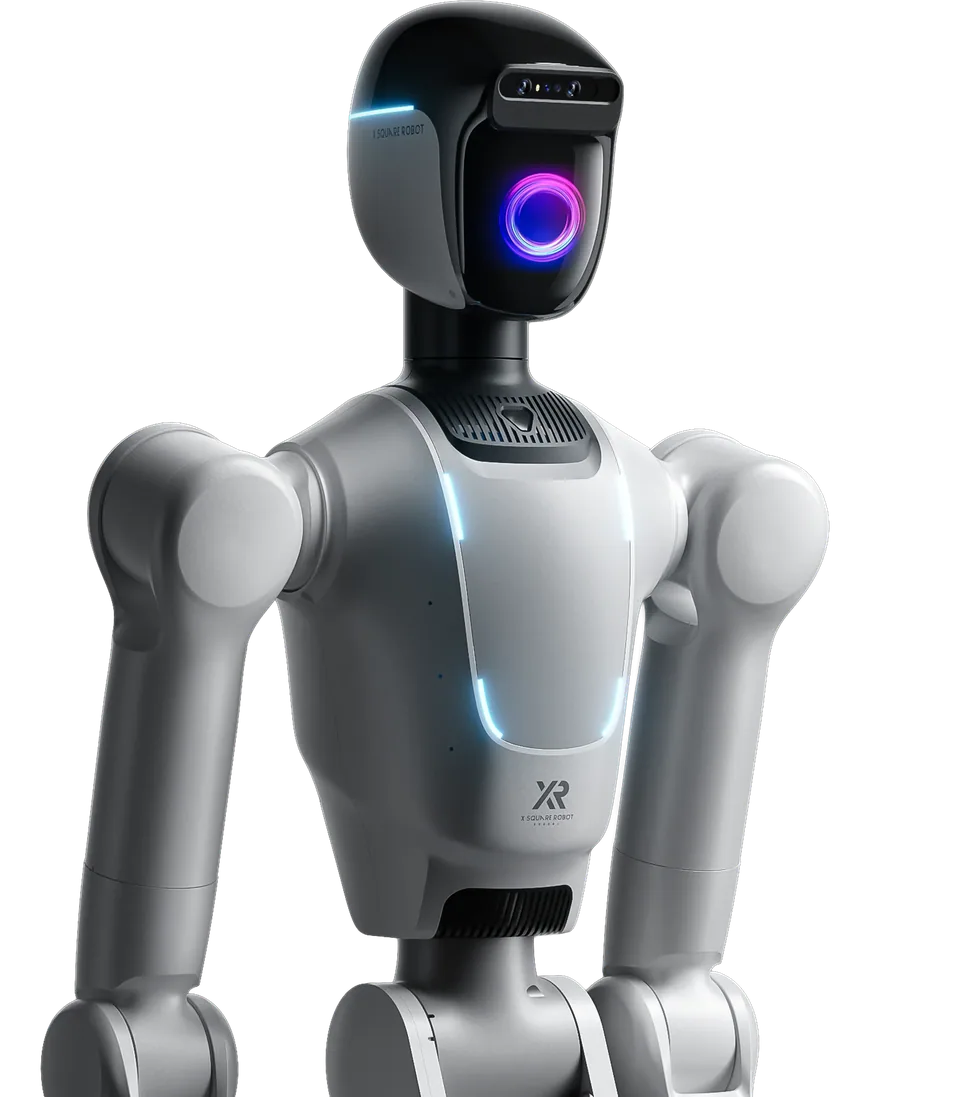
 prototype
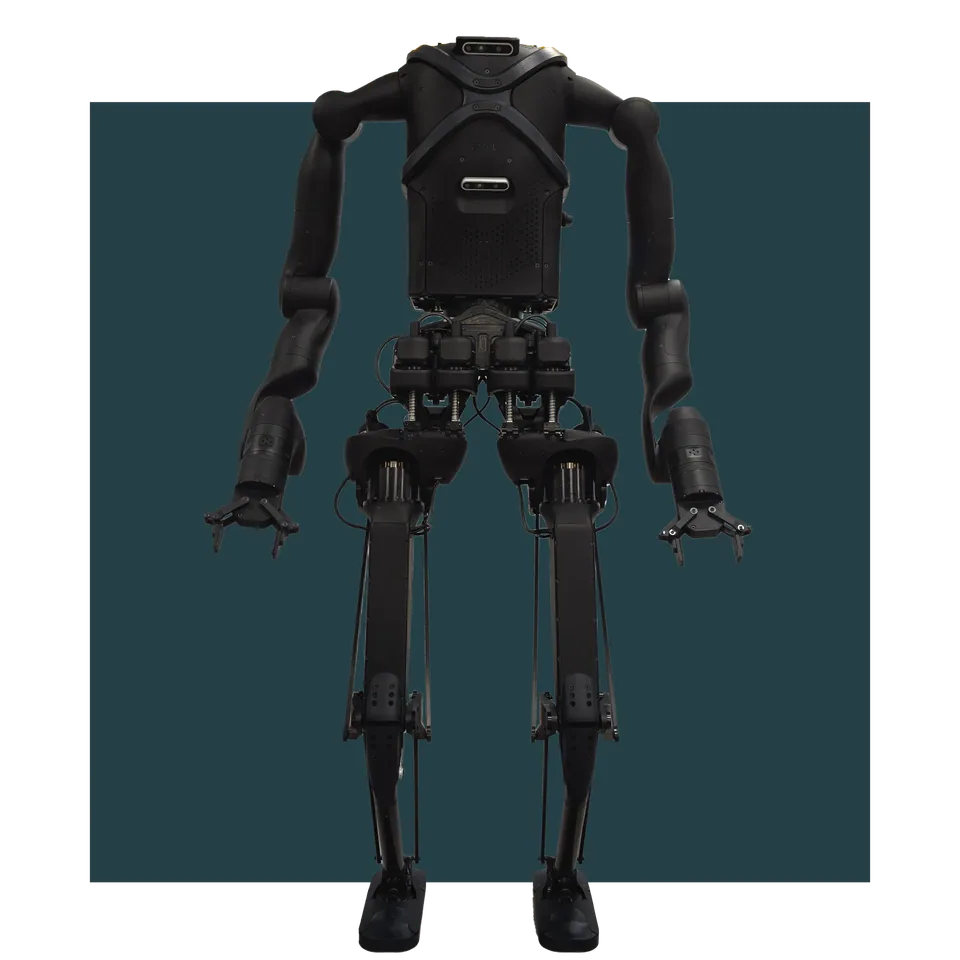
 prototype
 prototype
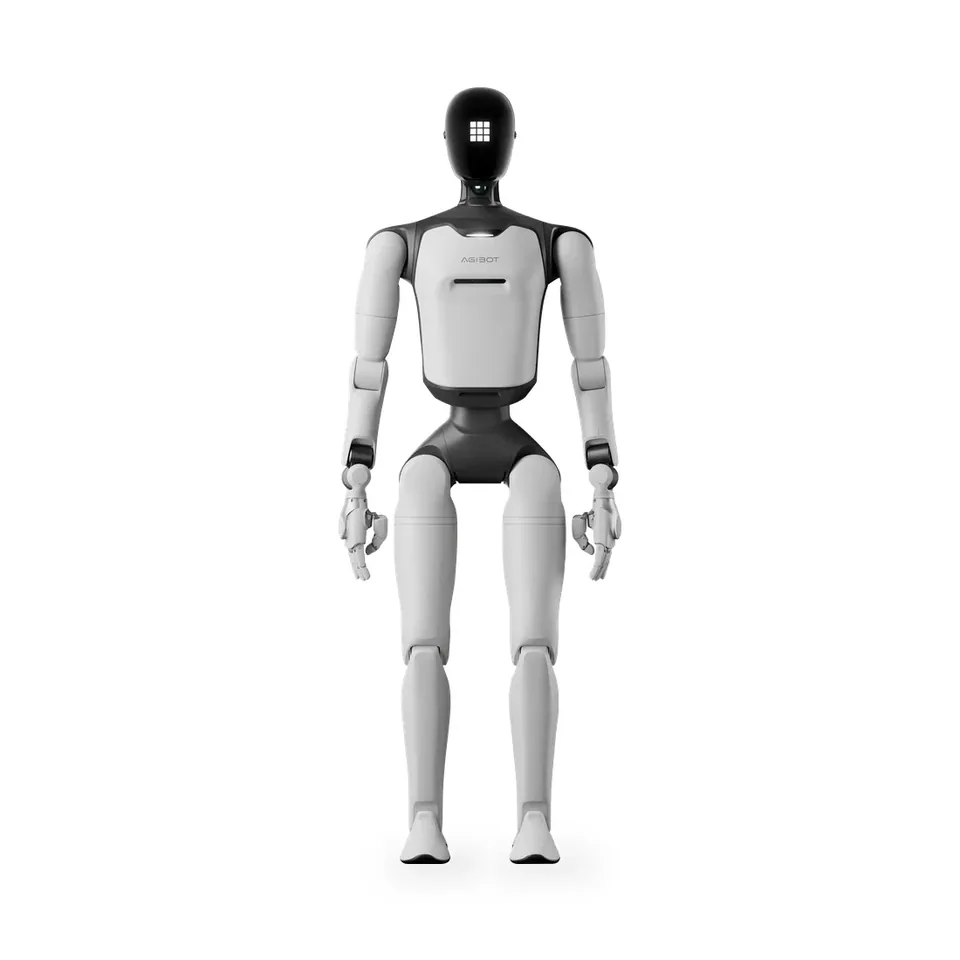 on sale
- on sale
History
RoboScience is a Beijing company working in so-called embodied intelligence, that is, artificial intelligence embodied in physical robots. REX G1 was unveiled in August 2026, and our catalog lists a sales start in 2026. The company positions the robot as ready for mass production. There are no earlier generations or documented versions yet, so we do not describe an evolution. An example of the broader trend, wheeled humanoids as a simplification of bipedal ones, is the concept described in “How Does a Humanoid Robot Work” and “Humanoid Robot Market Forecasts”.
Sales start
Sources
Frequently asked questions
Is the REX G1 available in Poland?
No. The manufacturer RoboScience (China) names no Polish shop or official distributor for the REX G1; the offer has to be requested from the manufacturer. Confirm service in Poland before buying.
How does REX G1 differ from classic bipedal humanoids?
It moves on a three-wheeled base with a lifting axis instead of on legs, which limits off-road mobility but simplifies the design and lowers production costs.
How long does a battery swap take on REX G1?
The manufacturer claims a five-second battery swap without powering the robot down, allowing near-continuous work; runtime on one charge is up to four hours.
Can you buy REX G1 in Poland?
No. The robot is not offered by any distributor in Poland, and the manufacturer does not give a sales price.
Shop links may become affiliate links in future, details: How we make money · How we check