pilot
Foundation (Foundation Future Industries, Inc.)Humanoid robots
Foundation Phantom
- 180 cmheight
- 40 kgpayload
- —price
Manufacturer
US defense-focused startup; Phantom humanoid tested in Ukraine, plan for 50,000 units by 2027; Eric Trump on the advisory board.
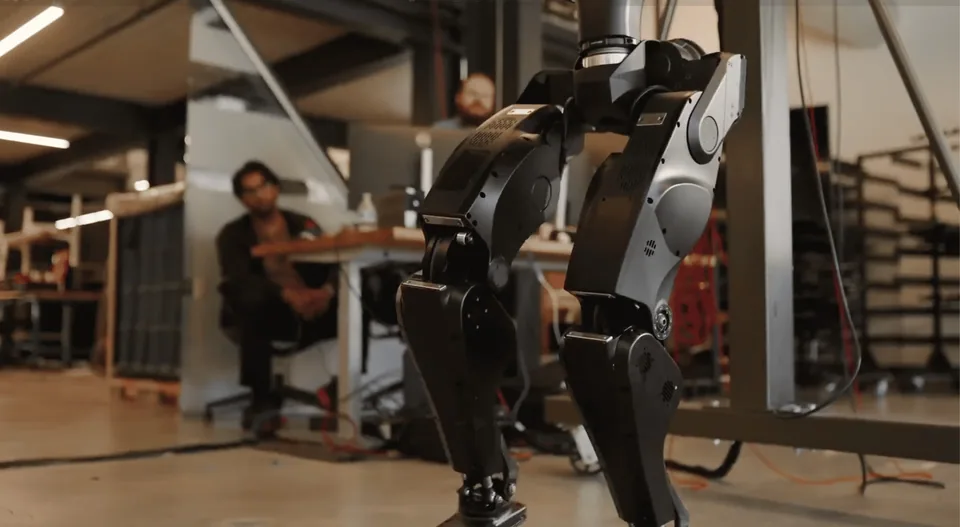
Foundation Future Industries of San Francisco, founded in 2024 by CEO Sankaet Pathak, is building the bipedal Phantom robot for industrial work and defense applications. It has already been tested in Ukraine and is backed by Pentagon research contracts worth about $24 million. The plan is to build 50,000 units by the end of 2027, leased for about $100,000 per unit per year.
That business model is closer to renting military equipment than to selling consumer robots, as Figure or Fourier do. The team was recruited from Tesla, 1X, Boston Dynamics and SpaceX, and Eric Trump joined the advisory board as chief strategy advisor. That in itself signals the company's political profile and calls for care when quoting it. Overall funding and valuation figures have not been confirmed.
Foundation has no presence in Poland; the defense segment lies outside the scope of this guide.
Foundation Future Industries of San Francisco was founded in 2024, and its founder and CEO is Sankaet Pathak. It is building the bipedal Phantom robot for industrial work and for defense applications. According to CNBC, Forbes and Interesting Engineering the robot was tested in Ukraine, and the company holds Pentagon research contracts worth about $24 million. The team was recruited from Tesla, 1X, Boston Dynamics and SpaceX, and Eric Trump joined the advisory board as chief strategy advisor, which in itself says something about the company's political profile and calls for care when quoting it. The Phantom was unveiled in December 2025, and the model's status is pilot, not series sale. The company's plan is loud: 50,000 units by the end of 2027, leased at about $100,000 per unit per year. That is a business model closer to renting military equipment than to selling consumer robots. Overall funding and valuation data are not confirmed. The general backdrop of the humanoid market is described in “Humanoid Robot Market Forecasts”.
One model is confirmed in the offering: Foundation Phantom, a military-industrial humanoid with pilot status. There is no public technical specification and no sale price, only a planned lease of about $100,000 per year per robot. Applications on record are tests in Ukraine, planned use by the US military and industrial work. There are no numbers to compare, but philosophies can be set side by side. Tesla Optimus Gen 3 and Figure 03 aim at factories and homes, Atlas at production, and Unitree H2 at the research and industrial market; the Phantom is the only one among them that openly bets on defense. The context of humanoids working in logistics is in “Agility Digit in Warehouses”. The competitors' portfolios are collected in the humanoid robots category, and terms such as degrees of freedom are explained in “Degrees of Freedom (DOF) in Humanoid Robots”. It also matters to the reader that data on parameters, height, weight and payload, has not been disclosed, so any numerical comparison would be guesswork. An assessment of the Phantom must therefore wait for public tests and documentation. Until then what remains are claims, sources cited by the media and research contracts, which lend credibility but do not replace a specification.
Foundation has two clear features: Pentagon research contracts worth about $24 million and a plan for large-scale production, 50,000 units by the end of 2027. We have no confirmed valuation or total funding, so these plans must not be mistaken for facts. Plans are plans, and production is production. A team recruited from Tesla, 1X, Boston Dynamics and SpaceX points to ambition, but does not settle whether it will be fulfilled. Direct competitors are other US firms: Figure AI, Tesla, Apptronik, Agility Robotics and Boston Dynamics. In this group Foundation stands out for the defense sector, which for the others is a smaller field or off limits. Caution also stems from the fact that Eric Trump sits on the advisory board; we do not judge this, only note it. A comparison of robot costs is in “How Much Does a Humanoid Robot Cost in 2026”. It is a signal worth watching in coming quarters.
Foundation has no presence in Poland whatsoever: no distributor, no deployments, no research programs with Polish universities. The Phantom is recorded as unavailable locally and, given its military purpose, such availability is unlikely to arrive as a commercial sale. The defense segment is outside the scope of this guide, so we recommend nothing here. For Polish readers interested in humanoids in industry, we point to “Humanoid Robots in Factories 2026” and the factory section, and for those asking about the impact on the job market, “Humanoid Robots and the Polish Labor Market”. If the company ever announces a civilian version, we will update this profile.
Foundation is a bet on defense and leasing, not a product to compare in a shop. The Phantom is at the pilot stage, with no specification and no sale price. It is worth watching the Pentagon contracts and delivery of the 2027 plan, but for now it is a promise, not an offer. For the Polish reader it is more a geopolitical curiosity than a purchase proposal. We will look at it again when a real product appears. For now, company announcements are best read critically.
Foundation (Foundation Future Industries, Inc.)
Foundation (Foundation Future Industries, Inc.)Humanoid robots