on sale
Manufacturer
Anki's successor: the Vector 2.0 robot, but the company was sued in 2024 over order and refund problems.
The story of Digital Dream Labs is one of rescuing a brand after a collapse: the Pittsburgh-based American company acquired Anki's robotics assets in 2019 after Anki shut down and resumed sales of the Vector robot as Vector 2.0, with a cloud-based AI subscription.
In September 2024 the Attorney General of Pennsylvania sued the company over widespread problems with order fulfillment and refunds, and despite the ongoing court case, hardware sales were reportedly set to continue into 2026.
Among consumer home robots, such as the former Anki Cozmo or newer Chinese products, Vector 2.0 stands out for its distinctive personality and face recognition, but the risk tied to the company's condition is a significant drawback. Availability in Poland is not confirmed.
The story of Digital Dream Labs begins with another company's collapse. When Anki, the maker of small desktop robots, shut down in 2019, its robotics assets were taken over by an American company from Pittsburgh. The new owner resumed sales of the Vector robot as Vector 2.0, with a cloud-based AI subscription, and the model returned to the lineup in January 2020. The founding year of DDL itself is not given, but the year 2019 and the acquisition of the brand are documented. September 2024 brought a less happy turn: the Attorney General of Pennsylvania sued the company over widespread problems with order fulfillment and refunds. The court proceedings are ongoing, and at the same time, according to available information, hardware sales were supposed to continue into 2026. For the customer this means a simple lesson: with cloud-dependent robots, the hardware is only part of the purchase, and the other part is the credibility of the company that keeps the servers running. The same lesson returns in the story of Moxie, which we describe in connection with Embodied. It is also worth remembering the scale: Vector is a toy with ambitions, not industrial equipment, so the financial stake for the customer is small, but the phenomenon itself, hardware whose purpose depends on someone else's servers, affects the whole industry and recurs in the texts on Emotix and on ownership costs in “Humanoid Robot TCO: How to Calculate Total Cost”.
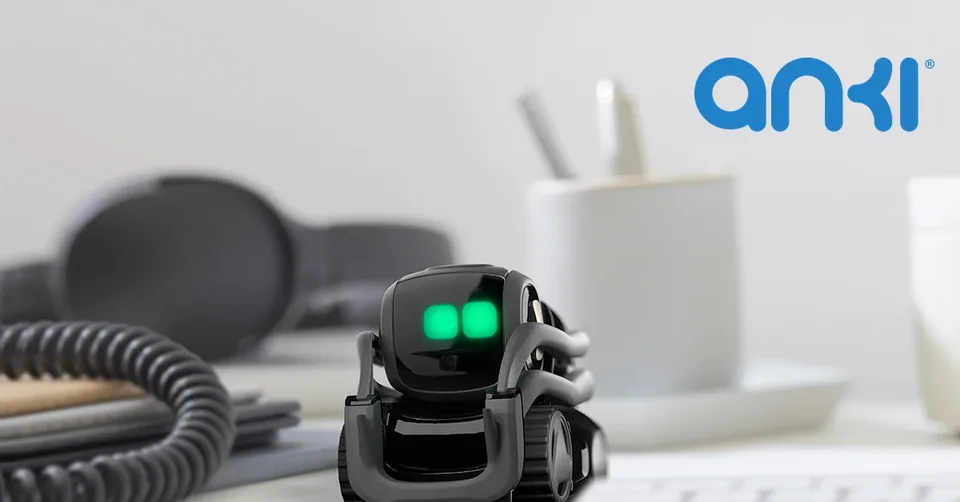
DDL's lineup has one product, but a well-known one: Vector 2.0. It is a small tracked desktop robot with a camera, a microphone array and a touch sensor, whose “brain” runs in the cloud. According to the manufacturer's website the black version costs USD 249.99, and the Open-Box variants (black, red and blue) USD 189.99 to 229.99; the pink one is sold out. An important detail that is easy to miss: voice commands, cloud AI and the ChatGPT integration require a subscription at USD 11.99 per month or USD 99.99 per year. In the category “Home robots” it is more a gadget and companion than a tool, and its application is confined to the space of homes. How to compare such hardware with more practical solutions is explained in “How to Read a Robot Datasheet”, and we write about the real cost of owning a robot in “Humanoid Robot TCO: How to Calculate Total Cost”. The physical build is modest: electric tracked drive, a camera, microphones and touch, with no arm and no payload that could be put on a spec sheet. The manufacturer also gives no weight or dimensions in verified sources, so for this model what gets compared is mainly the price, the subscription model and how the cloud works, not mechanical parameters. Anyone who wants to see a rival at a similar price will find it in the comparison with Loona Petbot.
The consumer home robot segment is crowded, and DDL plays in it not the role of a leader but of a brand rescuer. As direct comparisons, it is worth naming the former Anki Cozmo and desktop robots from other companies, such as Loona Petbot or temi V3 from Robotemi Global. The cheap entry, below USD 250, contrasts with the subscription model and the operational uncertainty stemming from the lawsuit. Data on funding, valuation, stock listing and headcount is not published, so we don't guess the scale. Among Chinese competitors Enabot also appears, with the Enabot EBO Air 2 model. DDL's market position is therefore rather a niche of enthusiasts who knowingly accept the company's risk and pay every month for full functionality. In short, DDL does not compete for market share on specs but on the promise that the beloved robot from the Anki years will keep working. Whether that promise is safe depends on the outcome of the Pennsylvania proceedings, whose course we found no verified sources on, so we don't prejudge it. A cautious buyer should therefore treat the purchase as a one-off expense on a gadget, not an investment in a platform.
The manufacturer does not state clearly whether it sells Vector 2.0 to Poland, and there is no Polish distributor or official dealer that we know of. Ordering from the manufacturer's store would mean a private import, and therefore no local warranty or support. This is especially significant given the 2024 lawsuit, whose subject was precisely the problems with order fulfillment and refunds. We found no deployments in Polish schools or universities. Anyone choosing a robot for classes with children will find a more sensible starting point in the article “Educational Robots for Schools and Universities”, and questions about cameras and data at home are sorted out in “Data Security: Robots with Cameras and the GDPR”.
Vector 2.0 is a likable gadget for someone who enjoys experimenting and accepts the risk. The entry price is low, but the subscription and the company's condition after the 2024 lawsuit matter. For a school, an office or a child, without a reserve for possible loss of services, we advise against it. If, however, you want an educational robot with better-documented durability, compare it with the kits in the category “Educational robots”. When buying, be prepared that over time you may be left with hardware without voice functions.
Digital Dream Labs (successor to Anki)